

Choosing a cancer hospital in Haryana requires verifying institutional depth beyond marketing claims. Measurable markers include tumor board frequency, subspecialty-trained surgical oncologists, and same-roof diagnostic integration.
Key Takeaways
- Surgical oncologists complete 2-3 years of fellowship training beyond general surgery residency, specializing in cancer resection and multidisciplinary care coordination
- High-volume tertiary centers hold tumor board meetings twice weekly to review complex cases and coordinate treatment plans across specialties
- Verify surgeon credentials by asking about case volume, subspecialty training, and tumor board participation frequency during initial consultations
- Operational integration means shared tumor boards and electronic health records; co-location means departments exist in the same building but operate separately
- Same-roof diagnostic capabilities (on-site PET-CT, pathology, frozen sections) eliminate inter-facility transfer delays and improve treatment timelines
Why Surgical Oncology Experience Matters in Cancer Treatment
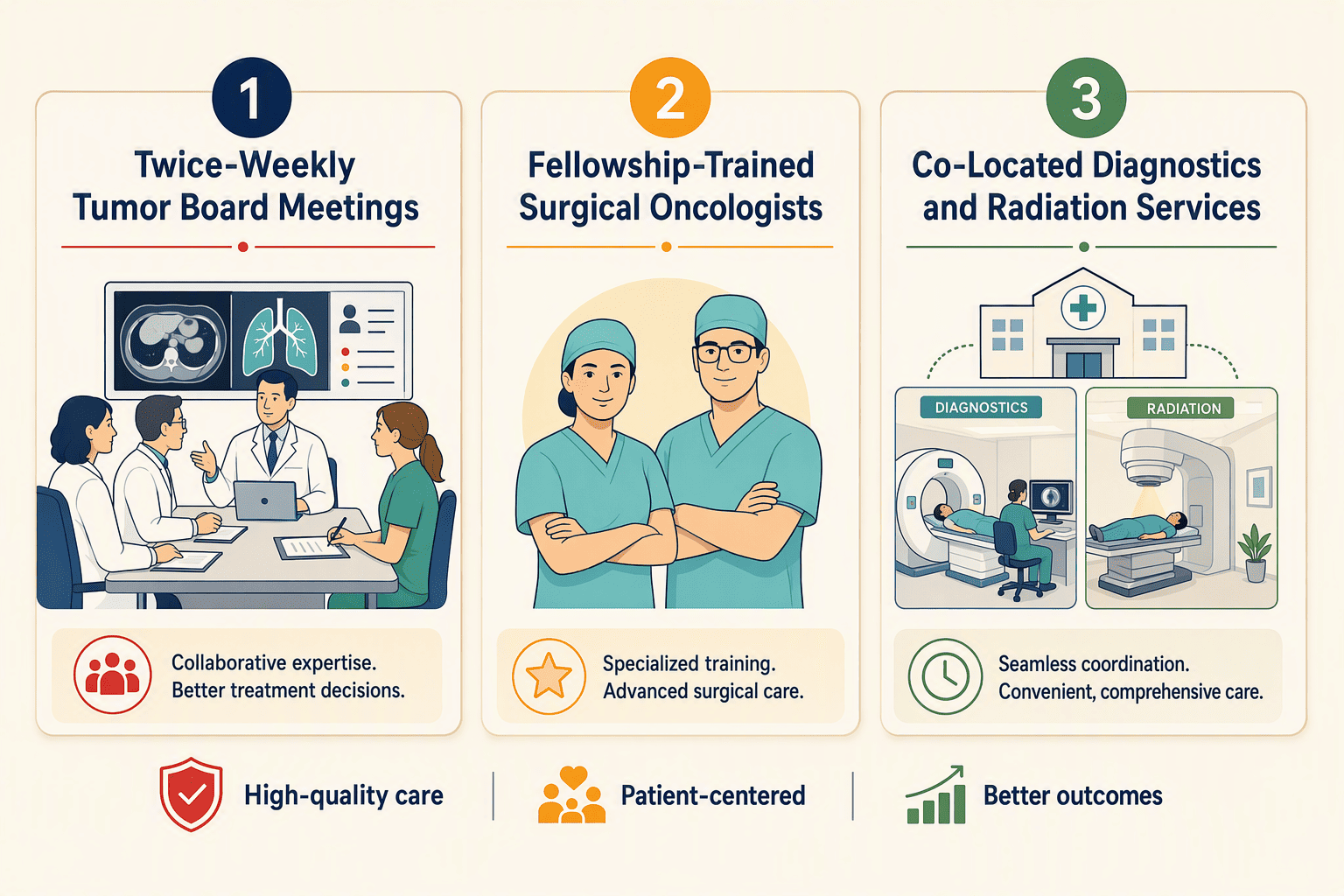
Finding a cancer hospital with experienced surgical oncologists in Haryana means verifying three markers: twice-weekly multidisciplinary tumor board meetings, subspecialty fellowship-trained surgeons beyond general-surgery credentials, and co-located diagnostic and radiation services that eliminate care fragmentation. These structural elements predict outcomes independent of individual surgeon skill.
What Defines an Experienced Surgical Oncologist
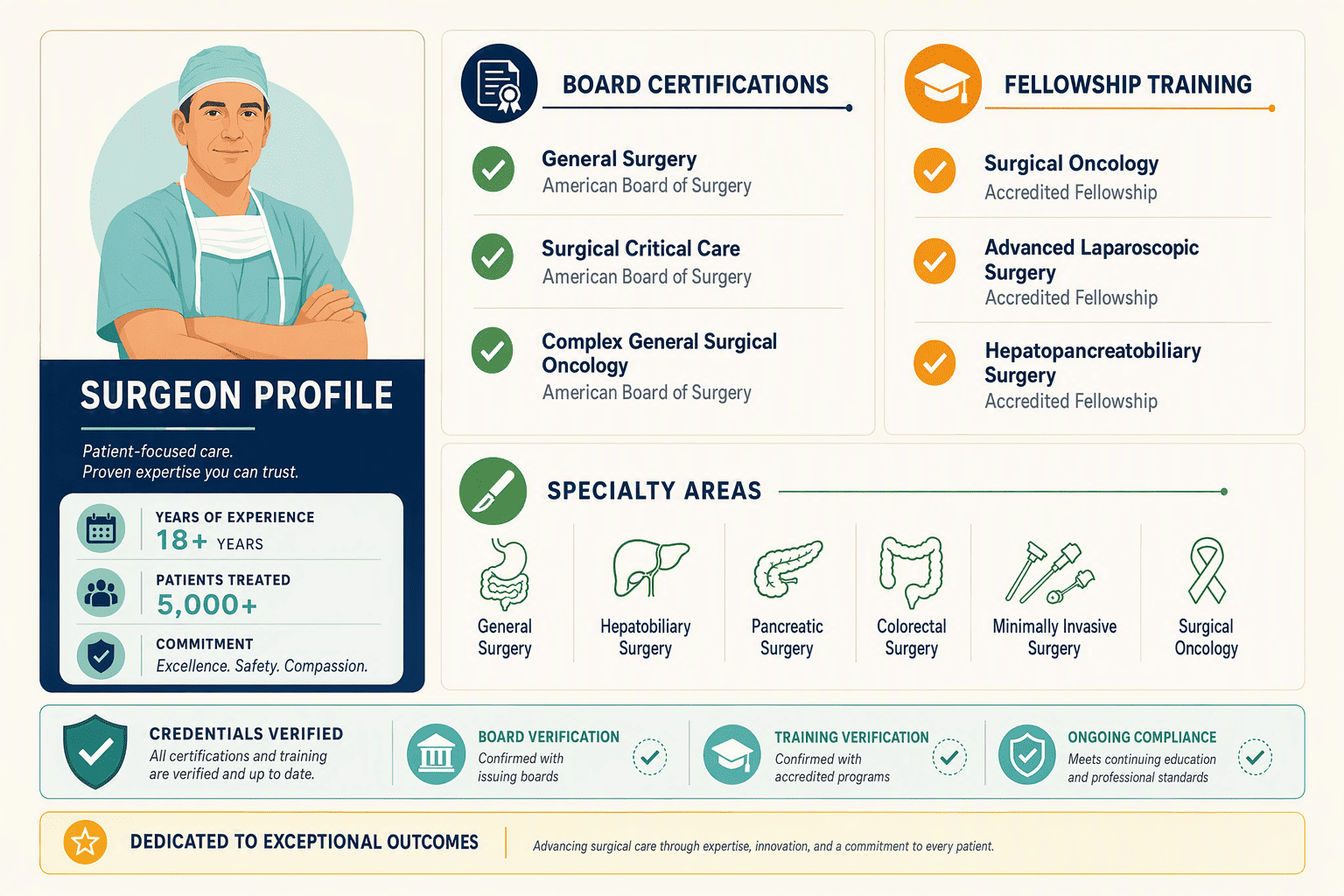
Surgical oncology is a recognized subspecialty requiring fellowship training beyond the foundational medical-doctor surgery credential. Board certification in surgical oncology signals completion of this extended pathway, typically including specialized rotations in cancer resection, reconstruction, and perioperative oncology care. Case-volume thresholds also matter: surgeons performing complex cancer resections regularly maintain technical proficiency that sporadic-case general surgeons cannot replicate. When evaluating hospitals, verify that the surgical team includes fellowship-trained oncologists rather than general surgeons who occasionally perform cancer procedures.
Outcome Differences Between High-Volume and Low-Volume Centers
Institutional structure affects patient outcomes as strongly as individual surgeon credentials. Academic research demonstrates that registered-nurse practice environments—including multidisciplinary participation in hospital affairs and cross-departmental coordination—predict surgical oncology mortality and failure-to-rescue rates. High-volume specialized centers treating complex cases such as pancreatic cancer show measurably better outcomes than lower-volume facilities, partly because regular tumor-board collaboration, imaging integration, and pathology consultation become routine rather than ad hoc. Patients should prioritize hospitals where surgical oncology teams participate in structured multidisciplinary review, not institutions where cancer surgery occurs in isolation.
Once you understand why surgical oncology expertise matters, the next step is confirming that a hospital's surgical team possesses verifiable credentials rather than general surgery backgrounds.
How to Verify a Hospital's Surgical Oncology Team Credentials
Where to Find Board Certification and Fellowship Training Records
Start by checking the hospital's official website for surgeon profiles listing board certifications (DNB Surgical Oncology, MCh Surgical Oncology) and fellowship training. For example, Max Healthcare's surgical oncologist directory lists degrees, experience years, and specialty areas. Artemis Hospitals' surgical oncology team profiles similarly document qualifications. However, both directories omit case volume data and tumor board participation frequency — critical depth markers you must ask about directly. Cross-reference credentials against the National Medical Commission registry to confirm active registration.
Questions to Ask About Case Volume and Subspecialty Focus
During consultations, ask specific questions: 'How many [specific cancer type] surgeries does this surgeon perform annually?' and 'How often does the surgical oncology team participate in multidisciplinary tumor board meetings?' These questions reveal institutional depth that credential listings alone cannot. Third-party directories like Practo aggregate surgeon names and patient ratings but lack case volume and tumor board frequency — treat them as starting points, not verification endpoints. High-volume surgeons (50+ oncoplastic breast surgeries or 30+ gastrointestinal resections annually) typically demonstrate better outcomes; ask for these numbers explicitly.
Example: Verifying Credentials at a Haryana Cancer Hospital
Andromeda Cancer Hospital's surgical oncology department is led by Dr. Arun Kumar Goel, whose publicly documented credentials include MBBS and MS from AIIMS, New Delhi. This verifiable institutional structure offers one example of how leadership qualifications should be transparent. However, documentation of qualifications alone does not confirm operational integration; you must still ask the hospital directly about weekly tumor board participation and annual case volume for your specific cancer type to verify the multidisciplinary coordination described in awareness materials.
Surgeon credentials establish individual expertise; tumor board meetings reveal whether the institution enables those experts to collaborate effectively on your case.
What to Ask About Multidisciplinary Tumor Board Meetings
What Happens in a Multidisciplinary Tumor Board Meeting
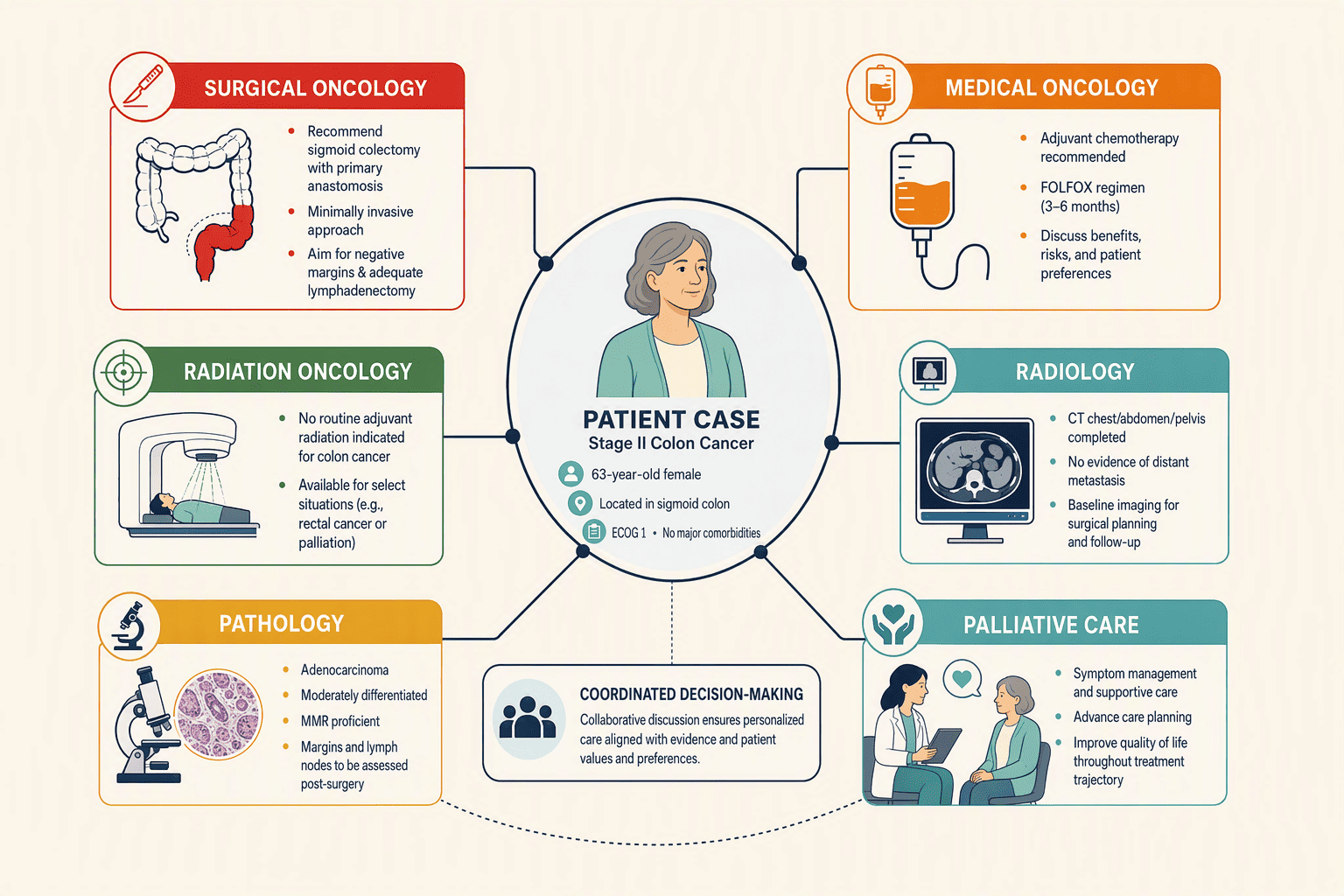
A multidisciplinary tumor board is a weekly or twice-weekly conference where surgical oncologists, medical oncologists, radiation oncologists, radiologists, pathologists, and palliative care specialists review each complex cancer case together. Rather than receiving sequential consultations, patients benefit from a coordinated treatment plan shaped by collective expertise. The tumor board translates National Cancer Grid clinical practice guidelines into patient-specific recommendations, weighing surgery, systemic therapy, radiation sequencing, and supportive care as a unified team. This coordinated planning is the operational core of integrated cancer care.
How Often Should Tumor Boards Meet at a Tertiary Cancer Center
High-volume tertiary centers typically convene tumor boards twice weekly to maintain treatment timeline discipline. Less frequent meetings can delay chemotherapy or surgery starts by a week or more. Andromeda Cancer Hospital in Sonipat documents twice-weekly tumor boards involving surgical oncologists, oncoplastic breast surgeons, medical oncologists, radiation oncologists, radiologists, pathologists, and palliative care specialists. This documented frequency serves as one verifiable Haryana benchmark when comparing institutions.
Questions to Ask to Confirm Documented Tumor Board Activity
Marketing materials listing 'multidisciplinary care' do not prove documented tumor board activity. Less than 50% of Indian tertiary hospitals offer key oncology services, reinforcing that claims require independent verification. Ask: 'How often does your tumor board meet?' 'Can you show me a recent tumor board case summary for a patient with my cancer type?' 'Which specialists participate in the tumor board?' 'Do you follow National Cancer Grid protocols?' Requests for documentation distinguish hospitals with operational tumor boards from those with aspirational marketing language.
Documented tumor board activity confirms that specialists communicate regularly. The next layer is verifying whether departments share workflows or merely occupy the same building.
Same-Roof Integration Vs Co-Location: What's the Difference?
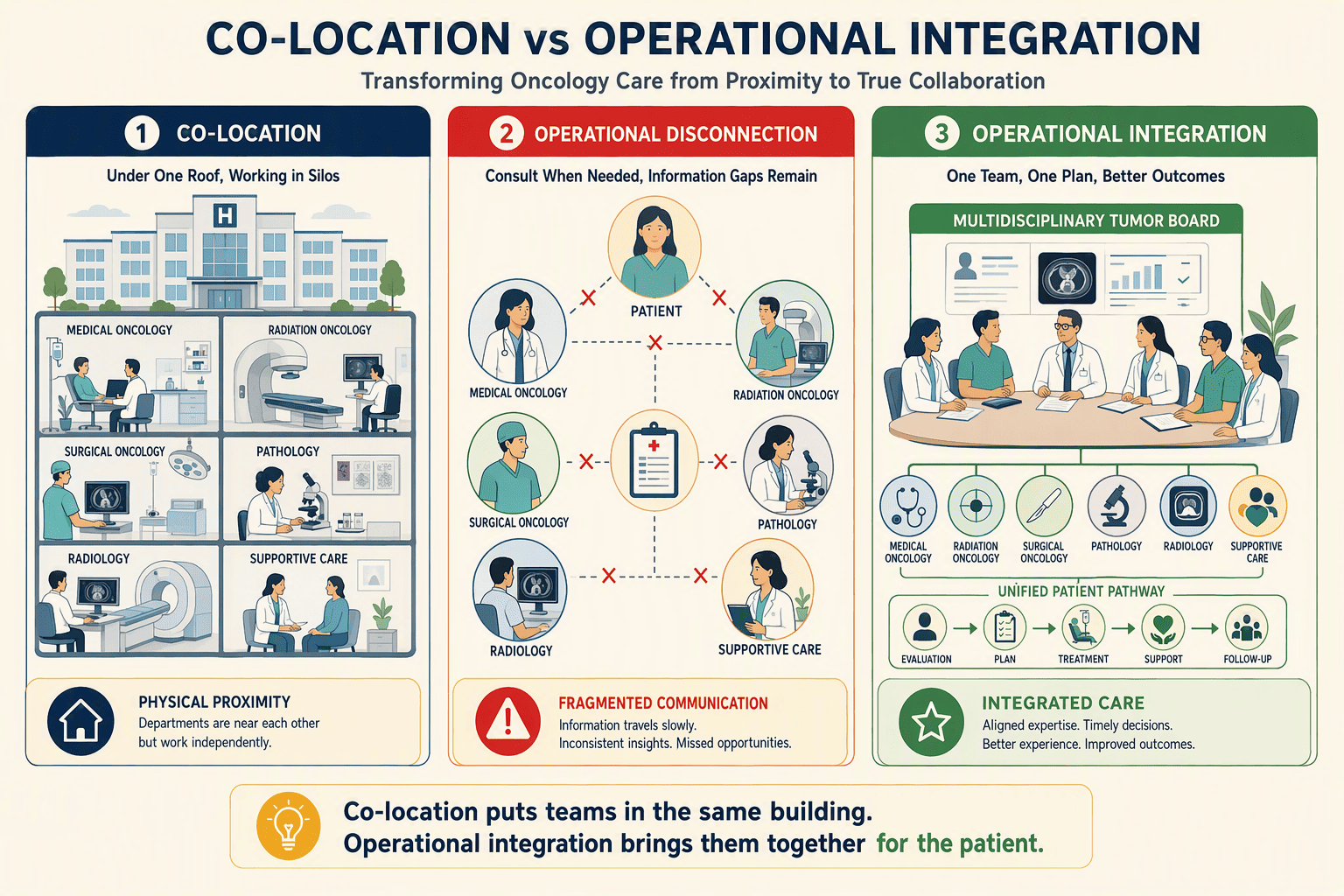
A hospital may employ both a surgical oncologist and a medical oncologist yet operate them in separate departments with minimal cross-consultation, readers must distinguish this *co-location* scenario from operational integration. Apollo Cancer Centers and Max Healthcare's oncology page list multiple oncology departments under one roof, but neither documents tumor board meeting frequency or integrated care protocols, this is what co-location looks like on paper.
What Operational Integration Looks Like: Shared Tumor Boards and Treatment Protocols
Operational integration means weekly or twice-weekly tumor boards where surgical, medical, and radiation oncologists review each case together; shared electronic health records; and coordinated appointment scheduling so patients see multiple specialists in one visit. Andromeda Cancer Hospital's twice-weekly tumor boards involve https://andromedahospital.in/doctors surgical oncologists, oncoplastic breast surgeons, medical oncologists, radiation oncologists, radiologists, pathologists, and pain and palliative care specialists, one verifiable example of this model.
Red Flags That Suggest Minimal Integration
Look for these warning signs: separate admission processes for surgical vs medical oncology, oncologists unaware of each other's treatment plans, no publicly posted tumor board schedule, and the hospital's inability to answer *'How often do your oncology departments meet to discuss cases?'*, these suggest co-location without integration.
Operational integration depends on diagnostic and surgical infrastructure. On-site technology eliminates delays that fragment care timelines.
How to Confirm Access to Advanced Diagnostic and Surgical Technology
Same-Roof Diagnostic Services: Pathology, Radiology, PET-CT
On-site pathology eliminates inter-facility transfer delays and sample mix-ups. Ask: 'Is frozen section biopsy available during surgery, or do you send specimens off-site?' Andromeda Cancer Hospital in Sonipat provides intraoperative frozen section facility, stereotactic breast biopsy, and whole-body PET-CT scans within the same building, reducing wait times.
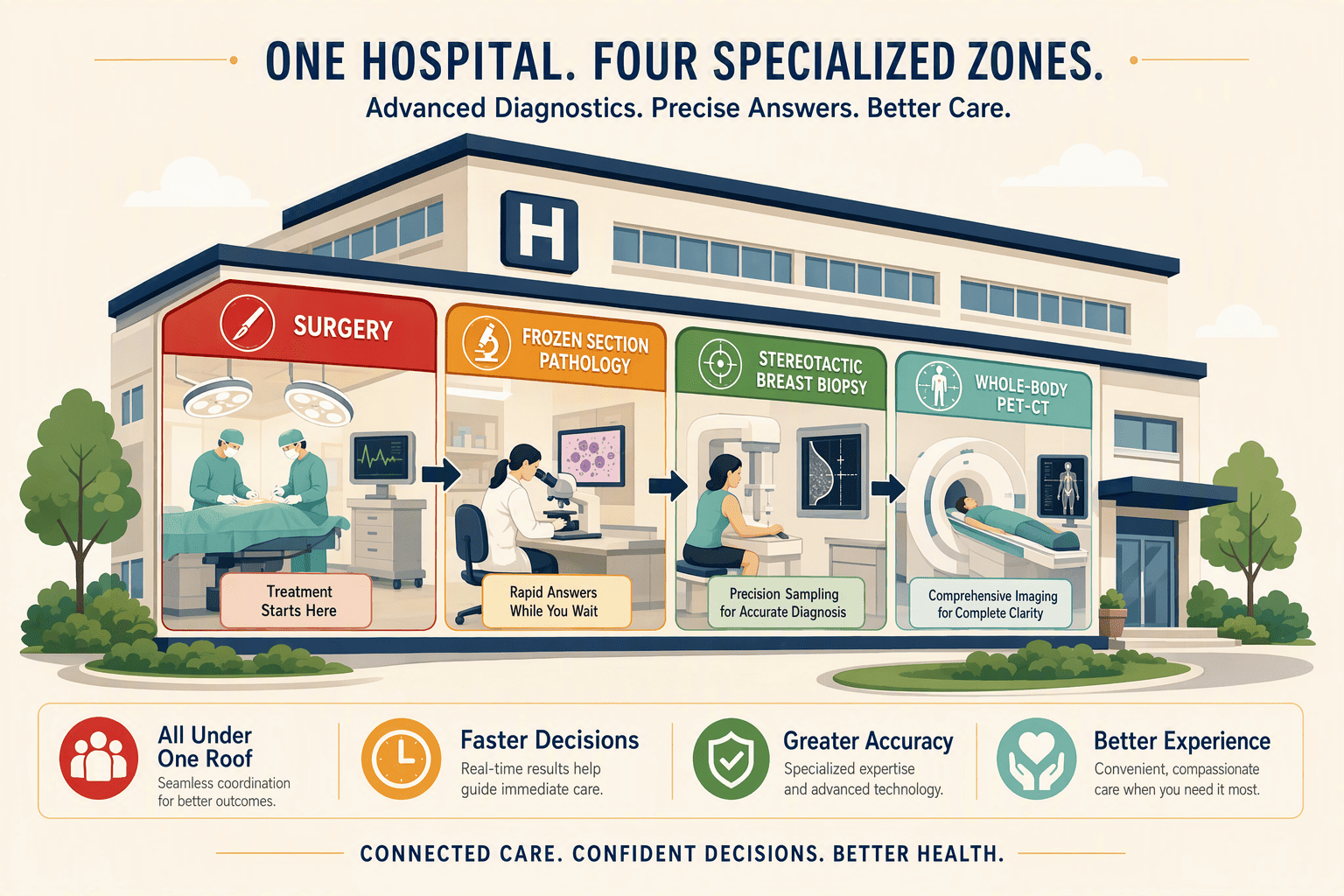
Surgical Technology: Surgery and Oncoplastic Techniques
Minimally invasive surgery and oncoplastic breast surgery https://andromedahospital.in/doctors/dr-vaishali-zamre combine cancer removal with reconstruction in one operation. Ask: 'Does your surgical oncology team perform oncoplastic breast conservation surgery?' Andromeda Cancer Hospital's breast oncology centre https://andromedahospital.in/treatments/breast-oncology lists oncoplastic breast conservation as a core service. Compare this with Fortis Cancer Institute Gurugram, which also lists surgical oncology, readers should apply the same verification questions across facilities.
Questions to Ask About Technology Access and Wait Times
Use these verification prompts: 'Is your PET-CT on-site or do you refer patients to an affiliated facility?' https://andromedahospital.in/treatments/nuclear-medicine-pet-ct 'What is the turnaround time for frozen section results?' 'How long is the current wait for a robotic surgery slot?' Specific operational answers, not marketing claims, confirm real access to advanced technology.
Armed with verification criteria, you can assess any cancer hospital systematically. Use these questions to confirm institutional depth during your first consultation.
Questions to Ask During Your First Consultation
Credential and Experience Verification Questions
- What is your subspecialty training, fellowship, board certification, in surgical oncology?
- How many procedures of my specific cancer type do you perform annually?
- How often do you participate in multidisciplinary tumor board meetings?
- Do you work with oncoplastic surgeons for breast cancer cases or reconstructive specialists for other sites?
Institutional Depth and Technology Questions
- How often does the hospital's tumor board meet, weekly, twice weekly, or on-demand?
- Can you provide a recent tumor board case summary showing surgeon, medical oncologist, and radiation oncologist input?
- Is pathology and PET-CT performed on-site, or are samples outsourced?
- What is the wait time for robotic or minimally invasive procedures?
- Does the hospital follow National Cancer Grid or international treatment guidelines?
At Andromeda Cancer Hospital in Sonipat, patients can request tumor board case summaries and verify the twice-weekly meeting schedule during initial consultations. Coordinated multidisciplinary teams improve long-term survivorship outcomes, reinforcing why readers should verify integration during initial consultations.
Red Flags to Watch for During the Consultation
- Surgeon unable to cite annual case volume for your specific cancer type.
- Hospital administrator cannot confirm tumor board meeting frequency or provide documentation.
- Vague answers like 'we have a multidisciplinary team' without naming participating specialists.
- Separate admission or billing processes for surgical oncology versus medical oncology, suggests siloed departments.
Making an Informed Choice
Large multi-specialty hospitals in Gurugram (Max, Artemis, Fortis) offer broader subspecialty coverage and brand recognition but may operate oncology departments as separate silos. Dedicated cancer hospitals with documented tumor board frequency ensure operational integration but may have fewer non-oncology services under one roof. Government tertiary centers provide low-cost cancer care but face capacity constraints and longer wait times, while private hospitals offer faster access and advanced technology at higher cost.
As India's National Cancer Grid expands clinical practice guidelines to more hospitals, patients will increasingly be able to verify NCG protocol adherence and documented tumor board participation as standardized markers of institutional oncology depth, moving beyond brand reputation toward measurable care coordination.
Apply the verification checklist during your first consultation at Andromeda Cancer Hospital or any Haryana cancer center, ask about tumor board frequency, surgeon case volume led by Dr. Arun Kumar Goel https://andromedahospital.in/doctors/dr-arun-kumar-goel and same-roof diagnostics to confirm operational integration rather than co-location.
Frequently Asked Questions
What is the difference between a general surgeon and a surgical oncologist?
Surgical oncologists complete 2-3 years of fellowship training beyond general surgery residency, specializing in cancer resection techniques, tumor biology, and multidisciplinary care coordination. Board certifications like DNB or MCh Surgical Oncology signal completion of this extended pathway, including rotations in reconstructive surgery and lymph node dissection.
How often should a tertiary cancer hospital hold multidisciplinary tumor board meetings?
High-volume tertiary centers typically hold tumor boards twice weekly to review complex cases and maintain treatment timeline discipline. Less frequent meetings can delay chemotherapy or surgery starts by a week or more. Andromeda Cancer Hospital in Haryana documents twice-weekly tumor board meetings as one benchmark for operational integration.
What should I ask to verify a hospital's tumor board is active, not just listed in marketing materials?
Ask three verification questions: 'How often does your tumor board meet?', 'Can you show me a recent tumor board case summary for a patient with my cancer type?', and 'Which specialists participate in the meetings?'. Marketing materials claiming 'multidisciplinary care' do not prove documented activity; request evidence during consultations.
What does 'same-roof integration' mean for cancer care?
Same-roof integration means surgical oncology, medical oncology, radiation oncology, pathology, radiology, and PET-CT services operate in one facility with shared tumor boards and coordinated treatment planning. This eliminates inter-facility transfers. Co-location places departments in the same building but operates them separately, without shared workflows or electronic health records.
How do I verify a surgical oncologist's case volume and subspecialty focus?
Ask directly: 'How many [specific cancer type] surgeries do you perform annually?' and 'Do you have subspecialty training in oncoplastic surgery or minimally invasive techniques?'. Hospital websites list credentials but rarely publish case volume; verification requires consultation questions that reveal institutional depth beyond credential listings.
What are red flags that a hospital's oncology departments are co-located but not operationally integrated?
Warning signs include separate admission processes for surgical versus medical oncology, oncologists unaware of each other's treatment plans, no publicly posted tumor board schedule, and inability to answer 'How often do your departments meet to discuss cases?'. Vague marketing language about 'multidisciplinary care' without documentation signals co-location rather than integration.
Which Haryana cancer hospitals have experienced surgical oncology teams?
Haryana options with surgical oncology departments and NABH accreditation include Andromeda Cancer Hospital, Max Super Speciality Hospital Gurugram, Artemis Hospital Gurugram, Fortis Memorial Research Institute Gurugram, and Paras Hospitals Gurugram. Apply the verification checklist, tumor board frequency, surgeon credentials, same-roof diagnostics, at any hospital rather than relying on lists alone.
Sources
- Surgery for Cancer - NCI - www.cancer.gov
- Surgical oncology outcomes: The role of nurse practice environments - ascopubs.org (2006)
- Financial Impact of Complex Cancer Surgery in India: A Study of Pancreatic Cancer - pmc.ncbi.nlm.nih.gov
- Surgical Oncologist in Gurgaon, Haryana | Max Hospital - www.maxhealthcare.in
- Best Surgical Oncologists in Gurgaon | Artemis Hospitals - www.artemishospitals.com
- Best Surgical Oncologists Near Me in Gurgaon - Practo - www.practo.com
- Transforming India's Approach to Cancer Care - orfonline.org
- NCG Cancer Guidelines | NCG Guidelines Manual - ncgindia.org (2026)
- Best Oncology Hospital in India | Apollo Cancer Centers - www.apollohospitals.com
- Best Cancer Hospital in Delhi NCR, India | Max Healthcare - www.maxhealthcare.in
- Top 10 Cancer Hospitals in Delhi: Government and Private - www.careinsurance.com
- Follow-up Care After Cancer Treatment | American Cancer Society - www.cancer.org