
Advanced cancer patients in India face a fragmented landscape when seeking affordable palliative care—institutional cancer hospitals with integrated pain-and-palliative departments versus charitable NGO-funded hospice networks, each requiring different documentation and suited to distinct clinical needs.
Key Takeaways
- Institutional cancer hospitals offer CGHS-empaneled palliative care at ₹1,500–₹8,000 per visit/day, requiring empanelment verification and covering interventional pain procedures.
- Charitable NGO hospice networks like CanSupport and Pallium India provide free or income-based subsidized home care, requiring BPL cards or annual income affidavits for eligibility.
- The WHO pain ladder guides cancer pain management through three progressive steps—non-opioids, weak opioids, strong opioids—with adjuvant therapies addressing specific pain mechanisms.
- Strong opioid availability varies by state due to NDPS Act licensing; urban tertiary centers maintain morphine and fentanyl stocks while smaller facilities may lack licensed prescribers.
- Inpatient hospice suits uncontrolled pain requiring rapid IV titration; outpatient pain clinics serve stable pain managed on oral medications with caregiver support at home.
Understanding Palliative Care for Advanced Cancer — Pain Management as a Core Right
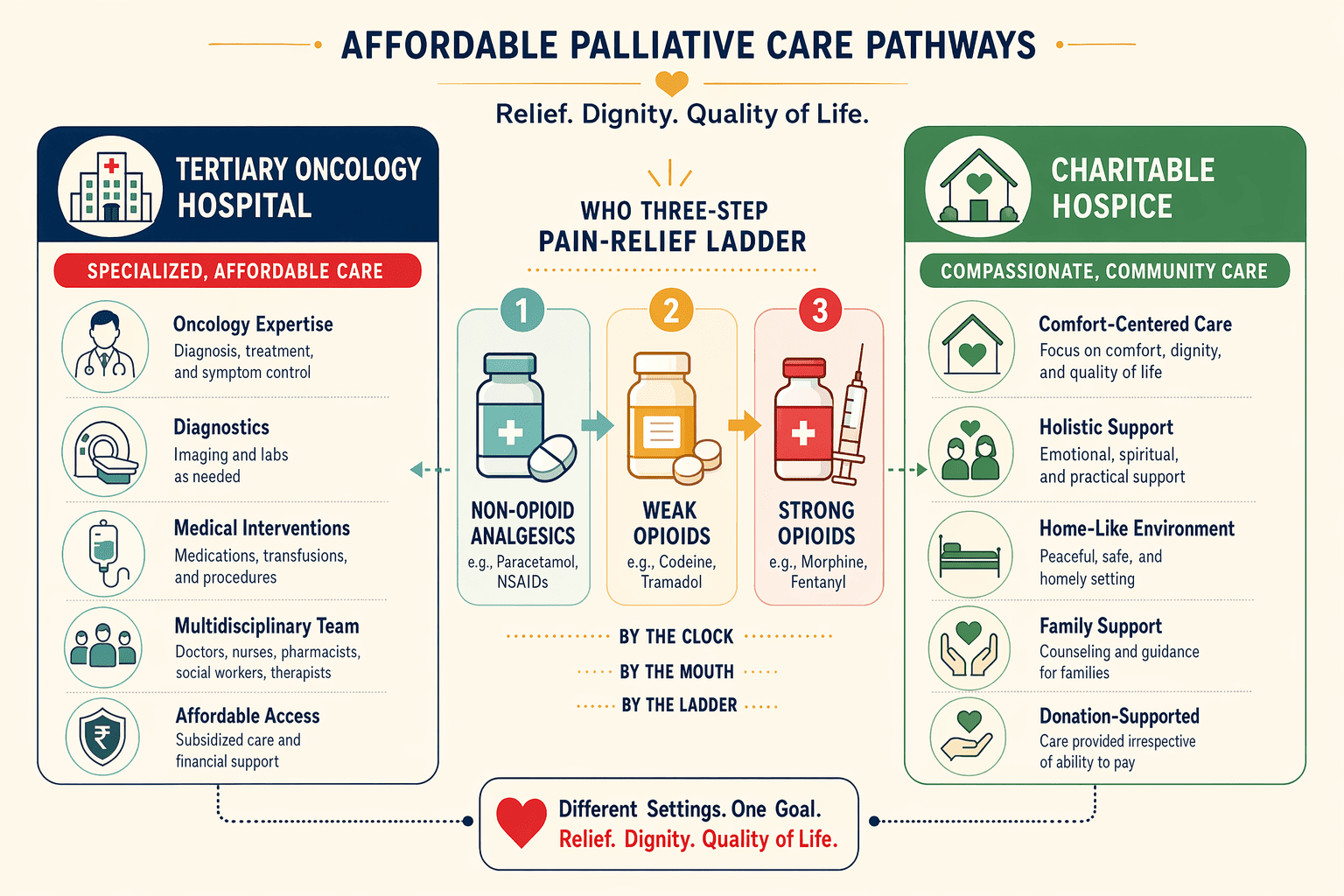
Affordable palliative care for advanced cancer patients follows two institutional pathways: tertiary oncology hospitals with dedicated pain-and-palliative departments (₹10,000, ₹30,000 per month depending on opioid regimen and interventional procedures) and charitable hospice organizations offering subsidized or no-cost symptom relief for families without financial means. Both frameworks center on the World Health Organization's three-step analgesic ladder, moving from non-opioid analgesics to weak opioids to strong opioids as pain intensity escalates, a protocol cited across NCI, Mayo Clinic, and Macmillan Cancer Support as the clinical backbone of pain management.
What Palliative Care Covers Beyond End-Of-Life Support
Palliative care addresses symptom control, psychosocial support, and quality-of-life preservation at any disease stage, not exclusively terminal care. Many advanced-cancer patients receive concurrent curative-intent oncology (chemotherapy, radiation, targeted therapies) alongside palliative symptom management; the two approaches complement rather than exclude one another. Hospice care, by contrast, typically applies when curative treatment has stopped and life expectancy falls below six months. Palliative consultation can begin at diagnosis when pain, nausea, or fatigue impair daily function, long before end-of-life discussions arise. Andromeda Cancer Hospital's Department of Pain and Palliative Care integrates symptom relief starting from diagnosis, running parallel to surgical, medical, and radiation oncology under the same roof.
Pain Management as the Clinical Backbone, WHO Three-Step Ladder
The WHO analgesic ladder structures pain escalation into three tiers: Step 1 uses non-opioid analgesics (paracetamol, NSAIDs) for mild pain; Step 2 adds weak opioids (codeine, tramadol) for moderate pain uncontrolled by Step 1; Step 3 introduces strong opioids (morphine, fentanyl, oxycodone) for severe or persistent pain. Each step may incorporate adjuvant medications, anticonvulsants for neuropathic pain, corticosteroids for bone pain, antidepressants for central pain syndromes, tailored to pain type and patient tolerance. Controlling pain is described as an important part of cancer treatment, not an optional add-on; unmanaged pain impairs mobility, disrupts sleep, worsens mood, and accelerates functional decline. The ladder approach is evidence-based and cited 30 to 50 times across NCI, Mayo Clinic, and Macmillan resources as the universal clinical standard.
India-Specific Opioid Access Constraints and State Variability
Strong opioid availability in India varies by state due to Narcotic Drugs and Psychotropic Substances (NDPS) Act licensing requirements, creating geographic disparities in pain relief quality. Urban tertiary centers in Delhi-NCR, Mumbai, and Bengaluru typically stock morphine, fentanyl patches, and oxycodone formulations; smaller district hospitals may carry only tramadol (Step 2) or require families to procure morphine from distant pharmacies with special prescriptions. This regulatory friction delays pain escalation when clinical need arises, particularly in rural areas where specialized palliative infrastructure is minimal. Families navigating advanced cancer at smaller centers should confirm opioid formulary access early, asking oncology teams whether Step 3 analgesics are stocked on-site or require external procurement. Andromeda Cancer Hospital offers specialized pain relief through nerve blocks, epidurals, and infusion techniques alongside pharmaceutical management, with on-site availability reducing procurement delays for patients in Haryana and Delhi-NCR.
While the WHO framework establishes a universal pain-management protocol, implementation pathways diverge sharply between institutional tertiary centers and community-based charitable networks.
Institutional Cancer Hospitals With Integrated Palliative Care Programs
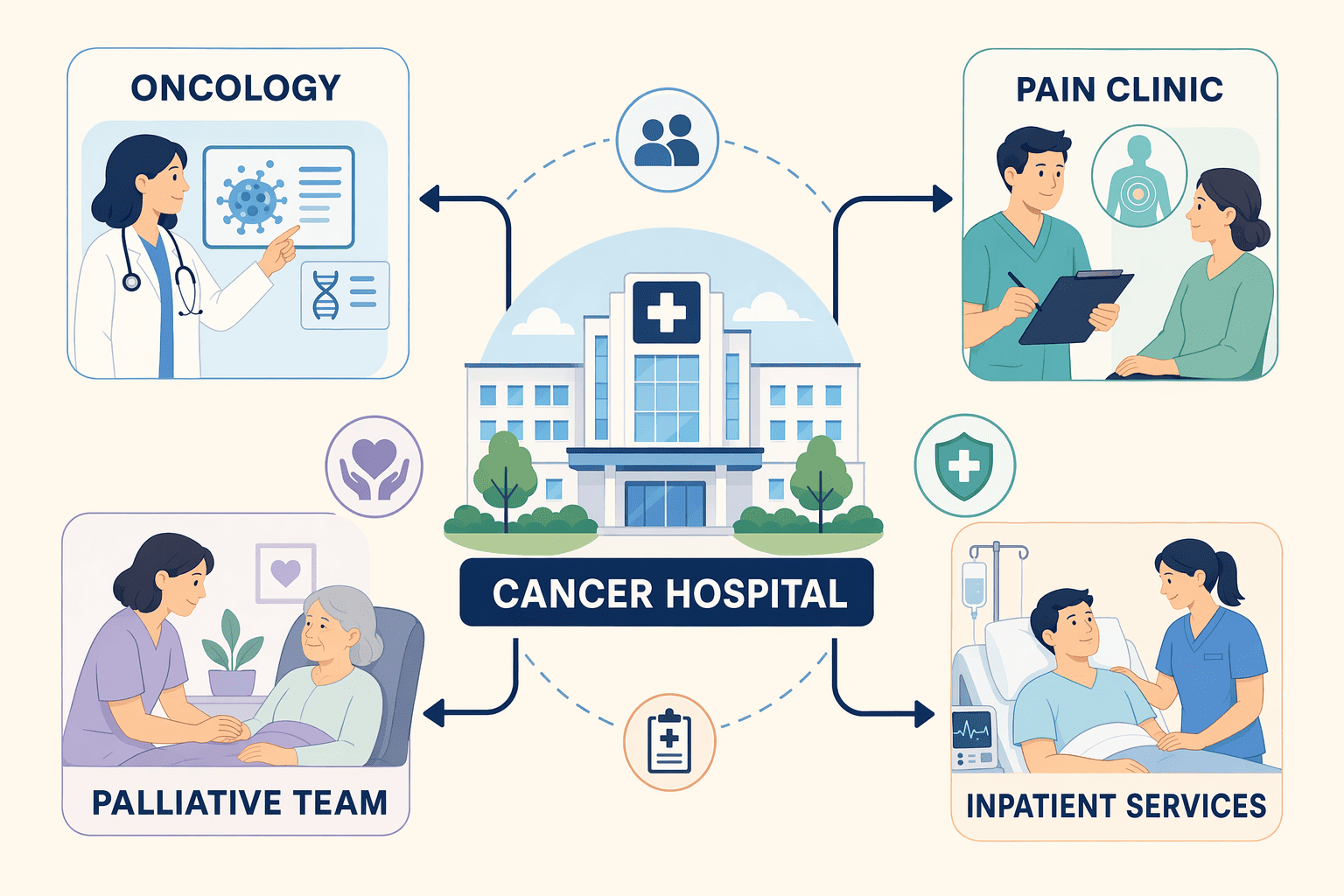
Tertiary cancer hospitals offering same-roof pain-and-palliative departments enable advanced-stage patients to access symptom management without navigating fragmented referrals. Institutions like Andromeda Cancer Hospital, Tata Memorial Hospital, Rajiv Gandhi Cancer Institute and Research Centre, Kidwai Memorial Institute of Oncology, MGM Cancer Institute, and VS Hospitals integrate palliative specialists directly into surgical, medical, and radiation oncology departments, allowing concurrent curative-intent and comfort-focused care from diagnosis forward.
Same-Roof Integration, Multidisciplinary Tumor Board Reviews
Institutional hospitals embed palliative care physicians in weekly tumor board reviews, ensuring that pain-management strategies run parallel to chemotherapy, surgery, or radiation planning. At Andromeda Cancer Hospital, the verified multidisciplinary team includes oncoplastic surgeons, medical oncologists, radiation oncologists, radiologists, pathologists, pain and palliative care specialists, clinical psychologists, and breast care nurses under one roof. This model mirrors Cleveland Clinic's description of pain teams bringing together anesthesiologists, oncologists, and palliative specialists to coordinate medication, procedures, and supportive interventions. For advanced-stage patients, tumor boards allocate time to discuss symptom burden, breathlessness, neuropathic pain, gastrointestinal distress, before finalizing next-line systemic therapy, preventing delayed palliative consultations that occur when departments operate in silos.
Cost Structure, Outpatient Pain Clinics Versus Inpatient Hospice
Institutional palliative care divides into outpatient pain clinics (nerve blocks, epidurals, oral analgesic titration) and inpatient hospice units for end-of-life care. Indicative cost ranges at tertiary centers approximate ₹1,500, ₹3,000 per outpatient visit and ₹3,000, ₹8,000 per inpatient day; actual charges vary by procedure complexity, medication formulary (generic morphine versus sustained-release opioids), and bed category (general ward versus private room). These figures exclude oncology treatment costs, chemotherapy, radiation, diagnostic imaging, which run concurrently and may be invoiced separately. Families should request itemized estimates covering consultation fees, intervention charges (regional anesthesia, infusion pumps), pharmacy costs, and nursing care days to avoid surprise billing when transitioning from curative to comfort-focused admissions.
CGHS Empanelment and Annual Verification Requirements
Central Government Health Scheme beneficiaries must verify that a hospital's current empanelment certificate explicitly lists oncology and palliative care services, general empanelment does not guarantee cancer-specific coverage. The free CGHS empanelled hospitals directory catalogs facilities by specialty, but annual renewal cycles mean outdated entries may persist; patients should cross-check the hospital's CGHS rate list on-site before admission. Shanthibhavan Palliative Hospital and regional cancer centers like Kidwai Memorial may carry oncology empanelment while smaller district hospitals do not. Confirm that both curative oncology departments (surgical, medical, radiation) and the pain-and-palliative unit appear in the empanelment documentation to avoid claim rejections when bills span tumor boards, systemic therapy, and symptom-management procedures during a single admission episode.
For patients unable to afford institutional care or requiring home-based services, NGO-funded palliative care networks offer an alternative access pathway tied to income verification.
Charitable and Ngo-Funded Palliative Care, Free or Subsidized Access
Income Certification and BPL Eligibility Criteria
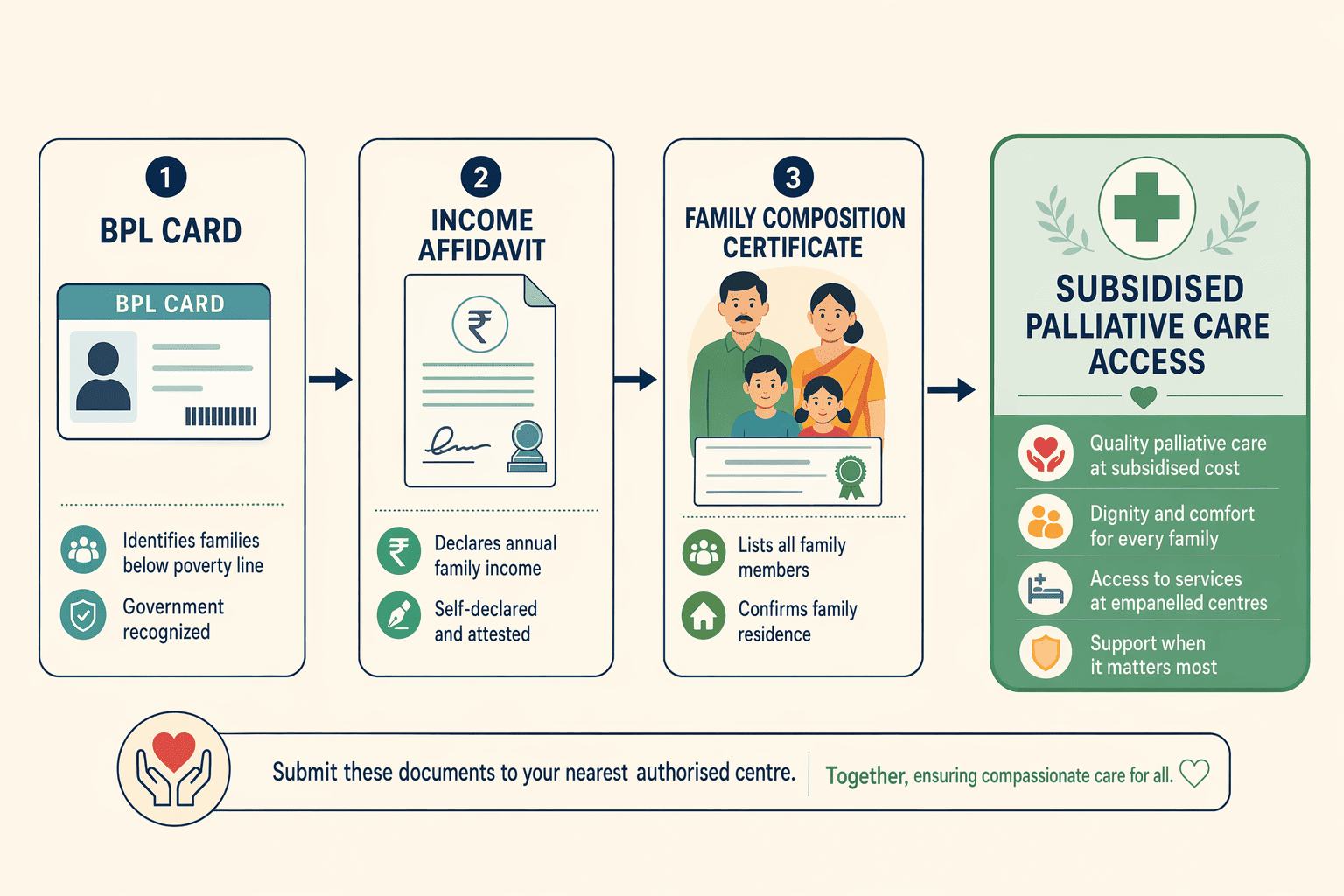
Accessing free or heavily subsidized palliative care at charitable institutions typically requires formal income verification. Patients must present a Below Poverty Line (BPL) card issued by their state government, an annual income affidavit signed by a gazetted officer, and a family composition certificate confirming household size and dependent count. Government operational guidelines for palliative care programs outline these documentation standards to ensure equitable allocation of donor-funded and public resources. Many NGO-run hospices and charitable hospitals request similar proof during intake, though some simplify the process by accepting self-declarations in urgent cases. Families should gather income documents, ration-card photocopies, and Aadhaar cards before the first consultation to avoid delays in care initiation.
NGO Hospice Networks, Cansupport, Pallium India, and Geographic Coverage
CanSupport operates free home-based palliative care across Delhi, delivering symptom management and psychosocial support through trained volunteers and nurses. Pallium India coordinates a nationwide network of community palliative care centers, offering free or low-cost home visits in Kerala, Karnataka, and select urban hubs. Both organizations rely on donor funding and transparent financial audits to sustain services. However, geographic coverage remains patchy: urban concentrations leave rural patients with limited access, forcing families to travel hours or forgo specialized care. Research modeling palliative care access from public healthcare centers confirms that capacity constraints and workforce shortages compound rural inequities.
Service Scope and Limitations, What Charitable Care Covers
NGO home-based palliative care excels at oral analgesics, wound care, counseling, and caregiver training, interventions deliverable at the bedside without advanced infrastructure. Services include pain assessment, prescription of morphine tablets where licensed, bereavement support, and coordination with district health authorities. Yet these programs rarely perform interventional pain procedures such as nerve blocks, intrathecal pump implantation, or epidural catheters, which require sterile operating rooms and anesthesia expertise. Patients needing such interventions must transition to institutional hospitals. Shanthibhavan Palliative Hospital and VS Hospitals bridge this gap, offering charitable inpatient beds and procedural capabilities for income-qualified families who have exhausted home-care options.
Understanding the clinical protocols that guide pain escalation helps patients navigate conversations with palliative care teams and anticipate treatment trajectories.
Pain Management Protocols in Palliative Care, WHO Ladder and Beyond
Pain is one of the most common symptoms in patients with cancer, often negatively impacting functional status and quality of life. The World Health Organization's three-step analgesic ladder provides a systematic framework for escalating pain relief based on severity and response.
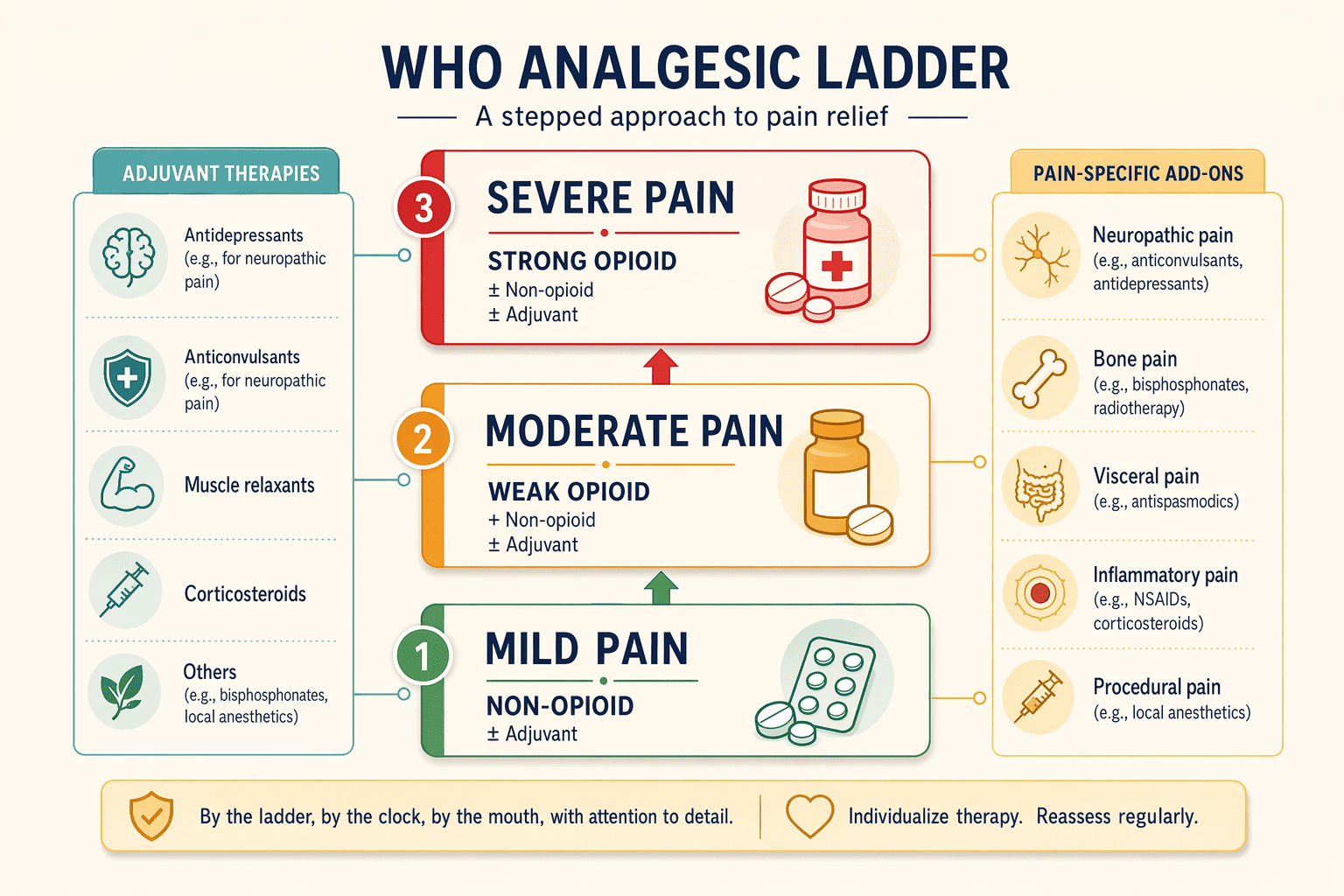
WHO Three-Step Ladder, Stepwise Pain Relief Escalation
The WHO ladder guides clinicians through three progressive steps:
- Step 1, Non-opioids: Paracetamol and NSAIDs for mild pain.
- Step 2, Weak opioids: Codeine or tramadol when non-opioids fail, often combined with adjuvants.
- Step 3, Strong opioids: Morphine, fentanyl, or oxycodone for moderate-to-severe pain uncontrolled by weaker agents.
Adjuvant therapies, anticonvulsants for neuropathic pain, corticosteroids for bone pain, are layered at every step to address specific pain mechanisms.
Interventional Pain Procedures, Nerve Blocks, Intrathecal Pumps, Availability and Cost
When systemic opioids fail to control pain, interventional procedures may be indicated. Nerve blocks, epidurals, and intrathecal pumps offer targeted relief for refractory cases. These procedures are typically available at institutional hospitals with dedicated anesthesiology departments; Andromeda Cancer Hospital's Department of Pain and Palliative Care provides nerve blocks, epidurals, and infusion techniques as part of its integrated anesthesia service. Charitable home-based care programs may not routinely offer interventional options. Indicative costs vary by complexity and facility; patients should confirm coverage under empanelled insurance schemes.
Opioid Prescription Requirements and NDPS Act Constraints in India
India's Narcotic Drugs and Psychotropic Substances (NDPS) Act regulates strong opioid prescriptions. Licensed prescribers, typically senior medical officers or palliative care specialists, must hold state-issued narcotic licenses. Smaller community health centers often lack morphine stock or licensed prescribers, requiring patients to escalate to district hospitals or tertiary cancer centers. Families should verify opioid availability and prescriber credentials when selecting a palliative care provider, particularly in rural settings where regulatory barriers limit access to key pain relief medications.
Affordability hinges on navigating India's layered reimbursement schemes and charitable access thresholds, each requiring specific documentation prepared before first contact.
How to Access Affordable Palliative Care, Empanelment, Referrals, and Income Certification
CGHS Empanelment Verification, Step-By-Step Workflow
Before admission, verify that palliative care services are covered under a hospital's CGHS empanelment. Hospitals empanelled for general care may not include oncology or pain management. Follow this workflow:
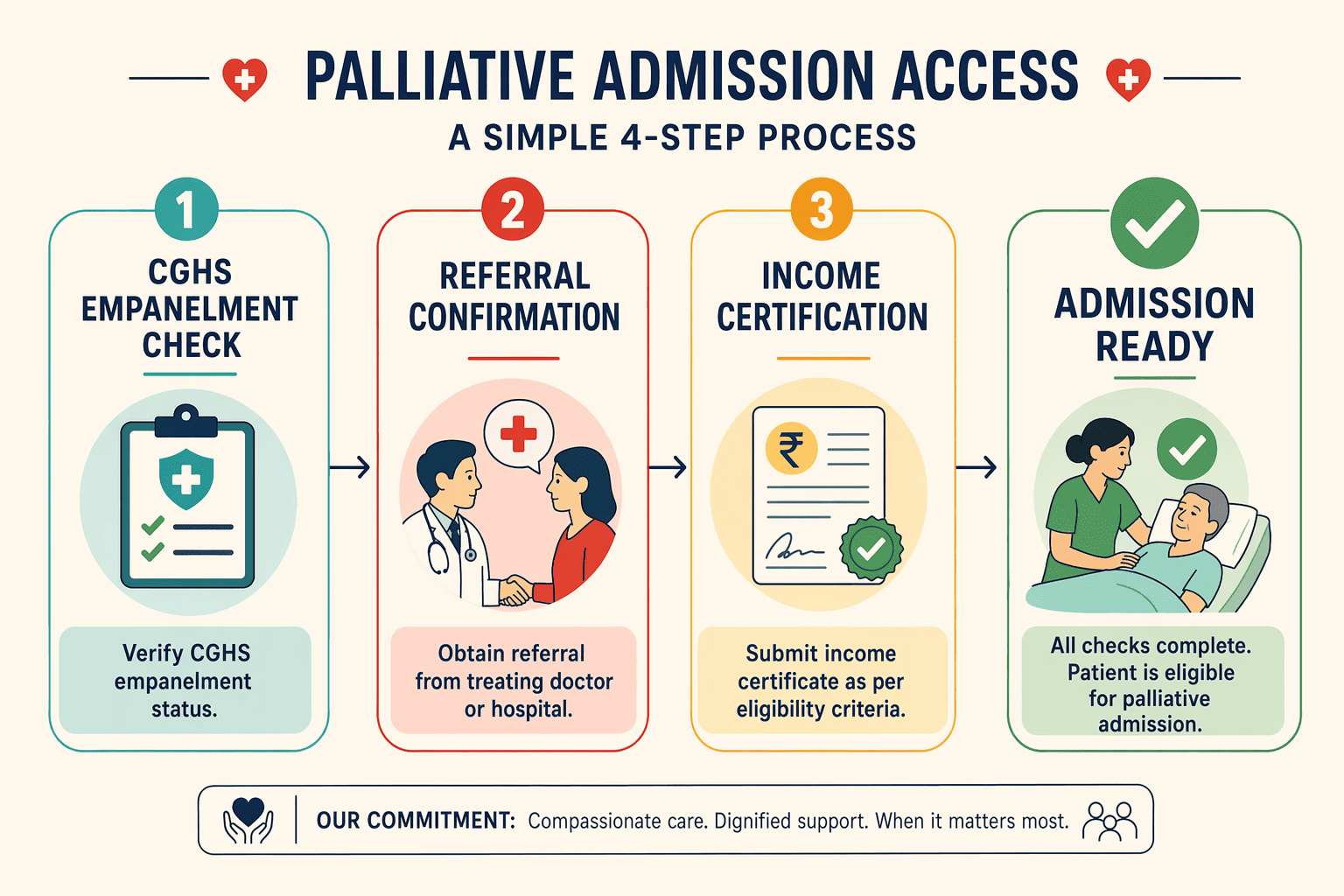
- Search the official CGHS empanelled hospitals list to confirm the hospital appears.
- Request a copy of the empanelment certificate and verify that palliative care or pain and palliative care services are explicitly listed.
- Check the certificate's validity date, empanelment requires annual renewal; expired certificates void cashless coverage.
Andromeda Cancer Hospital participates in CGHS empanelment frameworks and offers pain management starting from diagnosis. Call +91 9138111625 to confirm current empanelment status before scheduling.
Income Certification Submission, Documentation Checklist for Free or Subsidized Care
Government palliative care programs and charitable trusts require income verification to grant free or subsidized services. Assemble these documents before your first consultation:
- BPL card (if applicable) or annual income affidavit stamped by a notary.
- Family composition certificate from the local municipal office or panchayat.
- Oncology referral letter from the treating oncologist specifying advanced-stage disease and palliative care indication.
- Recent cancer diagnosis documents, pathology report, staging scan summaries, treatment history.
Submit the complete checklist at your first appointment. Missing documentation delays eligibility approval by 7 to 10 days.
24/7 Emergency Palliative Care Pathways, On-Call Services Versus Scheduled Appointments
Pain is one of the most common symptoms in cancer, and acute pain episodes require immediate intervention. Access pathways vary by hospital:
- 24/7 on-call palliative care, hospitals with dedicated pain management teams provide emergency nerve blocks, epidurals, and opioid adjustments outside regular hours. Patients call a direct palliative care hotline; triage determines home visit or emergency department routing. Read 24/7 pain relief support during cancer treatment for pathway details.
- Scheduled appointments only, hospitals without round-the-clock palliative teams route acute pain cases to the general emergency department, where on-call oncologists manage symptoms until the palliative care team resumes scheduled hours.
Confirm the hospital's emergency pathway at intake. Delays of 12 to 24 hours for acute pain relief reduce quality of life significantly in advanced-stage patients.
Choosing between inpatient hospice admission and outpatient pain clinic follow-up depends on pain control stability, caregiver availability, and acute symptom escalation patterns.
When to Choose Inpatient Hospice Versus Outpatient Pain Clinics
Clinical Indicators for Inpatient Hospice Admission
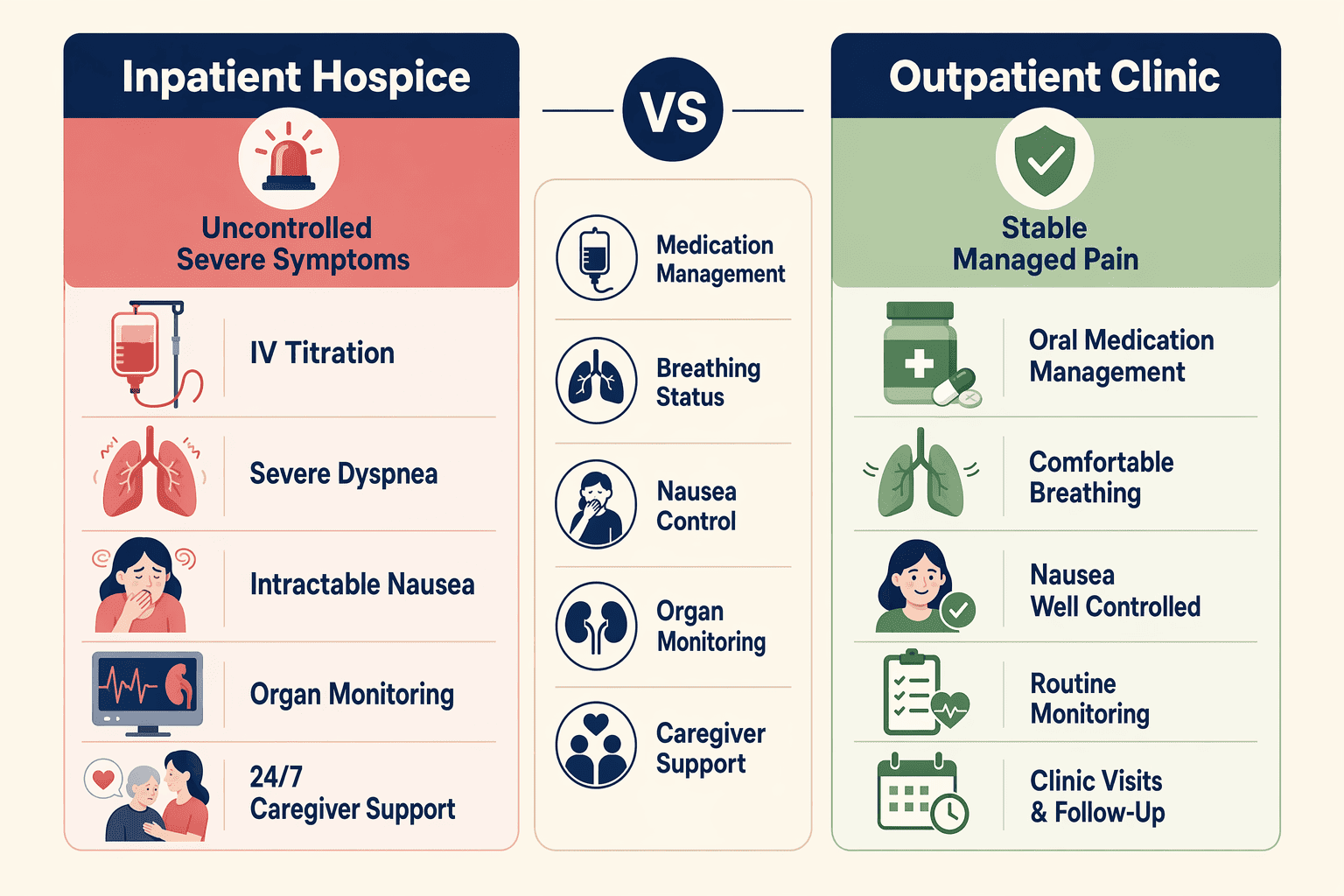
Inpatient hospice admission is indicated when pain becomes uncontrolled despite escalating oral or transdermal opioid regimens, requiring rapid intravenous titration to achieve relief. Severe dyspnea, intractable nausea unresponsive to outpatient antiemetics, and end-stage organ failure demanding continuous monitoring also necessitate inpatient care. Caregiver exhaustion, when family members can no longer safely administer medications, assist with transfers, or provide round-the-clock symptom observation, triggers admission for respite or transition to facility-based care.
When Outpatient Pain Clinics Are Sufficient
Outpatient pain management suits patients with stable pain controlled on oral medications, an available caregiver at home, and no acute symptom crisis. Many advanced cancer patients receive concurrent curative-intent treatment, chemotherapy, targeted therapy, while managing baseline pain through scheduled clinic visits. Andromeda Cancer Hospital's Department of Pain and Palliative Care offers such interventions from diagnosis onward, enabling patients to remain at home between oncology appointments and avoiding unnecessary hospitalization.
Transitioning Between Outpatient and Inpatient Care
When outpatient pain control fails, breakthrough pain episodes increase, caregiver becomes unavailable, or new symptoms emerge, request inpatient admission through your oncology team. Document symptom escalation (pain scores, frequency of rescue doses) to expedite referral. Andromeda Cancer Hospital's integrated model facilitates smooth transitions: outpatient pain clinic physicians coordinate directly with inpatient palliative care units, ensuring continuity of opioid regimens and intervention plans without delays.
Making an Informed Decision on Affordable Palliative Care
Institutional hospitals offer 24/7 on-call access and interventional pain procedures but require CGHS empanelment or out-of-pocket payment; charitable NGO hospice networks provide free or subsidized care but geographic coverage is patchy and interventional modalities may be unavailable. Inpatient hospice admission delivers rapid symptom control for uncontrolled pain but costs ₹3,000, ₹8,000 per day; outpatient pain clinics cost ₹1,500, ₹3,000 per visit and suit stable pain managed on oral medications with caregiver support at home. As India's palliative care infrastructure expands under the National Programme for Palliative Care, expect increased government funding for charitable hospice beds and streamlined CGHS empanelment processes, reducing geographic and financial access barriers for advanced-cancer patients seeking pain management. Verify your CGHS empanelment status this week or prepare income certification documents, then contact Andromeda Cancer Hospital's pain-and-palliative care team to assess the most affordable access pathway for your clinical needs.
Frequently Asked Questions
How much does palliative care cost at institutional cancer hospitals in India?
Outpatient pain clinic visits cost approximately ₹1,500, ₹3,000, while inpatient hospice care ranges ₹3,000, ₹8,000 per day at tertiary centers. CGHS empanelment reduces out-of-pocket costs for government beneficiaries; actual expenses vary by treatment modality, oral analgesics cost less than interventional nerve blocks or epidurals.
Who is eligible for free palliative care at charitable hospitals and NGOs?
Patients holding Below Poverty Line (BPL) cards issued by state governments typically qualify for free care. Subsidized access may be granted at income-based thresholds through annual income affidavits signed by gazetted officers and family composition certificates; specific thresholds vary by institution and state guidelines.
What is the WHO pain ladder and how does it guide cancer pain management?
The WHO ladder structures pain into three steps: Step 1 uses non-opioids (paracetamol, NSAIDs) for mild pain; Step 2 adds weak opioids (codeine, tramadol) for moderate pain; Step 3 introduces strong opioids (morphine, fentanyl) for severe pain. Adjuvant therapies, anticonvulsants for neuropathic pain, corticosteroids for bone pain, are layered at each step.
Can I access strong opioids like morphine at all palliative care centers in India?
Strong opioid availability varies by state due to NDPS Act licensing requirements for prescribers and pharmacies. Urban tertiary centers in Delhi-NCR, Mumbai, and Bengaluru typically stock morphine and fentanyl patches; smaller facilities may lack licensed prescribers, requiring escalation to tertiary cancer hospitals with dedicated pain-and-palliative departments.
How do I verify CGHS empanelment status before choosing a palliative care hospital?
Check the official CGHS empanelled hospitals list on data.gov.in or cghshospitals.com, confirm palliative care services are explicitly listed in the empanelment certificate, not just general oncology, and verify annual renewal status. Outdated entries persist because annual renewals lag directory updates; contact the hospital directly to confirm current status.
When should I choose inpatient hospice versus outpatient pain clinic for palliative care?
Choose inpatient hospice when pain becomes uncontrolled despite escalating oral opioid regimens, requiring rapid IV titration, or when severe dyspnea, intractable nausea, or caregiver exhaustion emerges. Outpatient pain clinics suit stable pain controlled on oral medications with available caregiver support and concurrent curative-intent treatment ongoing.
Do NGO palliative care services like CanSupport and Pallium India cover my city?
CanSupport operates free home-based palliative care across Delhi; Pallium India coordinates a network in Kerala, Karnataka, and select cities. Rural areas remain underserved. Contact CanSupport or Pallium India directly to confirm service availability in your location, as geographic coverage is patchy and volunteer capacity varies by region.
Sources
- Pain and Cancer Treatment - Side Effects - NCI - www.cancer.gov
- Cancer pain: Relief is possible - Mayo Clinic - www.mayoclinic.org (2024)
- Types of pain | Macmillan Cancer Support - www.macmillan.org.uk
- Indian Society for Study of Pain, Cancer Pain Special Interest Group Guidelines on Palliative Care Aspects in Cancer Pain Management - PMC - pmc.ncbi.nlm.nih.gov
- Cancer Pain: Management & Treatment - Cleveland Clinic - my.clevelandclinic.org (2025)
- Palliative Care | Cancer Care NGO Support in India - cansupport.org
- Access to palliative care in India: situational analysis and modeling of access from public healthcare centers - pmc.ncbi.nlm.nih.gov
- OPERATIONAL GUIDELINES - clpr.org.in (2017)
- Cancer Pain (PDQ®) - NCI - National Cancer Institute - www.cancer.gov
- Facts About Cancer Pain - American Cancer Society - www.cancer.org
- List of Hospitals empaneled under CGHS all over India | Open Government Data (OGD) Platform India - www.data.gov.in
- Cancer Pain - NCI - National Cancer Institute - www.cancer.gov
- What is cancer pain? | Coping physically - Cancer Research UK - www.cancerresearchuk.org
- Hospice care in India: A review - PMC - pmc.ncbi.nlm.nih.gov (2022)