

Cancer pain doesn't follow office hours. Breakthrough pain, opioid-resistant episodes, and sudden escalations can occur at any time, making round-the-clock access to pain management key for quality of life.
This guide explains how 24/7 cancer pain support works in practice—from emergency interventions to palliative care team coordination—and when to seek immediate help.
Key Takeaways
- 24/7 pain relief support includes emergency interventions for breakthrough pain, scheduled palliative consultations, and multidisciplinary team coordination
- Immediate intervention is warranted for sudden, severe pain that breaks through baseline medication control
- Pain management modalities escalate from oral analgesics to interventional procedures (nerve blocks, epidurals, infusion techniques) when first-line therapies fail
- Palliative care teams integrate with oncology planning and train family caregivers to recognize when hospital admission is necessary
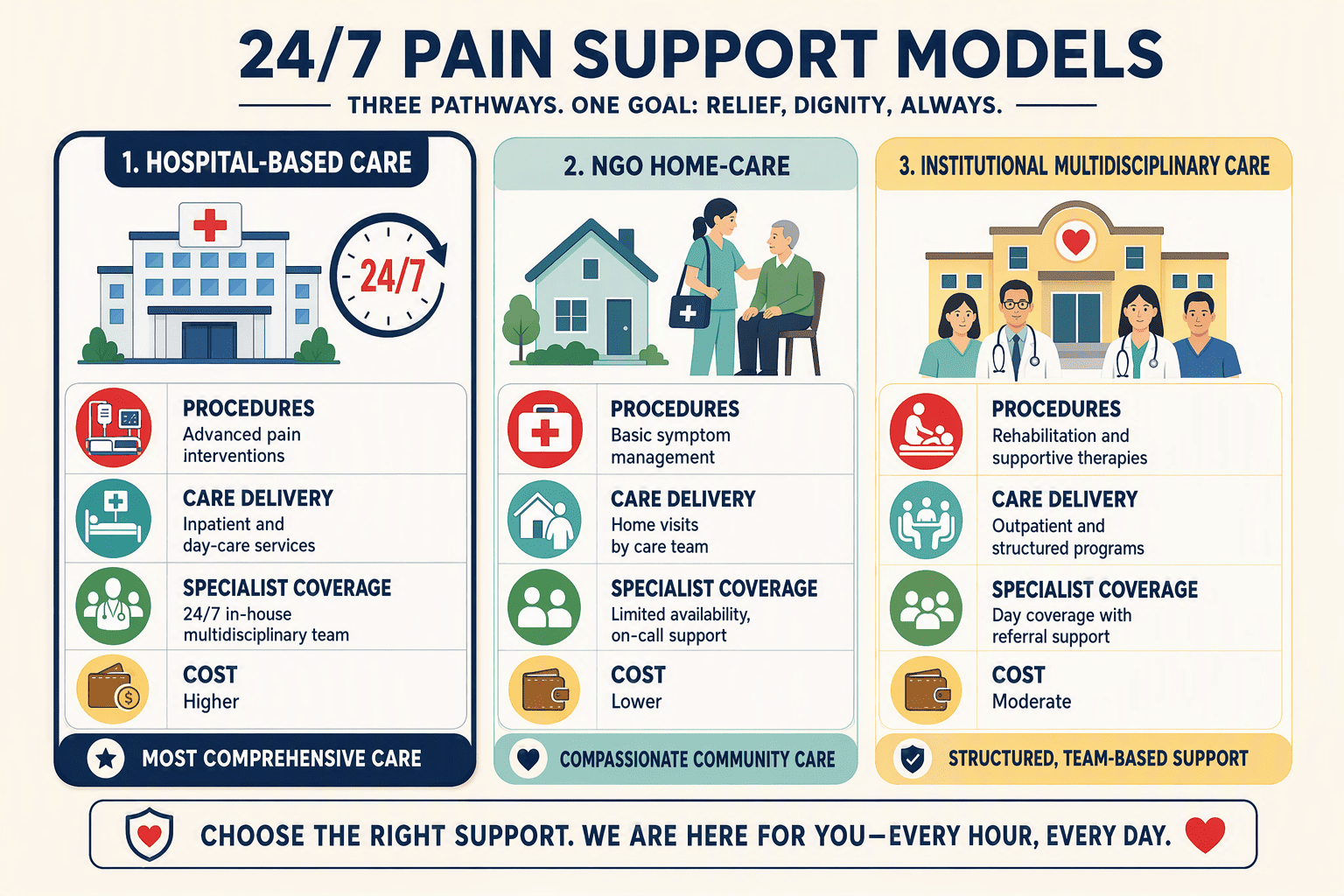
- Hospital-based models offer immediate access to anesthesiology for procedures; NGO home-care models provide 24/7 phone consultations with limited interventional capacity
What Does 24/7 Pain Relief Support Mean in Cancer Care?
24/7 pain relief support in cancer care encompasses three integrated components: emergency pain interventions when pain escalates suddenly (breakthrough pain, opioid-resistant pain), scheduled palliative care consultations for ongoing symptom control, and multidisciplinary coordination with oncology teams to adjust treatment plans. This round-the-clock framework ensures that cancer patients receive timely pain management at any stage of their journey, not only during end-of-life care.
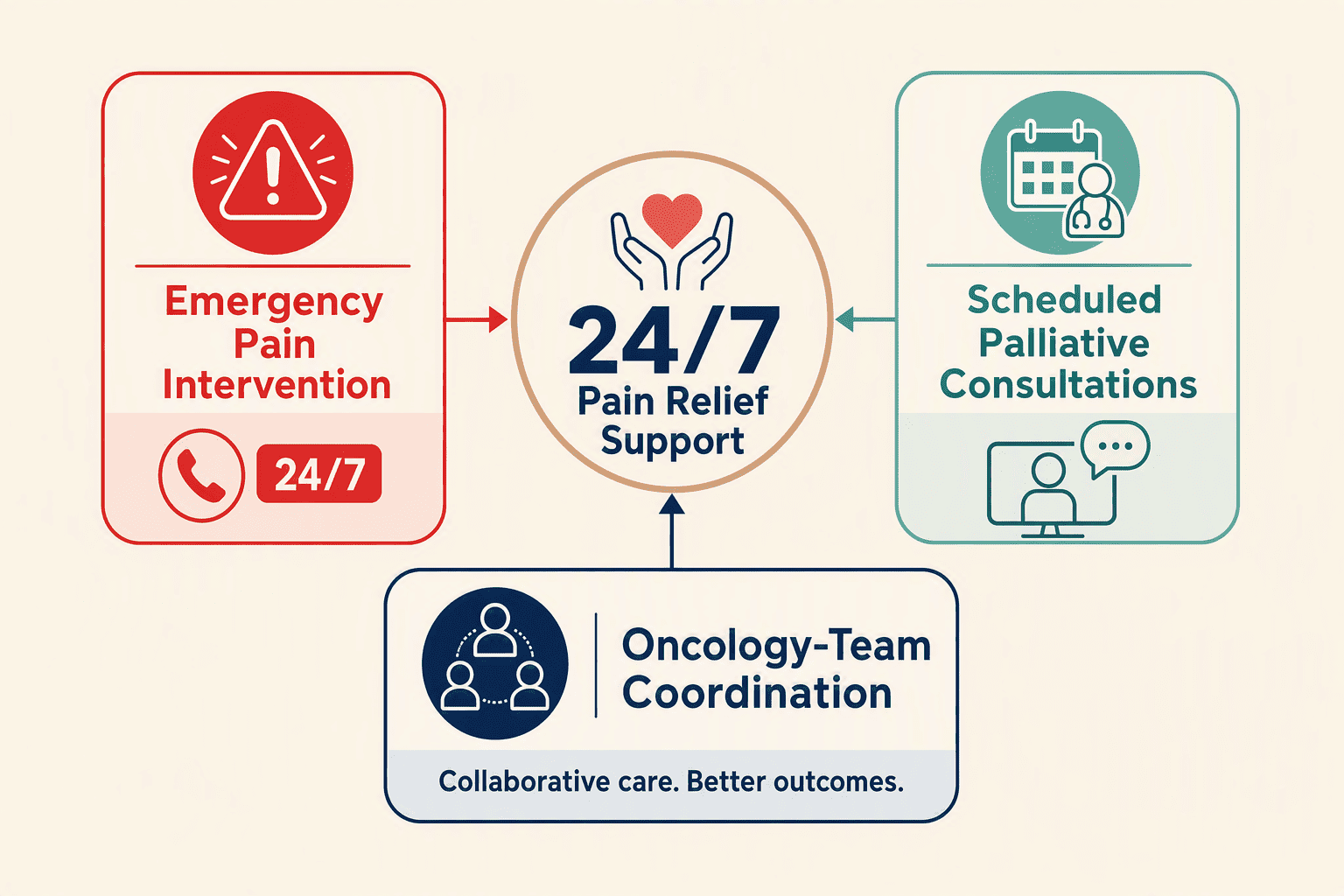
Emergency Pain Interventions Vs. Scheduled Palliative Consultations
Cancer pain may be acute, chronic, or breakthrough. Acute pain often arises during procedures or immediately after surgery and requires rapid intervention. Chronic pain persists over months and is managed through scheduled palliative care consultations that adjust medication regimens and integrate non-drug approaches. Breakthrough pain—sudden flare-ups despite ongoing medication—demands emergency protocols, including nerve blocks, epidurals, and infusion techniques.
Who Delivers 24/7 Pain Support: Palliative Care Teams, Anesthesiologists, and On-Call Systems
Round-the-clock pain relief is delivered by a multidisciplinary team. Palliative care physicians and specialized nurses develop individualized pain control plans. Anesthesiologists perform interventional procedures such as nerve blocks and epidurals for complex pain. On-call systems triage pain crises by phone, determining whether the patient needs emergency medication adjustment, an in-person consultation, or referral to an oncology team for treatment modification. This layered approach ensures that pain management evolves with the patient's clinical trajectory.
Pain Management Starting From Diagnosis, Not Just End-Of-Life
A common misconception holds that 24/7 pain support is reserved for terminal patients. In reality, palliative care starts from diagnosis, focusing on managing symptoms and improving quality of life for advanced and incurable cases. Early integration of pain management improves mood, sleep, and energy, making active cancer treatment more tolerable. Andromeda Cancer Hospital's Department of Pain and Palliative Care offers pain management and palliative interventions starting from diagnosis, illustrating this thorough 24/7 support model.
Knowing when pain requires emergency attention versus scheduled consultation determines whether you call for immediate help or wait for the next clinic appointment.
When to Seek Immediate Pain Support Vs. Scheduled Palliative Care
What Qualifies as a Pain Crisis: Breakthrough Pain, Opioid-Resistant Pain, Acute Escalation
Breakthrough pain, sudden, severe pain that occurs despite around-the-clock medication, is the clearest signal that immediate intervention is needed. This type of pain "breaks through" the baseline control established by scheduled analgesics and typically reflects disease progression, new metastases, or undertreated neuropathic components. Opioid-resistant pain, where current regimens fail to provide relief even after dose escalation, also qualifies as a crisis. Acute escalation from structural changes, such as pathologic fracture or spinal cord compression, demands urgent assessment. Cancer, cancer treatment, or diagnostic procedures may cause pain, and any sudden spike that renders a patient unable to function or triggers distress warrants immediate contact with the palliative care team or emergency services.
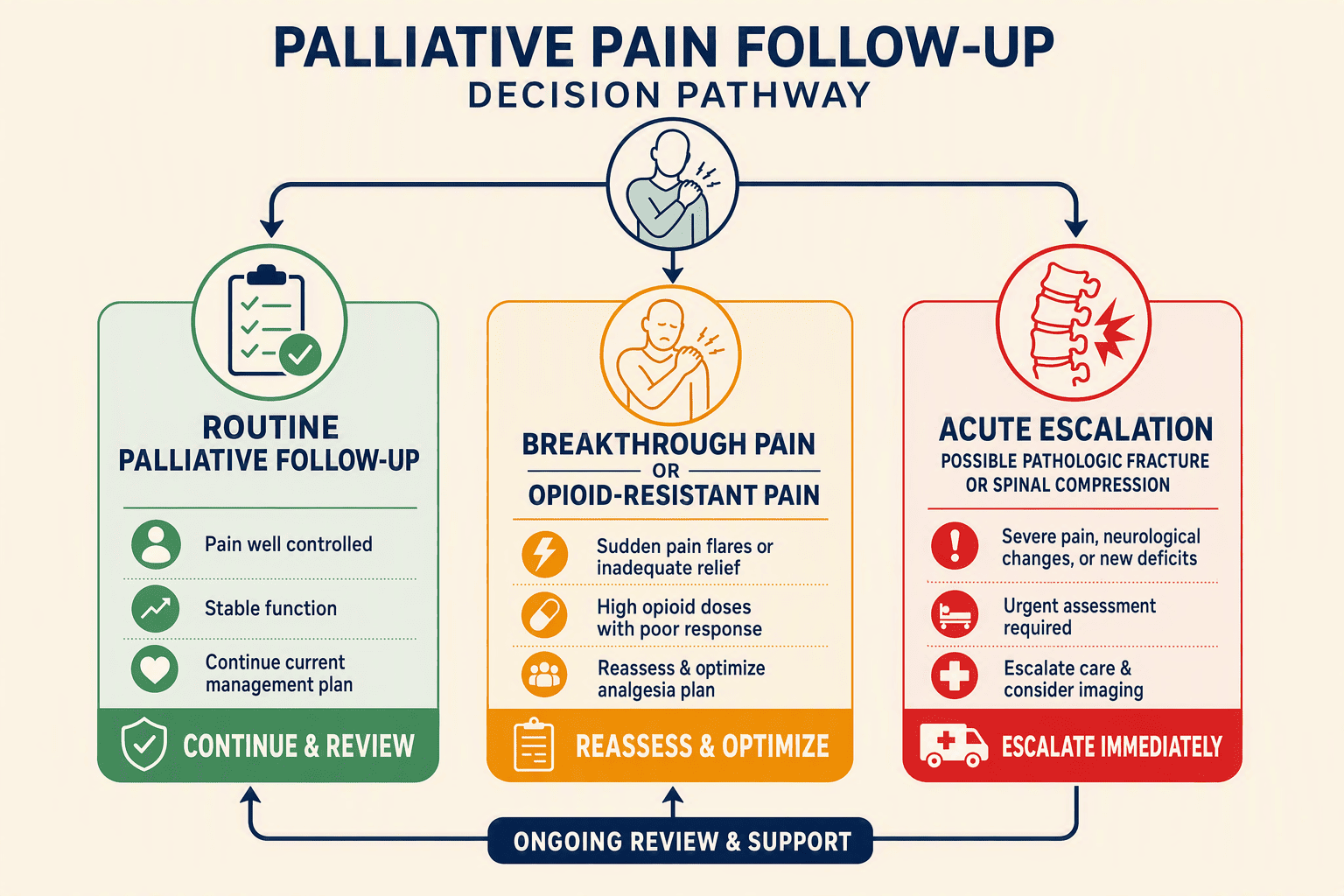
Clinical Triage at 2 AM: Who Answers the Call and What Questions Are Asked
When a cancer patient calls for pain support after hours, an on-call nurse typically fields the initial triage. The nurse documents pain intensity using a numeric rating scale (0 to 10), asks about onset (sudden versus gradual), reviews current medications and adherence, and assesses associated symptoms such as fever, confusion, or motor deficits. If the pain score is ≥7, onset is abrupt, or red-flag symptoms are present, the nurse pages the on-call palliative care physician or anesthesiologist for real-time consultation. Non-crisis cases, those with moderate, stable pain or medication side effects, receive guidance over the phone and are scheduled for next-morning clinic review. This structured triage ensures that true emergencies receive immediate intervention while preserving clinic capacity for ongoing management.
When Scheduled Palliative Consultations Are Sufficient
Gradually worsening chronic pain, constipation from opioid therapy, adjustment of scheduled dosing, and psychosocial distress all fall within the scope of scheduled consultations. These issues require thoughtful evaluation, reviewing pain diaries, titrating long-acting analgesics, coordinating bowel regimens, or integrating counseling, but do not demand middle-of-the-night intervention. Scheduled visits also allow time for thorough symptom assessment using tools like the Edmonton Symptom Assessment System, which captures pain alongside fatigue, nausea, and mood. Patients are encouraged to bring symptom logs and medication lists to these appointments, enabling the team to refine the care plan iteratively rather than reactively.
This article does not replace medical advice. If you experience sudden, severe pain that is uncontrolled by your current medication, contact your palliative care team or visit the emergency room immediately.
Once you understand the urgency criteria, the next question becomes what pain relief options are available when you do reach out for help.
Pain Management Modalities Available in Cancer Hospitals
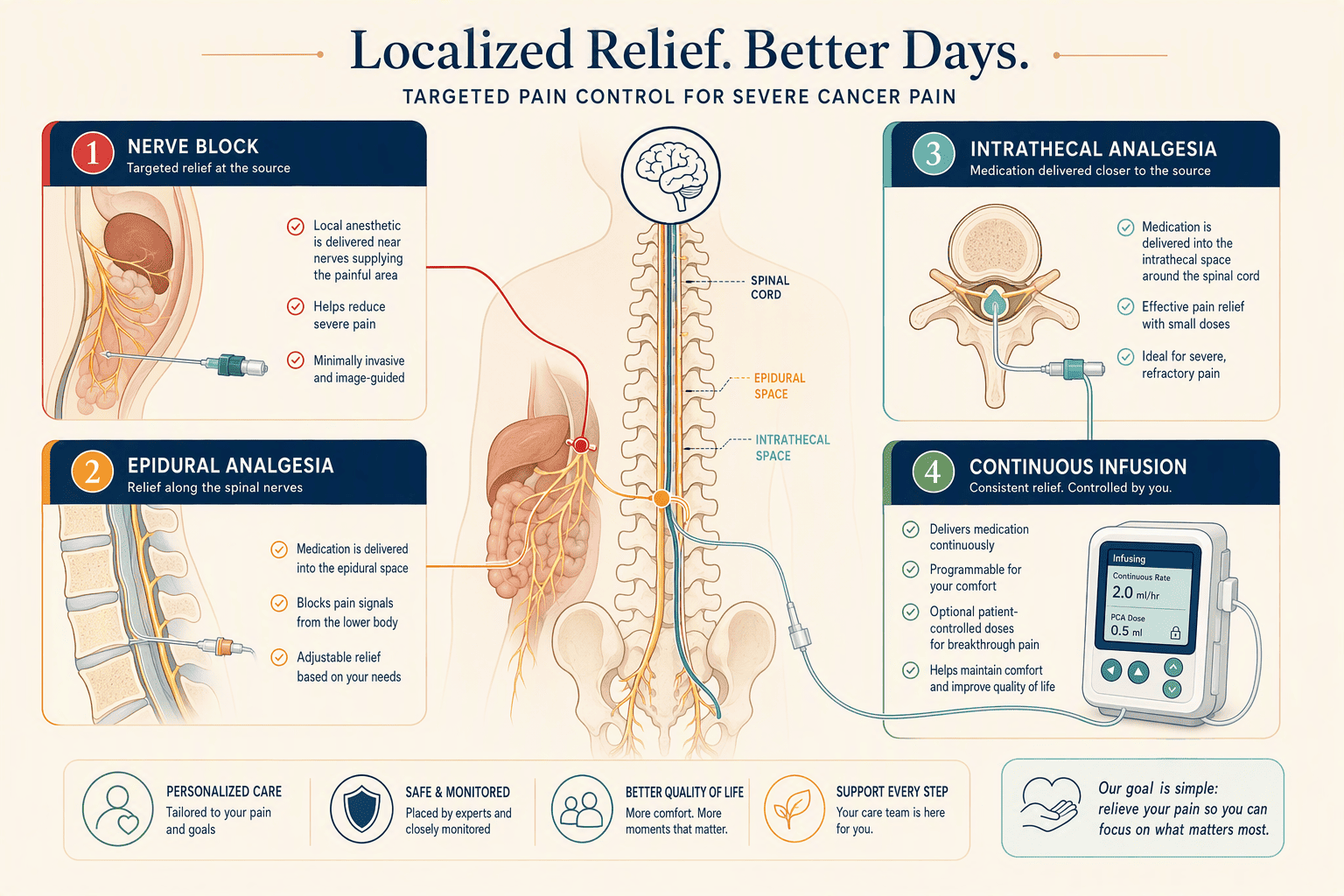
Nerve Blocks, Epidurals, and Infusion Techniques for Acute Pain Relief
When oral medications reach their limit, interventional procedures become the front-line response in 24/7 pain management. Andromeda Cancer Hospital's anesthesiology team https://www.andromedahospital.in/doctors/dr-divya delivers specialized pain relief through nerve blocks, peripheral, epidural, and intrathecal, along with infusion techniques using continuous opioid or local anesthetic infusion via pump. These interventions target localized severe pain that systemic drugs cannot adequately control, such as bone metastases compressing nerve roots or visceral pain from abdominal tumors. Regional anesthesia techniques, including spinal, epidural, and nerve blocks, allow clinicians to deliver high-potency analgesia directly to pain pathways while minimizing systemic side effects. Major institutional centers like Tata Memorial Hospital and AIIMS Delhi offer embedded palliative care departments with research-backed protocols, providing 24/7 crisis support for patients whose pain escalates beyond oral management. For families navigating Schedule X licensing barriers to morphine access in India, these centers maintain immediate prescription pathways alongside multidisciplinary teams.
Opioid Titration and the WHO Analgesic Ladder
The World Health Organization's analgesic ladder structures pharmacological escalation: Step 1 begins with non-opioid analgesics like acetaminophen and NSAIDs; Step 2 introduces weak opioids such as tramadol; Step 3 deploys strong opioids including morphine and fentanyl. Round-the-clock support at thorough cancer hospitals includes titrating doses up the ladder when pain intensity increases or breakthrough pain episodes multiply. Andromeda's approach extends to age-specific techniques for pediatric and geriatric cancer patients, addressing the breadth of 24/7 support across patient populations who metabolize opioids differently. India's regulatory framework classifies morphine under Schedule X, requiring specialized licenses that create regional disparities in opioid access; institutional centers navigate these barriers through coordinated prescription pathways.
When to Escalate From Oral Opioids to Interventional Procedures
Escalation decisions hinge on three patient scenarios: (a) bone metastases causing localized severe pain unresponsive to oral morphine → peripheral nerve block to interrupt the pain signal at the anatomical source; (b) abdominal cancer with visceral pain inadequately controlled by oral morphine → celiac plexus block to target autonomic nerve pathways; (c) neuropathic pain from tumor compression of nerve structures → epidural infusion delivering sustained analgesia directly to the spinal cord. Shanthibhavan Palliative Hospital, India's first no-bill palliative facility, operates a 49-bed inpatient unit with 24/7 medical supervision, advanced pain management protocols, and a fully-equipped ICU with ventilator support, demonstrating how institutional models and NGO-based care both provide round-the-clock nursing care to ensure no patient waits through the night for pain relief.
| Center | 24/7 Emergency Support | Palliative Care Availability | Pain Medicine Specialist | Teleconsultation |
|---|---|---|---|---|
| Andromeda Cancer Hospital | Anesthesia team on-call; nerve blocks, epidurals, infusion available | Embedded palliative care with interventional procedures | Yes – anesthesiologists trained in regional techniques | Available (link internal systems) |
| Tata Memorial Hospital | Embedded palliative care departments with research-backed protocols | 24/7 crisis support | Multidisciplinary teams including pain medicine specialists | Multi-state telemedicine access |
| AIIMS Delhi | Embedded palliative care departments with research-backed protocols | 24/7 crisis support | Multidisciplinary teams including pain medicine specialists | Multi-state telemedicine access |
| Shanthibhavan (NGO model) | 49-bed no-bill facility; 24/7 medical supervision | Advanced pain management protocols; ICU with ventilator support | Round-the-clock nursing care | Not specified |
Effective delivery of these pain management modalities requires smooth coordination among specialists, 24-hour availability, and clear protocols for escalation.
How Palliative Care Teams Coordinate Round-The-Clock Support
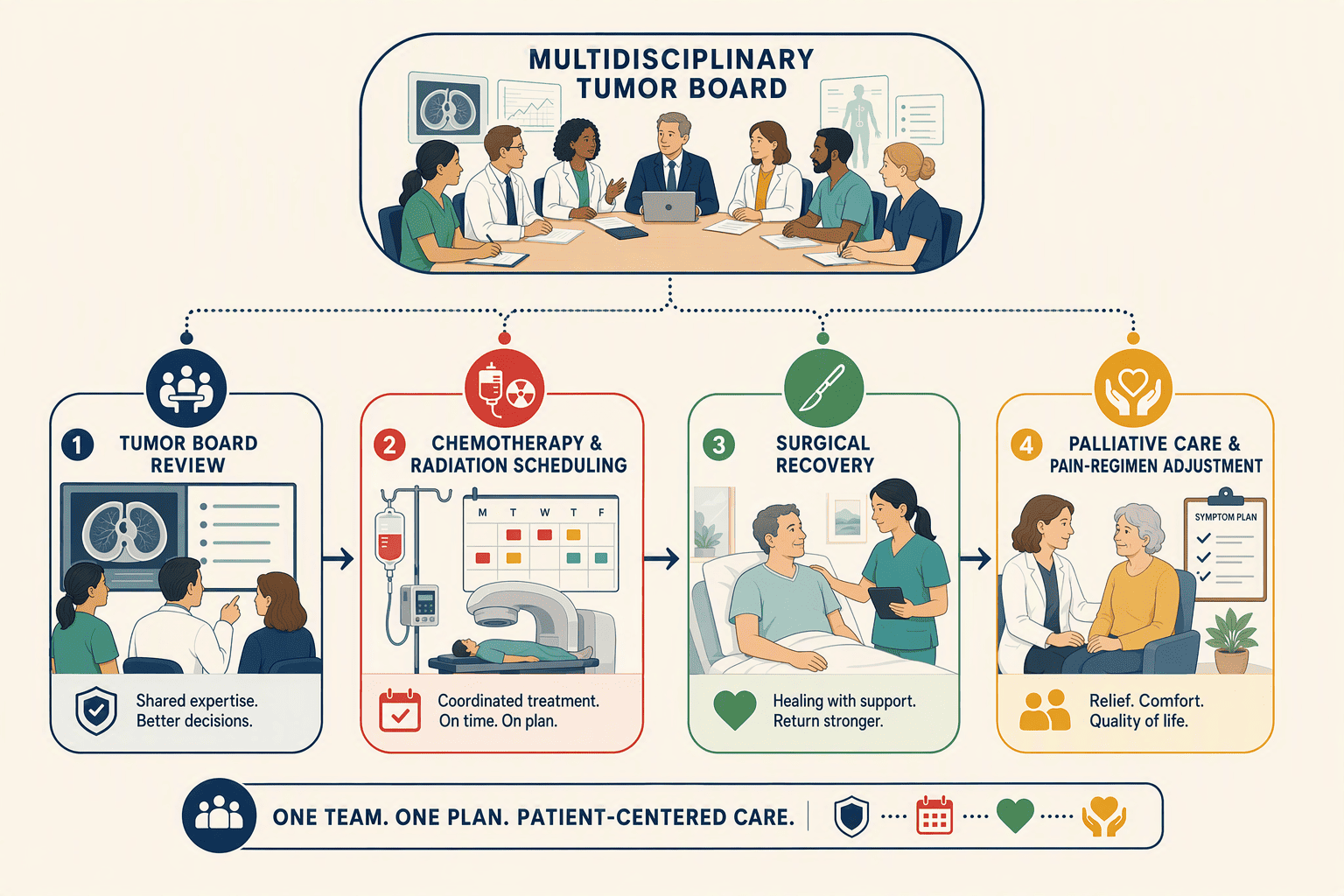
Multidisciplinary Review: Palliative Care Teams and Oncology Treatment Plans
Palliative care teams in thorough cancer hospitals integrate into oncology planning through tumor board reviews, palliative care specialists examine chemotherapy schedules, radiation timelines, and surgical recovery phases before adjusting pain regimens. At Andromeda Cancer Hospital, the tumor board convenes twice weekly and includes pain and palliative care specialists alongside surgical, medical, and radiation oncologists. This coordination ensures that opioid prescribing accounts for potential pain triggers such as bone metastases or post-surgical inflammation, rather than operating independently of the oncology plan.
Home-Based Vs. Hospital-Based Palliative Support
Institutional hospital-based models provide 24/7 in-patient pain management with on-call anesthesiology for interventional procedures (nerve blocks, epidurals). NGO home-care models, exemplified by Pallium India and Shanthibhavan, offer 24/7 phone consultations, home visits by trained volunteers, and oral medication management, but typically lack immediate access to interventional procedures. Shanthibhavan operates a 49-bed no-bill palliative hospital with ICU-level ventilator support and 24/7 clinical supervision. CGHS-empanelled hospitals cover scheduled palliative care consultations; however, coverage for after-hours emergency pain consultations varies by hospital policy, patients should verify coverage before treatment begins.
The Role of Family Caregivers in 24/7 Pain Management at Home
Family caregivers receive training on oral opioid administration, recognizing breakthrough pain, and using rescue medications (e.g., sublingual fentanyl). Emergency medications kept at home typically include fast-acting opioids for breakthrough pain. Caregivers are instructed to call for hospital admission when pain remains uncontrolled despite rescue medication or when the patient shows signs of opioid toxicity (confusion, respiratory depression). NGO home-care programs often train caregivers through hands-on demonstrations during scheduled home visits.
Choosing Your 24/7 Pain Support Model
Hospital-based 24/7 support offers immediate access to interventional procedures like nerve blocks and epidurals but may require in-patient admission. NGO home-care models provide 24/7 phone consultations and home visits but have limited access to anesthesiology services. Institutional models like Andromeda Cancer Hospital, Tata Memorial, and Apollo offer thorough multidisciplinary coordination (oncology + palliative care + anesthesiology) but may have higher out-of-pocket costs for private patients; CGHS-empanelled hospitals cover scheduled palliative consultations but after-hours coverage varies.
As India's palliative care landscape expands, with more hospitals establishing dedicated pain and palliative care departments, NGO models scaling home-care services, and government insurance schemes improving coverage, patients will have more options for 24/7 pain relief support integrated into their cancer treatment journey.
Contact Andromeda Cancer Hospital's Pain and Palliative Care department to discuss 24/7 pain management options during your cancer treatment. Their team can help you understand what interventions are available and how to access emergency support when breakthrough pain occurs.
Frequently Asked Questions
What happens when I call for pain support at 2 AM during cancer treatment?
An on-call nurse answers, assesses your pain intensity using a 0-10 scale, documents current medications, and reviews symptom onset. For crisis cases (uncontrolled breakthrough pain), the nurse pages the on-call palliative care physician or anesthesiologist. Non-crisis cases receive guidance and next-morning consultation scheduling.
How quickly will a palliative care doctor respond to my emergency pain call?
Thorough cancer hospitals with dedicated pain and palliative care departments typically have on-call physicians who respond within 15-30 minutes for crisis cases. Non-crisis cases are scheduled for next-morning consultation. Apollo's 24×7 toll-free helpline (1800-203-1066) provides immediate phone triage.
Are emergency pain consultations covered by CGHS or private insurance?
CGHS-empanelled hospitals cover scheduled palliative care consultations, but coverage for after-hours emergency consultations varies by hospital policy. Private hospitals may charge separately for after-hours palliative visits. Verify coverage with your hospital's billing department before treatment begins.
Can I get morphine at home, or do I need to go to the hospital for opioid pain relief?
Morphine is a Schedule X controlled substance in India, requiring special licensing for hospitals and pharmacies. Some cancer hospitals provide take-home oral morphine for breakthrough pain with caregiver training, but not all have 24/7 pharmacy access. Patients may need emergency room visits for opioid titration.
What is breakthrough pain, and when should I call for help?
Breakthrough pain is sudden, severe pain that 'breaks through' around-the-clock medication. It qualifies as a pain crisis requiring immediate intervention. Call your palliative care team or visit the emergency room when pain escalates suddenly and remains uncontrolled by current medication.
How do family caregivers know when to take me to the hospital versus managing pain at home?
Caregivers trained to recognize breakthrough pain should call for hospital admission when (a) pain is uncontrolled despite rescue medication, (b) the patient shows signs of opioid toxicity (confusion, respiratory depression), or (c) vomiting or swallowing difficulty prevents oral medication.
What pain management services does Andromeda Cancer Hospital offer 24/7?
Andromeda's Department of Pain and Palliative Care offers pain management and palliative interventions from diagnosis onward, including nerve blocks, epidurals, and infusion techniques. Anesthesiologists use age-specific techniques for pediatric and geriatric patients. Contact the hospital directly for 24/7 service availability.
Sources
- Pain and Cancer Treatment - Side Effects - NCI - www.cancer.gov
- Cancer pain: Relief is possible | Mayo Clinic - www.mayoclinic.org (2024)
- Cancer Pain - NCI - www.cancer.gov
- 5 Best Specialized Cancer Pain Management Centers in India - www.picancercare.com
- Shanthibhavan Palliative Hospital - India's First No-Bill Palliative Hospital - shanthibhavan.in
- List of Hospitals empanelled under CGHS all over India - www.data.gov.in
- Shanthibhavan Palliative Hospital | First Palliative Hospital in India | Pallium India - palliativeindia.in (2016)