
Introduction
A small white patch. A persistent sore. A slight difficulty in chewing.
These subtle changes are easy to dismiss, but when they are early signs of oral cancer, time becomes the single most critical factor. In India, the path from noticing a symptom to sitting in an oncologist's chair is often stretched thin by long waiting lists, specialist shortages, and fragmented diagnostics. Each week of delay can allow oral squamous cell carcinoma to progress, potentially shifting the disease from an early, highly treatable stage to one that demands more extensive surgery and reduces long-term survival.
The problem is not a gap in clinical knowledge; it is system design. Most cancer pathways are sequential: scan waits for biopsy, biopsy waits for report, report waits for surgeon, surgeon waits for a slot. Every handoff adds a queue.
Andromeda Cancer Hospital in Delhi NCR runs a model built on parallel processing instead. Imaging, pathology, surgical assessment, and prehabilitation move forward simultaneously under a single multidisciplinary team. The result is a compressed diagnosis-to-treatment timeline that eliminates the weeks-to-months delays common in fragmented care. This article maps out how rapid-access oncology works and what you can do right now to secure a treatment start date measured in days, not months.
Key Takeaways
- Speed in oral cancer treatment is a product of operational design, not luck. Here are the concrete mechanisms that collapse the waiting period.
- When a biopsy, pathology review, and a PET-CT scan all happen at separate facilities scattered across a city, staging can swallow two to four weeks before a single treatment decision gets made. That gap is not a medical requirement; it is a logistics problem. A same-roof setup co-locates the biopsy suite, histopathology lab, and advanced imaging under one roof, stripping out courier runs, inter-lab queuing, and the scheduling ping-pong patients usually endure. That is why teams that control the diagnostic chain in-house can move from first suspicious lesion to a complete TNM staging workup within 48 to 72 hours, rather than the 20-plus days a fragmented model routinely burns (National Health Service, England, Quarterly Cancer Waiting Times Statistics, 2025-26).
- Even a rapid workup stalls if the specialists never sit down together. A standing multidisciplinary tumor board, convened twice weekly without exception, eliminates the old ritual of sequential outpatient referrals. The surgeon, medical oncologist, radiation oncologist, head-and-neck radiologist, and oral pathologist review the same images and slides in one session, debating margins, nodal involvement, and organ-preservation tactics in parallel. Instead of a patient shuttling between departments for two or three weeks collecting opinions, the board outputs a consensus treatment plan in a single afternoon, translating a new diagnosis into an actionable roadmap almost immediately.
- Financial clearance is the bottleneck nobody budgets for, and it blindsides families after the clinical plan is already locked. Pre-verifying insurance eligibility, CGHS empanelment through the Empanelled Hospitals and Labs portal, and any required pre-authorization before a patient even walks in for staging means the payment layer never stalls the treatment layer. Patients arrive knowing their coverage is confirmed; the hospital triggers therapy without pausing for a desk audit or a cash-deposit scramble.
- The front door itself is another friction point. In-person specialist slots can carry a multi-week waiting list, particularly at high-volume public or trust hospitals in Delhi NCR. A structured tele-oncology triage consult circumvents that queue entirely. A head-and-neck surgeon reviews the uploaded clinical photographs, CT scout films, or outside biopsy report within hours, determines urgency, and books the staging workup directly, cutting the time from first contact to oncologist review from weeks down to the same calendar day.
- Neoadjuvant chemotherapy or definitive chemoradiation should launch within days of a multidisciplinary decision, not weeks later once each department carves out its own initiation slot. Because medical, surgical, and radiation oncology sit on the same tumor board and operate from shared treatment protocols, the handoff from plan to first infusion or first fraction of radiation is a single scheduling step, not a chain of internal referrals. That integration is what compresses the interval between diagnosis and systemic therapy to a timeline that actually matches the biology of an aggressive oral squamous cell carcinoma.
Why Oral Cancer Wait Times Exist and Why Speed Saves Lives
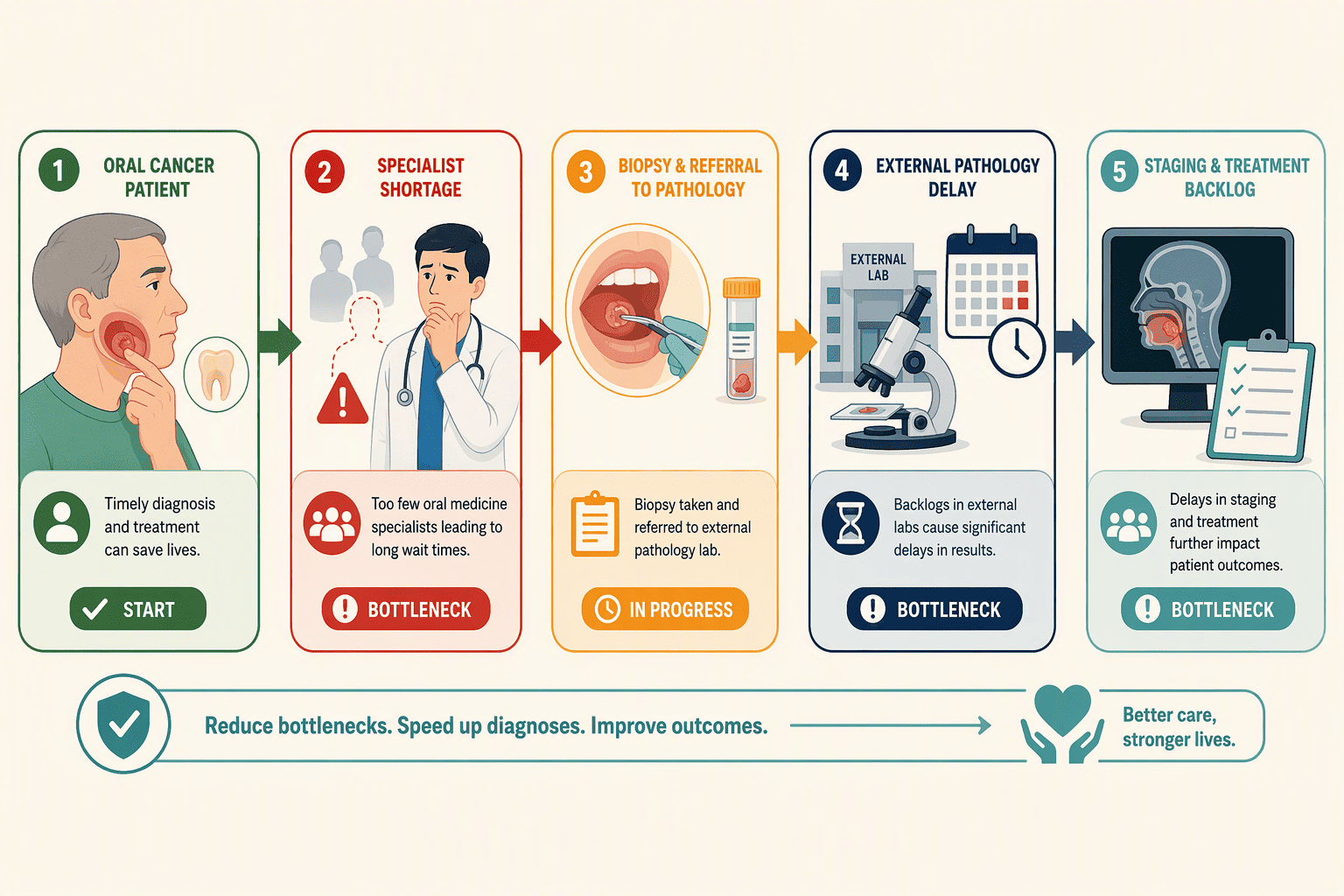
Long waiting lists are not caused by a single bottleneck. Three structural failures feed the queue. India faces a significant shortage of specialist oncologists, which means the few available surgical, medical, and radiation oncologists are disproportionately concentrated in a handful of metropolitan centers.
When a patient finally reaches one, they often enter a sequential referral pathway: a surgeon orders a biopsy, then waits for a report from an external lab, then refers to a radiologist for a PET-CT at another facility, then schedules a tumor board that meets once a month. Each handoff adds a week or more. This fragmentation is the root cause of delays that can stretch from two to three months.
Oral squamous cell carcinoma does not wait. Its median growth rate is fast enough that a delay of four to six weeks can allow clinically meaningful stage progression. When a tumor shifts from T1 to T2, or nodal involvement develops during the waiting period, the surgical morbidity increases sharply and five-year survival probability drops. A system that takes months to plan treatment is, biologically speaking, letting the cancer set the timeline.
What a True Multidisciplinary Approach Looks Like in Delhi NCR
A true multidisciplinary approach is a single-room, same-hour decision. At Andromeda Cancer Hospital, a standing tumor board meets twice weekly. Surgical oncology, medical oncology, radiation oncology, and maxillofacial prosthodontics sit at the same table. Full imaging, pathology slides, and immunohistochemistry reports are already compiled for each case before the discussion begins.
This is different from the referral-based sequencing that dominates Indian cancer care. In a typical pathway, a surgeon examines you, then sends you to a radiologist, then waits for a report, then contacts a medical oncologist, and eventually arranges an ad-hoc discussion. Each step measures weeks.
A standing tumor board collapses this into a single event. The surgeon hears the medical oncologist's neoadjuvant recommendation immediately. The radiation oncologist weighs in on margin planning before the first incision is scheduled.
This simultaneous care model is the operational definition of 'no waiting list' in oncology. It is what you should demand when selecting a head and neck cancer team.
How Same-Roof Diagnostics and Digital PET-CT Eliminate Staging Delays
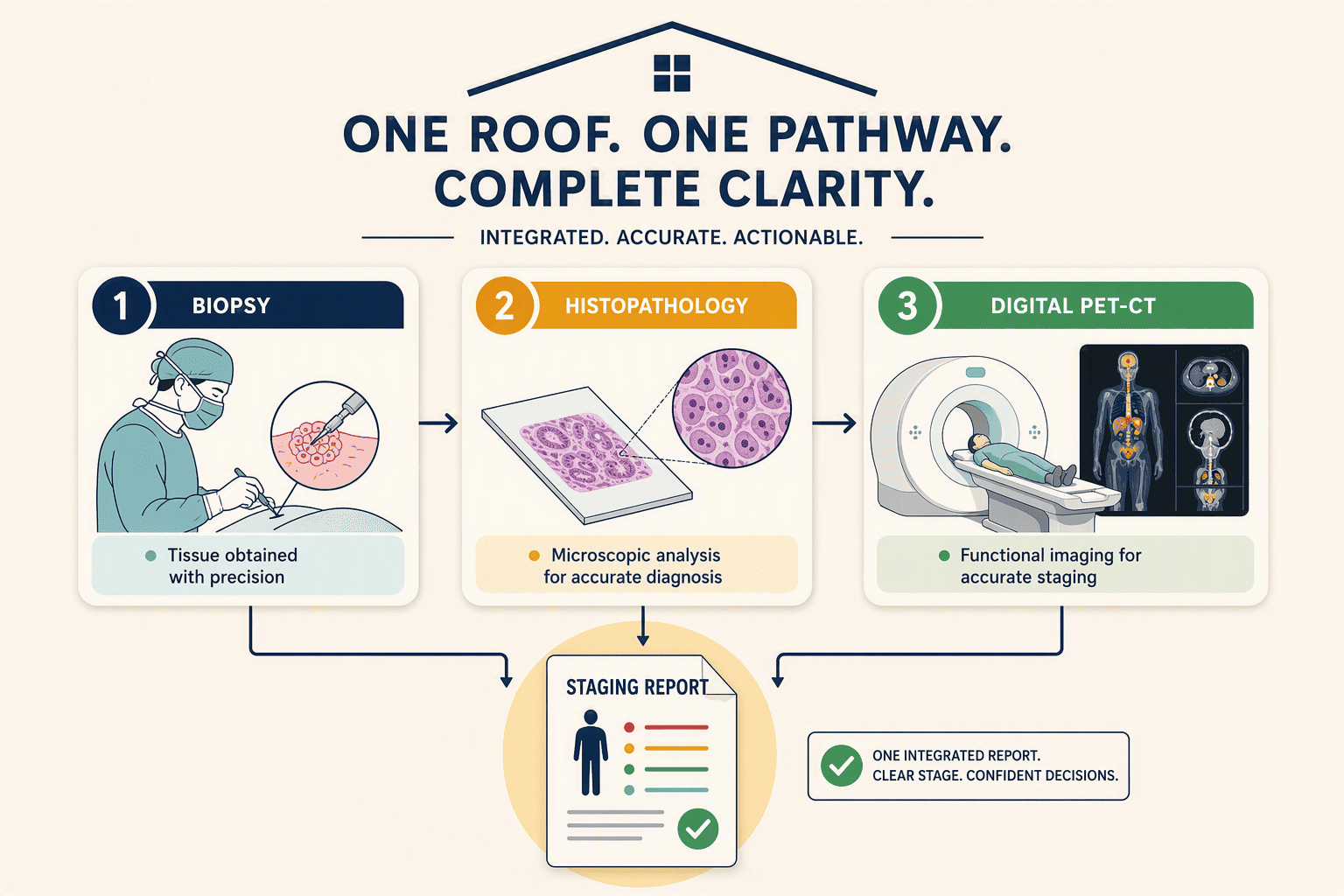
The most common bottleneck in oral cancer care is the diagnostic gap. You are seen by a surgeon, who orders a biopsy, which goes to an external lab. Then a PET-CT is scheduled at a different imaging center. The reports trickle back on different timelines, often stretching three to five weeks before your case is ready for staging.
Andromeda Cancer Hospital removes this fragmentation. Biopsy, histopathology, and digital PET-CT with structured reporting all happen under one roof. That eliminates the transit time of specimens between facilities and the scheduling conflicts of separate imaging centers.
Digital TOF imaging is used for staging, treatment response assessment, and recurrence surveillance. The tumor board gets the full picture without waiting for outside vendor timelines. The documented turnaround cycle: PET-CT and IHC testing are completed within one week for tumor board review.
The real problem with longer waits is stage shift. A tumor that was node-negative at the first scan can progress to node-positive while you wait. That changes the treatment plan and the prognosis. The clinical value of rapid staging is not convenience; it is making sure the treatment plan you receive matches the cancer you have today.
Bridging the Gap: How Tumor Board Protocols Launch Treatment in Days, Not Months
The tumor board's parallel processing converts a new diagnosis into an actionable plan within a single-digit day count through these steps:
- Biopsy and imaging: When you present with a suspicious oral lesion, the biopsy is performed, sent to the on-site histopathology lab, and processed alongside a scheduled PET-CT.
- Multidisciplinary review: Digital images and pathology slides are ready for the next tumor board meeting (which happens twice weekly), where surgical oncology, medical oncology, and radiation oncology simultaneously assess the clinical stage and immediately map the treatment sequence.
- Direct treatment initiation: If neoadjuvant chemotherapy is indicated, the medical oncology team initiates the protocol directly from the board's recommendation, without requiring a separate referral letter or a second consult appointment.
This workflow directly counters the public norm where a patient waits weeks for a staging report, then weeks more for a tumor board slot, and then weeks further to start systemic therapy. Here, the calendar from first consult to initiation is measured in days.
Systemic Therapies and Reconstruction: Mapping Your Neoadjuvant and Adjuvant Timeline
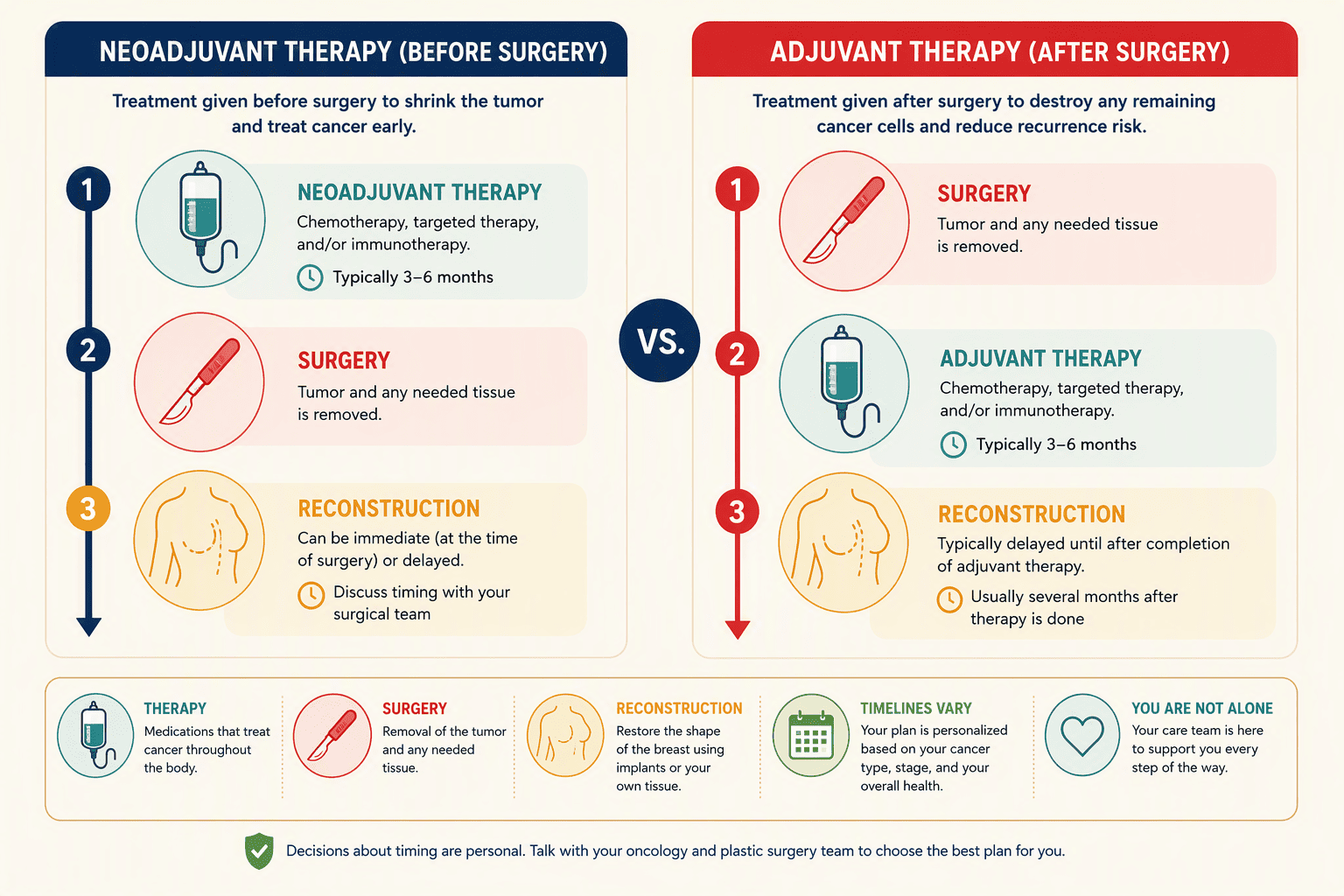
Understanding whether your therapy begins before or after surgery shapes your entire treatment calendar. The table below maps the two primary pathways and their typical sequencing against the reconstruction timeline.
| Pathway | Timing of Systemic Therapy | Typical Indication | Impact on Reconstruction Timeline |
|---|---|---|---|
| Neoadjuvant | Before surgery (weeks to months) | Shrink the tumor to permit a less extensive operation; evaluate tumor response to a specific drug regimen | Postpones any surgical reconstruction; immediate reconstruction happens after systemic therapy is complete, which can delay the final surgical date by 3 to 6 months or more |
| Adjuvant | After surgery (within 4 to 12 weeks post-operatively) | Eliminate residual cancer cells and reduce distant recurrence risk | Immediate reconstruction can proceed during the index surgery; adjuvant therapy begins once surgical wounds have healed adequately |
Your medical oncologist selects neoadjuvant therapy when a tumor is locally advanced, inflammatory, or a subtype that responds well to preoperative treatment, such as triple-negative or HER2-positive breast cancer. In these situations, chemotherapy, targeted therapy, or sometimes hormone therapy is delivered first. The goal is straightforward: a smaller tumor often means a smaller surgery. A patient who might have needed a mastectomy upfront could become a candidate for breast conservation after a good response.
This approach also provides a live read on how your particular cancer responds to drugs. If the tumor shrinks, your team gains confidence that the same or a similar regimen given after surgery will handle any remaining microscopic cells. If the tumor does not respond adequately, your oncologist can switch to a different class of drugs after surgery rather than waiting months to discover the first choice was ineffective.
Adjuvant therapy flips the order. Surgery happens first, removing all visible disease. After you have recovered from the operation, usually within a window of 4 to 8 weeks, systemic treatment begins. Its job is to hunt down cells that escaped surgery and reduce the chance the cancer comes back, either in the same area or elsewhere in your body. For patients with early-stage, hormone receptor-positive breast cancers, adjuvant treatment is frequently the default path. The reconstruction conversation looks different here because your surgeon can offer immediate reconstruction at the time of the cancer operation, without needing to coordinate around a preoperative chemotherapy schedule.
The choice between these two pathways changes the reconstruction conversation materially. With neoadjuvant therapy, you have months of systemic treatment before any surgical incision, and your plastic surgeon uses that window to plan the reconstruction and discuss whether you prefer implant-based or autologous tissue reconstruction. With adjuvant therapy, the reconstructive surgery occurs up front, and any postoperative chemotherapy or radiation must be factored into the healing process. A radiation oncologist, for example, will typically ask for a fully healed surgical site before starting treatment, which can mean a pause of 6 to 8 weeks between the operation and the first radiation session.
Both pathways require tight coordination among the medical oncologist, surgical oncologist, and plastic surgeon. Your timeline is not set in a single meeting. It evolves as test results come back, as you respond or fail to respond to initial chemotherapy, and as post-surgical pathology reports reveal what the team actually found. The table above is a starting map. The exact distances and stopovers get drawn once your individual tumor biology and your own preferences are laid on top of it.
Verifying Insurance, CGHS Empanelment, and Managing Out-of-Pocket Costs
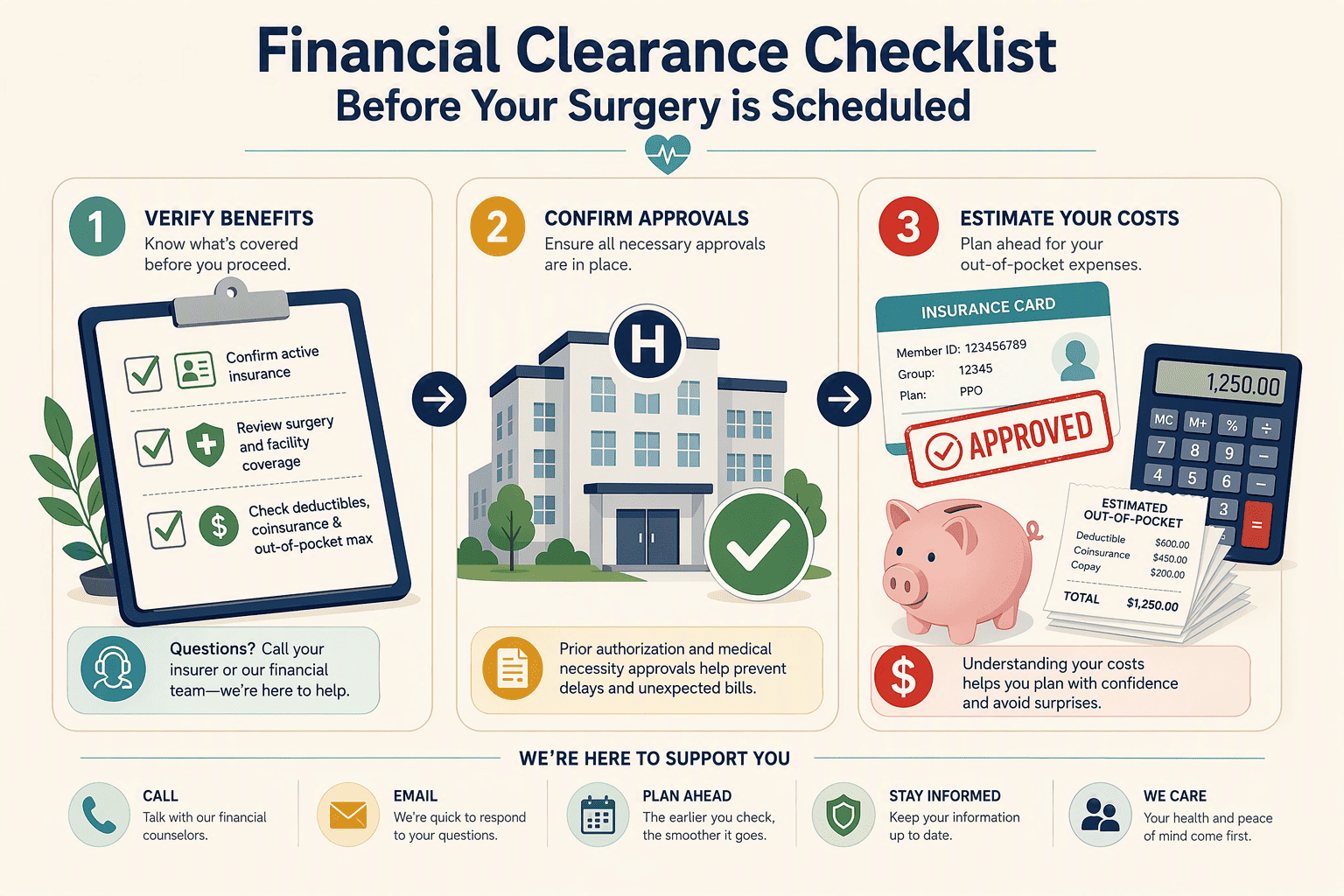
Financial clearance can become an unexpected waiting list of its own if not handled proactively. Follow these steps before you schedule a surgery date.
- Check CGHS empanelment status: Visit the Ministry of Health & Family Welfare's CGHS empanelment portal and search by selecting your city to confirm the hospital is listed for oral oncology and reconstructive surgery. Empanelment status varies annually and should be verified directly before admission.
- Initiate pre-authorization early: Contact your insurer and submit the treating oncologist's recommendation letter immediately after the tumor board finalizes your treatment plan. Do not wait until a surgery date is fixed.
- Request a cost estimate: Private cancer centers in Delhi NCR typically involve out-of-pocket expenditure exceeding ₹3 to 5 lakhs for surgical resection with free-flap reconstruction. Obtain a written estimate that breaks down surgeon fees, implant costs, anesthesia charges, and ICU stay.
- Confirm anesthesia coverage: Anesthesia planning may differ based on the procedure and your overall health. Patients with comorbid conditions may need individualized monitoring, so verify that both daycare anesthesia (for biopsies and port insertions) and major operative anesthesia are covered in your authorization.
Holistic Care Without the Queue: Palliation, Pain Management, and Survivorship
Whole-person support launches the moment you walk in the door, not after a cure is declared. The table below maps the four pillars of integrated oncology care and when they activate in a rapid-access model.
| Pillar of Care | Core Practitioner(s) | When You Access It | Primary Aim |
|---|---|---|---|
| Palliative Oncology (Symptom Management) | Palliative-care physician, advanced practice nurse, or medical oncologist double-certified in palliative care | At diagnosis or within 2 weeks of your initial rapid-access visit, alongside the curative plan | Preventing unnecessary suffering from cancer symptoms or treatment side effects; managing nausea, neuropathy, or lymphedema before they force a treatment break. |
| Integrative Pain Management | Interventional pain specialist, anesthesiologist, or physiatrist, often co-located with the oncology floor | The moment you report pain that over-the-counter measures cannot control; acute post-operative pain protocols begin in the recovery room | Using nerve blocks, non-opioid pharmacotherapy, and ablation techniques to separate cancer pain from treatment-related pain, preserving function while you continue therapy. |
| Psychological & Cognitive Oncology | Psycho-oncologist, clinical psychologist, or oncology social worker embedded in the clinic | Embedded screening at your first clinic visit, with same-day warm handoff if distress exceeds 4 on the NCCN Distress Thermometer | Stopping cancer-related PTSD, treatment anxiety, or "chemo-brain" cognitive fog from becoming the reason you withdraw from potentially curative therapy. |
| Survivorship & Lifestyle Restoration | Oncology-certified dietitian, pelvic-floor physical therapist, and exercise physiologist | Transition visit scheduled 3 to 4 months after primary therapy ends, but sexual-health counseling and nutrition consults are available on day one if needed | Rebuilding exercise tolerance, sexual health, metabolic nutrition, and vocational stamina after active treatment; a concrete written care plan replaces passive monitoring. |
Tele-Oncology and e-OPD Platforms for Faster Specialist Triage Across India
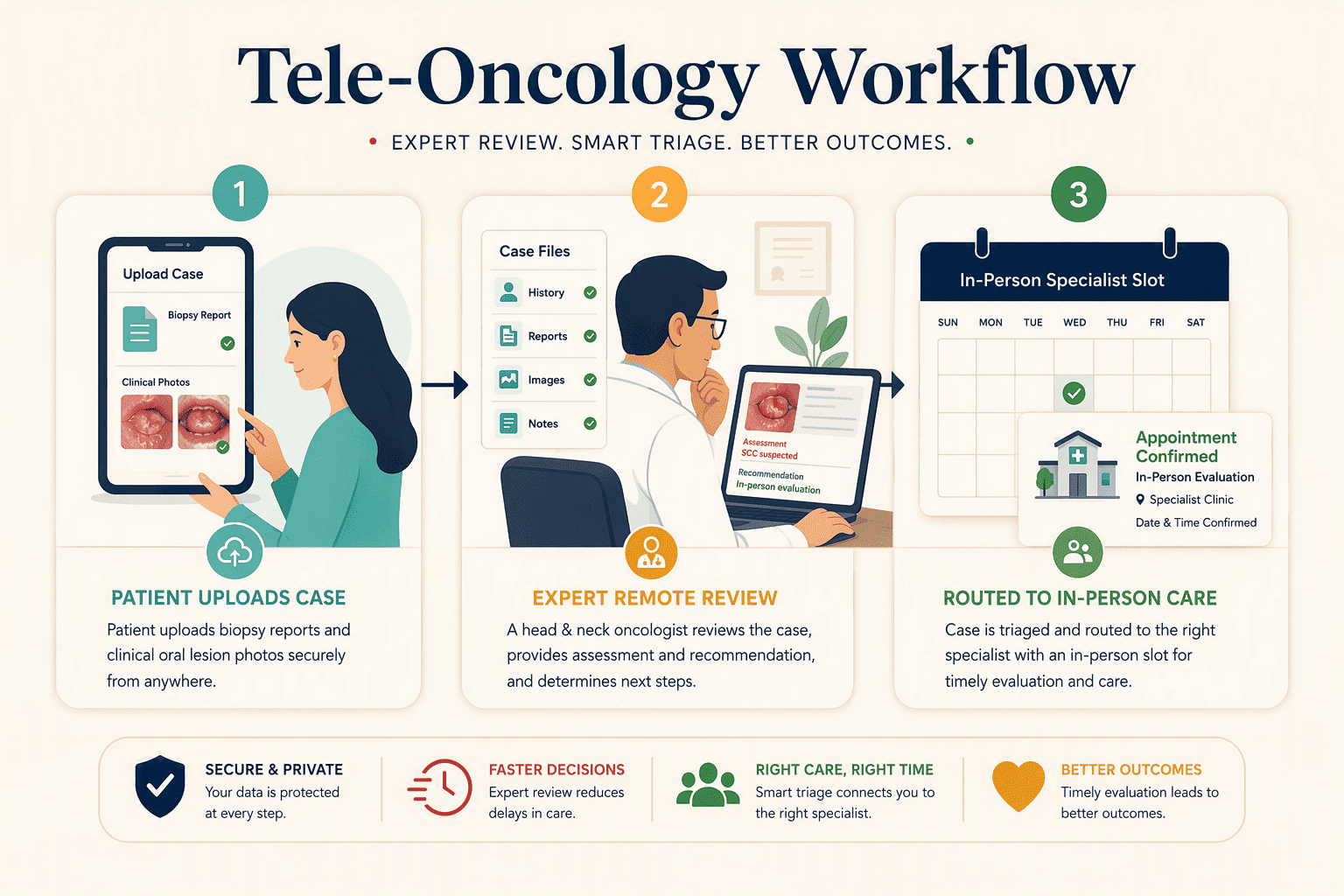
You do not need to stand in a physical queue to get a specialist's eyes on your case. A tele-oncology consultation works as a virtual front door that cuts out the weeks-long wait for a first in-person visit. Through a structured e-OPD, you upload your preliminary biopsy report, clinical photographs of the oral lesion, and any prior imaging.
A head and neck oncologist reviews these, provides a preliminary staging opinion, and directly schedules your in-person visit with the same diagnostic slots already booked. You arrive to a planned workflow rather than starting a new queue. Government platforms like e-Sanjeevani have expanded teleconsultation reach, but a dedicated cancer center's internal tele-oncology service links triage directly to its own tumor board and PET-CT scheduling, closing the handoff gap that generic telemedicine leaves open.
Hours, not weeks. That is the triage standard that sets a rapid-access pathway apart.
Conclusion
Getting oral cancer treatment started in India doesn't fail because of a lack of doctors or machines. It fails because specialist handoffs eat weeks at every step, and no one owns the calendar between those handoffs. In Delhi NCR, a different approach is already running: diagnostics, treatment planning, and therapy initiation happen under one roof, on one timeline, with a single clinical team accountable for moving you from suspicion to first treatment without gaps.
The mechanics are straightforward once you look at them. A PET-CT scan is ordered and reported inside one week because the radiologist sits on the same campus and sees your referral the same day it's written. A tumor board meets twice weekly and reviews your scans, pathology, and surgical candidacy in parallel instead of bouncing your file from one outpatient clinic to the next. When the board decides you need surgery and reconstruction, both teams block the same operating room slot, and when you need systemic therapy, medical oncology starts planning your cycles from the same discussion, not a separate appointment two corridors away.
The front door is a tele-oncology consult that reads your uploaded reports and triages you within hours, so you know whether to travel, which specialty to see first, and what records to bring. It replaces the common experience of waiting two weeks for an ENT OPD slot only to be told you need a different specialist entirely.
No component of this model relies on rare assets. It works because the sequence itself is redesigned: diagnostics and therapy decisions happen concurrently, not consecutively. That is what turns months of calendar time into days. Your next action is to book that tele-oncology slot, send your existing reports, and step into a pathway that runs on your tumor's timeline, not on a queue.
Frequently Asked Questions
What are the causes of long waiting lists for oral cancer treatment in India, and why is timely care critical for outcomes?
Waiting lists stem from multiple interconnected issues that compound delays in oral cancer care.
- Shortage of specialist oncologists: Few specialists are available, and they are concentrated in metropolitan centers.
- Fragmented diagnostics: Separate visits to external labs and imaging centers create sequential handoffs.
- Infrequent tumor boards: Tumor boards that meet rarely delay team decision-making.
- Biological urgency: Oral squamous cell carcinoma can progress in weeks; a delay of four to six weeks can allow stage advancement that reduces survival rates and increases surgical morbidity.
Which hospitals in Delhi NCR offer dedicated oral cancer care with minimal wait times, and what defines a true multidisciplinary approach?
Andromeda Cancer Hospital in Sonipat, Delhi NCR, offers a rapid-access pathway. A true multidisciplinary approach means a standing tumor board with surgical, medical, and radiation oncology and maxillofacial prosthodontics meeting twice weekly to make simultaneous decisions, bypassing sequential referrals that cause months of delay.
How does Andromeda Cancer Hospital’s tumor board and PET-CT turnaround enable faster treatment initiation?
The hospital coordinates PET-CT and IHC testing with a turnaround within one week for tumor board review. Because the board meets twice weekly, imaging and pathology are processed in parallel, allowing a treatment decision and initiation of neoadjuvant chemotherapy or surgery within days rather than months.
What systemic therapies and surgical reconstructions are available for oral cancer, and how do they fit into neoadjuvant or adjuvant timelines?
Chemotherapy, immunotherapy, and targeted therapy can be delivered as neoadjuvant treatment to shrink the tumor before surgery, or as adjuvant therapy after resection. TrueBeamSTx radiation is used in adjuvant settings. Free-flap reconstruction is performed either immediately with ablative surgery or as a delayed procedure, depending on the treatment sequence planned by the tumor board.
What should patients verify about insurance empanelment, like CGHS, and out-of-pocket costs before scheduling oral cancer treatment at a private hospital?
To ensure timely and covered treatment, follow these steps after the tumor board finalizes your plan:
- Verify CGHS empanelment: Check current status for oral oncology and reconstruction on the Ministry of Health portal, as status varies annually.
- Request a written cost estimate: Surgical resection with reconstruction typically exceeds ₹3 to 5 lakhs.
- Initiate insurer pre-authorization: Do this immediately after the tumor board finalizes your plan to avoid delays.
How do palliative, pain management, and supportive care stay timely for oral cancer patients from diagnosis?
Supportive care runs concurrent with oncology treatment, not after curative treatment ends, beginning at the first consult.
- Pain management and palliative interventions: Initiated from the first consult.
- Nutritional support: Provided for dysphagia.
- Pre-surgical speech and swallowing assessments: Completed before surgery.
- Structured survivorship surveillance: Scheduled to ensure ongoing monitoring without separate queues.
Sources
- Head & Neck Cancers | Andromeda - www.andromedahospital.in
- Empaneled Hospitals and Labs - cghs.mohfw.gov.in