

Introduction
You turn 40 and the checklists start. Blood pressure, blood sugar, cholesterol. But the one conversation that gets postponed, often indefinitely, is the one about cancer.
The silence is costly. ICMR data projects that 1 in 9 Indians will develop cancer in their lifetime.
The period after 40 is a biological window where decades of accumulated cellular damage meet a declining repair system. The National Programme for Prevention and Control of Cancer, Diabetes, Cardiovascular Disease and Stroke (NPCDCS) identifies this midlife phase as critical precisely because the cumulative exposure to behavioral risk factors like tobacco, unhealthy diet, and physical inactivity reaches a tipping point.
The reality is simple: evidence has erased the old fatalism. Roughly 30 to 50 percent of cancers are attributable to modifiable risk factors. The power to intercept the disease is, to a significant degree, in your hands. This article maps the concrete, evidence-based changes that matter most after 40, from eliminating tobacco and rethinking your plate to navigating the screening tests available at your nearest primary health centre under the NPCDCS framework.
Key Takeaways
Most midlife cancer risk is shaped by a handful of concrete, every-day decisions. The evidence behind them is dense, but the actions they point to are remarkably simple.
- Eliminate all tobacco: A single cigarette delivers more than 70 known carcinogens directly into your system. Quitting now cuts lung cancer risk by half within a decade.
- Zero alcohol is the safest level: Alcohol is a Group 1 carcinogen. A linear dose-response relationship means every drink directly increases your risk of at least six cancer types, including breast and colorectal.
- Achieve a healthy body weight: Excess visceral fat acts as an active endocrine organ. It drives chronic inflammation and insulin resistance, and is linked to at least 13 distinct cancer types.
- Adopt a plant-forward, high-fibre diet: Processed meat is a proven Group 1 carcinogen. Replacing it with legumes, whole grains, and a variety of vegetables directly reduces your colorectal cancer risk.
- Complete age-appropriate cancer screenings: Screenable cancers like oral, cervical, and breast cancer have dramatically better outcomes when caught at early stages through opportunistic screening available under NPCDCS at primary health centres.
At a Glance
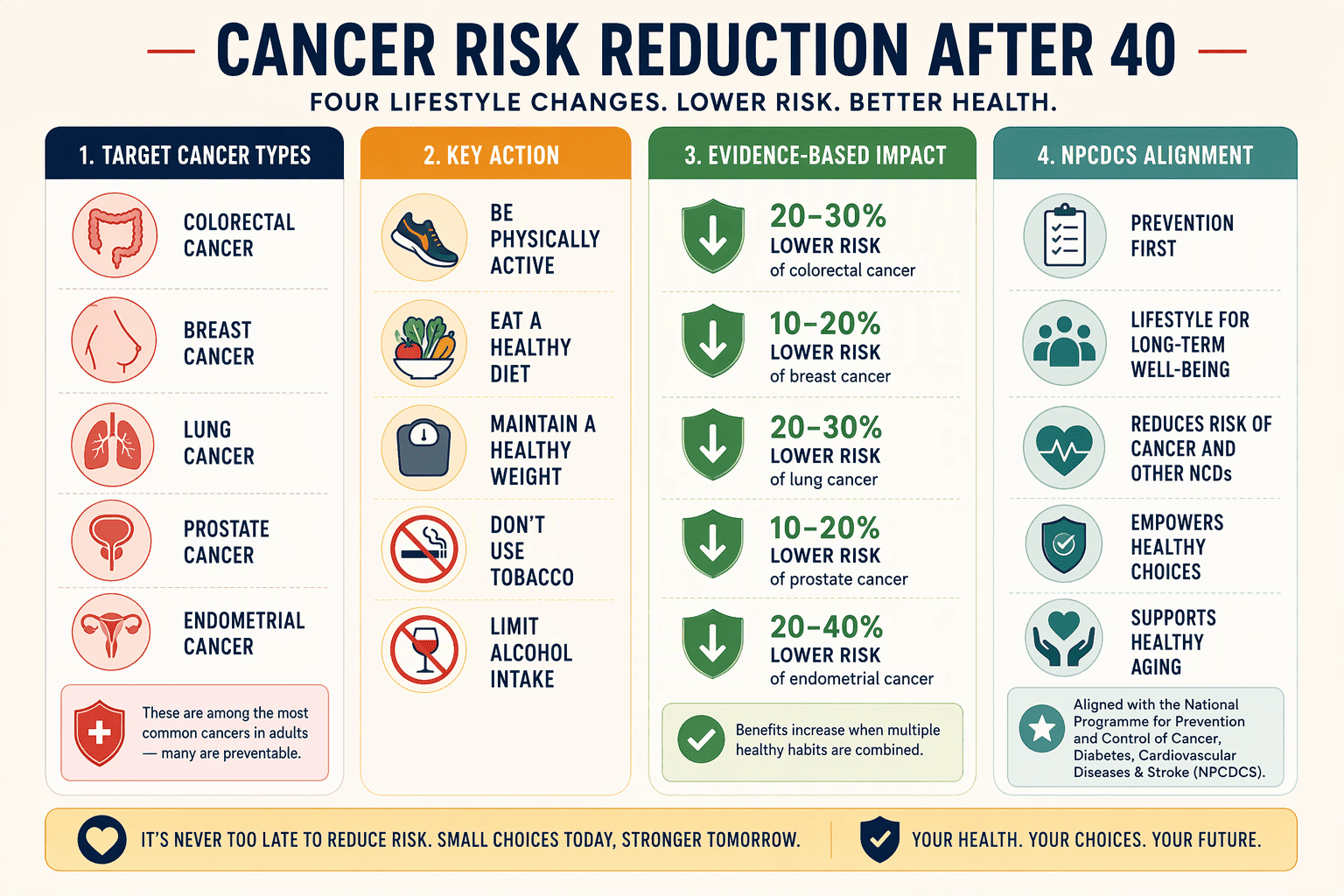
Here is how the options compare across the dimensions that matter most.
| Lifestyle Change | What It Targets | Key Action After 40 | Evidence-Based Impact | NPCDCS Alignment |
|---|---|---|---|---|
| Eliminate tobacco | Lung, oral, oesophageal cancer | Quit all forms completely; use cessation clinics | Halves lung cancer risk within 10 years | Core NPCDCS risk factor reduction priority |
| Zero alcohol | Breast, colorectal, liver cancer | Replace with non-alcoholic alternatives | Every drink linearly increases risk for 6+ cancer types | Included in NPCDCS lifestyle guidelines |
| Healthy body weight | 13 cancer types (e.g., colon, breast, pancreas) | Maintain BMI 18.5 to 23; target waist <90 cm (men), <80 cm (women) | Reduces chronic inflammation and insulin resistance | Emphasised in NPCDCS midlife screening |
| Plant-forward high-fibre diet | Colorectal cancer | Eat 30 g fibre/day; limit processed meat to none | Directly lowers colorectal cancer risk | Recommended in NPCDCS dietary advice |
| Regular physical activity | Breast, colon, endometrial cancer | 150 min moderate aerobic + 2 strength sessions/week | Lowers risk 10 to 25% for major sites | Part of NPCDCS exercise guidelines |
| Complete age-appropriate screenings | Oral, cervical, breast cancer | Annual dental check; pap smear q3y; mammogram after 50 | 90+% survival if caught early (vs. <30% late) | Free at PHCs under NPCDCS screening program |
Defining the Midlife Cancer Risk Landscape
Cancer is fundamentally a disease of accumulated errors. The cellular machinery that copies DNA makes mistakes. After 40, the silent backdrop of life starts to surface.
Those decades of sporadic sunburns, workplace toxin exposures, and metabolic stresses finally meet a repair toolkit that is naturally losing its sharp edge. The surveillance systems that once swiftly spotted and destroyed aberrant cells become less efficient. This is not a sudden switch; it is an epidemiological inflection point.
India’s health data underscores the urgency. During the year 2005, the data shows that non-communicable diseases accounted for 53 percent of all deaths in the age group 30 to 59 years. This was not an anomaly; it was the shape of things to come.
The projections are stark: an estimated 118 million people had high blood pressure in India in the year 2000, a figure expected to soar to 213 million by 2025. These are the numbers of a population living in an epidemiological transition.
The NPCDCS did not frame its guidelines in a vacuum. It responded to a specific, documented shift away from infectious diseases toward chronic, lifestyle-driven pathologies. Major NCDs are caused by a recognizable cluster of risks: unhealthy diet specifically low fruit and vegetable intake, physical inactivity, tobacco use, harmful use of alcohol, and stress. For someone stepping into their 40s, this is not a catalogue of inevitable decline; it is a precise map of where to push back. The exposure you have accumulated is real, but the biological plasticity that remains is substantial.
Aging amplifies exposure. Carcinogens do not always wash out of the body cleanly; many leave persistent epigenetic marks that change how your genes express themselves over time. Add to this the reality of indoor smoke from solid fuels, a distinctly Indian risk factor explicitly cited by the NPCDCS, and you see a risk landscape that is part biology and part environment. Understanding this helps you see that prevention is not a single heroic act but a stack of quiet daily interventions.
Tobacco Cessation After 40: The Single Most Decisive Action
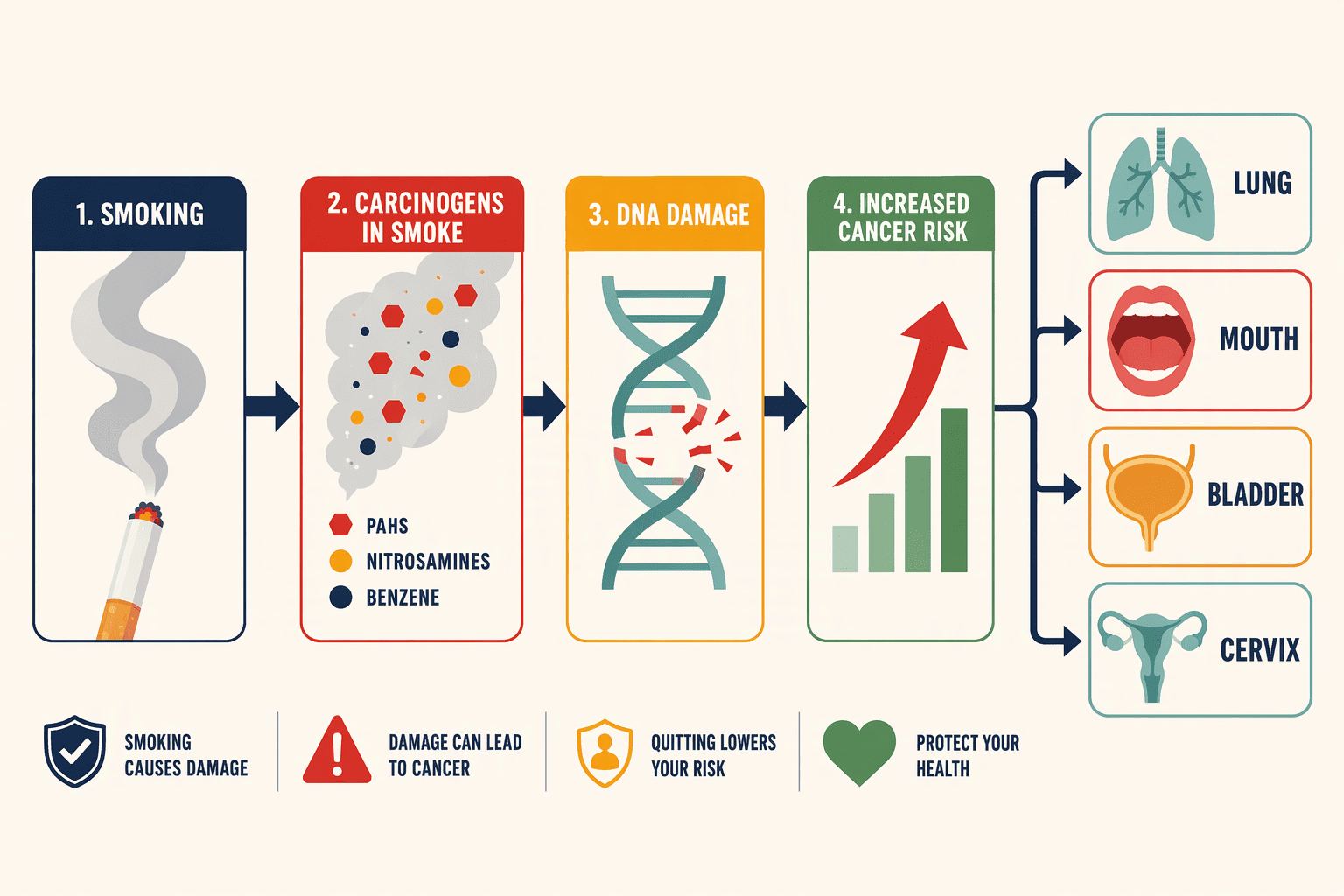
A drag on a cigarette is an act of chemical self-sabotage that produces more than 70 known carcinogens in a single moment. The body reads this as a direct assault on the DNA of cells in the lung, mouth, bladder, and cervix. The link is not a vague statistical correlation; it is a direct causal chain with a specific body count. Tobacco is linked to at least 12 cancer types, a reach that extends far beyond the lungs to the esophagus, pancreas, and kidney. And for users of smokeless tobacco common in India, the insult lands primarily on the oral cavity, driving the country’s high rates of disfiguring and often fatal oral cancers.
But the repair capacity of the human body after cessation is not trivial. The data is unambiguous and cuts clean through the fatalistic ‘I’ve smoked too long’ narrative: after 10 years of cessation, lung cancer risk falls to approximately half that of a continuing smoker. The cilia in your airways, the tiny finger-like projectiles paralyzed by smoke, start sweeping mucus and debris clear again within weeks.
The systemic inflammation dials down. At an institution like Andromeda Cancer Hospital, the specialists managing thoracic cancers and head and neck cancers witness the end-stage consequences of continued use daily. Your clinical team can direct you to evidence-based cessation supports including nicotine replacement therapy to give you a genuine fighting chance of stopping for good.
Alcohol and Cancer: Understanding the Linear Dose-Response Risk
The reassuring myth of ‘moderate drinking’ falls apart once you look at the toxicology. When your body metabolizes ethanol, it produces acetaldehyde, a compound that binds directly to DNA and damages it. The International Agency for Research on Cancer classifies alcohol as a Group 1 carcinogen, placing it in the same certainty category as asbestos and processed meat.
The risk follows a mechanism with no threshold: a linear dose-response means the line on the graph does not bend, it starts at a single drink and moves upward. Every additional unit of alcohol adds probability. Heavy or regular alcohol consumption increases the risk of developing cancers of the oral cavity, pharynx, larynx, esophagus, liver, breast, colon, and rectum.
The relationship is clearest in breast cancer data. Even very low daily intakes produce a measurable uptick in risk, driven by hormonal receptor pathways and oxidative stress. The systemic effects extend to the liver, where cirrhosis and cancer are well-documented outcomes, and to the colorectal region through direct contact and metabolic disruption.
The margins for ‘acceptable risk’ are a mirage. For anyone over 40 already managing the baseline risk of age, reducing the risk profile calls for a clear-headed decision.
The safest level is zero. The NPCDCS includes harmful alcohol use as a core, actionable target because the epidemiological evidence has long since moved past ambiguity.
Achieving and Maintaining a Healthy Body Weight
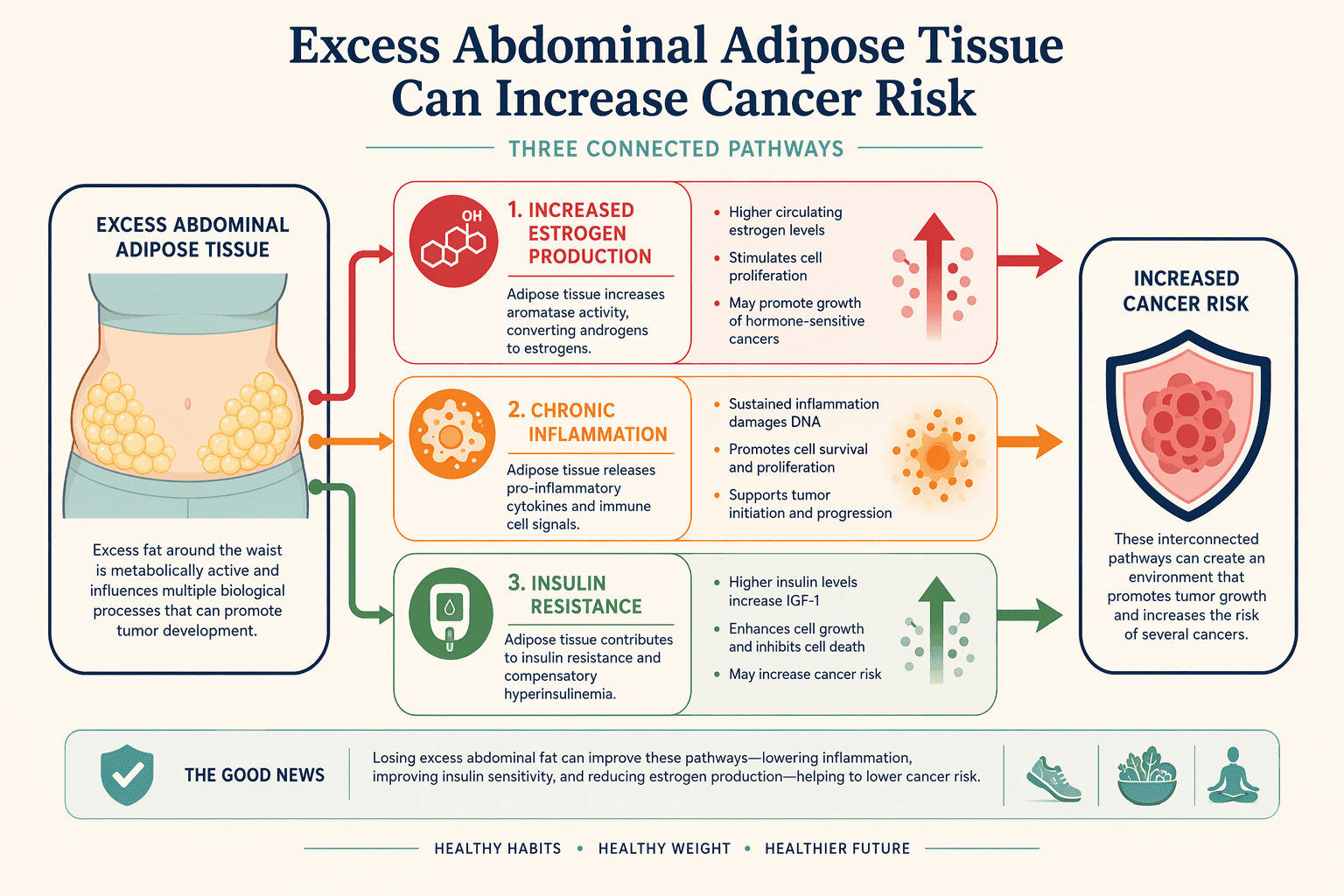
Body fat is a metabolically active endocrine organ. It alters the body's hormonal environment, drives chronic low-grade inflammation, and promotes insulin resistance. The International Agency for Research on Cancer has linked this state to at least 13 cancer types. Weight management after 40 is a core medical strategy.
- Target postmenopausal breast cancer: Adipose tissue produces estrogen after ovarian function ceases. High body fat translates directly into higher circulating hormone levels that fuel hormone-receptor-positive breast cancers.
- Reduce visceral inflammation: Fat cells buried deep in the abdomen secrete cytokines. These signaling proteins keep the immune system in a constant state of alert, creating a microenvironment where DNA damage can progress unchecked.
- Mitigate insulin resistance: Obesity is now recognised as a risk factor for at least 13 types of cancer, including breast (post-menopausal), colon, uterus, oesophagus, kidney, and pancreas. Hyperinsulinemia acts as a growth signal for many of these cells.
- Aim for sustainable metabolic health: The goal after 40 is a reduction in excess visceral fat. Even a moderate weight reduction of 5 to 10 percent of current body weight has measurable impacts on these inflammatory and hormonal markers, directly lowering risk.
Building a Cancer-Protective Diet: Plants, Fibre, and What to Limit
The NPCDCS flags low fruit and vegetable intake as a primary behavioral risk factor driving cancer in India. The protection plants offer comes from the physical bulk and phytochemical shields they introduce into the gastrointestinal system.
Dietary fibre is the important agent here. It alters the terrain of the colon. Fibre dilutes potential carcinogens in the gut, reduces the time that stool is in contact with the bowel lining, and is fermented by gut bacteria into short-chain fatty acids like butyrate that have direct anti-cancer properties. Moving to a plate dominated by legumes, whole grains, and seasonal vegetables is a concrete, evidence-based shift.
On the other end of the scientific certainty spectrum sits processed meat. The IARC classification of processed meat as a Group 1 carcinogen is a statement of definitive proof. The data shows a 17% increased colorectal cancer risk per 50 g daily serving. That is a single sausage or a few strips of bacon a day. The mechanism implicates heme iron and the formation of N-nitroso compounds during curing and digestion.
Do not lean on pills to fill a dietary gap. The data has repeatedly shown that the isolated compounds do not replicate the protective matrix of whole food. For instance, research in humans has not demonstrated convincingly that taking antioxidant supplements can help reduce the risk of developing or dying from cancer; some studies have even suggested an increased risk. The goal is to limit red and processed meat strictly, crowd the plate with fibre, and not rely on a multivitamin for an insurance policy that does not exist in oncology.
The Role of Physical Activity: Beyond the 150-Minute Guideline
Physical activity is an independent variable in cancer risk reduction. Movement modulates the system in ways that inhibit carcinogenesis, not just by burning calories. The following frameworks show how to integrate this beyond simply hitting a weekly quota.
- Reduce colorectal and breast cancer risk:The American Institute for Cancer Research recommends a minimum of 150 minutes of moderate-intensity aerobic activity per week for cancer prevention. The biological return on this includes accelerated gut transit time, which limits the colon's exposure to mutagens, and lowered circulating estrogen in women, a direct lever on hormone-sensitive breast tissue.
- Boost immune surveillance: Each session of moderate activity mobilizes Natural Killer (NK) cells into the bloodstream. These cells are your immune system's rapid-response unit against tumours. A sedentary body, by contrast, has a more sluggish front line.
- Integrate into a sedentary life: Do not wait for a gym membership. You break sedentariness on a minute-by-minute level. Standing for two minutes every thirty minutes, taking the stairs, and post-meal brisk walks, these non-exercise activity bursts cumulatively signal to your insulin and inflammatory pathways that you are metabolically engaged, not dormant.
Managing Stress and Prioritising Sleep as Cancer Prevention Tools
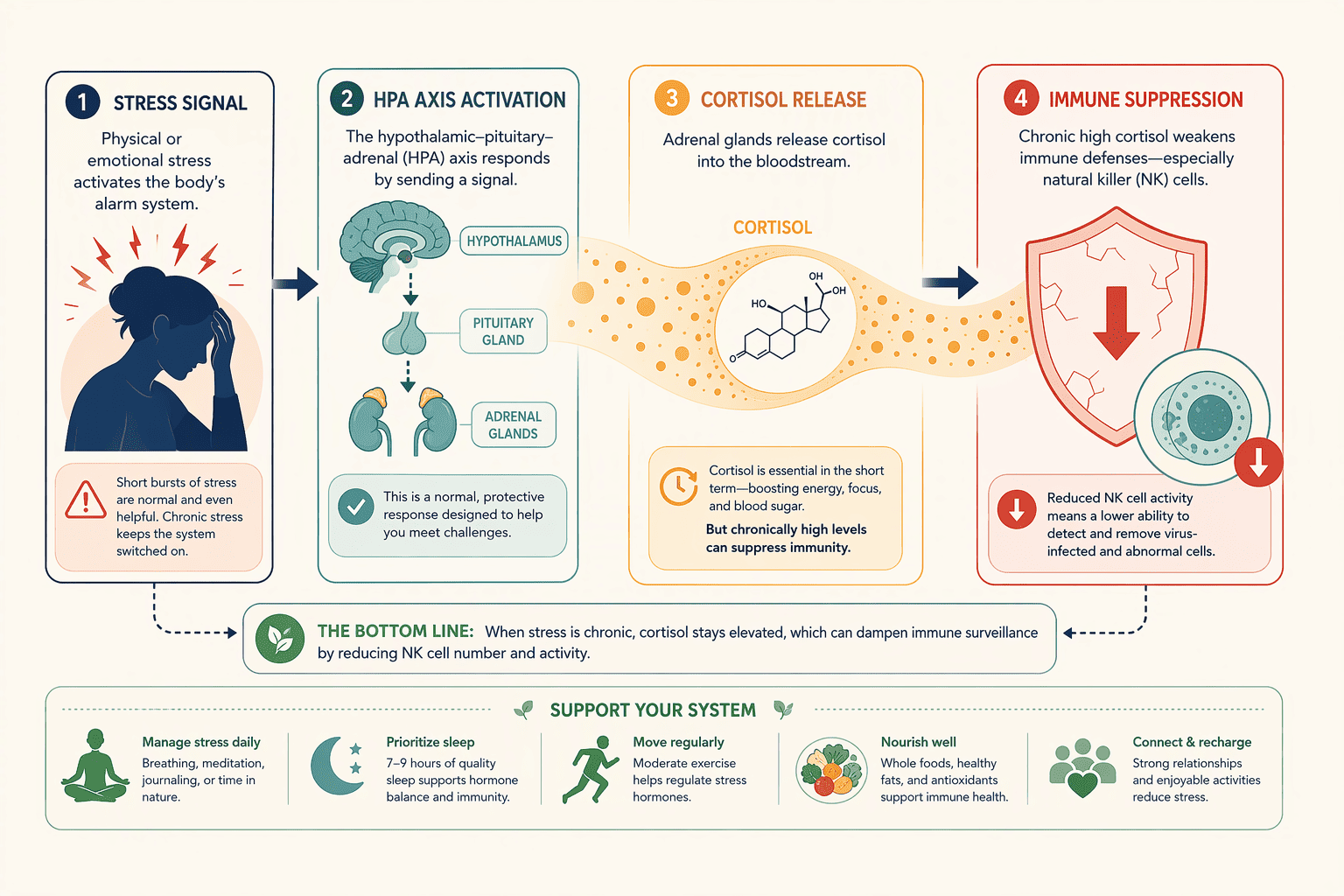
Your body keeps a chemical score of every unresolved stressful week. When the hypothalamic-pituitary-adrenal axis stays switched on, it floods the body with cortisol. Over weeks and months, this glucocorticoid environment suppresses the immune system's capacity to detect and destroy abnormal cells before they multiply out of control.
The mechanisms are observable: persistently high cortisol downregulates the function of Natural Killer cells, the lymphocytes that provide your first immunological line of defense against tumorigenesis. The NPCDCS manual codifies stress as one of the five core risk factors for major NCDs. The programme embeds stress management as a core strategy, alongside dietary change and physical activity, because the mind-body connection is biologically real.
A cell runs on a clock. Its daily rhythm of repair and replication is governed by circadian biology.
The most profound insult to that clock is light at night. Exposure to blue light suppresses the natural nocturnal secretion of melatonin, a hormone that acts as both a powerful antioxidant and a signal that tells cancer cells to stop dividing. Disrupted circadian rhythms, seen in chronic shift workers and chronic insomniacs, are linked to a higher incidence of several cancers. The International Agency for Research on Cancer has classified 'shift work that involves circadian disruption' as a probable human carcinogen. The behavior prescription is simple, non-pharmacological, and mechanical: make the room dark and make the wake-sleep time consistent.
You protect DNA in your sleep. The deep slow-wave phase is when growth hormone surges and cellular cleanup, including DNA repair pathways, is most active. Think of it as a nocturnal maintenance crew that you either deploy or cancel. Chronic sleep fragmentation impairs this repair efficiency, leaving the door slightly ajar for mutations that accumulate over your 40s and 50s.
Environmental Factors and Cancer Risk in the Indian Context
Generic global advice often misses the carcinogenic agents that are uniquely prevalent in the Indian domestic environment. The NPCDCS checklist includes these distinct, modifiable exposures. Mitigation begins with awareness. Here are the steps to address them.
- Eliminate solid fuel combustion smoke: Indoor air pollution from cooking with biomass, often in poorly ventilated kitchens, represents a massive, sustained carcinogenic exposure for women. Switch to LPG cylinders or use improved, forced-draft biomass stoves that dramatically reduce particulate matter.
- Mitigate outdoor air particulate matter: The International Agency for Research on Cancer has classified outdoor air pollution as a Group 1 carcinogen. Use N95 masks on high-pollution days and consider a home HEPA air purifier for the rooms where you spend the most hours.
- Address water contaminants: Have your groundwater tested for arsenic and lead. If levels are high, switching to filtered or reverse osmosis purified water directly reduces your oral and visceral exposure to these heavy metals, agents implicated in skin and bladder cancers.
- Reduce occupational chemical exposure: If you work in construction, textiles, agriculture with pesticide use, or informal battery recycling, demand and wear proper personal protective equipment. The residue you carry home on your clothes exposes your family unless you wash up and change out of work gear immediately.
Key Cancer Screening Tests for Everyone Over 40
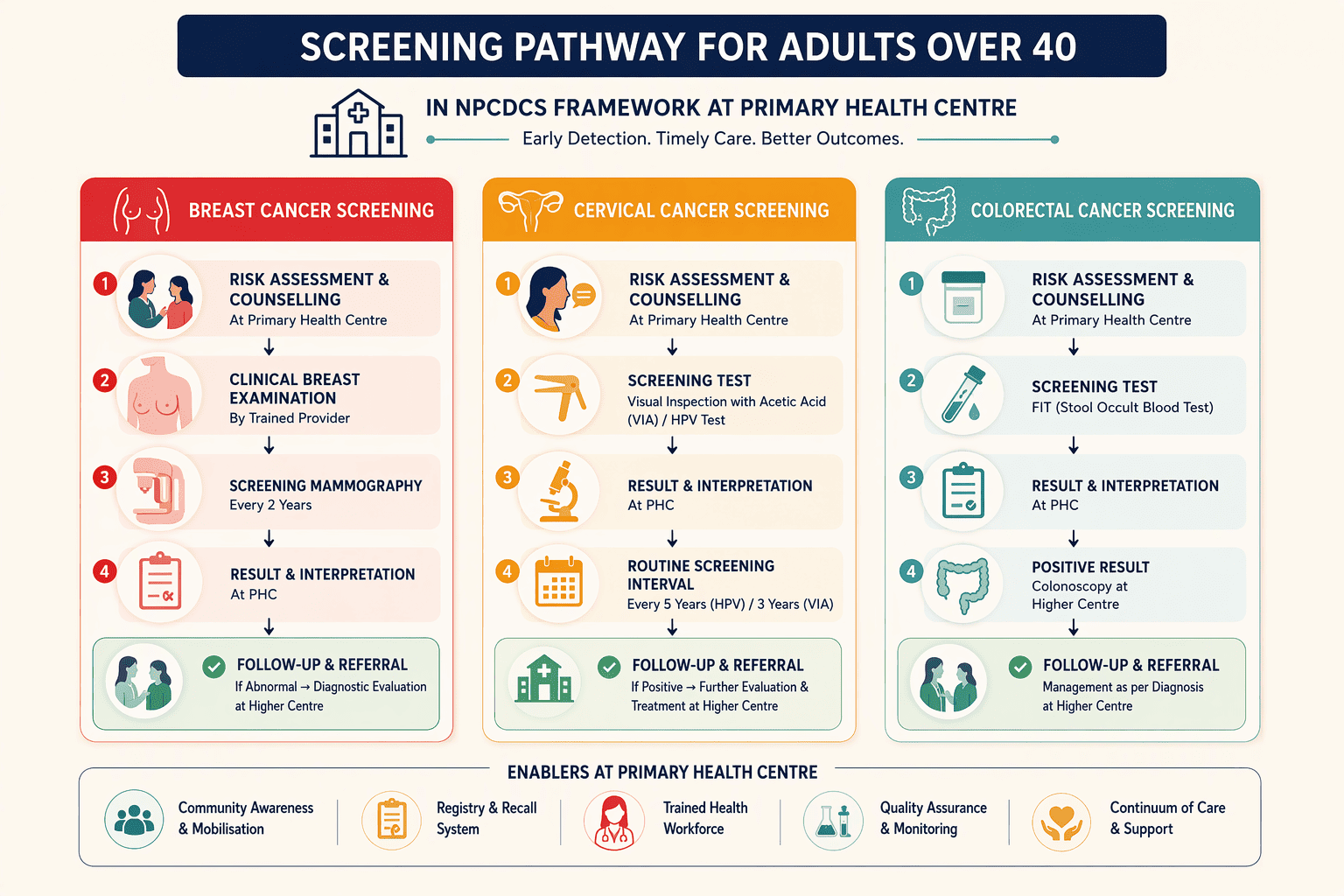
The promise of lifestyle change is probabilistic prevention, not a complete shield. That is why screening exists. It does not wait for a symptom to knock. The NPCDCS operational framework redesigns this as 'opportunistic screening' inside primary health centres, designed specifically to catch the most common cancers at a stage where the intervention is simple and the survival rate is high. The protocols are structured, not experimental:
- Breast cancer: For women over 40, a Clinical Breast Exam performed by a trained professional is the frontline.
- Cervical cancer: The NPCDCS resources the use of Visual Inspection with Acetic Acid, or a Pap test whenever available.
- Oral cancer: An Oral Visual Exam is mandatory to detect suspicious lesions, leukoplakia, or submucous fibrosis driven by tobacco use.
You do not need to navigate a private, expensive screening labyrinth to access this first layer of protection. The system is built. At specialized centres like Andromeda Cancer Hospital, the diagnostic precision scales up dramatically using 3-D full-field digital mammography and high-resolution ultrasound with elastography for breast imaging, alongside PSMA PET-CT for detailed staging. The logical sequence is to comply with the public-health-level screening that is freely accessible and to escalate to an advanced oncology centre for a diagnostic biopsy or image-guided intervention if a physician finds an abnormality. The schedule must be periodic and non-negotiable at an interval your doctor recommends.
Conclusion
You can push the thought aside. The data does not let you. Roughly half of all cancer cases trace back to factors you control: the smoke you quit, the weight you drop, and the screening appointments you keep.
That window narrows sharply after 40. What looked like a future problem becomes a set of numbers on a lab report.
Go back to your primary health centre. The NPCDCS has already built the screening pathway. Book the tests it structures for your age and risk profile. Sitting on that referral is the single most expensive delay you will ever make.
Shedding 5 to 10 kilograms cuts risk across at least 13 cancer types, and obesity-driven malignancies now show the steepest incidence curves in Indian metros. Tobacco cessation stops the carcinogens you inhale today from mutating cells you will depend on tomorrow. These are medical interventions, not lifestyle slogans.
Screening works only when you show up. Mammography, HPV testing, low-dose chest CT for long-term smokers, and colonoscopy after 45 catch lesions years before they become incurable. The numbers hold: treatable stage I disease versus a stage IV diagnosis that costs ten times as much and offers a fraction of the survival.
If you need a clinical partner to navigate specialist opinions, advanced imaging, or multidisciplinary tumour board planning, Andromeda Cancer Hospital serves the national capital region and northern states with that infrastructure.
Frequently Asked Questions
What are the most evidence-based lifestyle changes to reduce cancer risk for people over 40?
The strongest evidence supports four core interventions that target the primary causal pathways of inflammation, hormonal dysregulation, and direct DNA damage that escalate after 40:
- Quit tobacco immediately.
- Avoid alcohol completely.
- Maintain a body mass index in the healthy range through diet.
- Strictly limit processed meat.
How does diet and nutrition specifically impact cancer risk after age 40?
Dietary choices directly alter cancer risk through several mechanisms:
- A high-fibre diet accelerates gut transit time and feeds beneficial bacteria, reducing colorectal cancer risk.
- Processed meat is a Group 1 carcinogen with a proven 17 percent increased risk per daily 50-gram serving.
- Low vegetable and fruit intake misses critical phytochemicals that block carcinogens.
What role does physical activity play in cancer prevention after midlife?
Physical activity independently lowers risk for breast and colorectal cancers by 20 to 25 percent through several mechanisms:
- It mobilizes Natural Killer cells that patrol for abnormal growths.
- It drives down circulating estrogen.
- It reduces insulin resistance.
All these mechanisms directly counter tumorigenesis in the aging body.
How does smoking and alcohol cessation after 40 affect long-term cancer risk?
It dramatically reverses risk. Lung cancer risk drops to roughly half that of a continuing smoker after a decade of quitting. For alcohol, a linear dose-response means cutting to zero immediately stops the direct metabolic production of acetaldehyde, a DNA-damaging carcinogen linked to six cancer sites.
What screening tests should someone over 40 routinely get for early cancer detection?
Under India's NPCDCS, women should receive a clinical breast exam and cervical cancer screening using VIA or Pap smear on a defined periodic schedule. All adults should undergo a visual oral cavity exam to detect tobacco-related lesions. Follow up any abnormality with specialist imaging like mammography or PET-CT.
How do environmental factors and stress management influence cancer risk in India today?
Indoor biomass cooking smoke is a potent lung carcinogen for women. Outdoor air pollution is a confirmed Group 1 carcinogen. On the biological side, chronic stress elevates cortisol and suppresses Natural Killer cell activity, a recognized pathway that impairs the immune system’s ability to clear incipient tumours as you age.
Sources
- Protecting Our Environment, Protecting Our Health: The Link Between Climate Action and Cancer Prevention - www.andromedahospital.in
- National Programme for Prevention and Control of Cancer, Diabetes, Cardiovascular Disease and Stroke (NPCDCS) - clinicalestablishments.mohfw.gov.in
- Best Cancer Prevention Care Hospital in India - iociindia.com
- How Your Daily Lifestyle Changes Can Reduce Cancer Risk: A Practical Guide - babymemorialhospitals.com
- Risk Factors: Diet - NCI - www.cancer.gov