
Introduction
Your diagnosis lands on a Monday. By Wednesday, a surgeon examines you alone in one corner of the city, asking you to return with a separate radiology plan. Friday brings a chemotherapy consult at another facility that cannot access your original scans. Precious weeks dissolve while specialists work in silos, duplicating tests and adding layers of anxiety you do not need. This fragmented relay race costs time that your treatment timeline simply cannot afford.
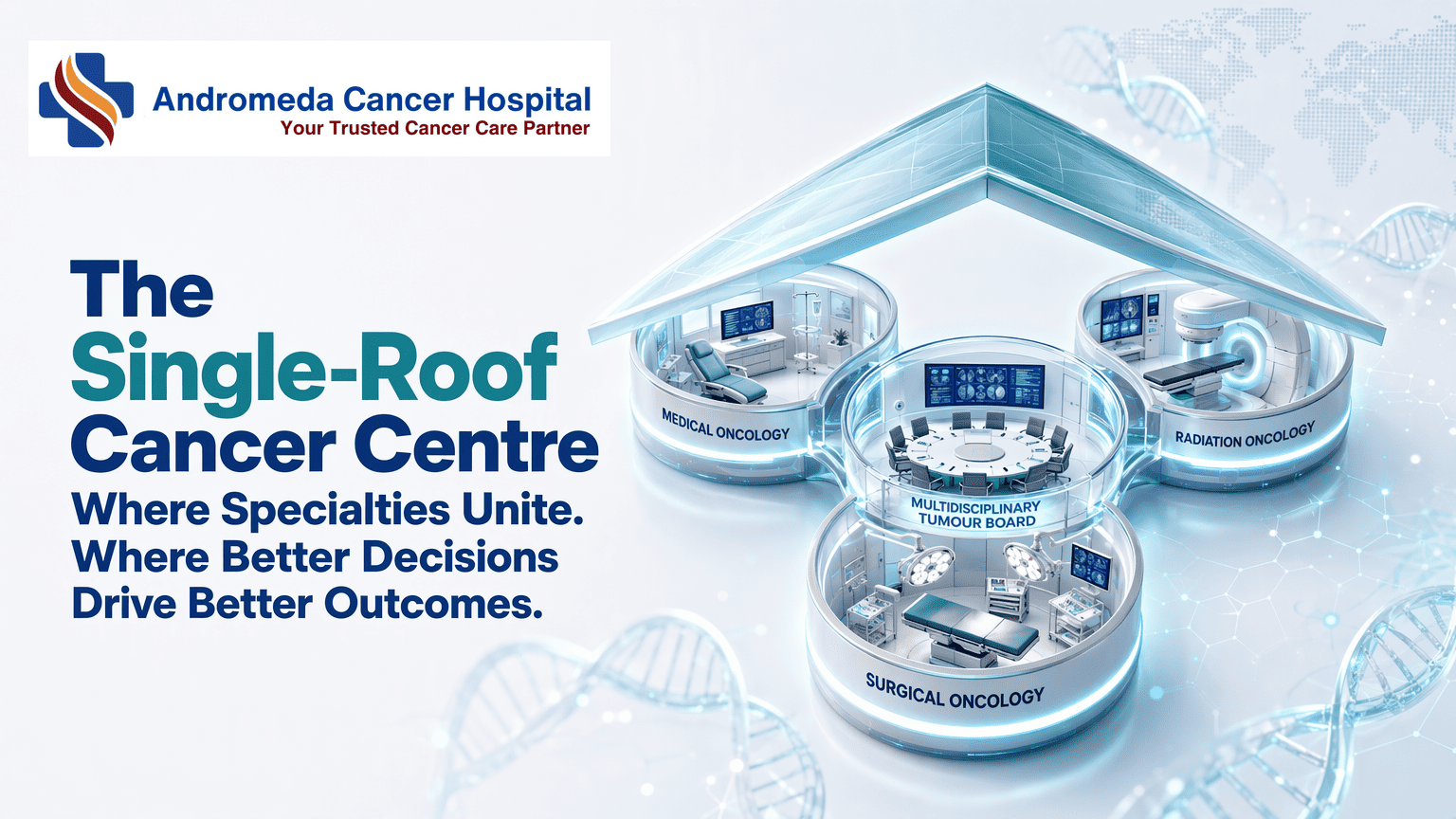
An integrated cancer facility eliminates that chaos by housing surgical oncology, radiation oncology, and medical oncology under one roof. National institutions such as the Rajiv Gandhi Cancer Institute & Research Centre offer preventive, diagnostic, therapeutic, rehabilitative and palliative cancer care under one roof, proving that centralised models are not aspirational theory but established clinical reality. The mechanism that makes this arrangement work is the multidisciplinary tumour board, where specialists design a single coherent strategy before any treatment begins.
The difference between active coordination and mere co-location can determine the speed and precision of your care. This article unpacks the model, the machines, and the verification signals that separate a genuinely integrated cancer centre from a multi-room building that happens to list several oncology branches on its website.
Key Takeaways
A true integrated centre combines surgical, medical, and radiation oncology under protocols dictated by a standing multidisciplinary tumour board, a mechanism known to reduce out-of-pocket costs by consolidating billing and sharing imaging across departments.
- Integrated care compresses timelines: Same-week multi-specialty consultations and shared pathology cut the fragmented weeks-long diagnosis-to-treatment window down to days, eliminating the most dangerous source of avoidable delay.
- A tumour board is a non-negotiable marker: Routine documented review of every case by surgical, medical, and radiation oncologists together before treatment starts defines clinical integration; co-location without this ritual is only administrative convenience.
- Technology enables precision: An integrated facility must house co-located PET-CT diagnostics, advanced radiation platforms such as MR LINAC and TrueBeam, and robotic surgery suites so treatment plans are calibrated on a single source of diagnostic truth.
- Verification is straightforward for patients in Haryana, Delhi NCR, and Punjab: The checklist requires asking for documented tumour board practice, on-site full-time specialists rather than visiting consultants, single-site integrated billing, and co-located diagnostic capability, all signals satisfied by a centre such as Fortis Cancer Institute, Gurugram, which also runs dedicated disease-site programs like its breast cancer unit.
What True Integration Means: Clinical Coordination vs. Co-Location
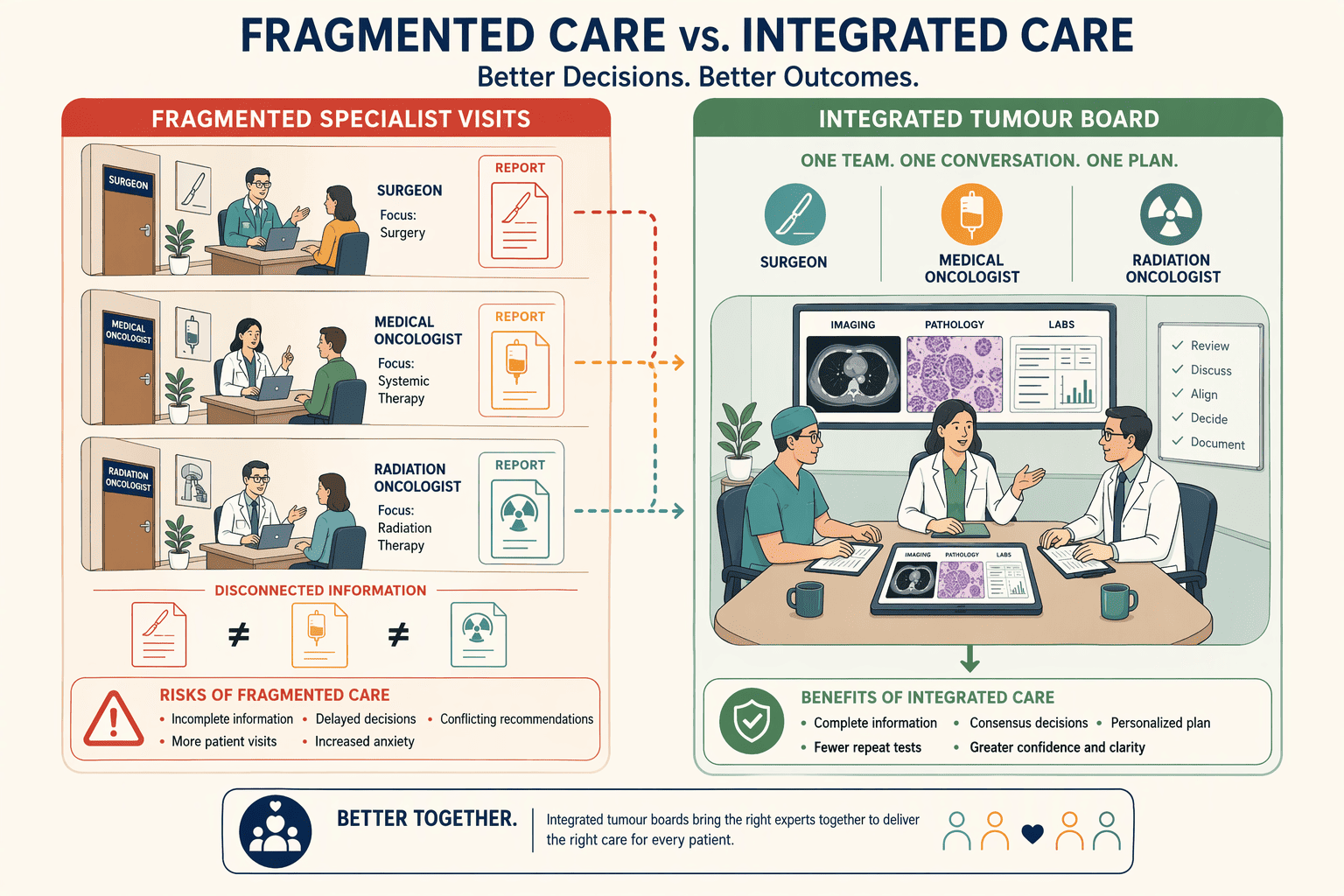
A cancer facility that merely houses a surgeon, a radiotherapist, and a medical oncologist in the same building is clinically co-located, not clinically integrated. Each specialist reads the same reports but forms their treatment plan in isolation, sequencing you through appointments that do not communicate. An integrated model works differently: your surgical, radiation, and medical oncologists sit in the same room, review your imaging and pathology together, and lock a unified treatment pathway before a single intervention occurs.
This is not an administrative detail. It stops the repeated diagnostics that fragment your record, inflate out-of-pocket costs, and produce contradictory advice.
The Department of Medical Oncology at VMMC & Safdarjung Hospital, New Delhi, conducts disease-specific clinics and multidisciplinary tumour board meetings regularly as part of its standard specialty-clinic operation. When you walk into a facility, the question to ask is not whether departments share a roof. It is whether they share a weekly, documented, case-by-case review table with your name on it.
The Speciality Triad: How Surgical, Medical, and Radiation Oncology Work Together
The three pillars sustain one another. Surgical oncology removes visible, solid tumour masses with negative margins. Medical oncology uses systemic agents (chemotherapy, immunotherapy, targeted therapy, hormonal therapy) to attack cancer cells circulating in the body or to shrink a tumour before an operation. Radiation oncology deploys high-energy X-rays, electrons, or protons to destroy residual microscopic disease at the tumour bed or to treat areas inaccessible by a scalpel. Alone, each discipline offers a partial solution. Coordinated, they deliver an optimally sequenced assault.
A dedicated breast cancer program shows how this works in practice. The pathway often begins with a medical oncologist leading neoadjuvant chemotherapy to shrink a locally advanced tumour, letting the surgeon preserve more of the breast. After the operation by a surgical oncologist skilled in oncoplastic techniques, the radiation oncologist applies adjuvant accelerated partial-breast or whole-breast irradiation to sterilise the surgical field. Facilities like Fortis Cancer Institute, Gurugram enable this exact neoadjuvant-to-surgery-to-adjuvant sequencing with same-day multi-specialty consults, with each specialist handing off within a single shared clinical workflow.
| Specialty | Primary Mechanism | Role in Integrated Sequencing |
|---|---|---|
| Surgical Oncology | Physical resection of solid tumours | Removes the primary mass with curative intent; provides staging tissue for pathology |
| Medical Oncology | Systemic drug-based therapy | Delivers neoadjuvant tumour shrinkage or adjuvant systemic sterilization; manages advanced/metastatic disease |
| Radiation Oncology | High-energy ionising radiation | Eradicates microscopic residual disease post-surgery; offers definitive non-surgical organ-preservation treatment |
The Patient Timeline: How Integration Compresses Diagnosis to Treatment
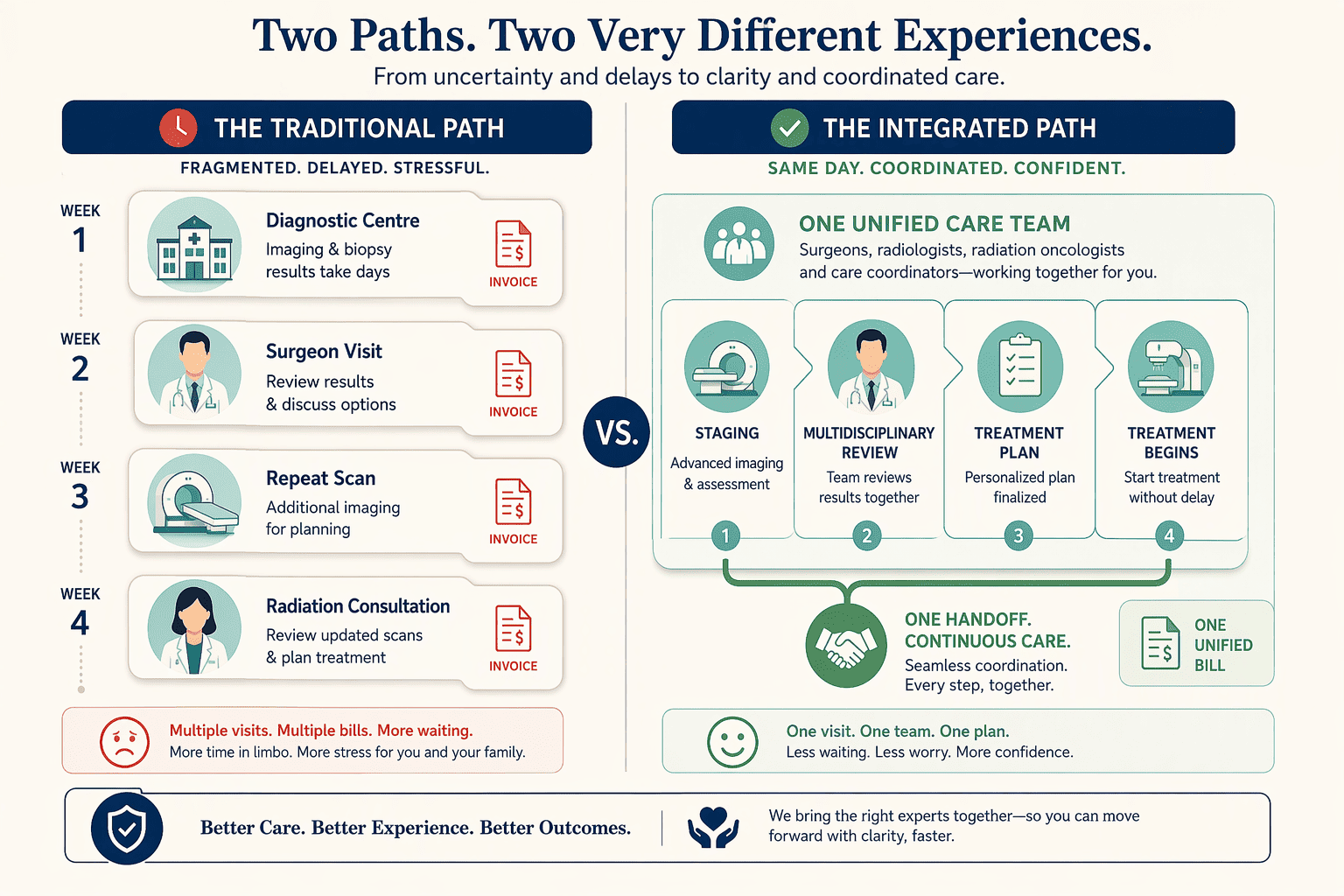
In a fragmented pathway, the calendar fills with dead air. You might spend three weeks looping between diagnostic centres, surgeon appointments, and a radiation consultation at another hospital, each requiring a fresh file, a fresh registration, and often a repeated expensive scan. Each stand-alone invoice adds to your out-of-pocket burden before a cohesive plan exists. The colorectal surgeon who worked you up has no institutional pressure to coordinate immediate handoff to the radiation suite across town, and precious biological time slips away.
An integrated centre compresses that timeline into a single week. The moment your PET-CT and core biopsy are complete, the results flow to a shared digital repository visible to every member of the tumour board. Your surgical, medical, and radiation oncologists sit down for your case review within days, not weeks.
They agree on whether neoadjuvant therapy should come first, whether the radiation field must be sculpted to protect a specific organ at risk, and how soon postoperative chemotherapy should start. This synchronisation produces a consolidated care plan and a single-source billing file, significantly cutting the duplicate professional fees and logistical costs that inflate cancer-care expenditure. Centres of excellence documented by Tata Memorial Centre operate 11 hospital institutions across 7 states specifically to provide this thorough cancer care, and at the hospital level, oncologists with integrated infrastructure can move you from first consult to initiated treatment within the same admission or the same calendar week.
The Technology and Infrastructure That Make Integration Work
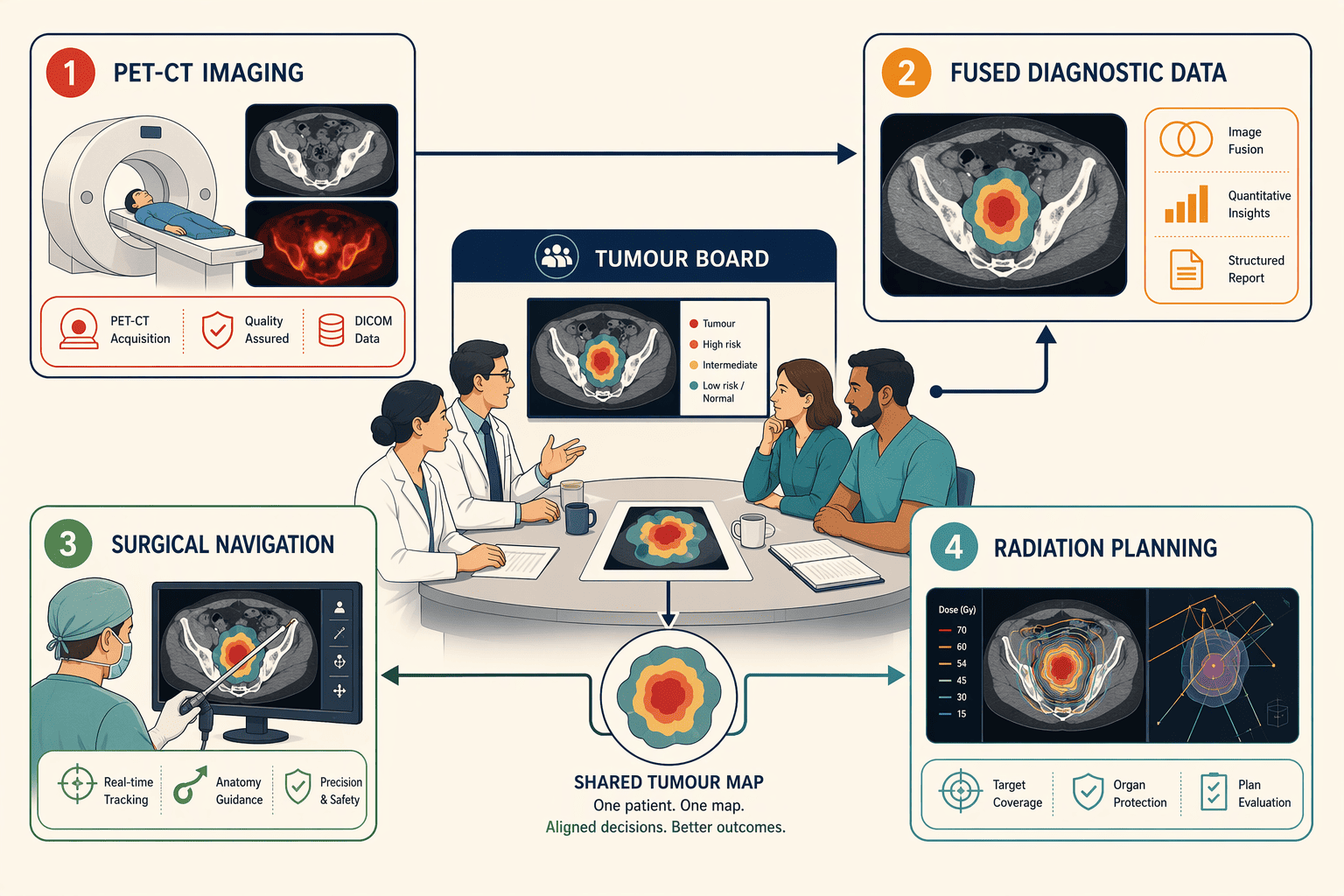
An integrated cancer centre earns its clinical capability through a thorough technology stack that enables precision from diagnosis through treatment delivery. Shared imaging anchors the workflow. Radiation planning and surgical navigation both demand the same high-resolution fused dataset. A co-located PET-CT fuses metabolic (PET) and anatomical (CT) information in a single acquisition, so the radiation oncologist and the surgeon look at the same disease map when they sit together at the tumour board.
For radiation delivery, the presence of advanced platforms separates a genuinely contemporary centre from one relying on decades-old technology. The MR LINAC combines a magnetic resonance imaging scanner with a linear accelerator to visualise soft-tissue tumours and adjust the beam in real time during treatment. This is especially critical for prostate, liver, and pancreatic malignancies, where the organ shifts with breathing or bladder filling during the session.
TrueBeam systems deliver millimetre-accurate IMRT, IGRT, and VMAT. Gamma Knife radiosurgery handles deep brain lesions and small cranial targets in a single session with sub-millimetre precision using 192 cobalt-60 sources. The radiation oncologist selects between SRS for intracranial lesions and SBRT for extracranial oligometastatic disease, guided by the plan the tumour board ratified.
Robotic surgical platforms provide the enhanced dexterity required for minimally invasive resections in narrow pelvic and thoracic spaces. When the gynaecological oncology team performs a complex hysterectomy with pelvic lymph-node dissection through tiny incisions, robotic instrumentation translates the surgeon's hand motions into precise instrument movements, minimising blood loss and accelerating recovery. This technology communicates with the same imaging repository the radiation team uses. That shared infrastructure is what makes active integration technically possible, not administration jargon.
Cancers Treated and the Role of Dedicated Programs Like the Breast Cancer Unit
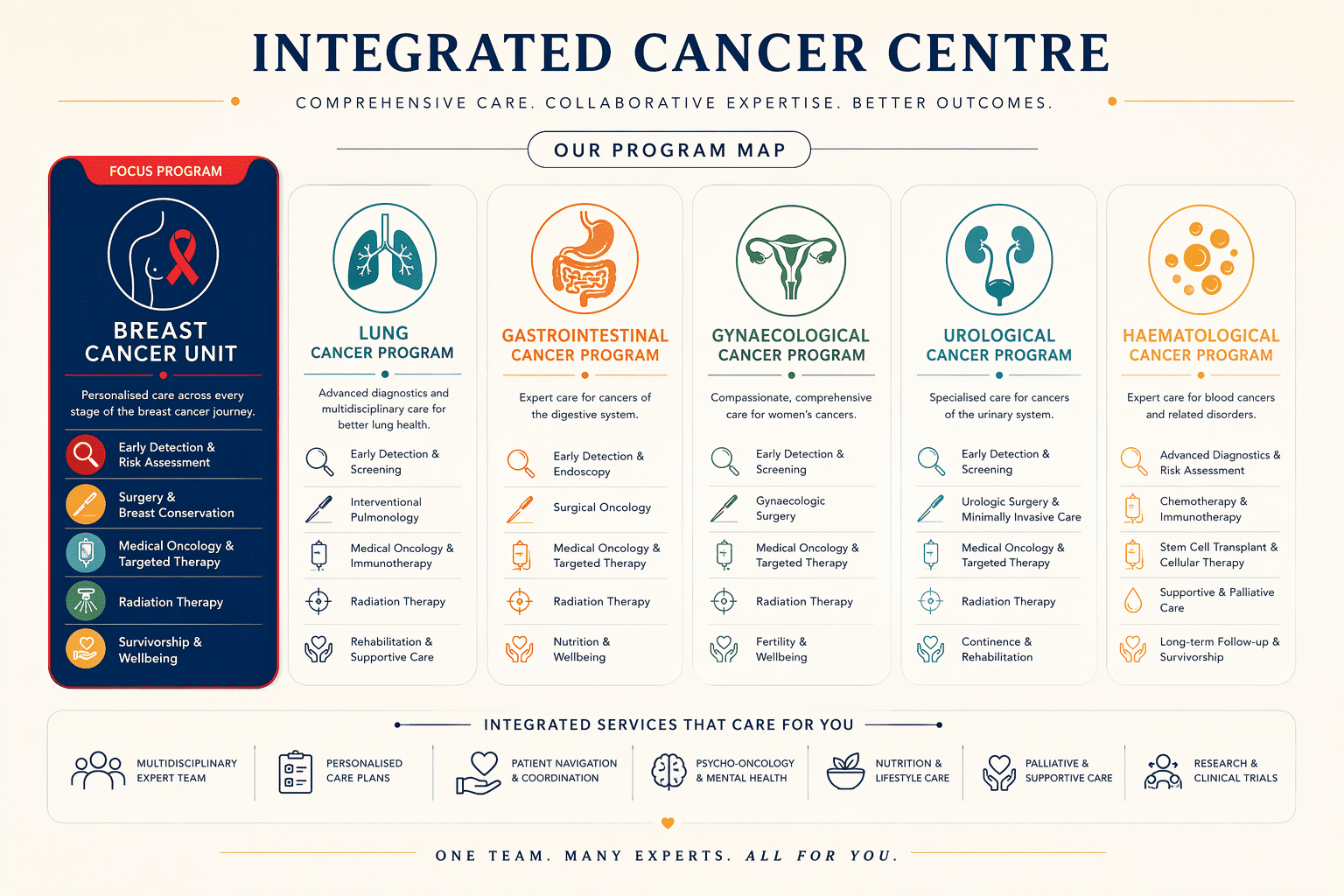
An integrated centre operates at two altitudes simultaneously. At the broad level, it must manage the full oncological disease spectrum: breast, lung, gastrointestinal (oesophageal, gastric, colorectal, pancreatic, hepatobiliary), gynaecological (ovarian, endometrial, cervical), urological (prostate, kidney, bladder), and haematological (leukaemia, lymphoma, multiple myeloma) malignancies. The surgical oncology department at the Advanced Centre for Treatment Research & Education in Cancer (ACTREC) demonstrates the depth required, with its breast service alone recording 6395 OPD consultations and its head-and-neck division adding another 2467 consultations, while the department operates 13 ORs per day and executed more than 1500 major surgical procedures in 2018 despite infrastructure disruption during renovation.
Breadth without organ-specific depth creates shallow care.
The dedicated Breast Cancer Unit within an integrated hospital serves as the clearest proof-of-concept for focal expertise inside a broad infrastructure. Here, a specialist breast surgeon like Dr. Vaishali Zamre, who holds advanced training in oncoplastic reconstruction from the Cardiff School of Medicine, UK, under Professor Robert Mansel, works with medical and radiation oncologists who see the same mammogram and the same elastography ultrasound on the same workstation. Dr. Zamre offers clinical breast examination, breast imaging interpretation, breast biopsies, oncoplastic breast conservation surgery, and reconstruction including partial, total, implant-based, and autologous techniques, all within a workflow where the chemotherapy order and the radiation fractionation schedule arrive from colleagues seated in the same ward corridor. A patient diagnosed with triple-negative breast cancer receives her tumour-board determination for dose-dense neoadjuvant chemotherapy from the medical oncologist, followed by an operation with immediate implant-based reconstruction from the surgical team, then adjuvant chest-wall irradiation from the radiation oncologist, all coordinated by a single clinic manager logging each step into a unified electronic health record.
Credentials and Team Expertise: What to Verify Before You Choose
The verification your family needs to perform when evaluating a cancer centre is concrete, specific, and answerable in a single telephone call to the medical director's office. Demand explicit confirmation of the five signals below. A facility that cannot produce a clear affirmative to each one is likely a series of independent private practices sharing a mailing address.
- Documented tumour board practice: Confirm that surgical, medical, and radiation oncologists hold routine, scheduled, recorded case-review meetings where new patient plans are discussed before treatment is initiated. This is the single most predictive signal of active integration.
- On-site full-time specialists: Ask whether the oncologists are employed as full-time dedicated faculty stationed at that campus, not visiting consultants who rotate between multiple private hospitals. Full-time presence drives institutional accountability.
- Co-located diagnostic capability: Verify that PET-CT, 3D mammography, and pathology processing operate in the same building as the treatment suites. High-resolution ultrasound with elastography belongs on this checklist too. Separate diagnostic locations fragment the imaging workflow and introduce calibration mismatches in radiation planning.
- Single-site integrated billing: Look for a unified patient account that consolidates surgical fees, chemotherapy drug charges, and radiation fractions into one hospital bill, rather than separate invoices issued by independent specialty offices. This structural integration reduces out-of-pocket duplicate costs.
- Full technology suite under one roof: Identify whether the centre houses IMRT, IGRT, VMAT, SRS, and SBRT-capable linear accelerators such as TrueBeam or MR LINAC, plus robotic surgery platforms, all accessible to every specialty on the tumour board without external referral.
Accessing an Integrated Centre: A Guide for Patients in Haryana, Delhi NCR, and Punjab
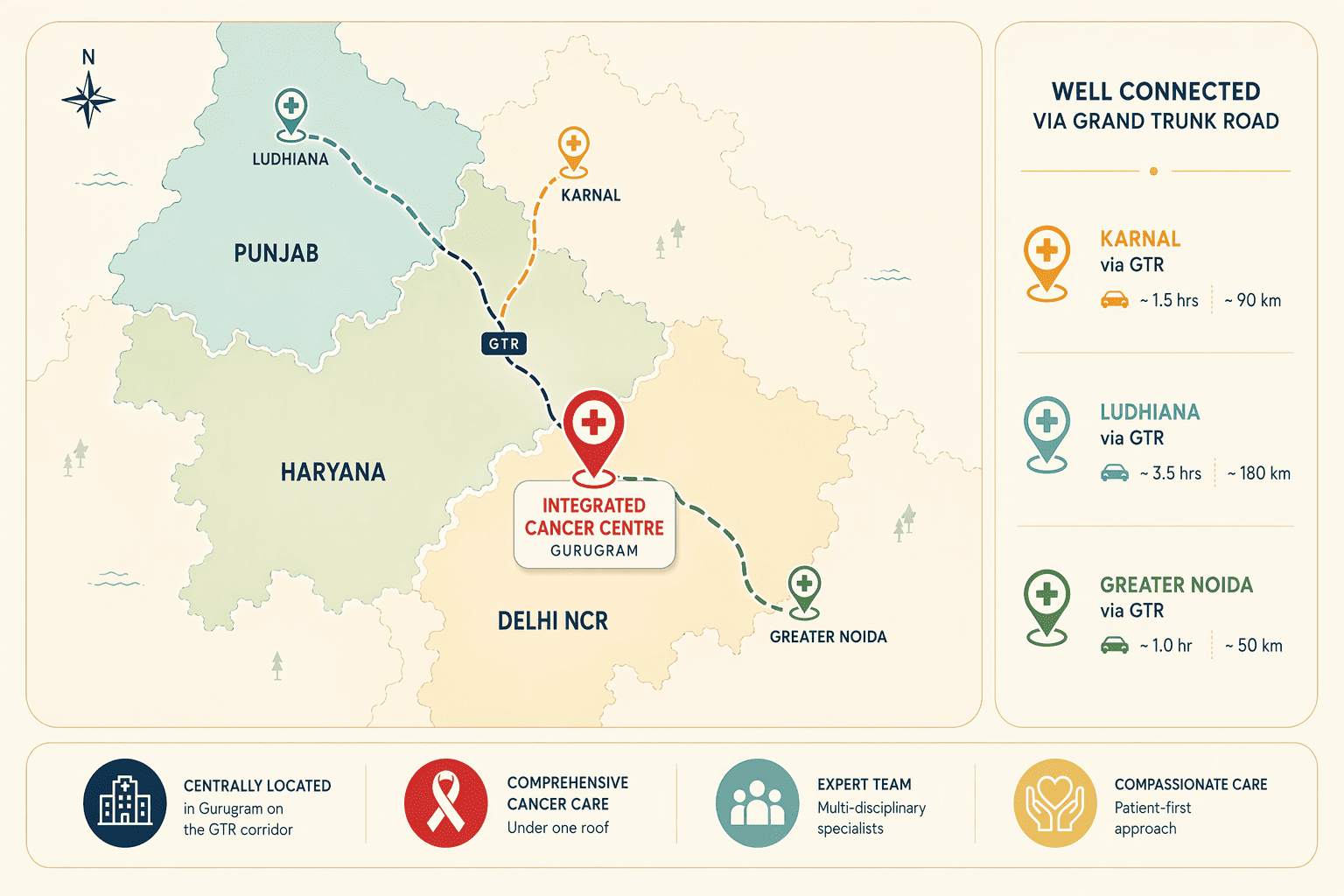
For a patient travelling from Karnal, Ludhiana, or Greater Noida, geography shapes every treatment decision. The journey to a high-quality integrated cancer centre along the Grand Trunk Road corridor demands that the facility sits within a feasible same-day drive while offering every capability from PET-CT staging to robotic resection. Fortis Cancer Institute, Gurugram, positioned on the southern edge of the National Capital Region and connected via the Delhi-Jaipur Expressway segment, has benchmark credentials as a verified integrated centre housing full-time surgical, medical, and radiation oncologists who deliver documented tumour board practice and same-week multi-specialty consultations.
The institute's catalogue of advanced systems covers the technologies that define contemporary precision: MR LINAC for real-time soft-tissue visualisation during treatment, TrueBeam for millimetric IMRT and IGRT arc therapy, Gamma Knife for single-session cranial radiosurgery, and co-located PET-CT ensuring radiation planning images and surgical navigation images originate from the same scan session. Its dedicated breast cancer program, referenced by the Centre's clinical documentation, demonstrates the model where a patient receives neoadjuvant drug therapy, oncoplastic surgery, and adjuvant irradiation sequenced by a standing multidisciplinary panel.
Access verification for regional patients requires attention to transport corridors. The centre sits within reasonable ambulance and family-car reach from the Kundli-Manesar-Palwal Expressway (KMP) and National Highway 48, reducing the travel burden that so often disrupts treatment adherence when daily radiation fractions stretch over six weeks.
For those living closer to the Sonipat-Panipat belt, a 105-bed dedicated cancer hospital such as Andromeda Cancer Hospital, Kundli, offers surgical, radiation, and medical oncology under one roof with specialised breast-oncology services led by a surgeon trained at the Cardiff School of Medicine and equipped with 3D full-field digital mammography, high-resolution ultrasound with elastography, stereotactic biopsy, and whole-body PET-CT. Its medical oncology unit delivers chemotherapy, immunotherapy, targeted therapy, and endocrine therapy through a fully equipped chemo-daycare facility, while its radiation oncology suite manages head-and-neck, breast, prostate, genitourinary, gynaecological, lung, oesophageal, gastrointestinal, brain, spine, bone, soft-tissue, paediatric, and haematological cancers. Travelling families in the GT Road, EPE, and WPE catchment area can evaluate this centre alongside the Gurugram benchmark, using the same tumour-board verification checklist for both.
Conclusion
The search for a cancer facility that combines surgical oncology, radiation therapy, and medical oncology under one roof comes down to one question: does your case get discussed at a tumour board where all three specialists sit together? If it does, the physical address matters less than the clinical coordination behind it.
Look for same-week consultations that share one imaging system and one billing desk. Those are the everyday signs that a centre treats integration as a workflow, not a slogan.
Your verification checklist is short. Make sure there is routine tumour board review, full-time on-site specialists in each discipline, co-located PET-CT, single-site billing, and a technology suite that includes IMRT-capable linacs and robotic surgery.
Fortis Cancer Institute, Gurugram, runs an MR LINAC, TrueBeam, Gamma Knife, and disease-site-specific programs, which makes it a practical reference point for patients travelling from Haryana, Delhi NCR, and Punjab.
Frequently Asked Questions
What are the core benefits of getting surgical oncology, radiation therapy, and medical oncology at a single, dedicated cancer hospital?
A single-hospital model eliminates fragmented diagnostic repetition, forces specialists to harmonise plans through a tumour board before treatment starts, and compresses the diagnosis-to-treatment timeline from weeks to days. Unified billing and a shared imaging repository reduce out-of-pocket duplication directly.
Which cancers can be treated comprehensively under one roof at this kind of facility?
An integrated centre typically handles breast, lung, gastrointestinal (oesophageal, gastric, colorectal, pancreatic), gynaecological, urological (prostate, kidney, bladder), head-and-neck, and haematological cancers. Dedicated disease-site programs add focused expertise within this broad capability.
What specific advanced radiotherapy and diagnostic technologies should I look for in an integrated cancer centre?
Look for a co-located PET-CT for unified staging, and radiotherapy systems such as:
- MR LINAC for real-time soft-tissue tracking
- TrueBeam for millimetric IMRT/IGRT/VMAT arc therapy
- Gamma Knife for single-session cranial radiosurgery
- SRS/SBRT capability for stereotactic treatments
How does a dedicated breast cancer program within a multi-disciplinary hospital improve diagnosis and treatment?
It coordinates neoadjuvant chemotherapy from a medical oncologist, oncoplastic surgery from a specialised breast surgeon, and adjuvant radiation from a radiation oncologist within one workflow. Same-day multi-specialty consultations and shared mammography reporting remove handoff delays.
What qualifications and multi-specialty expertise should an integrated oncology team possess?
Surgeons should hold MCh or equivalent surgical oncology training with subspecialty organ-specific fellowship experience. Medical and radiation oncologists must be DM or MD-trained with current institutional tumour-board participation. Advanced training in oncoplastic techniques or robotic surgery strengthens a surgical unit.
How do I find a thorough cancer hospital that is accessible to patients in Haryana, Delhi NCR, and Punjab?
Map candidates along the NH-44, KMP, and EPE corridors such as Fortis Cancer Institute Gurugram, a verified integrated centre with full-time specialists, or a dedicated 105-bed facility in Kundli, Sonipat such as Andromeda Cancer Hospital, both accessible via GT Road and offering tumour-board-led multi-specialty care.
Sources
- Breast Oncology | Andromeda - www.andromedahospital.in
- best cancer hospital in India | Fortis Healthcare - www.fortishealthcare.com
- Medical Oncology | Official Website of VMMC & Safdarjung Hospital, New Delhi - www.vmmc-sjh.mohfw.gov.in
- GOVERNMENT OF INDIA DEPARTMENT OF ATOMIC ENERGY LOK SABHA UNSTARRED QUESTION NO 3079 ANSWERED ON 11/03/2026 CANCER TREATMENT CENTRES/ HOSPITALS - cdnbbsr.s3waas.gov.in
- Advanced Centre for Treatment Research & Education in Cancer | Surgical Oncology - actrec.gov.in
- Why Choose Us for Cancer Treatment | Cancer Care | RGCIRC - www.rgcirc.org