
Introduction
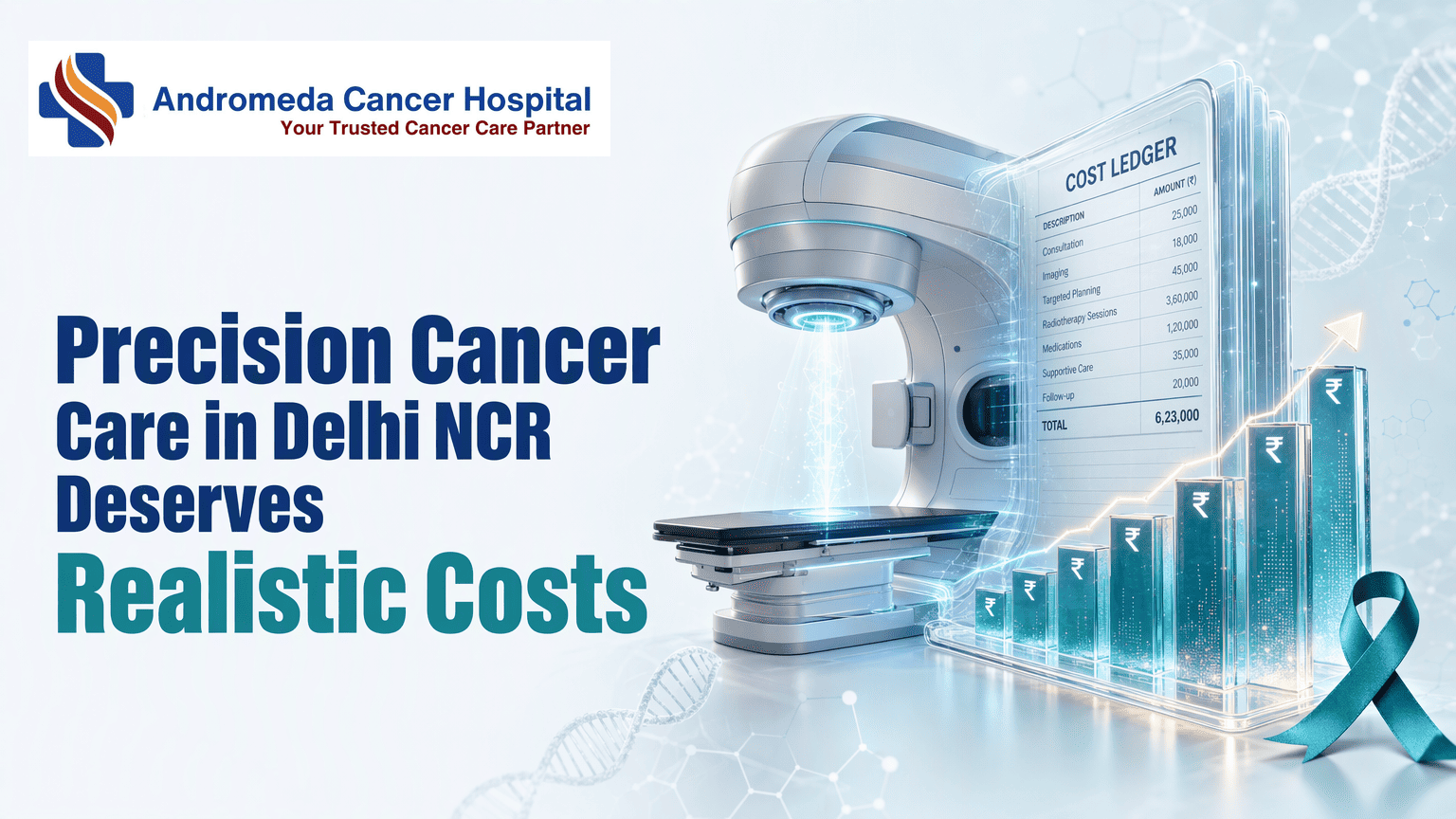
A slight change in a routine health scan can unravel a diagnosis that carries a heavy clinical weight and an even heavier financial one. In Delhi NCR, the journey from a cancer diagnosis to the treatment chair often morphs into a parallel crisis of affordability. The cost of radiation therapy, a cornerstone of cancer care, has climbed to new heights in 2026. A full course now typically lands between ₹1.3 lakh and ₹4 lakh, a range so wide it forces a single, painful question: what exactly are you paying for?
The tension in this price tag lies between the dazzling precision of advanced private hospitals and the stark, data-backed value offered by more focused specialist centres. The bill you face is not an arbitrary number; it is a ledger of machine acquisitions, operational overheads, and brand premiums. Understanding this breakdown is the only way to navigate the financial shock without compromising on the quality of care.
This article strips away the opaque pricing to reveal the exact cost drivers, line by line. From the multimillion-rupee linear accelerators that define modern oncology to the hidden 40 to 50% markup that hospital branding adds, the path to an empowered healthcare decision starts with transparent information.
Key Takeaways
The financial structure of modern radiotherapy in Delhi NCR is driven by a clear set of factors. These points distill the core findings for immediate clarity.
- Full Course Range: A radiation therapy course in Delhi NCR in 2026 costs between ₹1.3 lakh and ₹4 lakh, exclusively driven by the technology and hospital setting selected.
- Technology is the Core Driver: Advanced linear accelerators like the Varian TrueBeam STx that enable IMRT, IGRT, and SBRT command a per-session premium, pushing session fees up to ₹50,000.
- Hospital Tier Amplifies Cost: A corporate hospital chain may charge up to ₹4 lakh for an IGRT course, while a specialist centre charges around ₹2.5 lakh for identical protocols.
- Public Scheme Mitigation: Ayushman Bharat-empanelled hospitals represent the most significant pathway to drastically subsidized or cashless radiation therapy for eligible patients.
- Non-Session Charges Are Significant: Nearly a quarter of your final bill often stems from planning CT scans, physician consultations, and dosimetry.
What Radiation Therapy Actually Costs in Delhi NCR in 2026
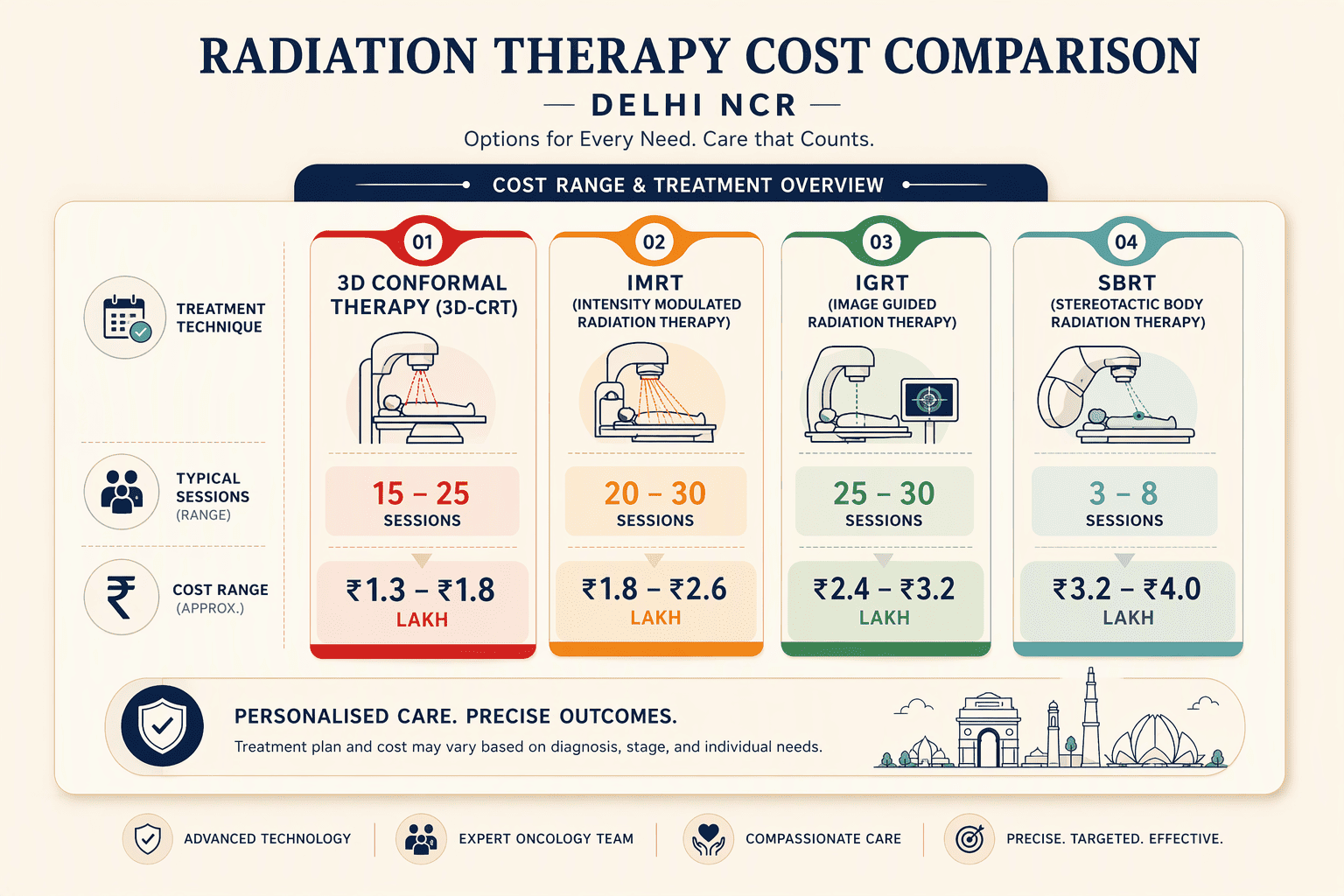
The bottom-line cost of radiation therapy in Delhi NCR in 2026 is not a fixed number. It swings from ₹1.3 lakh to ₹4 lakh for a full treatment course. This massive range is directly governed by the sophistication of the technique and the complexity of the cancer, with a typical course involving 15 to 35 sessions.
On the lower end, conventional 3D Conformal Radiation Therapy (3D-CRT) using older cobalt machines hovers between ₹2,000 and ₹4,000 per session. The costs then climb rapidly. The intensity-modulated and image-guided techniques (IMRT and IGRT) that define modern oncology push per-session rates from ₹4,000 up to ₹12,000. At the very apex, Stereotactic Body Radiotherapy (SBRT), which focuses an exceptionally high dose in just 3 to 8 sessions for small, contained tumors, can cost anywhere from ₹25,000 to ₹50,000 per session. Choosing SBRT over a conventional approach is the single largest lever on your final invoice.
The Technology Factor: How Machines Like the Varian TrueBeam STx Drive Pricing
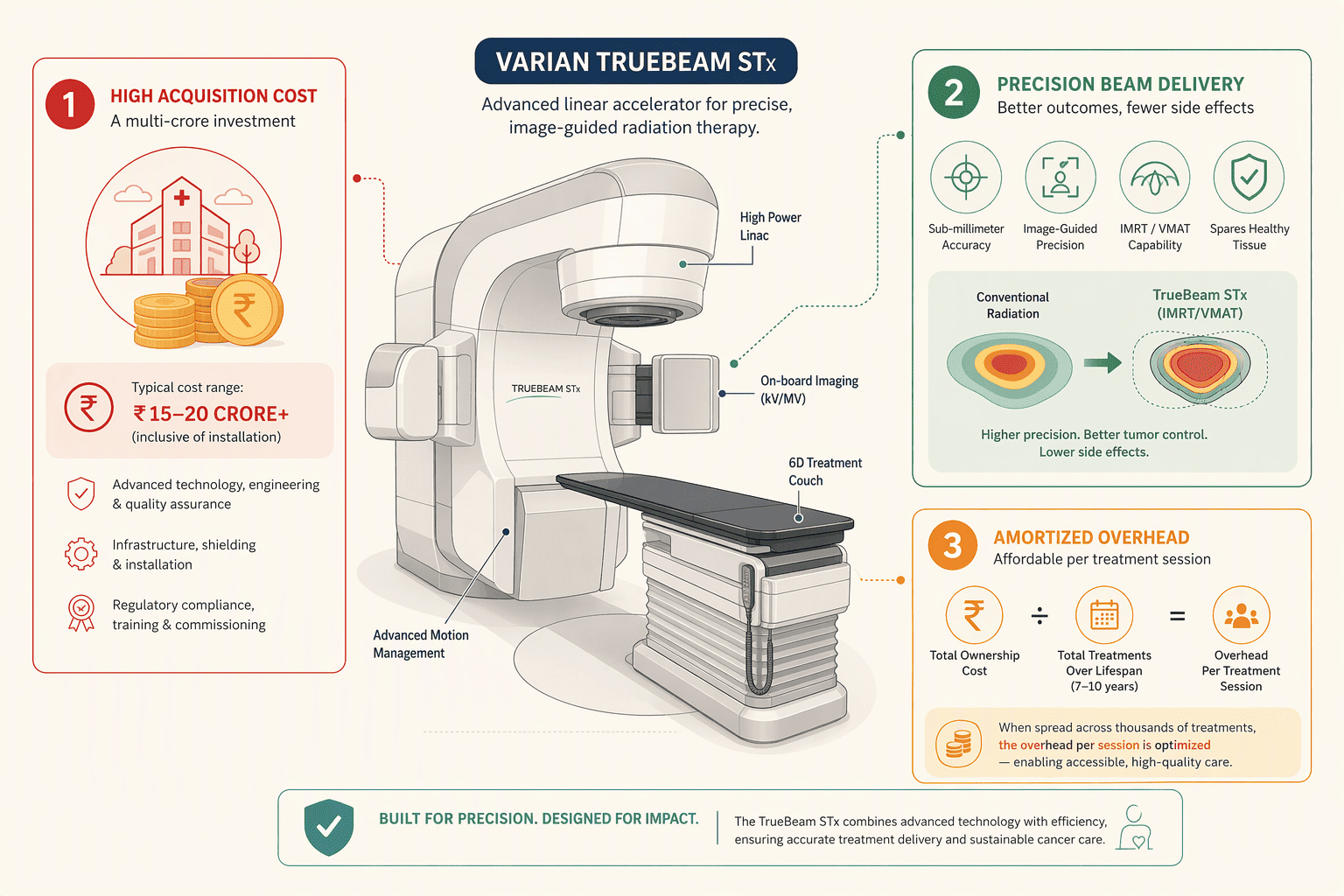
The machine itself accounts for the most significant line item in your radiation therapy bill. A modern linear accelerator's capital and operational overhead directly translate into the per-session charge. Key drivers underpinning this expense include:
- Machine Acquisition: Advanced systems like the Varian TrueBeam STx represent a multi-crore rupee investment for a hospital, a debt service that is amortized across every patient treatment.
- Precision Techniques: The TrueBeam STx is designed for high-precision IMRT, IGRT, and SBRT. These modalities sculpt the radiation beam, requiring complex software, specialized physicists, and rigorous quality assurance checks that generic cobalt machines bypass entirely.
- Session Cost Dichotomy: This technological capability creates a stark billing gap. Per-session fees for modern advanced linac treatments range from ₹12,000 to ₹50,000, compared to just ₹2,000 to ₹4,000 for a session on an older 3D-CRT simulator.
- Operational Overhead: Beyond the hardware, these machines demand a dedicated team, including a medical physicist for treatment planning, a radiation oncologist for precise execution, and specialized engineers for continuous maintenance.
Hospital Tier and Its Direct Impact on Your Final Bill
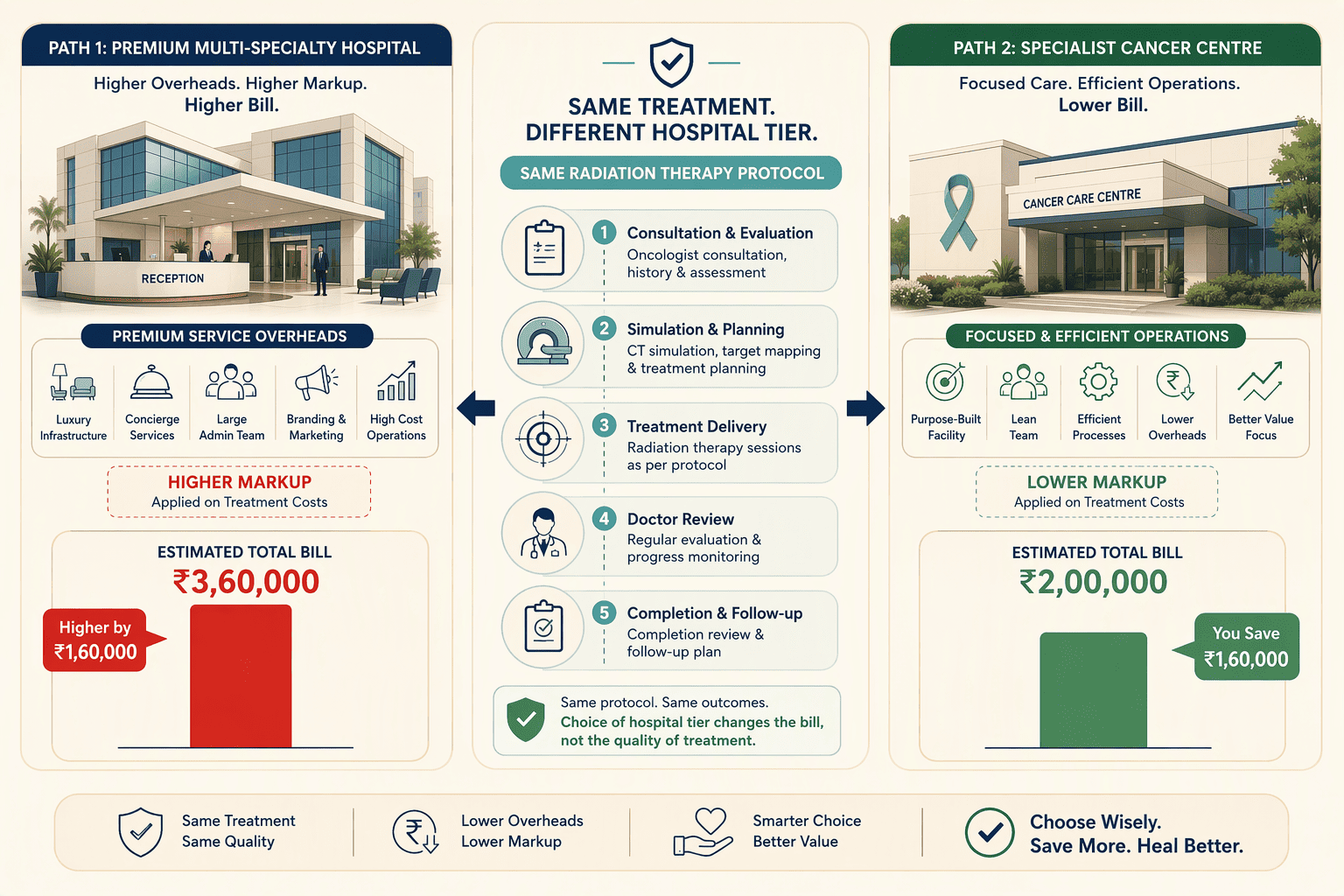
The room you walk into matters as much as the machine treating you. An identical treatment protocol can generate radically different bills depending on whether you walk into a corporate multi-specialty chain or a dedicated cancer centre. The price gap comes from operational overheads, branding premiums, and service consolidation markups.
| Cost Factor | Premium Corporate Chain (e.g., Max, Medanta, Fortis) | Specialist Cancer Centre (e.g., Oncare) |
|---|---|---|
| Full IGRT Course Estimate | Up to ₹4,00,000 | Approximately ₹2,50,000 |
| Price Premium Over Specialist | 40 to 50% higher for identical technology and protocols | N/A (Benchmark) |
| Primary Cost Drivers | Wider brand marketing, multi-specialty administrative overhead, premium real estate, higher physician engagement fees | High-volume throughput, lean administrative model, focused radiology staff allocation |
The markup is substantial. Industry research confirms that prices at specialist centres can be approximately 40 to 50% lower than those at broader healthcare providers. Choosing a hospital that uses the same Varian TrueBeam STx but operates with a focused, high-volume oncology throughput can directly slice nearly two lakh rupees off a complete IGRT course.
Every Component That Makes Up a Radiation Therapy Bill
Before a single beam of radiation is ever switched on, a patient incurs a sequence of non-negotiable fixed costs:
- Planning scans: The planning phase begins with a planning or simulation CT scan, which maps the tumour in three dimensions and requires custom-molded immobilization devices to hold you perfectly still each time, and pre-treatment imaging and lab tests for baseline mapping can cost a patient between ₹5,000 and ₹20,000.
- Physician and physics fees: Following the scan, a medical physicist spends hours on dosimetry, calculating the precise angles and intensities of radiation, a professional fee that is bundled into the planning charge; additionally, physician consultation fees, which start before the treatment and continue as weekly reviews known as OTVs (On Treatment Visits), can range from ₹500 to ₹5,000 for each interaction at a private facility.
- Supportive care costs: The bill accumulates supportive care costs that are often overlooked until they land on a post-discharge invoice, including medications for managing radiation-induced inflammation, nutritional supplements prescribed to counter treatment fatigue, and specialized dressings.
How Delhi NCR’s Costs Compare With Other Indian Metros and Abroad
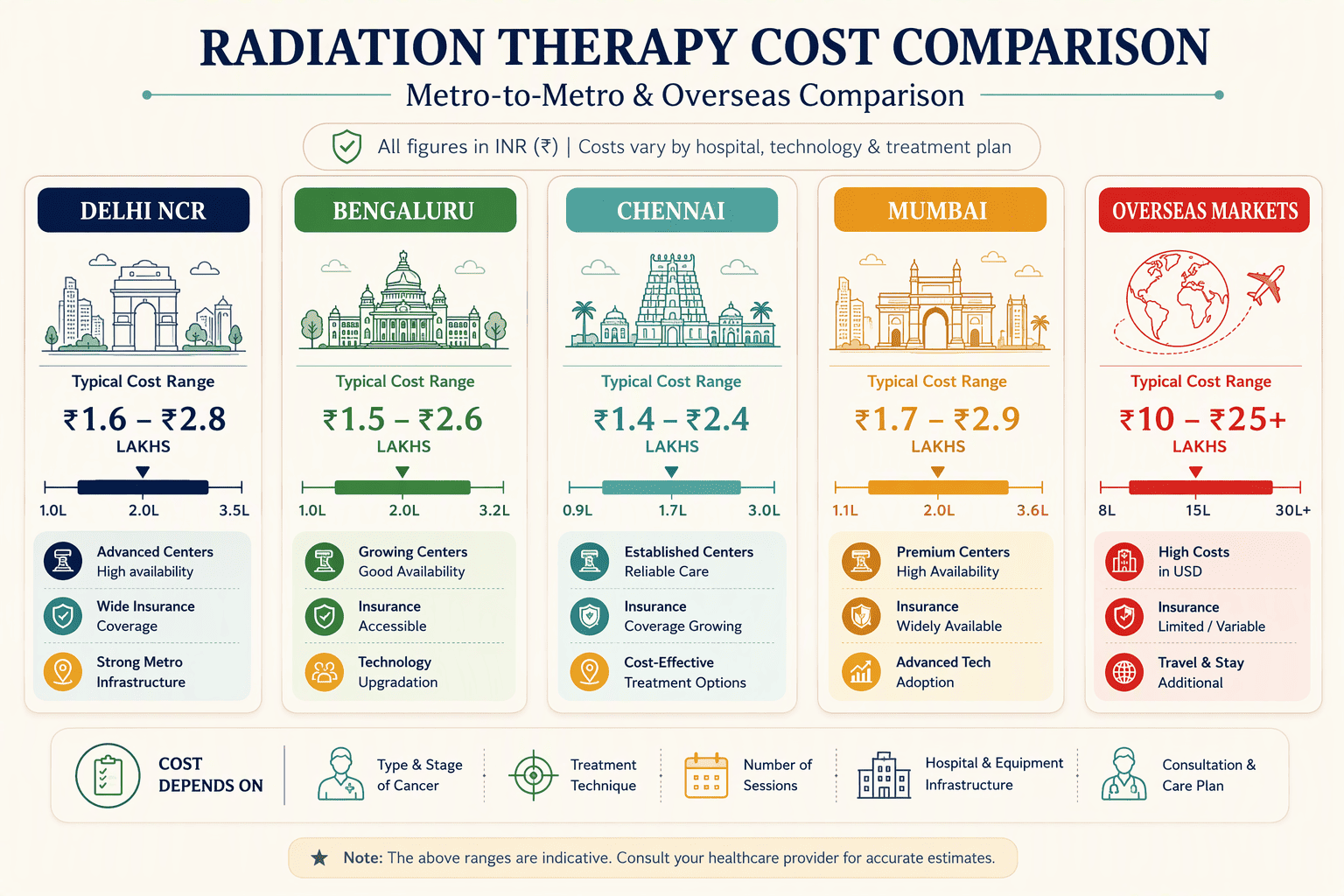
Within India, Delhi NCR sits on the upper-mid rung of the oncology pricing ladder. The city's range of ₹1.3 lakh to ₹4 lakh places it roughly on par with the premium oncology markets of Bengaluru and Chennai, which mirror these prices at the ₹1.4 lakh to ₹4 lakh mark. The nation's absolute ceiling, however, remains Mumbai, where the cost of identical technology is pushed to between ₹1.5 lakh and ₹4.5 lakh, driven by higher real estate premiums and a steeper operational burn rate.
This metropolitan premium becomes sharply visible when you look at tier-2 cities. Relocating a treatment plan from Delhi NCR to a city like Pune brings the price band down to ₹1.2 lakh to ₹3.2 lakh. The reduction is the direct result of lower real estate costs and staffing overheads.
This domestic differential is a rounding error, however, when placed on the global stage. Against the $20,000 to $50,000 price tag common in the United States or the United Kingdom, India's absolute most expensive private option remains radically accessible. The national medical infrastructure, even in an expensive Delhi NCR hospital, functions at a fraction of the West's cost floor.
Proven Pathways to Manage and Reduce Radiation Therapy Expenses
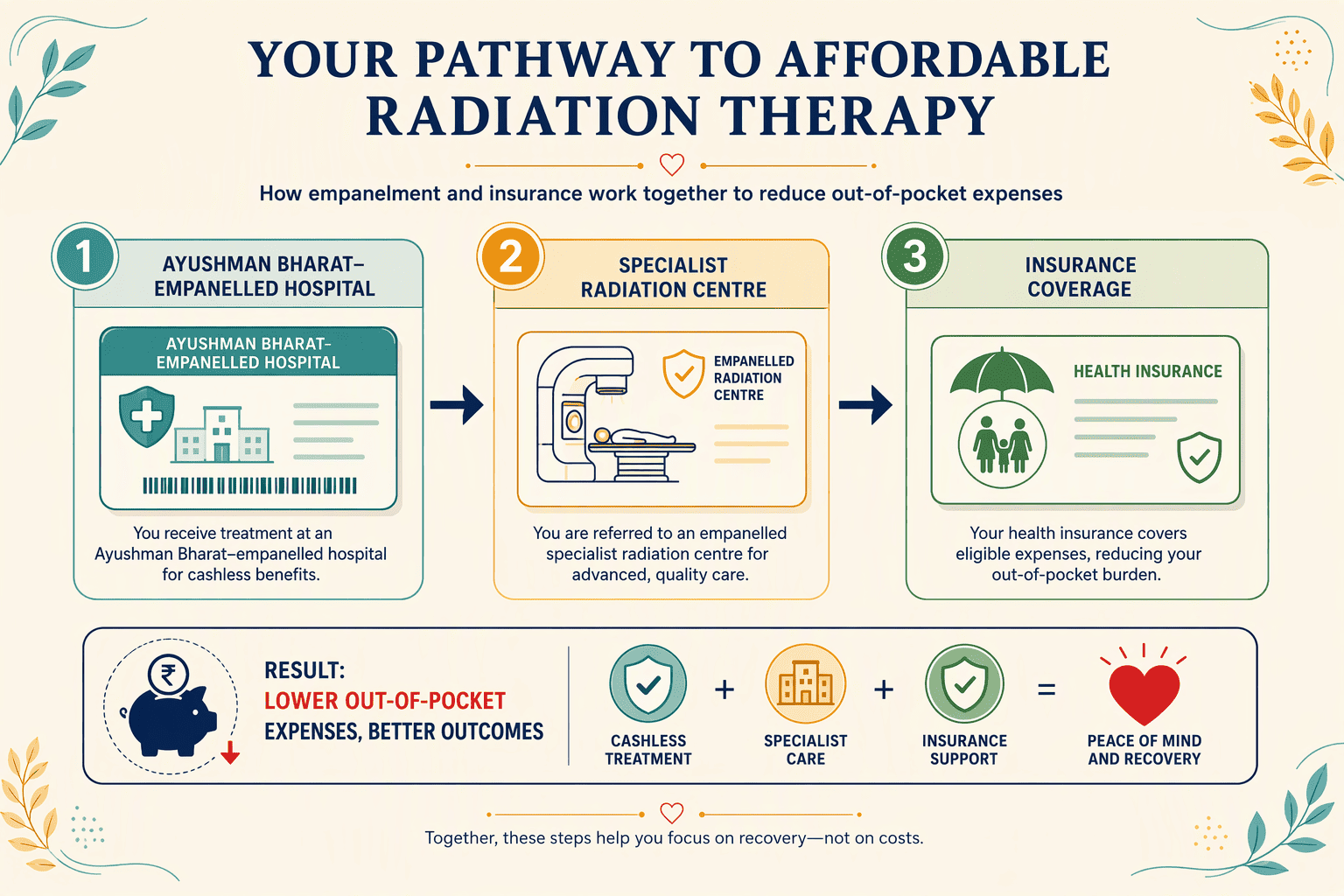
Escaping a premium bill in Delhi NCR means acting on three billing pathways that materially lower out-of-pocket expenditure.
- Choose an Ayushman Bharat-empanelled hospital: Instantly converts the cost to a cashless or deeply subsidized event for covered cancer types, directly slashing the ₹1.3 lakh floor.
- Opt for a specialist centre over a corporate chain: Dedicated oncology centres deliver the same Varian TrueBeam STx hardware and IGRT protocol at a 40 to 50% discount compared to corporate multi-specialty chains.
- Consider geographical arbitrage: Temporarily shifting treatment to a high-volume tier-2 city centre (e.g., Pune) reduces the billing ceiling from ₹4 lakh to ₹3.2 lakh while maintaining modern technology access.
Additionally, negotiating a fixed 'package rate' for the complete course upfront nearly always secures a lower total outlay than paying per session, and platforms like Milaap provide a documented crowdfunding channel for support medications and auxiliary bills.
Conclusion
The steep cost of radiation therapy here originates in hardware value amplified by brand positioning. The precision of a TrueBeam STx is a clinical necessity that justifies a premium over older cobalt relics. A 40 to 50% markup for the same beam in a corporate lobby is an operational choice, not a medical outcome. In Delhi NCR's 2026 pricing landscape, specialized high-volume centres break the link between cost and care quality. Informed provider selection remains your most effective tool to control expenses without diluting the medicine.
Frequently Asked Questions
What are the primary factors driving the high cost of radiation therapy in Delhi NCR?
Costs are driven by the type of linear accelerator (older cobalt vs. advanced TrueBeam STx), the complexity of the technique (3D-CRT vs. IMRT/IGRT), and the hospital tier. Corporate multi-specialty chains carry a significant 40 to 50% brand and operational overhead premium compared to dedicated specialist cancer centres for identical protocols.
How do equipment and technology like the Varian TrueBeam STx influence treatment pricing?
The Varian TrueBeam STx enables high-precision IGRT and SBRT, requiring multi-crore rupee investment and specialized physicists. This technology commands per-session fees from ₹12,000 to ₹50,000. In contrast, older 3D-CRT machines, which lack these precision capabilities, bill between ₹2,000 and ₹4,000 per session.
What is the typical cost range for a course of radiation therapy in Delhi NCR in 2026?
A full radiotherapy course in Delhi NCR spans ₹1.3 lakh to ₹4 lakh in 2026. The lower end involves conventional 3D-CRT on basic hardware, while the high end represents advanced SBRT or IGRT techniques delivered on systems like the Varian TrueBeam STx at premium corporate hospital chains.
How do radiation therapy costs in Delhi NCR compare with other Indian metro cities or international destinations?
Delhi NCR sits on par with Bengaluru and Chennai at ₹1.3 to ₹4 lakh but is slightly below Mumbai’s ceiling of ₹4.5 lakh. Costs are dramatically lower than tier-2 cities like Pune. All Indian private rates are a fraction of treatment in the US or UK, where courses frequently exceed $20,000.
Which components make up the final bill for a radiation therapy patient?
The bill consists of several components:
- Planning CT scan and immobilization: ₹5,000 to ₹20,000.
- Physicist’s dosimetry planning: Included in the planning charge.
- Per-session radiation delivery fee: Varies by technology (see above).
- Physician consultation and weekly reviews: ₹500 to ₹5,000 per visit.
- Supportive medications and nutritional consults: Additional costs that are almost never optional.
How can patients in Delhi NCR manage or reduce their radiation therapy expenses?
Patients can reduce costs through several strategies:
- Choose Ayushman Bharat-empanelled hospitals for cashless access.
- Opt for high-volume specialist centres over corporate chains to capture a 40 to 50% discount.
- Temporarily relocate treatment to a tier-2 city like Pune.
- Negotiate a fixed upfront package rate for the entire course instead of paying per session.
Sources
- What is the radiotherapy cost in India: treatment pricing guide! - www.oncarecancer.com
- Radiation Therapy Cost: Pre & Post Treatment Breakdown - www.hdfcergo.com