
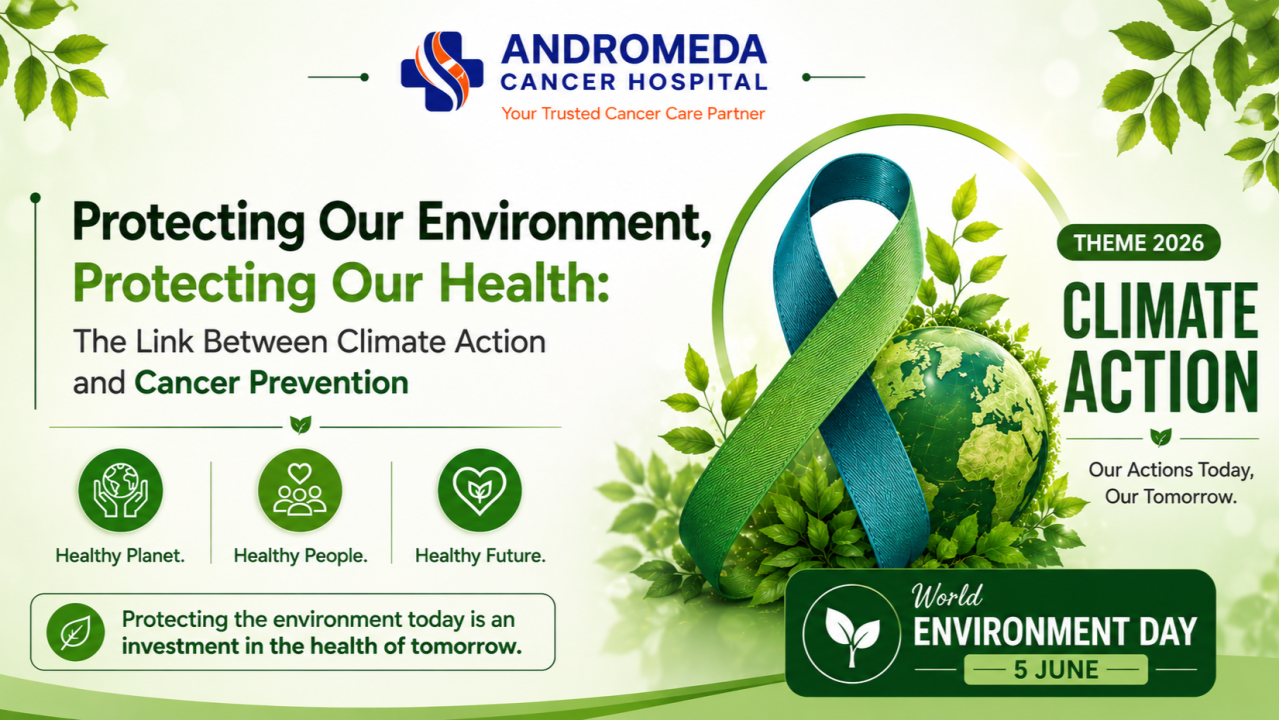
Every year on 5 June, the global community observes World Environment Day—an important reminder that human health and environmental health are closely connected. The 2026 theme, "Climate Action," encourages individuals, organizations, and governments to take meaningful steps toward a healthier and more sustainable future. Protecting the environment is not only about conserving natural resources—it is also about protecting public health and reducing disease risk.
While genetics and lifestyle factors such as diet, physical activity, and tobacco use play an important role in cancer development, environmental exposures are increasingly recognized as contributors to cancer risk. According to the World Health Organization (WHO), nearly 99% of the world's population breathes air that exceeds recommended air-quality guidelines, exposing millions to potentially harmful pollutants every day. Air pollution is associated with approximately 7 million premature deaths annually worldwide.
The International Agency for Research on Cancer (IARC), the specialized cancer agency of WHO, has classified outdoor air pollution as a Group 1 carcinogen, indicating sufficient scientific evidence that it can cause cancer in humans.
How Environmental Exposures Can Influence Cancer Risk
Environmental pollutants contain substances that can affect normal cellular function over time. Long-term exposure may contribute to genetic changes, chronic inflammation, oxidative stress, and disruption of normal cellular repair mechanisms. These changes can increase the likelihood of abnormal cell growth and, in some cases, cancer development.
Some of the key biological effects include:
- DNA Damage: Certain pollutants can alter DNA, increasing the risk of mutations during cell division.
- Chronic Inflammation: Ongoing exposure to harmful substances may create conditions that support abnormal cell growth.
- Oxidative Stress: Excess free radicals can damage healthy cells and affect natural repair processes.
Common Environmental Carcinogens and Associated Cancers
Environmental Exposure
Commonly Associated Cancers
- Air Pollution (PM2.5, Diesel Exhaust, Industrial Emissions)
- Lung Cancer
- Ultraviolet (UV) Radiation
- Melanoma, Basal Cell Carcinoma, Squamous Cell Carcinoma
- Asbestos Exposure
- Mesothelioma, Lung Cancer
- Benzene and Certain Industrial Chemicals
- Leukemia and Other Blood Cancers
- Tobacco and Second-Hand Smoke
- Lung, Oral, Esophageal, Bladder, and Several Other Cancers
Recognizing Early Warning Signs
While prevention remains essential, early detection continues to be one of the most effective tools in improving cancer outcomes. Individuals should seek medical advice if they experience:
- A persistent cough lasting more than three weeks
- Blood in sputum
- Unexplained weight loss
- Persistent fatigue without an obvious cause
- A non-healing oral ulcer
- Persistent hoarseness of voice
- Unusual lumps or swelling
- Changes in moles or skin lesions
- Blood in urine or stool
These symptoms do not necessarily indicate cancer, but timely medical evaluation is important.
What Can We Do?
Cancer prevention extends beyond hospital walls and requires collective action.
As Individuals
- Avoid tobacco in all forms and minimize exposure to second-hand smoke.
- Use sunscreen and protective clothing during prolonged sun exposure.
- Choose walking, cycling, or public transportation whenever feasible.
- Support initiatives that improve air quality and environmental sustainability.
- Participate in recommended cancer screening programs.
As Healthcare Institutions
- Reduce unnecessary single-use plastics in non-clinical areas wherever safe alternatives are available.
- Strengthen waste segregation and recycling practices.
- Promote responsible biomedical waste management.
- Encourage digital documentation to reduce paper consumption.
- Adopt energy-efficient systems and environmentally responsible practices.
Even small actions—carrying a reusable water bottle, choosing reusable bags, reducing avoidable plastic consumption, and properly segregating waste—can collectively contribute to a healthier environment and healthier communities.
A Shared Responsibility
Climate action is not only an environmental priority—it is also a public health priority. Every step toward cleaner air, safer environments, and sustainable healthcare contributes to reducing disease burden and improving quality of life.
This World Environment Day, let us recognize that cancer prevention begins long before diagnosis. By protecting our environment today, we contribute to healthier communities, healthier generations, and a healthier future for all.
Healthy Planet. Healthy People. Healthy Future.
#WorldEnvironmentDay2026#ClimateAction#CancerPrevention#EnvironmentalHealth#SustainableHealthcare