

When you receive a cancer diagnosis, treatment decisions benefit from multiple specialist perspectives working together rather than one doctor evaluating your case alone.
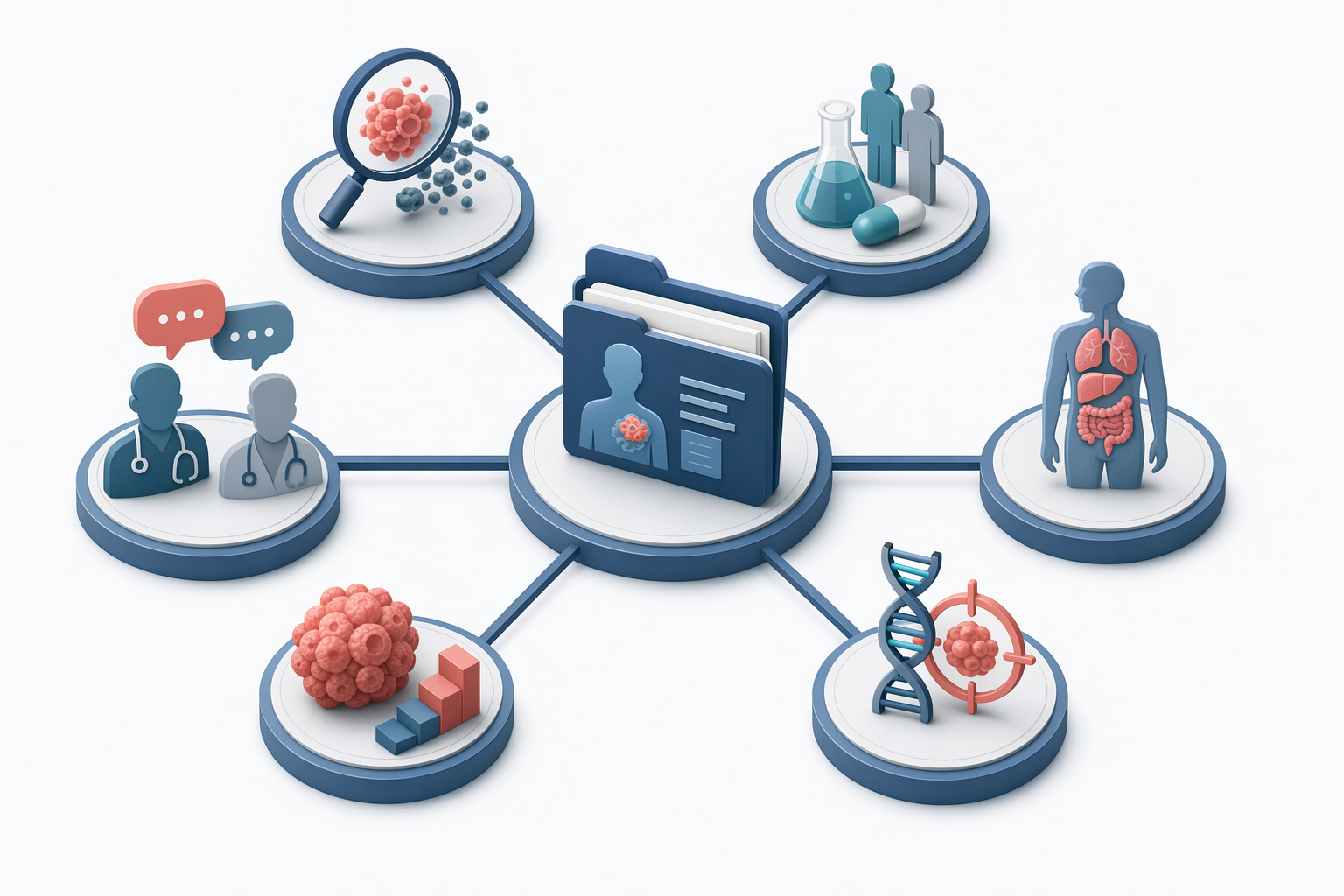
Multidisciplinary tumor boards bring surgical oncologists, medical oncologists, radiation oncologists, pathologists, and radiologists into one consultation to review imaging, pathology, and molecular data simultaneously.
Key Takeaways
- Tumor board consultations convene surgical, medical, and radiation oncologists with pathologists and radiologists to review one patient's case together and formulate a unified treatment plan
- The consultation process follows a structured sequence: radiologist presents imaging, pathologist reviews tissue samples, surgeon evaluates operability, and oncologists propose systemic and radiation therapy options
- Thorough cancer centers offer universal tumor board evaluation for newly diagnosed patients, while second opinion services provide patient-initiated tumor board access
- Tumor board review becomes mandatory for rare cancer subtypes, clinical trial eligibility, and multiorgan involvement, requiring coordinated care
- The full process from case submission to receiving recommendations spans two to four weeks, including imaging review, pathology preparation, board scheduling, and post-board consultation
What Is a Multidisciplinary Tumour Board Consultation?
You can access personalised, multidisciplinary cancer board consultations for newly diagnosed cancer at three primary locations: comprehensive cancer centres such as Andromeda Cancer Hospital, academic hospitals with dedicated oncology departments, and specialised cancer facilities that coordinate care across multiple disciplines.

Collaborative Specialist Review for Newly Diagnosed Patients
A tumour board consultation is a scheduled meeting where surgical, medical, and radiation oncologists collaborate with pathologists and radiologists to review a single patient's case. Instead of consulting each specialist separately, the patient's imaging, pathology reports, and medical history are presented to the entire team at once. This collaborative review replaces single-doctor decision-making with a unified treatment plan shaped by multiple experts. Weekly tumour board meetings led by board-certified oncologists ensure that complex cases receive a thorough evaluation before treatment begins.
Core Specialist Roles in a Tumour Board
Five key specialist roles form the standard tumour board team:
- Surgical Oncologist: Evaluates whether surgery is appropriate, what type of procedure would be optimal, and when it should occur in the treatment sequence.
- Medical Oncologist: Reviews systemic therapy options, including chemotherapy, targeted therapy, and immunotherapy, based on tumour biology.
- Radiation Oncologist: Assesses the role of radiation therapy in the treatment plan and determines optimal timing relative to surgery or systemic treatment.
- Pathologist: Confirms the cancer diagnosis, determines tumour grade and molecular characteristics, and identifies biomarkers that guide treatment selection.
- Radiologist: Interprets imaging studies to stage the cancer accurately, assess organ involvement, and monitor treatment response over time.
Understanding who sits on the tumour board helps you anticipate which specialists will shape your treatment recommendations.
Who Participates in a Tumour Board Review?
Extended Specialist Team Beyond Core Oncologists
A thorough tumour board draws on a multidisciplinary team that extends well beyond the three core oncology specialists. At Andromeda Cancer Hospital, the breast oncology centre assembles an eight-member extended roster comprising oncoplastic breast surgeons, medical oncologists, radiation oncologists, radiologists and interventional radiologists, pathologists, pain and palliative care specialists, clinical psychologists, and breast care nurses. This composition reflects the reality that breast cancer care often requires supporting expertise outside traditional surgical, medical, and radiation oncology tracks. Similar multidisciplinary structures are observed at Apollo Hospitals and Max Healthcare, where cancer treatment teams consolidate views from multiple specialities to ensure holistic management.

When Additional Specialists Join Your Case
Team composition adapts to tumour type and individual patient factors—not every patient requires every specialist. A clinical psychologist joins the board when the patient expresses significant anxiety or distress regarding diagnosis, treatment side effects, or survivorship concerns. Pain and palliative care specialists participate in cases where symptom burden is high or when the treatment plan includes aggressive chemotherapy regimens likely to produce difficult side effects. Interventional radiologists step into the discussion when image-guided biopsy, drainage procedures, or minimally invasive ablation may optimise the care pathway. This case-dependent activation logic is grounded in research evidence demonstrating that multidisciplinary tumour board composition scales with clinical complexity and available institutional resources. By structuring participation around individual case needs rather than deploying every specialist on every case, the board ensures each patient receives precisely the expertise their situation demands—no more, no less.
Once the team assembles, the tumour board consultation follows a systematic review process designed to synthesise all clinical evidence.
What Happens During Your Tumour Board Consultation
Tumour board consultations follow a structured case-presentation sequence designed to synthesise clinical evidence and specialist perspectives into a unified treatment plan. Understanding this process helps you recognise the depth of expertise shaping your care recommendations.

Case Presentation and Imaging Review
The consultation opens with a radiologist presenting imaging findings from CT, MRI, or PET scans. Next, the pathologist presents biopsy results—tumour grade, receptor status, histopathology markers—that define treatment options. The surgical oncologist then summarises your medical history, physical exam findings, and performance status. This layered presentation ensures every specialist reviews the same evidence base before proposing treatment.
Treatment Plan Formulation and Consensus Building
After the case review, the medical oncologist proposes systemic therapy options, chemotherapy, targeted therapy, or immunotherapy, while the radiation oncologist evaluates whether radiation is needed. Dissenting opinions surface when specialists weigh competing approaches. For example, if a surgical oncologist recommends immediate mastectomy but the medical oncologist suggests neoadjuvant chemotherapy first to shrink the tumour, the team deliberates by weighing tumour biology, patient age, and personal preference. Most institutions hold weekly multidisciplinary meetings to formalise these discussions, ensuring consensus before presenting recommendations to you.
Patient Role: Are You Present During the Tumour Board?
Most tumour boards occur without the patient in the room, specialists discuss cases candidly to evaluate all options, but you receive the consensus plan in a follow-up consultation where your oncology team explains recommendations and incorporates your treatment goals. Some cancer centres allow video participation or invite patients to observe portions of the discussion. This separation ensures specialists can deliberate freely while still centring your voice in final treatment decisions. This content is informational only; consult your oncology team directly about your specific case and the tumour board process at your centre.
Institutional commitment to multidisciplinary evaluation varies; some hospitals reserve tumour boards for complex cases, while comprehensive cancer centres build universal review into standard care.
How Andromeda Cancer Hospital's Multidisciplinary Team Evaluates Every Case
At Andromeda Cancer Hospital, all cancer or suspected cancer cases under investigation are candidates for multidisciplinary tumour board discussion, a structural commitment that distinguishes universal review from centres where tumour boards are opt-in or reserved for complex cases. This weekly forum brings together surgical oncologists, oncoplastic breast surgeons, medical oncologists, radiation oncologists, radiologists, pathologists, and pain and palliative care specialists. Cases starting cancer treatment in any modality, including palliative or supportive care, are discussed either before the start of treatment or in the next tumour board meeting after treatment begins. Each case is presented, imaging reviewed in detail, and a consensus reached on staging and treatment sequencing. Beyond initial evaluation, cases return for re-discussion whenever treatment decisions need review or when a change from one treatment modality to another is planned, ensuring continuous multidisciplinary oversight throughout the care journey.

Tailored Treatment Plans Based on Tumour Biology and Patient Health
The tumour board tailors plans to both tumour characteristics, hormone receptor status, HER2 status, grade, and genomic profile, and patient health factors such as age, comorbidities, and functional status. Treatment options are individualised, often including surgery (lumpectomy or mastectomy), radiation, chemotherapy, hormonal therapy, and targeted therapies. Consultants may bring any case to the tumour board for discussion whenever clinical judgment warrants collaborative specialist input, even outside standard protocol triggers. Financial context matters: cancer treatment planning must balance clinical optimality with patient access. The board considers treatment costs alongside medical factors, recognising that recommendations are effective only when patients can follow through. It is important to note that tumour board consultations do not guarantee optimal outcomes; treatment success depends on cancer stage, type, and biology, not just the consultation process.
Knowing when to request tumour board review empowers you to access collaborative specialist expertise at critical decision points.
When Should You Seek a Tumour Board Consultation?
Decision Triggers: Complex Cases and Second Opinion Needs
Tumour board review becomes critical, not optional, in three scenarios. Mandatory cases include rare cancer subtypes, patients eligible for clinical trials, and multiorgan involvement requiring coordinated surgical planning. Strongly recommended situations cover conflicting treatment opinions from multiple oncologists, advanced-stage diagnoses where multiple modalities (surgery, chemotherapy, radiation) must be sequenced optimally, and cases where biomarker testing suggests targeted therapy options. Patient preference applies to any newly diagnosed individual desiring collaborative review before committing to treatment. Many patients with breast cancer seek second opinions specifically to access this multidisciplinary evaluation structure.
Expedited Scheduling for Urgent Cases
Aggressive tumour biology triggers fast-track protocols. Triple-negative breast cancer, symptomatic brain metastases, and rapidly progressing leukaemias typically receive same-week board review, whereas lower-urgency cases, early-stage hormone-receptor-positive breast cancer or slow-growing neuroendocrine tumours, follow standard two-to-three-week scheduling. Time-sensitive treatment windows, such as fertility preservation before chemotherapy or impending spinal cord compression, override routine queues.
Timeline From Tumour Board Review to Treatment Start
The timeline from tumour board review to treatment start is flexible and depends on case urgency and report availability. For urgent cases requiring immediate surgical intervention, an emergency tumour board meeting can be convened on the same day. For standard cases where diagnostic reports are already available or tests are completed during the outpatient consultation, the case is typically discussed at the scheduled tumour board meeting in that week or the following week, usually within one week. Case assembly, including gathering pathology slides, imaging, and molecular reports when needed, determines the overall timeline. Post-board consultation and informed consent are added a few days before treatment initiation. This flexible pathway ensures that aggressive tumour biology requiring immediate intervention receives same-day review, while routine cases follow standard weekly scheduling without unnecessary delay.
Conclusion
Single-oncologist consultations deliver faster treatment initiation, one to two weeks from diagnosis to first treatment, but lack the multi-speciality perspective that tumour boards provide. Thorough cancer centres offering universal tumour board evaluation add two to four weeks to treatment planning but ensure every case benefits from collaborative review. Virtual tumour board services expand access to specialist expertise for second opinions regardless of geographic location, while in-person tumour boards at dedicated cancer hospitals integrate seamlessly with on-site treatment delivery and multidisciplinary care coordination.
As precision oncology advances and treatment options multiply, multidisciplinary tumour boards will increasingly incorporate molecular tumour boards that integrate genomic profiling and targeted therapy expertise alongside traditional oncology specialities, making collaborative specialist review even more key for newly diagnosed cancer patients navigating complex treatment landscapes.
Learn more about Andromeda Cancer Hospital's multidisciplinary cancer evaluation process and schedule a consultation to discuss your diagnosis with their specialist team.
Frequently Asked Questions
How long does a tumour board consultation take?
The tumour board meeting itself typically lasts 10-15 minutes per case. The timeline from initial consultation to board review is flexible and depends on case urgency and availability of diagnostic reports. For urgent cases requiring immediate surgical intervention, an emergency tumour board meeting can be convened on the same day. For standard cases where reports are already available or obtained during outpatient consultation, the case is typically discussed in that week's or the following week's scheduled tumour board meeting, usually within one week.
Will I be present during the tumour board meeting?
Most tumour boards occur without patient presence to allow candid specialist discussion, with results communicated in a separate follow-up consultation where your oncology team explains recommendations and incorporates your treatment goals. Some centres offer patient or family attendance via video or in-person for specific cases, though this varies by institution and meeting format.
Does my insurance cover tumour board consultations?
Tumour board consultations are typically bundled into the overall cancer care plan and covered by health insurance when medically necessary, for complex cases, second opinions, and rare subtypes, but coverage varies by insurer and plan. Patients should verify coverage with their insurance provider before the consultation, especially for virtual tumour boards or out-of-network thorough cancer centres that may require pre-authorisation.
Can I request a tumour board consultation even if my oncologist hasn't recommended it?
Yes, patients can request tumour board review as part of second opinion services or direct consultation at thorough cancer centres. Many institutions offer patient-initiated tumour board access through dedicated oncology departments or virtual tumour board platforms, allowing you to seek collaborative specialist evaluation independently of your current oncologist's recommendation for newly diagnosed cancer.
What's the difference between a tumour board and a second opinion from one oncologist?
A tumour board brings multiple specialists, surgical, medical, and radiation oncologists, plus pathologists and radiologists, into one meeting to review your case simultaneously and formulate a consensus plan. A single oncologist's second opinion provides one expert's independent perspective through sequential consultation. Tumour boards offer broader specialist input and real-time collaborative discussion rather than isolated individual assessments.
Are virtual tumour boards as effective as in-person tumour boards?
Virtual tumour boards maintain clinical quality and consensus-building effectiveness while expanding access to specialist expertise regardless of geographic distance. Research on National Cancer Grid virtual tumour boards demonstrates that remote specialist collaboration produces treatment recommendations comparable to in-person review, making virtual formats especially valuable for second opinions when physical attendance at thorough cancer centres is impractical.
How many cases does a typical tumour board review in one meeting?
Tumour boards typically review 8-15 cases per session, depending on case complexity, specialist availability, and institutional scheduling protocols. Each case receives 10-15 minutes of dedicated discussion time, with urgent cases often added to the agenda for same-week review when aggressive tumour biology or critical treatment timing requires fast-track evaluation outside the standard meeting schedule.
Sources
- Tumor Board | Multidisciplinary Cancer Care at Amerix Cancer Hospital - amerixcancer.com
- BigOHealth | Best Healthcare Platform in India for Cancer & Specialty Care - www.bigohealth.com
- Multidisciplinary approach to cancer care in Rwanda - ecancer - ecancer.org (2023)
- National Cancer Grid Virtual Tumor Boards of Head and Neck Cancers - ascopubs.org
- Second Opinion for Cancer Treatment | Amerix Super Speciality Hospital - amerixhospital.com