
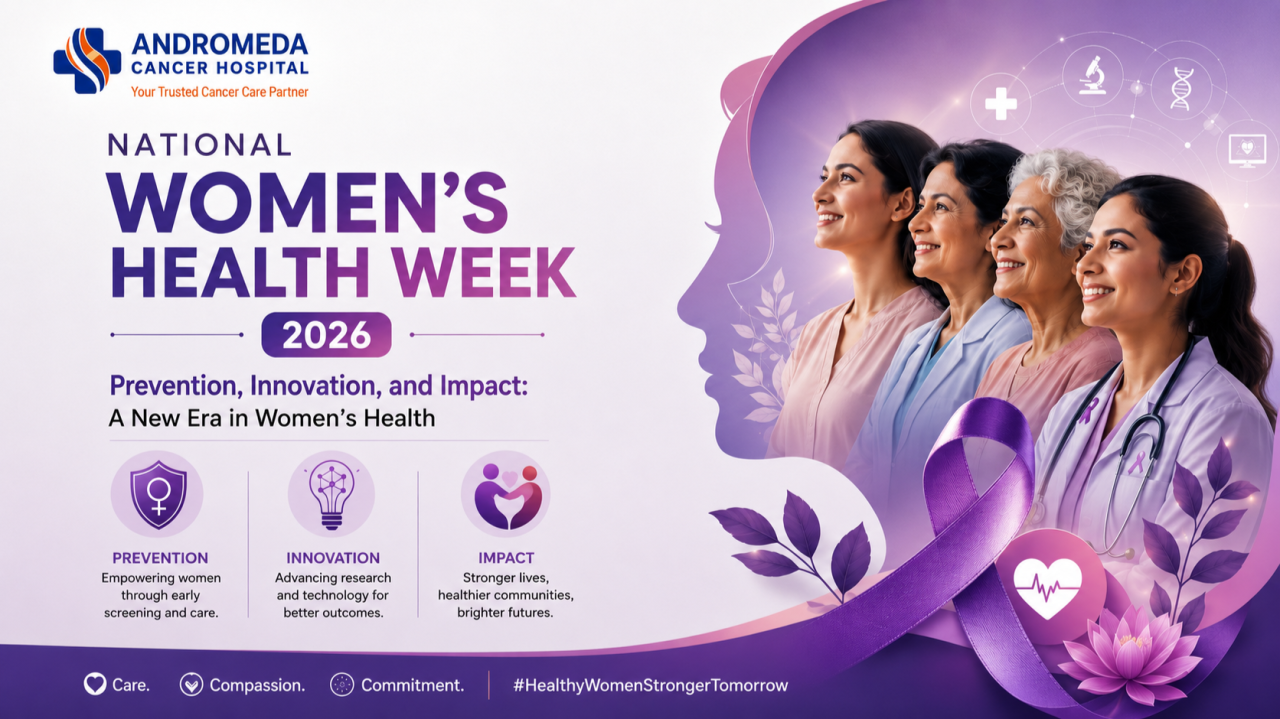
National Women’s Health Week 2026 (May 10–16) arrives with a timely and urgent message: “Prevention, Innovation, and Impact: A New Era in Women’s Health.” The theme is more than a slogan—it reflects a global shift in healthcare. The key changes are:
- From treating disease late to detecting risk early
- Preventing illness proactively
- Improving long-term quality of life for women.
For decades, women’s health conversations were often limited to pregnancy or reproductive care. Today, the focus is broader and smarter: heart disease, cancers, bone health, hormonal changes, mental wellness, and lifestyle-related diseases are all part of the preventive healthcare landscape.
Yet despite advances in medicine, millions of women still miss essential screenings. In India alone, more than 15.23 crore cervical cancer screenings and 8.37 crore breast cancer screenings have been conducted through national health initiatives—but awareness, accessibility, and follow-up care remain major challenges.
The reality is simple: early screening saves lives.
Why Preventive Screening Matters More Than Ever
Breast cancer is now the most commonly diagnosed cancer among women globally. According to the World Health Organization, survival rates exceed 90% in many high-income countries—but remain significantly lower in India, where delayed diagnosis is common.
Recent Indian screening campaigns revealed a concerning trend: nearly 4 out of 5 women screened required medical monitoring, follow-up, or intervention, despite many believing they were healthy.
The challenge is not only disease—it is late detection.
Many women ignore warning signs because symptoms appear mild, responsibilities come first, or preventive care feels unnecessary when they “feel fine.” Unfortunately, cancers such as breast and cervical cancer often develop silently in early stages.
That is why modern women’s healthcare is increasingly focused on risk prediction, early diagnosis, and personalized prevention.
Your Screening Checklist by Decade
In Your 20s and 30s: Build the Prevention Foundation
This is the decade where preventive habits have the greatest long-term impact.
Important Screenings & Preventive Tests
- HPV Vaccination (Vaccination offered to girls from the age of 9, recommended before HPV exposure, but can be taken at a later age)
- Pap Smear / HPV Testing for cervical cancer screening
- Blood pressure monitoring
- Thyroid profile
- Iron deficiency and anemia screening
- Blood sugar testing for diabetes risk
- Mental health and reproductive wellness checkups
- Family history assessment for hereditary cancers
Women-Specific Cancer Focus
Cervical cancer remains one of the most preventable cancers because precancerous changes can often be detected years before cancer develops. WHO continues to emphasize HPV vaccination and routine cervical screening as major preventive tools.
Modern Advances
- HPV DNA-based testing with higher sensitivity
- AI-supported cervical screening interpretation
- Digital reproductive health tracking apps
- Teleconsultation-based preventive gynecology
In Your 40s and 50s: The Early Detection Decade
This is the stage where screening becomes critical—not optional.
Essential Health Tests
- Annual Mammograms
- Clinical breast examination
- Colorectal Cancer Screening
- Lipid profile and cardiac risk assessment
- Diabetes screening
- Menopause and hormonal evaluation
- Liver and kidney function tests
- Vitamin D and bone health assessment
Women-Specific Cancer Focus
Breast cancer risk rises significantly after 40. The encouraging reality is that cancers detected at Stage 1 are associated with dramatically better treatment outcomes, less aggressive therapy, and improved survival.
Breakthroughs in Women’s Health
Healthcare innovation is transforming screening:
- AI-assisted mammography improves early detection of subtle lesions
- 3D mammography (Tomosynthesis) provides clearer imaging in dense breast tissue
- Genetic risk profiling helps identify women at high hereditary risk
- Liquid biopsy research is exploring cancer detection through blood samples
- Personalized screening intervals based on individual risk
These advances are moving healthcare from “one-size-fits-all” screening toward precision prevention.
In Your 60s and Beyond: Focus on Longevity and Quality of Life
Healthy aging is not just about living longer—it is about living independently, actively, and confidently.
Essential Screenings
- Bone Density Scan (DEXA)
- Breast and colorectal cancer surveillance
- Cardiac health evaluation
- Vision and hearing assessments
- Cognitive and neurological screening
- Osteoporosis monitoring
- Fall-risk and mobility evaluation
Key Women’s Health Concerns
Post-menopausal women face increased risks of:
- Osteoporosis
- Heart disease
- Frailty fractures
- Hormonal health complications
- Late-stage cancer diagnosis
Preventive screening during this stage can significantly improve the quality of life and reduce the risk.

The Bigger Picture: Prevention Is Power
One of the strongest findings emerging globally is that lifestyle and preventive care can dramatically change outcomes. Recent international research suggested that more than a quarter of healthy years lost to breast cancer are linked to modifiable lifestyle factors such as smoking, physical inactivity, obesity, and poor diet.
At the same time, global reports estimate that nearly 1.5 billion women worldwide still lack access to essential preventive screenings.
That is why the 2026 theme—“Prevention, Innovation, and Impact”—is so important. Prevention means encouraging women to prioritize routine checkups before symptoms appear. Innovation means using AI, precision diagnostics, and advanced screening technologies to detect disease earlier than ever before. Impact means ensuring that early detection translates into healthier families, reduced healthcare burden, and longer, healthier lives for women everywhere.
Women spend much of their lives caring for others. National Women’s Health Week is a reminder that prioritizing their own health is not selfish—it is essential. A mammogram was booked on time. A cervical screening is not postponed. A routine health checkup was completed early.
#Prevention, Innovation, and Impact: A New Era in Women’s Health - Because in this new era of women’s healthcare, prevention creates impact, innovation improves survival, and awareness becomes empowerment.
#NationalWomensHealthWeek2026#WomensHealth#EarlyDetectionSavesLives#PreventiveHealthcare#BreastCancerAwareness#Mother’sDay