
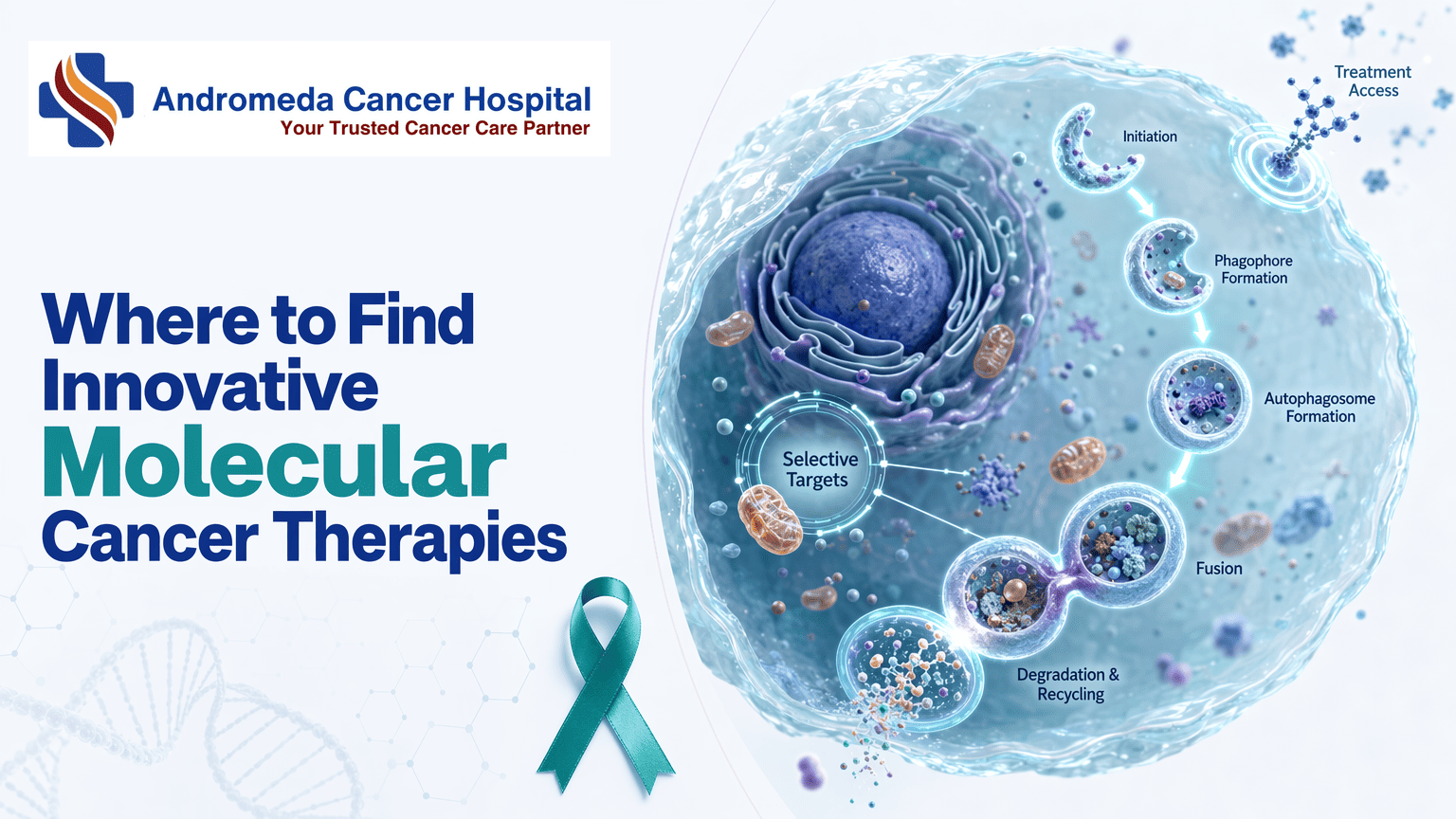
Cancer treatment is evolving beyond one-size-fits-all chemotherapy. Molecular therapies target specific genetic mutations and cellular survival pathways—like autophagy—that help tumors resist standard treatments.
Accessing these precision approaches requires molecular profiling to identify targetable vulnerabilities, followed by multidisciplinary tumor board evaluation to connect patients to targeted drugs or clinical trials.
Key Takeaways
- Autophagy is a cellular recycling process that prevents cancer early but enables tumor survival under chemotherapy and radiation stress
- Molecular profiling—biomarker testing and genomic analysis—reveals whether a tumor depends on autophagy and qualifies for autophagy-targeting therapies
- Autophagy inhibitors like chloroquine and hydroxychloroquine remain investigational, available only through clinical trials in India and internationally
- Precision oncology centers combine PET-CT imaging, immunohistochemistry, and genetic panels to match patients with targeted drugs or trial enrollment
- Multidisciplinary tumor boards interpret molecular profiles and coordinate access to domestic clinical trials or international networks like WIN Consortium and NCI precision medicine trials
What Is Autophagy and Why Does It Matter in New Molecular Cancer Therapies?
To access new cancer therapies that work at the molecular level, patients can look to three pathways: molecular profiling centers like Andromeda Cancer Hospital that offer biomarker testing and genomic analysis, clinical trial networks that match patients to investigational drugs, and investigational-drug platforms facilitated by advanced diagnostics.
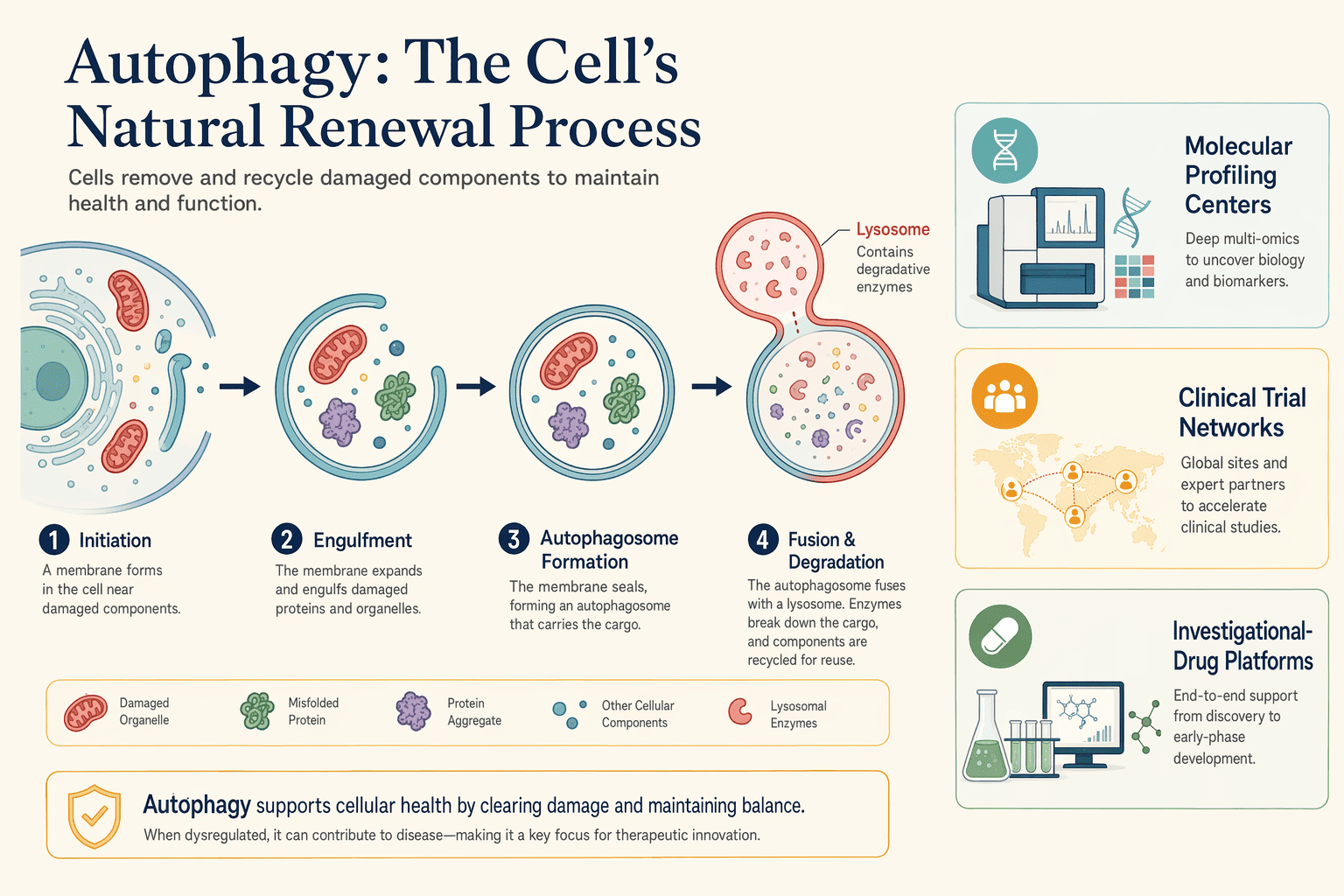
Autophagy: Cellular Recycling That Cancer Cells Hijack
Autophagy is an intracellular degradative process whereby cellular proteins and organelles are engulfed into autophagosomes, digested in lysosomes, and recycled to sustain cellular metabolism. Think of it as the cell's cleanup crew — under normal conditions, it clears damaged components and prevents toxic buildup. But established tumors exploit this same recycling system: when cancer cells face stress from chemotherapy, radiation, or nutrient deprivation, they activate autophagy to survive.
The Double-Edged Role: Prevention Vs. Treatment Resistance
Autophagy plays dual roles in cancer:
- It acts as a tumor suppressor by preventing the accumulation of damaged proteins and organelles before cancer starts.
- Once tumors establish, autophagy becomes a survival mechanism that promotes growth under metabolic stress and can drive resistance to anticancer therapy.
This paradox means that blocking autophagy can restore chemosensitivity in treatment-resistant tumors, but only when molecular profiling identifies autophagy-driven resistance as the dominant mechanism.
Why Molecular Profiling Is the First Step to Accessing Autophagy-Targeted Therapies
Molecular profiling, biomarker testing, genomic analysis, and functional imaging, reveals which role autophagy plays in a patient's tumor. Centers like the Advanced Centre for Treatment Research & Education in Cancer conduct cancer genetics and genomics research that underpins these diagnostic tools. Andromeda Cancer Hospital ensures access to advanced molecular testing through partnerships with accredited laboratories, enabling same-week tumor board review for complex cases and matching patients to autophagy inhibitors or other targeted therapies.
Understanding autophagy's protective role is the first step. The next question becomes: how do cancer cells weaponize this survival mechanism to evade treatment?
How Autophagy Helps Cancer Cells Survive Chemotherapy and Radiation
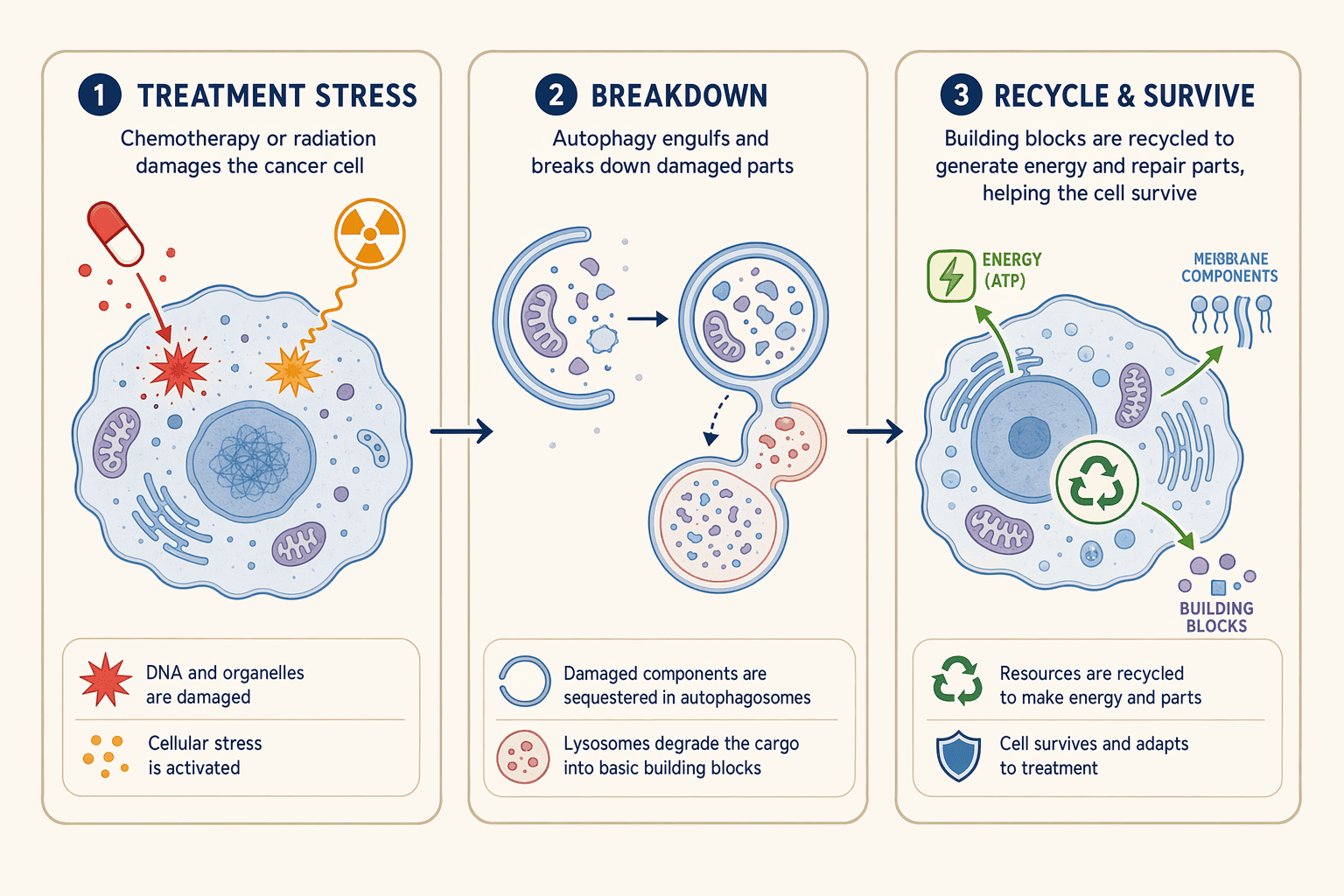
Autophagy is an evolutionarily conserved lysosomal degradation pathway that cancer cells exploit to resist treatment. When chemotherapy or radiation creates metabolic or structural stress, autophagy shifts from its normal housekeeping role into a pro-survival emergency response. This functional plasticity explains why some cancers resist standard therapy despite showing no obvious genetic mutations, the resistance is metabolic, not mutational, and often invisible to conventional testing.
Metabolic Stress Adaptation: How Tumors Use Autophagy to Outlast Chemotherapy
Chemotherapy-induced nutrient deprivation triggers autophagy as a survival reflex. Cancer cells recycle internal components, damaged proteins, lipid droplets, even fragments of their own organelles, to generate ATP and biosynthetic precursors. This self-cannibalization lets them outlast drug pressure for days or weeks, waiting until drug concentrations fall and proliferation can resume. In pancreatic and ovarian cancers, autophagy markers are frequently elevated in treatment-refractory disease, suggesting that cells surviving initial chemotherapy rounds rely heavily on this recycling pathway. The common mistake of escalating chemotherapy doses in resistant cancers without checking autophagy markers can backfire: higher doses may paradoxically trigger more autophagy, worsening resistance rather than overcoming it.
Radiation Resistance and Autophagy Activation
Radiation damage triggers autophagy as a cellular repair mechanism. When ionizing radiation fragments mitochondria or generates reactive oxygen species, autophagy clears the debris, preventing the accumulation of pro-apoptotic signals that would otherwise kill the cell. By removing damaged mitochondria before they can trigger programmed cell death, cancer cells evade the very outcome radiation therapy aims to induce. This mechanism operates across tumor types but is particularly evident in hypoxic regions of solid tumors, where baseline metabolic stress already primes cells for autophagy activation. Radiation doses that would kill autophagy-deficient cells are tolerated when autophagy machinery remains intact.
Clinical Evidence: Autophagy Upregulation in Treatment-Refractory Cancers
Clinical trials have documented autophagy upregulation in chemo-resistant disease, particularly in pancreatic, ovarian, and non-small-cell lung cancers. Autophagy inhibitors such as hydroxychloroquine have been tested in combination with chemotherapy, with the rationale that blocking autophagy during treatment might prevent cells from adapting to metabolic stress. While early-phase trials showed promise in specific contexts, results remain investigational, and autophagy inhibition has not yet become standard of care. The resistance mechanisms outlined above operate in parallel with genetic drivers of resistance, addressing one pathway without the other often yields incomplete responses. Molecular profiling that includes autophagy markers can reveal which resistance mechanism predominates, guiding decisions about treatment intensification versus pathway-targeted intervention.
The three core resistance mechanisms are:
- Metabolic stress adaptation, recycling internal components to survive nutrient deprivation during chemotherapy
- Radiation damage repair, clearing damaged mitochondria to prevent apoptosis after ionizing radiation
- Apoptosis evasion, removing pro-death signals before they accumulate to lethal thresholds
Recognizing autophagy-mediated resistance as a non-genetic mechanism shifts the treatment question from *"Which mutation is driving progression?"* to *"Which metabolic pathway is sustaining survival?"* Molecular profiling that captures autophagy flux, not just static protein expression, can identify patients whose tumors depend on this pathway, making them candidates for autophagy-targeted strategies when conventional dose escalation has failed.
Knowing that autophagy drives resistance naturally leads to the question: what drugs can interrupt this survival pathway, and where can patients access them?
Molecular Therapies That Target Autophagy Pathways: What's Available Today
Autophagy-modulating therapies occupy a fascinating, and still largely investigational, frontier in oncology. While researchers have identified numerous small molecules that either inhibit or activate autophagy in cancer cells, most remain confined to clinical trials. Understanding which agents are available, where patients can access them, and how molecular profiling connects individuals to the right studies is key for anyone exploring new molecular-level cancer therapies.
Autophagy Inhibitors: Chloroquine, Hydroxychloroquine, and Beyond
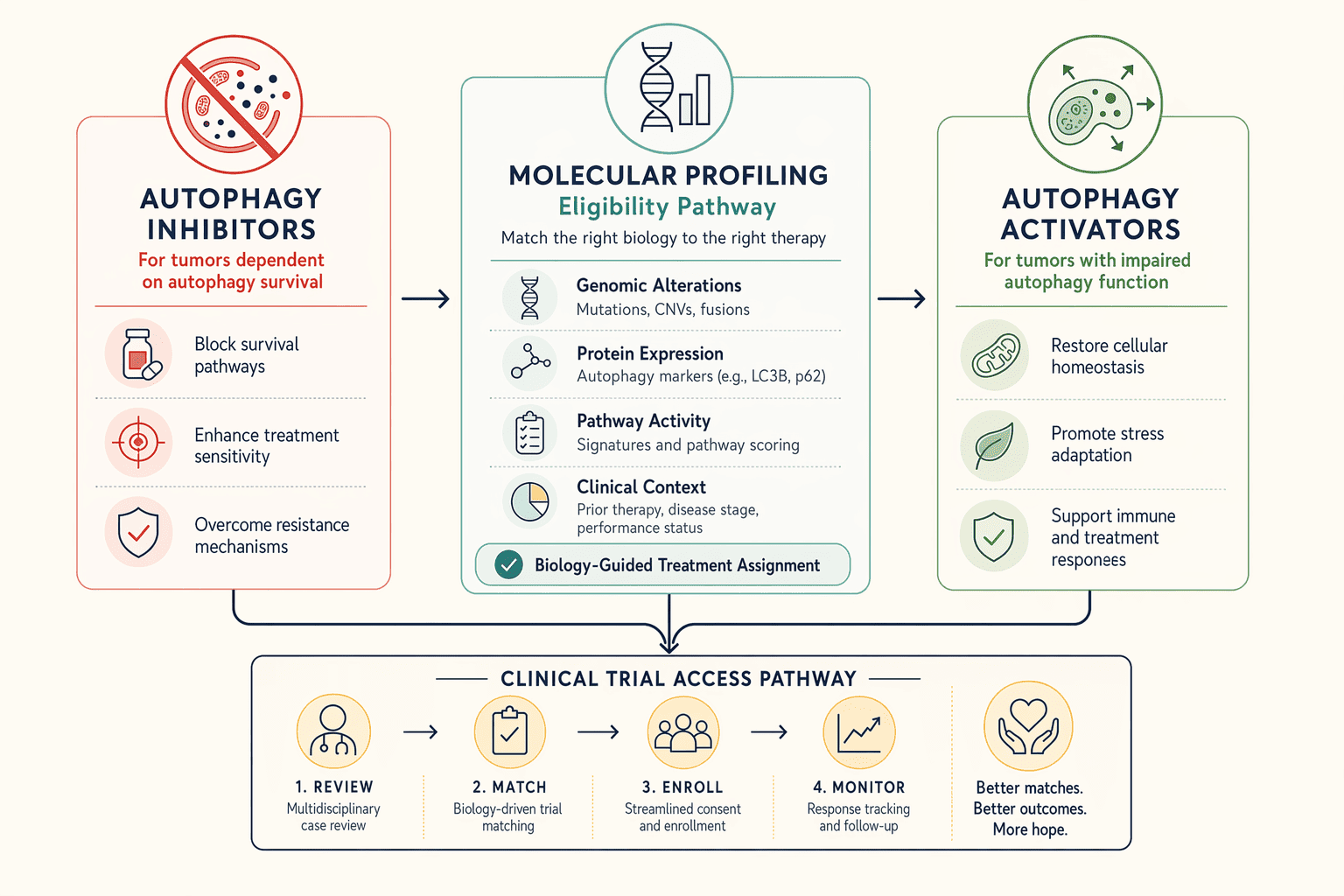
The most clinically advanced autophagy inhibitors are chloroquine and hydroxychloroquine, antimalarial drugs repurposed for cancer research. These agents block the final degradative step of autophagy by raising lysosomal pH, preventing cancer cells from recycling damaged organelles and nutrients under stress. A Phase II trial of hydroxychloroquine combined with carboplatin and gemcitabine in platinum-sensitive relapsed ovarian cancer demonstrated the feasibility of combining autophagy inhibition with chemotherapy, though response rates and biomarker correlations are still being analyzed. Similar Phase I/II studies in pancreatic, colorectal, and lung cancers have tested hydroxychloroquine alongside standard cytotoxic regimens, aiming to sensitize tumors that exploit autophagy for survival under chemotherapy-induced stress. However, these drugs remain investigational and are NOT available as standard care outside clinical trials. Access requires enrollment in an active study, patients interested in autophagy inhibition should ask their oncologist about open trials matching their cancer type and molecular profile.
Autophagy Activators in Cancer Prevention and Immunotherapy
While inhibiting autophagy makes sense for established tumors that depend on it, activating autophagy may benefit early-stage cancer prevention and immunotherapy. Compounds like rapamycin analogs (rapalogs) and metformin stimulate autophagy through mTOR inhibition, promoting the clearance of damaged mitochondria and misfolded proteins, processes that reduce oncogenic stress in pre-malignant cells. In the immunotherapy context, autophagy activation enhances immunogenic cell death: dying cancer cells processed through autophagy pathways release tumor antigens more effectively, priming T-cell responses. Emerging cellular therapies exploit this biology, neoantigen vaccines and CAR-T platforms rely on autophagy-mediated antigen presentation to generate strong immune recognition. The rationale is that autophagy, rather than being universally pro-tumor, plays a context-dependent role: protective in early tumorigenesis and immune priming, but hijacked by advanced cancers for stress resistance.
Clinical Trial Access: India Vs. International Networks
For Indian patients seeking autophagy-targeted therapies, trial access pathways differ substantially from those in high-resource settings. Domestically, the Clinical Trials Registry, India (CTRI) lists Phase I/II studies of autophagy modulators, though the majority remain single-center efforts with limited enrollment capacity. International platforms offer broader access: the NCI's precision medicine trials, NCI-MATCH (Molecular Analysis for Therapy Choice) and ComboMATCH, assign treatments based on molecular abnormalities rather than cancer type, and these trials enroll internationally. The Worldwide New Network (WIN) Consortium connects patients in low-resource countries, including India, to precision oncology trials by partnering with molecular diagnostic networks and trial-matching platforms. Centers like Andromeda Cancer Hospital that offer molecular profiling and convene twice-weekly multidisciplinary tumor boards can match patients to clinical trials through tumor board consultations and trial-network partnerships. This infrastructure bridges the gap between discovering a patient's tumor harbors autophagy-relevant mutations, such as KRAS-driven metabolic stress or TP53 loss leading to impaired autophagy checkpoints, and enrolling in a study testing agents that target those vulnerabilities. For patients exploring these pathways, asking 'Does my tumor profile suggest autophagy dependency, and are there matching trials I can access?' during tumor board review is the critical first step.
While investigational autophagy drugs hold promise, accessing them requires precise diagnostics. Here's how molecular profiling centers identify the right candidates and connect them to appropriate therapies.
How Andromeda Cancer Hospital Uses Molecular Profiling to Personalize Treatment
Precision oncology, also called personalized cancer medicine, is reshaping cancer care in India by moving beyond location-based treatment toward therapies tailored to each tumor's genetic fingerprint. Andromeda Cancer Hospital employs molecular profiling technologies including functional MRI, AI-assisted imaging, and PET-CT to uncover tumor genetics and biology, enabling the multidisciplinary team to match patients with targeted drugs and clinical trials. This section details the diagnostic pathway, tumor board review, and therapy selection process that connects molecular biomarkers to treatment decisions.
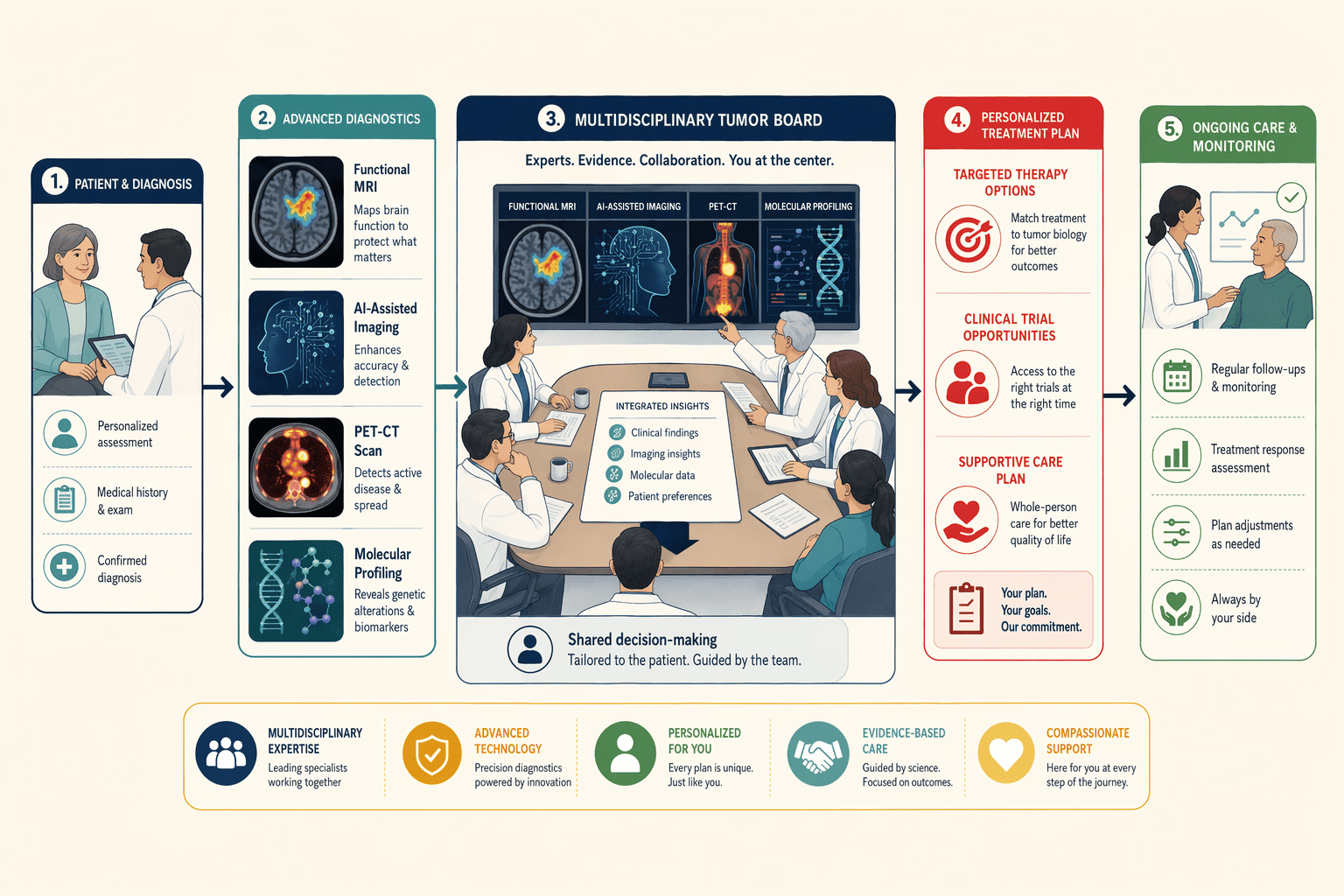
Molecular Profiling Technologies: Pet-Ct, Ai-Assisted Imaging, and Genomic Biomarkers
Andromeda Cancer Hospital's molecular diagnostics suite integrates three core technologies. PET-CT imaging reveals both tumor spread and metabolic activity, high glucose uptake flags aggressive cancer phenotypes and autophagy-dependent survival zones. Functional MRI maps blood flow and oxygen consumption in real time, identifying hypoxic regions where autophagy often drives chemotherapy resistance. AI-assisted imaging analysis applies pattern-recognition algorithms to radiology scans, detecting subtle features human readers may miss, for example, texture heterogeneity correlating with elevated autophagy markers like LC3B.
Under one roof, Andromeda Cancer Hospital coordinates PET-CT, MRI, and immunohistochemistry testing, with results available within one week for tumor board review. Genomic biomarker panels, including tests for HER2, EGFR, and autophagy proteins p62 and Beclin-1, identify actionable mutations the team can target with approved drugs or investigational agents in clinical trials.
The Multidisciplinary Tumor Board: From Biomarker Results to Personalized Treatment Plan
Every Wednesday, Andromeda Cancer Hospital's tumor board, comprising surgical oncologists, medical oncologists, radiation oncologists, pathologists, and nuclear medicine physicians, convenes to interpret molecular profiling data and design individualized treatment strategies. The process follows four steps:
- Molecular profiling completed, PET-CT, IHC biomarker panels, and next-generation sequencing results are compiled in the patient's electronic record.
- Multidisciplinary team reviews biomarker results, pathologists present mutation profiles (HER2+, EGFR exon 19 deletion, autophagy-marker expression), radiologists highlight metabolic hotspots, and nuclear medicine specialists interpret PET-CT uptake patterns.
- Team identifies targeted therapy options or clinical trial matches, medical oncologists cross-reference mutations with FDA-approved drugs and ongoing trials; if autophagy markers (LC3B, p62) are elevated, the team evaluates combination regimens pairing chemotherapy with autophagy inhibitors under investigational protocols.
- Personalized treatment plan presented to patient, the coordinating oncologist discusses the recommended therapy sequence, expected outcomes, and alternative trial options in a dedicated consultation.
The laboratory supports tumor board participation and expert second opinions, ensuring pathology interpretations align with the latest genomic classification systems. Caveat: Tumor board consultations do not guarantee optimal outcomes; treatment success depends on cancer stage, type, and biology.
Targeted Therapy Selection: HER2, EGFR, and Beyond
When molecular profiling identifies specific genetic alterations, Andromeda Cancer Hospital prescribes targeted therapies designed for those mutations. HER2-positive breast or gastric cancers receive trastuzumab-based regimens; EGFR-mutant non-small cell lung cancer is treated with osimertinib or similar tyrosine kinase inhibitors. January 2026 FDA approvals, including breakthrough designations for sevabertinib and zoldonrasib in NSCLC, exemplify how biomarker testing unlocks access to newly approved agents for molecularly defined patient subsets.
The #MyTumorID campaign spotlights biomarker testing, uncovering tumor genetics, and clinical trial matching, principles Andromeda Cancer Hospital applies daily. When autophagy-dependency biomarkers (elevated Beclin-1, low p62) appear alongside targetable driver mutations, the tumor board may recommend dual-pathway strategies: a targeted drug to shrink the tumor plus an autophagy modulator (chloroquine analogue or ULK1 inhibitor) from a precision-oncology trial. This integrative approach addresses both the genetic driver and metabolic escape routes, aiming to delay resistance.
Across northern India, several cancer centers offer molecular profiling infrastructure. The table below compares Andromeda Cancer Hospital, Tata Memorial Hospital, Apollo Cancer Centres, HCG Cancer Centre, and AIIMS New Delhi on key precision-oncology capabilities:
| Hospital | Molecular Testing Availability | Targeted Therapy Access | Clinical Trial Access | Biomarker Tests Offered |
|---|---|---|---|---|
| Andromeda Cancer Hospital | PET-CT, AI imaging, IHC under one roof | HER2, EGFR, others | Weekly tumor board trial matching | HER2, EGFR, p62, Beclin-1, LC3B |
| Tata Memorial Hospital | Thorough NGS, IHC | Wide range approved/investigational | High trial volume national referral | Multi-gene panels, broad biomarker suite |
| Apollo Cancer Centres | PET-CT, NGS at select sites | HER2, EGFR, BRAF, ALK | Trial enrollment varies by location | Oncotype DX, Foundation Medicine available |
| HCG Cancer Centre | IHC, targeted gene panels | HER2, EGFR, common mutations | Selected trial partnerships | ER/PR, HER2, PD-L1, microsatellite instability |
| AIIMS New Delhi | Research-grade NGS, IHC | Broad formulary, investigational access | Academic trials, government collaborations | Thorough oncology biomarker menu |
Andromeda Cancer Hospital is one Delhi NCR facility where PET-CT, MRI, and IHC testing are coordinated under one roof, enabling same-week multidisciplinary tumor board review. This integrated model reduces the time from biopsy to personalized treatment plan, a critical advantage when autophagy-driven resistance can emerge rapidly. For patients whose tumors harbor both targetable mutations and autophagy-dependency markers, the coordinated pathway connects molecular insights to combination therapies, positioning Andromeda Cancer Hospital as a competitive precision-oncology hub in northern India alongside the listed institutions.
Conclusion
Standard chemotherapy regimens are widely available and insurance-covered, but they do not address autophagy-mediated resistance. Molecular profiling and targeted therapies require upfront diagnostic investment but unlock access to investigational drugs and precision approaches unavailable in the standard-care pathway. International clinical trial networks, NCI-MATCH, WIN Consortium, offer cutting-edge autophagy-targeting agents, yet require logistical coordination for travel and international insurance; domestic molecular profiling centers like Andromeda Cancer Hospital, Tata Memorial, and AIIMS provide trial-matching services within India's healthcare infrastructure.
As autophagy-modulating drugs advance from Phase I/II trials to Phase III and eventual regulatory approval, molecular profiling will become the standard gateway for personalized cancer care, shifting oncology from one-size-fits-all chemotherapy to biomarker-driven precision treatments that exploit each tumor's unique survival dependencies.
Schedule a molecular profiling consultation at Andromeda Cancer Hospital this month to uncover your tumor's genetic and metabolic profile, and connect to targeted therapies or clinical trials tailored to your cancer's biology. The tumor board will interpret biomarker results and recommend the most appropriate precision oncology pathway.
Frequently Asked Questions
What is autophagy and how does it relate to cancer treatment?
Autophagy is a cellular recycling process where cells digest damaged proteins and organelles for survival. It prevents cancer initiation by removing damaged cells but enables tumor survival under chemotherapy or radiation stress. Molecular profiling reveals whether a tumor is autophagy-dependent, making it a candidate for autophagy-targeting therapies.
Are autophagy-targeting drugs available as standard cancer treatment in India?
No, autophagy inhibitors like chloroquine, hydroxychloroquine, and nelfinavir remain investigational and are available only through clinical trials. Indian patients can search the Clinical Trials Registry, India (CTRI) for Phase I/II studies. Molecular profiling centers like Andromeda Cancer Hospital can connect patients to trial-matching networks.
How does molecular profiling identify if my cancer is resistant to chemotherapy due to autophagy?
Biomarker tests measure autophagy markers, LC3B, p62, and Beclin-1 protein expression, in tumor tissue. Elevated levels suggest the tumor relies on autophagy to survive treatment. Multidisciplinary tumor boards interpret these markers alongside genetic mutations to recommend targeted therapy or autophagy-modulating clinical trials.
What is the difference between targeted therapy and chemotherapy?
Chemotherapy uses broad cytotoxic drugs that kill all rapidly dividing cells, including healthy ones. Targeted therapy attacks specific genetic mutations or molecular pathways in cancer cells, sparing normal cells. Examples include HER2-targeted trastuzumab and EGFR-targeted osimertinib. Molecular profiling identifies which targeted drugs a patient is eligible for.
Can I access international clinical trials for autophagy-targeting drugs from India?
Yes. The WIN Consortium and NCI precision medicine trials enroll patients globally, including from India. Molecular profiling centers can support trial matching through partnerships with these networks. Logistical considerations, travel, international insurance, apply for trials conducted abroad.
What is a multidisciplinary tumor board and how does it help choose my treatment?
A tumor board is a team of specialists, medical oncologist, surgical oncologist, radiation oncologist, pathologist, radiologist, genetic counselor, who review molecular profiling results, imaging, and clinical history. They recommend the most appropriate treatment: standard therapy, targeted drugs, immunotherapy, or clinical trial enrollment. Success depends on cancer stage, type, and biology.
How much does molecular profiling cost at cancer centers in India?
Costs vary by center and panel comprehensiveness: basic mutation panels range ₹15,000, ₹30,000; thorough genomic profiling ₹50,000, ₹1,50,000. Some centers offer financial counseling or package pricing. Contact Andromeda Cancer Hospital or other centers directly for current pricing and insurance coverage details.