
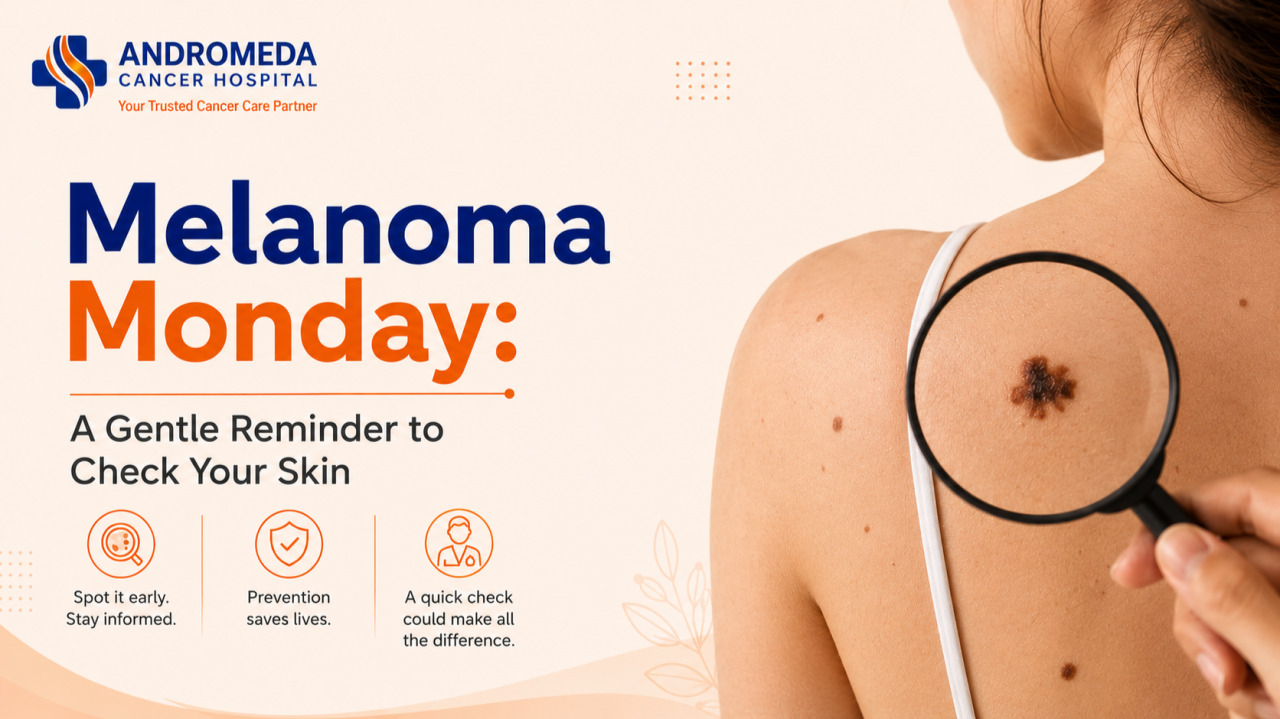
Every year, the first Monday of May is recognized globally as Melanoma Monday. While it might sound like just another date on the calendar, for a country like India—where the sun shines bright nearly year-round—it is a vital reminder to pay attention to our body’s largest organ: the skin.
In the Indian context, skin issues are incredibly common. From heat rashes and fungal infections to dust allergies, our skin goes through a lot. However, because we are so used to "minor" skin irritations, we often ignore things that could be more serious. This blog is a simple guide to understanding skin cancer without the panic, specifically tailored for our Indian climate and lifestyle.
What is Melanoma?
Melanoma is a type of skin cancer that starts in melanocytes—the cells responsible for giving our skin its color.
- It is less common, but
- More serious, because it can spread faster if not detected early
- The positive side? 👉 When caught early, it is highly treatable.
The Biggest Myth in India - “We have more melanin, so we are safe.”
While it is true that higher melanin provides some natural protection against UV rays, it does not make us immune.
In fact, melanoma in Indians often appears in unexpected places:
- Palms
- Soles of feet
- Under fingernails
Because we don’t usually check these areas, diagnosis often happens late.
Risk Factors: Who Should Be Careful?
While anyone can develop skin cancer, certain factors increase the risk:
- Prolonged Sun Exposure: People who work outdoors under the harsh afternoon sun without protection.
- History of Sunburns: Even a few severe, blistering sunburns in childhood can increase the risk of skin cancer later in life.
- Family History: If a close relative has had melanoma.
- Weakened Immune System: Due to other medical conditions or long-term medications.

Allergy or Something More?
In India, "skin lesions" can be confusing. Is it a mosquito bite? A heat rash? An allergy to a new soap?
This is where most confusion happens.
Common Skin Issues:
- Itchy
- Sudden appearance
- Triggered by food, weather, or products
- Heal quickly
Suspicious Signs:
- Painless
- Don’t go away
- Slowly change over time
👉 The keyword is: Change
The ABCDE Rule for Screening: If you have a mole or a dark spot, check for these five signs:
- A for Asymmetry: One half doesn't match the other.
- B for Border: The edges are ragged, blurred, or irregular.
- C for Color: The color is not the same all over (shades of black, brown, or even pink).
- D for Diameter: The spot is larger than a pencil eraser (about 6mm).
- E for Evolving: The spot is changing in size, shape, or color.

Precautions for the Indian Climate
Our temperatures often soar above 40°C. Here’s how to stay safe without living in fear:
- The "Shadow Rule": If your shadow is shorter than you (usually between 10 AM and 4 PM), the sun’s UV rays are at their strongest. Seek shade.
- Physical Barriers: In India, we have the best traditional defense—the Dupatta, Gamcha, or an umbrella. Light-colored, long-sleeved cotton clothing is your best friend.
- Sunscreen is for Everyone: Use a broad-spectrum sunscreen with at least SPF 30. Apply it 20 minutes before going out, and don't forget your ears and the back of your neck.
- Check Your Extremities: Since Indian cases often appear on feet and hands, give yourself a "skin check" once a month after a bath. Look at your soles and between your toes.
When to See a Doctor?
Don't panic over every pimple or rash. However, you should visit a dermatologist if:
- You have a sore that doesn't heal within 3 or 4 weeks.
- A new dark spot appears under a nail or on your palm/sole.
- An existing mole starts to itch, bleed, or crust over.
Final Thought
Melanoma Monday isn’t about creating fear—it’s about awareness and action.
In a country where we endure so much—from heat to pollution—our skin quietly protects us every day. The least we can do is notice when it asks for help.
✨ Just 10 minutes a month. ✨ One small habit. ✨ One life-saving awareness.
Because Early detection doesn’t start in hospitals, it starts with you simply paying attention - it saves lives.
#MelanomaAwareness#SkinHealth#PreventiveHealthcare#HealthcareAwareness#EarlyDetection#ABCDEruleMelanoma#SkinCheckRoutine