
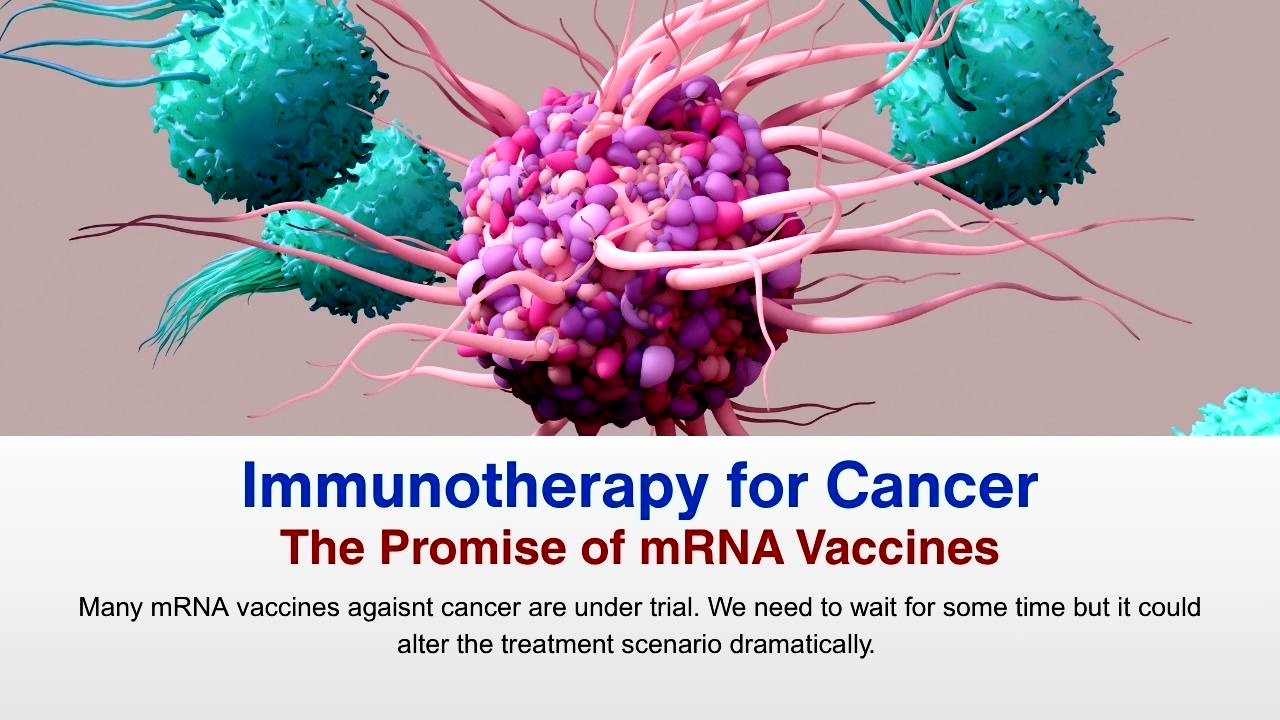
What is mRNA?
mRNA (messenger RNA or ribonucleic acid) is polymeric molecule produced in the cells by a process of transcription using DNA. mRNA is a template used for synthesis of proteins. The proteins then get modified in various ways and serve their diverse functions. Some of the proteins serve as antigens that are recognized by immune cells of the body and body can mount an immune defence against these antigens.
What are mRNA vaccines and how do they work?
An mRNA vaccine is a revolutionary type of immunization that uses mRNA prepared in the laboratory and injected. It instructs the body cells to produce a viral or tumor-related protein. This stimulates the immune system to build both antibody (humoral) and T-cell (cellular) responses.
Steps in the process for mRNA vaccine preparation and usage
- Antigens have to be identified from the viral pathogens or cancer cells
- mRNA are produced in the laboratory using equipment that can generate mRNA molecules in the instructed sequence.
- The mRNA molecules are packaged in lipid nanoparticles (LNPs).
- The vaccine is administered via intramuscular injection.
- Cells translate the mRNA to produce the target antigen (e.g., SARS‑CoV‑2 spike protein).
- When the antigen appears on the cell surface, the immune system recognizes it as foreign and activates adaptive immunity.
- The mRNA is degraded afterward (and does mRNA vaccines across different diseases.
Infectious diseases: Viral Targets: COVID‑19 mRNA vaccines (Pfizer–BioNTech Comirnaty & Moderna Spikevax) are the only currently authorized mRNA vaccines.
There are many others in development/testing: influenza, RSV, CMV, EBV, Zika, HIV, norovirus, Hepatitis C, genital herpes, malaria—many already in Phase 1–3 clinical trials
Bacterial targets: A novel candidate vaccine against Yersinia pestis (plague) recently showed 100% efficacy in mice; human trials still pending.
How many mRNA vaccines are approved?
- COVID‑19: Pfizer–BioNTech Comirnaty Moderna Spikevax These are the only licensed mRNA vaccines worldwide to date
- No mRNA vaccines have yet received approval for other diseases; many are in varying stages of clinical trials.
- mRNA vaccines in cancer: current landscape
Oncology research in mRNA vaccines is rapidly advancing:
- Clinical trial status: Over 120 clinical trials are exploring mRNA vaccines for lung, breast, prostate, melanoma, pancreatic, brain cancers and more.
- Safety & tolerability: Multiple trials have found mRNA cancer vaccines to be well tolerated with manageable side-effects, sometimes less than traditional chemotherapy.
- Promising efficacy signals: A Phase I personalized neoantigen mRNA vaccine for pancreatic cancer (16 patients) generated specific T-cell responses; responders remained recurrence-free for up to 18 months.
- Personalized vaccine platforms (e.g., Autogene cevumeran) are entering Phase II trials
- Moderna/Merck’s mRNA‑4157/V940 combined with pembrolizumab showed a 44% reduction in melanoma recurrence in Phase II, now progressing into Phase III.
- "Universal" vaccine approach: Preclinical studies in mice (University of Florida) indicate a general mRNA booster that primes the immune system when used with checkpoint inhibitors, though human trials are still in planning. This particular vaccine could work against multiple different type of cancers and not be dependent on cancer specific antigens.
Looking Ahea
- Challenges: The field of mRNA vaccines is relatively new. The vaccines against Covid received emergency use approval. Long term safety data is necessary. However, the concept underlying the mRNA vaccines is very promising. However, scientific research has to complete all phases of testing and show evidence of benefit with acceptable toxicity profile. Regulatory issues, cost of therapy, scaling personalized vaccine production, delivery methods, etc are issues to be handled.
- Hopeful future: If ongoing trials confirm efficacy, mRNA vaccines could become vital in adjuvant cancer therapy to prevent recurrence and possibly treat ongoing cancers.
Conclusions
- mRNA vaccines work by instructing cells to produce antigens that drive immune response—offering rapid, flexible platforms.
- Today, only COVID‑19 mRNA vaccines are licensed.
- mRNA tech is in active trials for infectious diseases and is showing very encouraging progress in oncology, with multiple phase II/III human trials underway.
- Several cancer-specific mRNA vaccines have successfully entered human trials, with early data indicating both safety and potential efficacy.