
Breast cancer treatment has transformed dramatically over the last five decades.
It used to be one-size-fits-all approach. It was dominated by radical mastectomy/modified radical mastectomy in nearly all patients and chemotherapy and radiotherapy in selected cases.
It is now a highly personalized approach with individualized decision making. At the heart of this evolution lies a powerful idea: de-escalation of treatment.
De-escalation means deliberately reducing the intensity or extent of surgery, chemotherapy, or radiotherapy without compromising cure. The aim is not only to save lives but also to preserve quality of life, minimize side effects, and avoid long-term harm.
This represents a shift from “maximum tolerated treatment” to “minimum effective treatment.”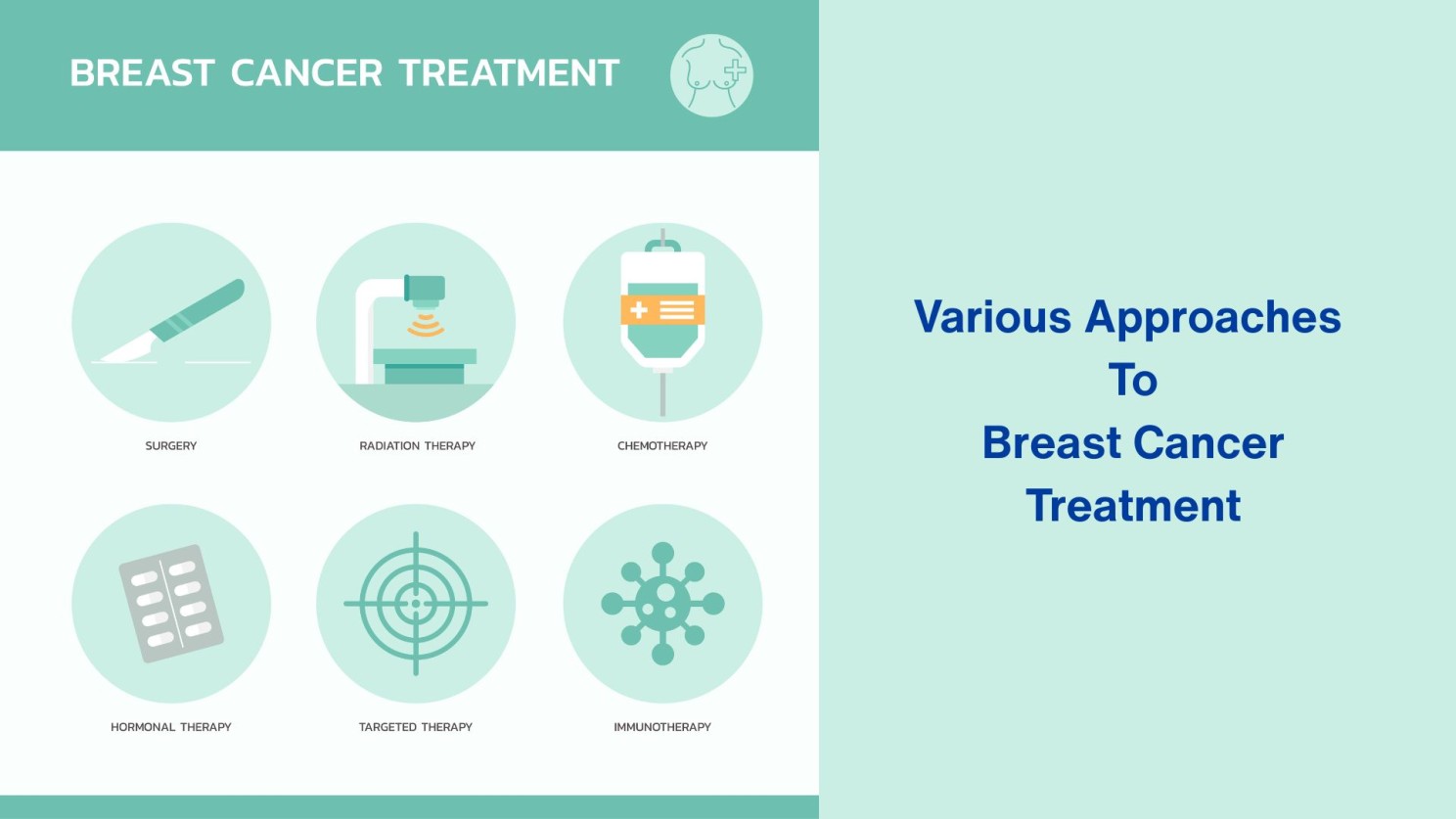
Why De-escalation Matters
Survival rates have improved with earlier detection and better systemic therapies. But aggressive treatments often leave lasting scars:
- Chronic lymphedema after axillary dissection
- Disfigurement and trauma after mastectomy
- Infertility and menopause from chemotherapy
- Cardiotoxicity, fatigue, and secondary cancers after radiotherapy
These burdens have led oncologists worldwide to ask: Can we treat less and still cure? Increasingly, the answer is yes—when patients are carefully selected.
Areas of De-escalation
1. Surgery
- Breast Surgery Breast Conservation after NAST: In large operable and selected locally advanced cancers, neoadjuvant systemic therapy (NAST) often shrinks tumours, making breast conservation surgery (BCS) possible. With proper imaging, margin control, and radiotherapy, outcomes are comparable to mastectomy, with superior cosmetic and psychological benefits. Omission of Surgery: Trials are exploring whether patients achieving complete response after NAST can safely avoid surgery. While promising, this approach requires rigorous imaging, biopsy confirmation, and close follow-up in clinical trial settings before wider adoption.
- Axillary Surgery Sentinel Lymph Node Biopsy (SLNB): SLNB has replaced axillary lymph node dissection (ALND) in node-negative patients, reducing lymphedema while providing accurate staging. Recurrence rates remain equivalent to ALND. Avoiding ALND in Limited Nodal Disease: Trials such as ACOSOG Z0011, IBCSG 23-01, AMAROS, SENOMAC, and SENODAR show that patients with minimal nodal disease on SLNB can avoid ALND, sometimes substituting axillary radiation. Omission of Axillary Surgery Altogether: The SOUND trial demonstrated that early breast cancer patients with negative axillary ultrasound can avoid even SLNB without compromising safety. This major advance reduces morbidity, shoulder dysfunction, and preserves body image.
2. Radiotherapy
- Hypo-fractionated Schedules: Delivering higher doses in fewer sessions is now standard, offering equal efficacy, lower toxicity, and more convenience.
- Partial Breast Irradiation: In very low-risk patients undergoing BCS, targeting only the tumour bed instead of the entire breast achieves safe outcomes.
- Omission of Radiotherapy: In carefully chosen elderly, low-risk patients, omission does not compromise survival and spares them from toxicity.
3. Systemic Therapy
- Genomic Assays: Tests like Oncotype DX and MammaPrint help identify hormone-receptor positive patients who can avoid chemotherapy, receiving only endocrine therapy.
- Shorter Chemotherapy Courses: Selected regimens with reduced cycles show comparable results, minimizing cumulative toxicity.
- Targeted Therapy: For HER2-positive disease, studies suggest that shorter durations of trastuzumab may suffice, lowering cardiotoxicity risk.
4. Endocrine Therapy
Endocrine therapy improves survival but prolonged use causes menopausal symptoms, bone loss, and adherence problems. Evidence indicates that in some low-risk patients, five years of therapy may be adequate compared to ten years.
Risks of De-escalation
De-escalation carries challenges that must be weighed carefully:
- Undertreatment: Lower-intensity therapy may increase recurrence in some patients.
- Tumour Heterogeneity: Low-risk appearance does not always equal indolent biology
- Compensatory Overtreatment: Less surgery is often offset by more systemic therapy or radiation, shifting rather than reducing toxicity.
- Psychological Concerns: Some patients equate “less treatment” with “less cure,” creating anxiety.
- Limited Long-Term Data: Many de-escalation trials have short follow-ups; survival data over decades are awaited.
Thus, de-escalation must be evidence-driven, guided by tumour boards, and aligned with patient preferences.
Benefits of De-escalation
Despite the risks, the advantages are substantial:
- Reduced Toxicity: Lower rates of lymphedema, cardiotoxicity, infertility, and secondary malignancies.
- Improved Quality of Life: Better cosmetic outcomes, body image, and emotional recovery.
- Cost Savings: Particularly valuable in low-resource settings like India.
- Faster Recovery: Enables earlier return to family, work, and normal life.
- Patient-Centred Care: Aligns treatment with individual biology and personal values.
Long-Term Advantages
- Personalized Medicine: Molecular profiling and AI tools will refine risk stratification, allowing precise tailoring of therapy intensity.
- Healthcare Sustainability: Avoiding overtreatment conserves resources, improving access to effective care.
- Survivorship Focus: With rising survival rates, quality of life and long-term well-being take centre stage. De-escalation prevents chronic complications, ensuring survivors thrive beyond cancer.
- Global Relevance: In resource-limited countries, evidence-based de-escalation provides safe, affordable care without compromising outcomes.
The Way Forward
De-escalation is not a universal formula. Success requires:
- Careful patient selection using clinical, pathological, and molecular tools
- Multidisciplinary tumour board decision-making
- Shared decision-making, incorporating patient preferences
- Robust clinical trial participation and long-term data generation
Ultimately, de-escalation reflects the art of modern oncology: treating smarter, not harder.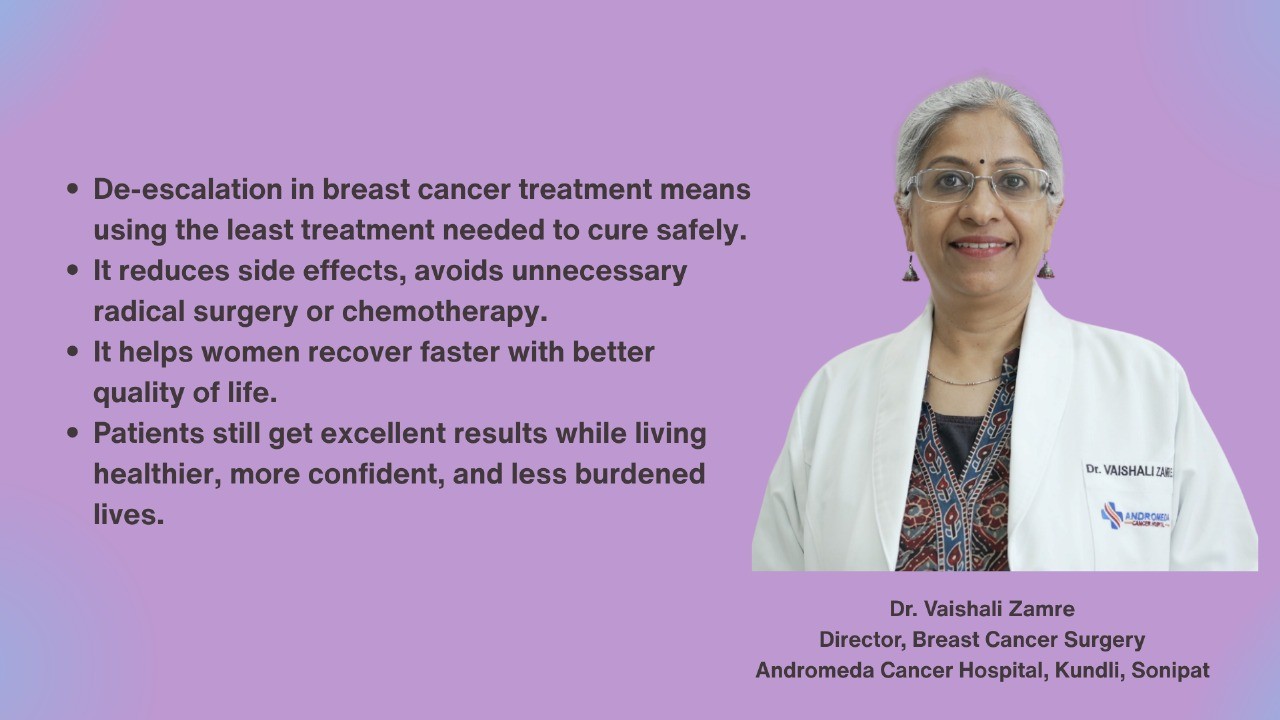
Conclusion
Breast cancer care has entered an era of precision and compassion. De-escalation—across surgery, radiotherapy, and systemic therapy—brings together the twin goals of cure and quality of life.
For patients, it means fewer scars and a fuller life. For oncologists, it represents evidence-based, humane medicine. For society, it ensures sustainable, affordable cancer care.
The challenge now is to refine our tools and judgment so that every woman receives not just the best chance of survival, but the best chance of living well.
Andromeda Cancer Hospital now offers world class cancer treatment to patients of Haryana, Delhi and Northern India. For breast cancer management, it has a specialized centre of excellence "Andromeda Breast Cancer Centre".
Andromeda Cancer Hospital Youtube Channel: http://www.youtube.com/@andromedacancerhospital
You will find a treasure trove of informational videos at this channel. Visit this page and find out for yourself. Also request you to follow and share the link to the youtube channel.