
Thorough cancer staging with PET-CT requires more than proximity—AERB licensing, digital scanner technology, specialty tracer availability, insurance empanelment, and multidisciplinary tumor board integration all determine diagnostic accuracy and treatment planning effectiveness.
Key Takeaways
- Verify AERB licensing status using the May 2026 registry PDF before booking any PET-CT scan in Haryana
- Digital time-of-flight (TOF) scanners offer superior small-lesion detection compared to older analog systems
- Specialty tracers (PSMA for prostate cancer, DOTA for neuroendocrine tumors) require direct facility inquiry—website data is rarely disclosed
- CGHS and ESI empanelment status varies by facility; prior authorization and referral documentation requirements differ
- Multidisciplinary tumor board review changes treatment plans in 15.89% of early breast cancer cases
Where can you get thorough cancer staging with PET-CT in Haryana? Andromeda Cancer Hospital in Sonipat is one AERB-certified option offering FDG, PSMA, DOTA, and Choline tracers. However, 'thorough staging' requires five verifiable criteria — not just facility proximity — before you book: (1) AERB radiation safety licensing, (2) digital time-of-flight (TOF) scanner technology, (3) cancer-specific tracer availability, (4) insurance empanelment for oncology services, and (5) multidisciplinary tumor board integration. This article maps the five-step validation framework you can apply to any center in Haryana — starting with the May 2026 AERB registry PDF as your first checkpoint.
Why Scanner Type and Tracer Portfolio Matter Beyond Location
A PET-CT scan combines metabolic imaging with structural anatomy to detect diseased cells earlier than standalone CT or MRI. 'Thorough' means accuracy at the hardware level, digital TOF scanners (like Andromeda's GE Discovery IQ 2 ) improve lesion detection over analog systems, and cancer-type fit at the tracer level. FDG traces glucose metabolism across most solid tumors; PSMA targets prostate cancer; DOTA maps neuroendocrine malignancies. A center offering only FDG cannot stage every cancer type. Integration matters equally: PET-CT findings feed multidisciplinary tumor boards where radiation oncologists, medical oncologists, and surgeons plan treatment together, scans without coordinated review delay decisions. Proximity alone does not equal thorough.
The AERB Verification Framework as Your First Checkpoint
Before comparing tracer portfolios or insurance networks, verify AERB licensing. The Atomic Energy Regulatory Board's May 2026 registry PDF lists every licensed PET-CT facility in India, search your shortlisted center's name to confirm radiation safety compliance. Unlicensed centers cannot legally operate PET-CT scanners. The five steps this article provides walk you through AERB verification, scanner specs, tracer availability checks, insurance empanelment confirmation, and tumor board integration, in that order. Start with licensing; the rest follows.
Before comparing scanner technology or tracer portfolios, radiation safety compliance is the first gate, no AERB license means no legal operation of radioactive materials.
Step 1: Verify AERB Licensing and Radiation Safety Compliance
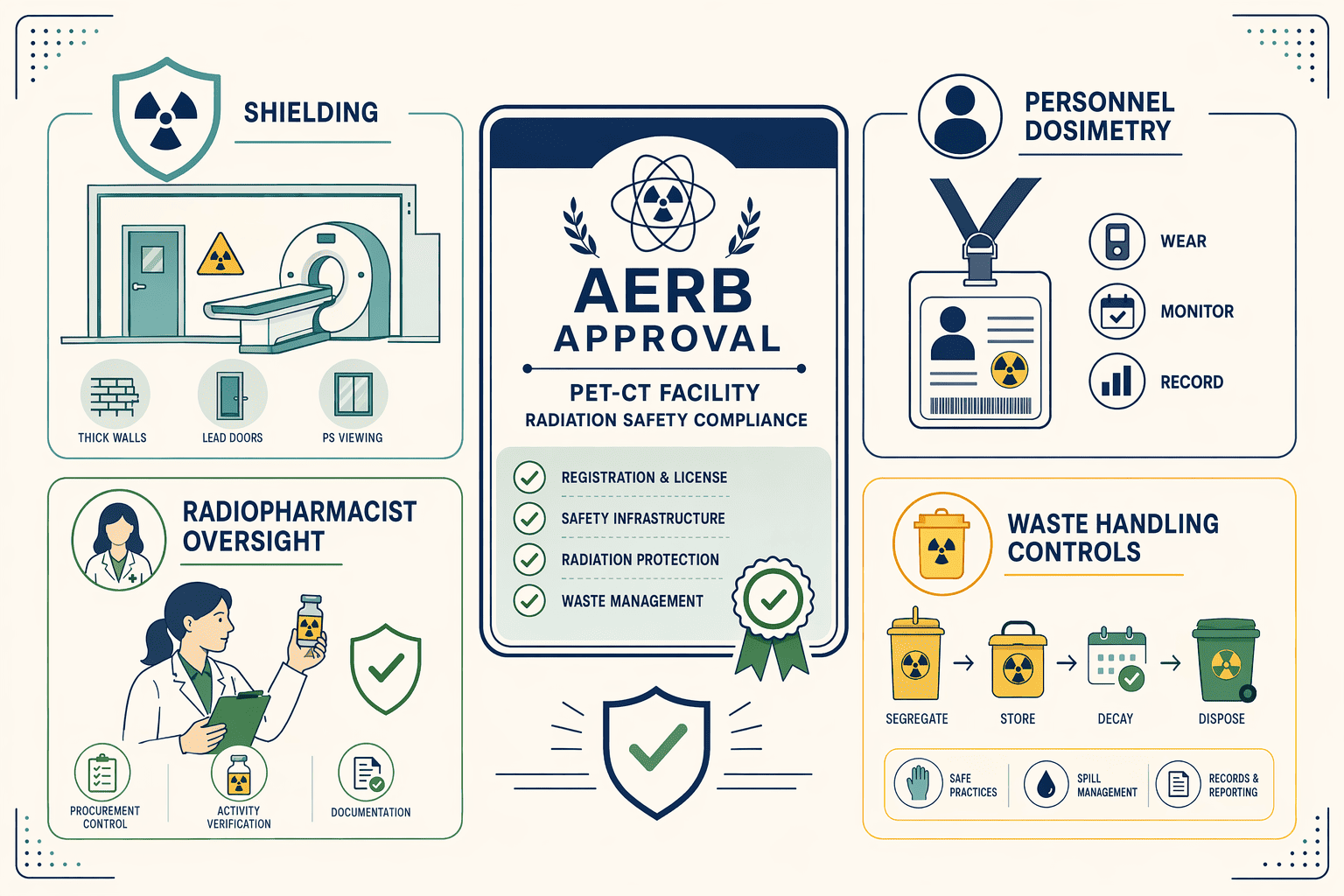
Before booking a PET-CT scan for cancer staging in Haryana, confirm the facility holds an active Atomic Energy Regulatory Board (AERB) license. AERB licensing validates radiation safety infrastructure, qualified radiopharmacist, waste handling protocols, personnel dosimetry, and shielding standards, but does not cover clinical expertise, insurance empanelment, or turnaround time.
How to Search the AERB Registry Before Booking
- Download the May 2026 AERB PDF from mgw3.aerb.gov.in/images/PDF/NuclearMedicine/RSD1.pdf, this is the authoritative national registry of licensed PET-CT centres.
- Open the PDF in a reader that supports text search, Adobe Acrobat, Preview (Mac), or any browser-based PDF viewer.
- Use Ctrl+F (Windows) or Cmd+F (Mac) to search the facility name or city (e.g., "Sonipat" or "Gurugram") within the PDF.
- Confirm 'Active' license status and verify the facility address matches the hospital you plan to visit, some hospitals operate multiple branches; only the listed address holds AERB certification.
Andromeda Cancer Hospital appears in the May 2026 registry as an AERB-licensed PET-CT centre in Sonipat, Haryana, staffed by AERB-certified Radiation Safety Officers. Other licensed facilities in Haryana include National Cancer Institute (Jhajjar), Fortis Hospotel Limited (Gurgaon), and House of Diagnostics Healthcare (Faridabad).
What AERB Certification Guarantees (and Doesn't)
AERB licensing confirms the facility meets radiation safety infrastructure requirements, shielded hot laboratory, designated radioactive waste storage, trained radiopharmacist, and equipment calibration protocols. Facilities must submit layout plans, site elevation drawings, and radiation shielding calculations during the approval process.
AERB certification does not validate clinical outcomes, reporting turnaround time, insurance empanelment for oncology services, or availability of specialty tracers beyond standard FDG PET-CT. After confirming AERB licensing, cross-check insurance coverage and tracer availability separately, some hospitals are empanelled for general care only, not oncology.
Once AERB licensing is confirmed, scanner generation determines how accurately the system can detect small or early-stage lesions.
Step 2: Check Scanner Technology, Digital TOF Vs Older Pet-Ct Systems
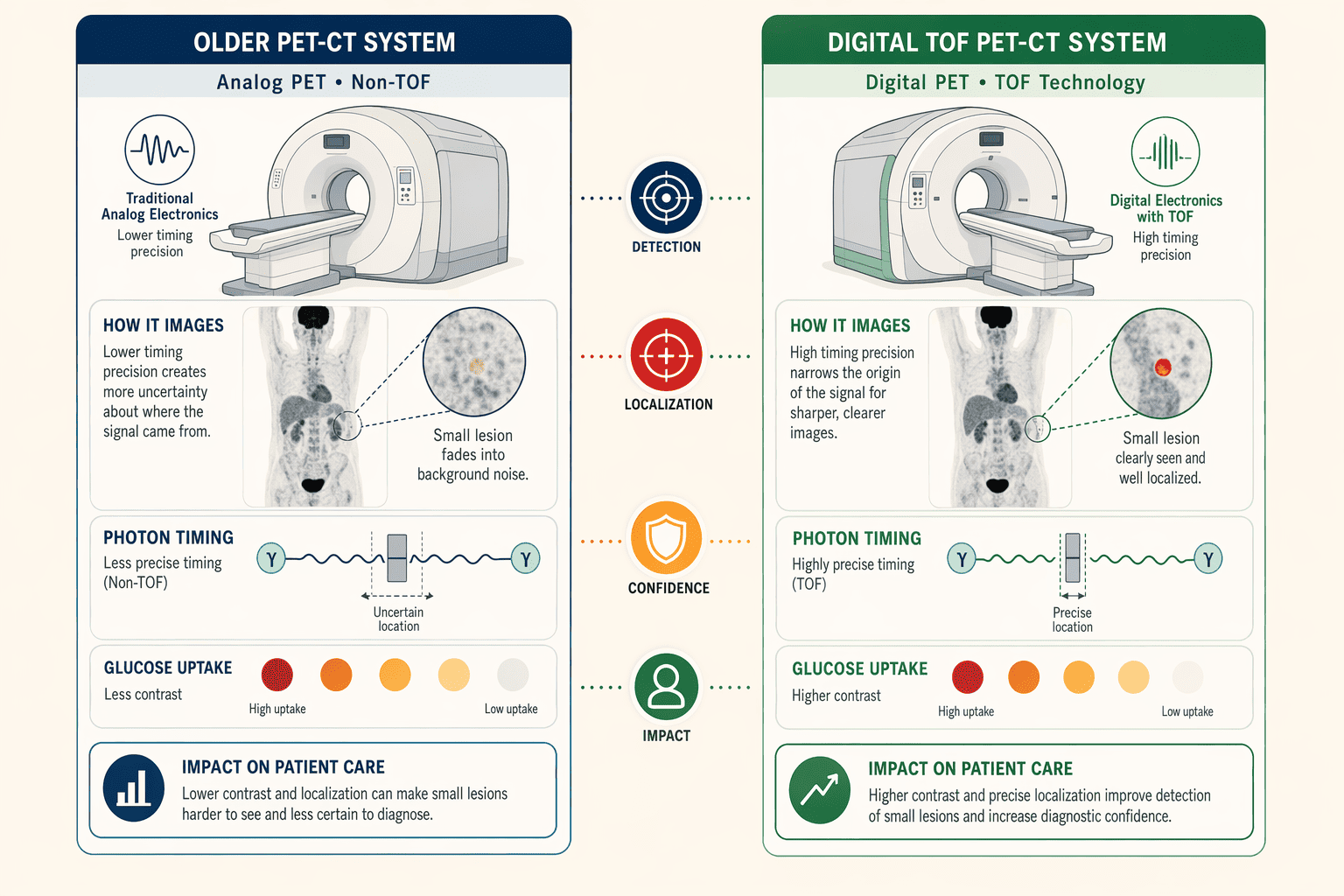
Not all PET-CT scanners deliver the same diagnostic precision. Understanding how PET scans detect metabolically active cancer cells through radioactive glucose uptake is the first step, but the scanner's ability to measure photon-timing accuracy determines whether small, early-stage lesions appear clearly or disappear into background noise.
What Digital TOF Adds to Early-Stage Cancer Detection
Digital time-of-flight (TOF) scanners measure the precise time difference between the two 511-keV photons emitted when a positron annihilates an electron, typically within picosecond accuracy. This photon-timing precision localizes metabolic activity along a shorter segment of the detection line, improving signal-to-noise ratio and revealing sub-centimeter lesions that analog systems often miss. For patients with early-stage malignancies, where tumor burden may be minimal and uptake values borderline, TOF technology can make the difference between detecting recurrence at a curable stage and missing it until symptoms appear.
Andromeda Cancer Hospital operates a GE Discovery IQ 2 PET-CT scanner, one example of digital TOF technology available in Haryana. The system combines TOF capability with iterative reconstruction algorithms designed to suppress noise while preserving edge definition in metabolically active regions, relevant for staging lung, colorectal, and lymphoma cases where nodal involvement drives treatment decisions.
Older analog PET-CT systems, common in budget centres that acquired equipment five to ten years ago, lack TOF capability entirely. They still detect high-uptake tumors reliably, but borderline lesions (standardized uptake values between 2.0 and 3.5) may be interpreted as equivocal or discarded as physiologic uptake. This gap matters most in surveillance scans, where oncologists are looking for early recurrence signals before the disease becomes clinically evident.
Questions to Ask About Scanner Generation and Age
Before booking your PET-CT scan, verify the technology directly with the facility. Ask two specific questions during the initial phone call: 'Is your PET-CT scanner digital TOF or analog?' and 'What is the scanner model and installation year?' Centres with digital TOF scanners will state the model name readily, GE Discovery IQ, Siemens Biograph Vision, or Philips Vereos are the three dominant platforms. If the receptionist cannot answer or defers to 'advanced imaging' without naming the technology, that's a signal to ask for radiology staff clarification before committing.
Installation year matters because even TOF-capable scanners degrade over time. A 2015 TOF scanner may have reduced detector sensitivity compared to a 2022 installation of the same model, particularly if the facility has deferred calibration or detector-block replacement. The script above forces transparency, and when centres hesitate or provide vague reassurance ('We have the latest equipment'), treat that as a reason to compare with facilities that publish scanner specifications openly.
For readers weighing cost against technology, our article on affordable PET-CT scanners in Delhi NCR explores how digital TOF pricing has converged with older systems as more centres adopt the technology, scanner generation is no longer a reliable proxy for total scan cost.
Digital TOF hardware is only as useful as the radiotracer matched to your specific cancer type, standard FDG won't detect what PSMA or DOTA can reveal.
Step 3: Confirm Specialty Tracer Availability for Your Cancer Type
FDG Vs PSMA Vs DOTA: Which Tracer Matches Your Diagnosis
Not every PET-CT scan uses the same radiotracer. Accurate staging guides treatment selection and helps predict cancer behavior over time, but only if the tracer is matched to your diagnosis. FDG (fluorodeoxyglucose) is the standard glucose-based tracer for most solid tumors, lung, breast, colorectal, lymphoma. PSMA (prostate-specific membrane antigen) targets prostate cancer and is key for staging aggressive disease or detecting recurrence. DOTA binds to somatostatin receptors on neuroendocrine tumor cells, making it the go-to tracer for carcinoid, gastroenteropancreatic NETs, and pheochromocytomas. Choline is used for prostate cancer recurrence when biochemical markers rise after initial treatment.
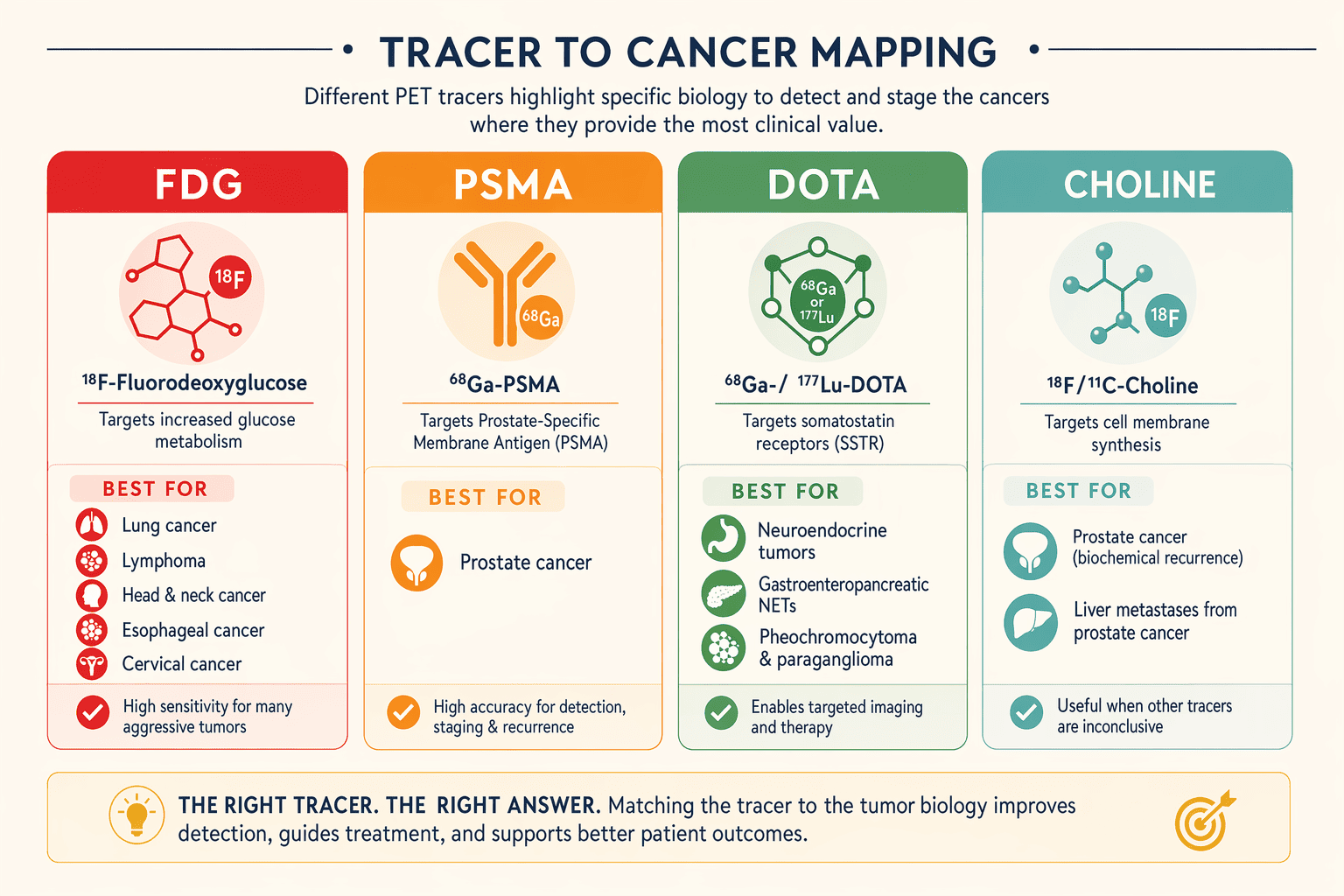
Mahajan Imaging lists FDG, PSMA, and Choline among common PET-CT tracers, illustrating the standard portfolio many centers offer. Andromeda Cancer Hospital provides FDG, DOTA, PSMA, and Choline, supporting a range of oncologic indications.
What to Ask When Calling a Pet-Ct Center
Public data on specialty tracer availability beyond FDG is rarely disclosed on hospital websites, direct inquiry is required. Use this checklist:
- "Do you offer PSMA tracer for prostate cancer staging or recurrence?"
- "Is DOTA available for neuroendocrine tumor imaging?"
- "Can I get a Choline PET-CT for biochemical recurrence of prostate cancer?"
- "What is the upfront cost per tracer type?"
Call Andromeda Cancer Hospital at +91 130 298 4289 or +91 9138111625 to confirm PSMA, DOTA, or Choline availability for your diagnosis. For deeper context on tracer-based diagnostics, review the hospital's nuclear medicine treatment page.
After confirming tracer availability, verify whether your insurance scheme covers the scan and what documentation the facility requires for reimbursement.
Step 4: Validate Insurance Empanelment and Payment Coverage
CGHS Empanelment and Referral Requirements for Pet-Ct
Central Government Health Scheme (CGHS) approval for PET-CT requires prior authorization and a valid referral from a government hospital. Before admission, call the facility to confirm active CGHS empanelment for nuclear medicine services, many hospitals listed as CGHS-empaneled for general care lack specific clearance for PET-CT. Follow this workflow:
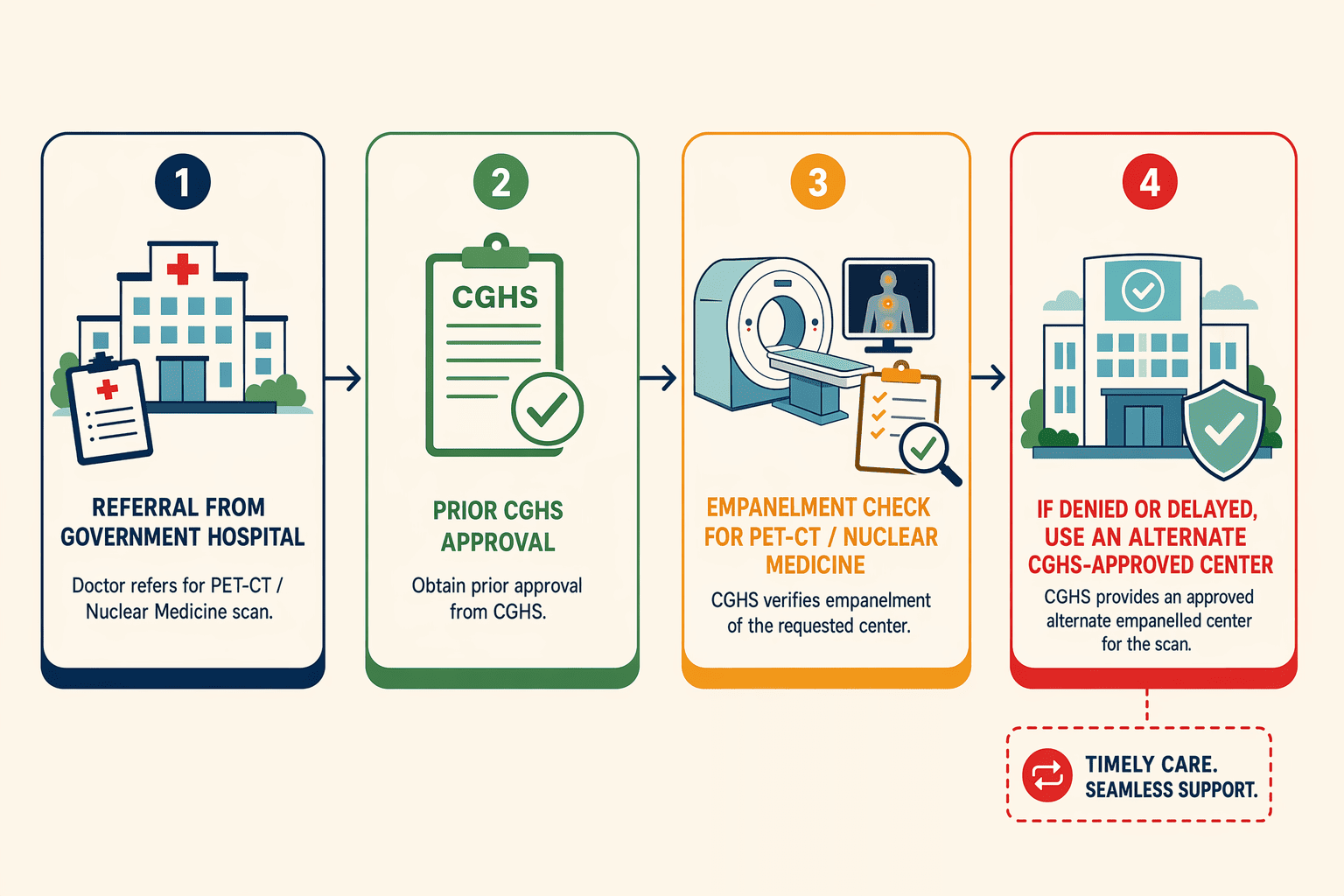
- Obtain a referral from your CGHS dispensary or a government hospital oncologist, document the clinical indication (staging confirmed malignancy, restaging after treatment, or suspected recurrence).
- Request prior authorization by submitting the referral, diagnostic reports, and treatment summary to your CGHS office, authorization timelines vary from 3 to 10 working days.
- Verify empanelment status by calling the PET-CT center directly, ask: 'Is your facility CGHS-empaneled for FDG-PET scans?' and 'What documents do I need for cashless admission?'
- Confirm scan coverage for your clinical indication, CGHS typically approves FDG-PET for confirmed malignancies but may deny screening or non-oncologic applications.
If the facility is not empaneled or authorization is delayed, ask your referring oncologist for an alternate CGHS-approved center. Keep copies of all authorization paperwork and bring them to the scan appointment.
TPA Network Verification and Unlisted Procedure Handling
Insurance coverage for PET-CT varies by policy, many insurers approve FDG-PET for confirmed malignancies but may deny screening or non-oncologic applications. Before scheduling, call your Third Party Administrator (TPA) or insurer helpline to verify:
- Network inclusion: Ask 'Is [facility name] in your network for nuclear medicine procedures?' If the center is out-of-network, confirm whether you can claim reimbursement later.
- Clinical indication coverage: State your diagnosis and scan purpose, TPAs often pre-approve staging scans but flag surveillance scans as 'not medically necessary' unless documented progression.
- Pre-authorization process: Request the TPA reference number and document submission timeline, some insurers require 48-hour advance notice for high-cost imaging.
Use this inquiry script when calling the PET-CT center: 'Does your facility accept cashless claims from [your TPA]? What documents do you need at admission, insurance card, pre-authorization letter, or treating oncologist's prescription?' Facilities that list insurance partnerships on their websites typically simplify cashless processing, but verbal confirmation prevents billing surprises.
If your policy does not cover PET-CT or the facility is unlisted, ask for a cost estimate and compare it against published pricing at nearby centers, out-of-pocket rates for FDG-PET range from ₹9,999 to ₹15,000 in Haryana, while specialized tracers (PSMA, DOTA) cost ₹20,000, ₹30,000.
Insurance approval doesn't guarantee optimal treatment planning, multidisciplinary tumor board integration determines whether imaging findings translate into coordinated care.
Step 5: Assess Multidisciplinary Integration and Tumor Board Review
What Multidisciplinary Tumor Board Review Means for Staging Accuracy
A multidisciplinary tumor board brings surgical oncologists, medical oncologists, radiation oncologists, and radiologists together to jointly review PET-CT imaging and plan treatment, not siloed department reports handed from one specialist to the next. This collaborative review ensures that staging findings inform all treatment modalities simultaneously, reducing the risk of miscommunication or conflicting recommendations. Ask prospective centres: 'Does your facility have a multidisciplinary tumor board?' and 'Will my PET-CT findings be reviewed by oncology subspecialties together or sent as separate reports?' Centres without formal tumor boards may deliver imaging reports department-by-department, leaving patients to coordinate care themselves.
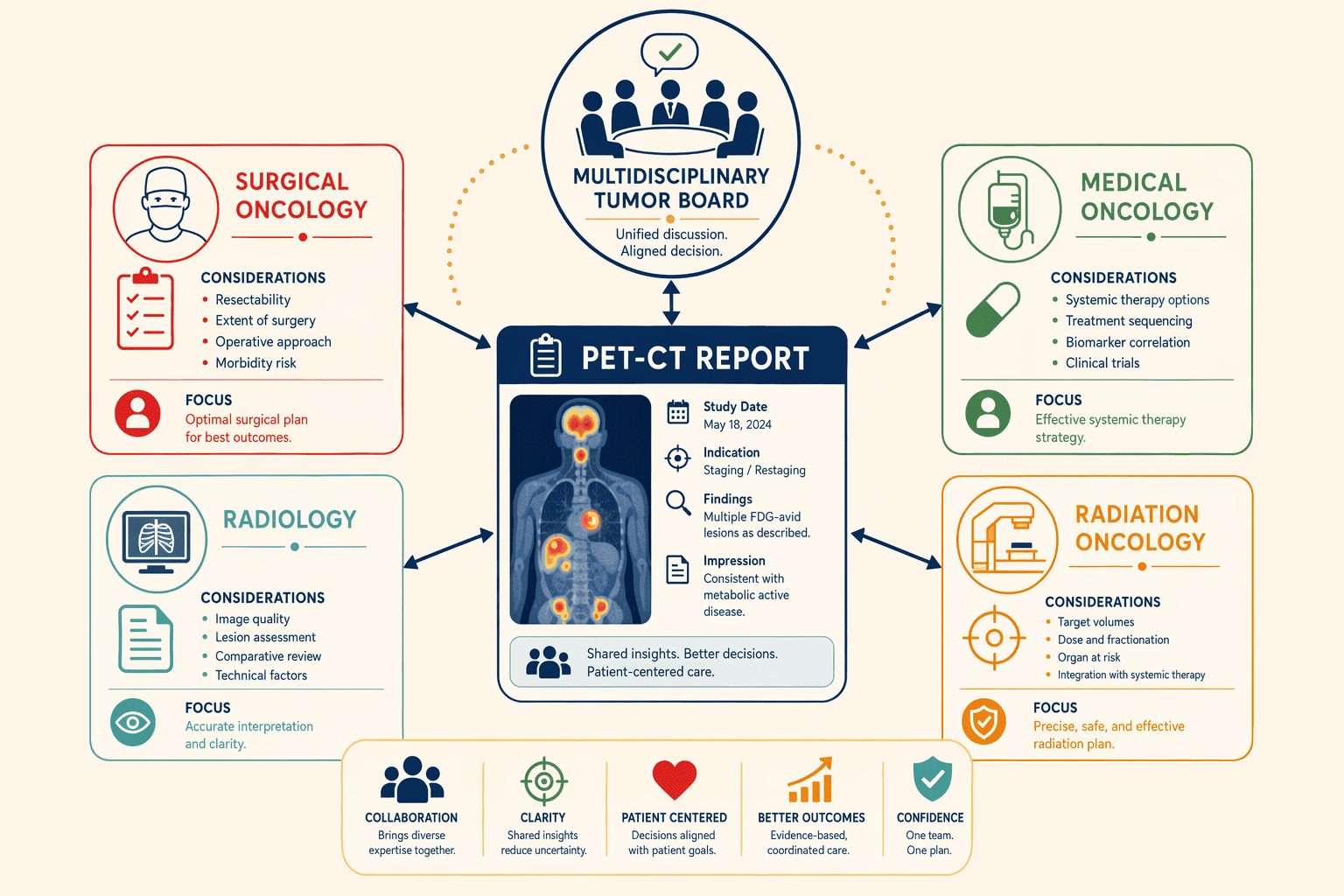
Recent research shows that multidisciplinary PET-CT review altered management in 15.89% of early breast cancer patients, identifying occult metastases and synchronous malignancies that single-department reads might miss [F2-12, F2-13]. At Andromeda Cancer Hospital, nuclear medicine physicians participate in weekly tumor board reviews alongside surgical, medical, and radiation oncology teams, ensuring PET-CT staging findings are integrated into unified treatment plans rather than siloed reports.
Turnaround Time: In-House Vs Outsourced Imaging Analysis
Turnaround time for PET-CT reports varies by whether the centre processes imaging in-house or outsources to external radiologists. In-house nuclear medicine teams typically deliver same-day or 24-hour reports, allowing tumor boards to convene quickly; outsourced analysis may take 48 to 72 hours and require follow-up coordination. Before booking, ask: 'Is PET-CT reporting done in-house or outsourced?' and 'What is the typical turnaround time for report delivery?' For patients awaiting time-sensitive treatment decisions, same-day in-house reporting reduces anxiety and accelerates care planning.
With all five verification steps defined, apply this checklist to any facility, starting with these questions before booking your scan.
Pet-Ct Centers in Haryana: What to Ask Before Booking
Consolidated Pre-Booking Checklist for Pet-Ct Verification
Before booking a PET-CT scan in Haryana, ask facilities these five questions to verify regulatory compliance and clinical integration:
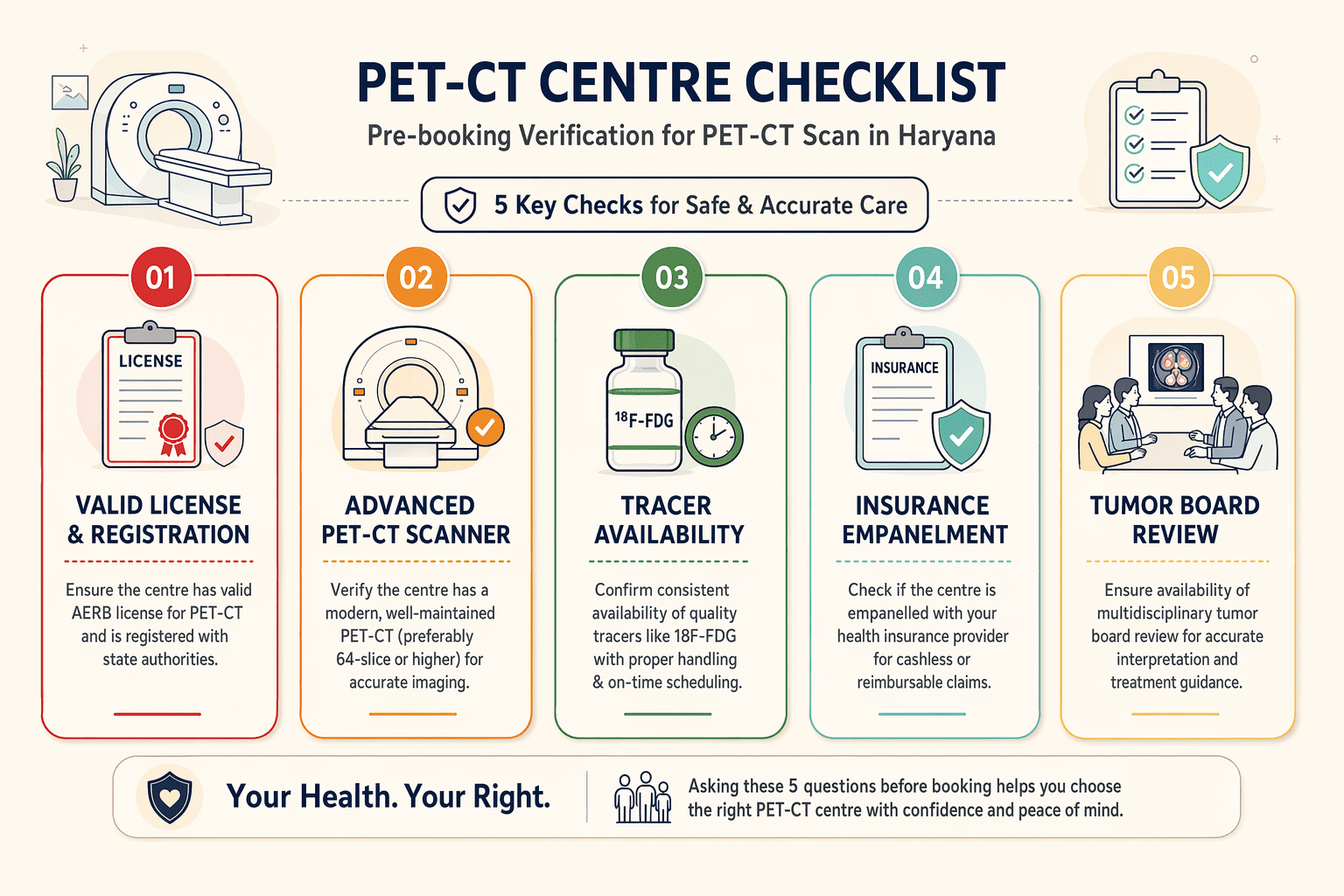
- Verify AERB licensing: Ask if the centre appears in the May 2026 AERB PDF of licensed facilities.
- Confirm scanner technology: Ask whether the scanner uses digital time-of-flight (TOF) detectors or analog crystal technology.
- Check specialty tracer availability: Confirm on-site availability of PSMA, DOTA, and Choline tracers for prostate, neuroendocrine, and complex cases.
- Verify insurance empanelment: Ask for proof of CGHS, ESI, or TPA empanelment certificates covering oncology PET-CT specifically.
- Ask about tumor board integration: Confirm that reports are reviewed in multidisciplinary tumor boards and ask for turnaround time commitments.
Examples of Facilities to Investigate in Haryana
Apply this checklist to any Haryana centre, including Andromeda Cancer Hospital (AERB-certified with the GE Discovery IQ 2 digital TOF system ), Mayom Hospital, Amerix Super Speciality Hospital, Dr. Prem Super-Speciality & Cancer Hospital, and Ganesh Diagnostic & Imaging Centre. Public website data is often incomplete; call facilities directly to confirm tracer availability, insurance acceptance, and report turnaround time before booking.
Making the Right Pet-Ct Choice in Haryana
Facilities with in-house nuclear medicine teams typically deliver same-day or 24-hour PET-CT reports, while centers outsourcing imaging analysis may take 48-72 hours, ask about report turnaround time before booking to match urgency needs. CGHS and ESI empanelment cover pre-authorized PET-CT for confirmed malignancies but may deny screening or non-oncologic applications, verify insurance acceptance and referral requirements directly with the facility and your TPA before admission.
As digital TOF scanner adoption expands across India and specialty tracer portfolios broaden (PSMA, DOTA, Choline), patient access to precision cancer staging will improve, but regulatory verification using the AERB registry and tracer-availability inquiry remain key first steps regardless of facility marketing claims.
Download the May 2026 AERB PDF registry, verify licensing status for facilities in your shortlist, then call each center to confirm scanner technology, tracer availability, insurance empanelment, and tumor board integration, or contact Andromeda Cancer Hospital in Sonipat (+91 130 298 4289 or +91 9138111625) to schedule a consultation and confirm all five criteria in one call.
Frequently Asked Questions
How do I verify if a PET-CT center in Haryana is AERB-licensed?
Download the May 2026 AERB PDF registry, open it, and use Ctrl+F (Windows) or Cmd+F (Mac) to search for the facility name or city. Confirm 'Active' license status in the registry, this is the only official verification source for radiation safety compliance.
What is the difference between digital TOF and analog PET-CT scanners?
Digital time-of-flight (TOF) scanners use picosecond-precision photon timing to localize metabolic activity more accurately along detection lines, improving small-lesion detection in early-stage cancers. Analog systems lack this timing resolution. Andromeda Cancer Hospital operates the GE Discovery IQ 2, a digital TOF example available in Haryana.
Which radiotracer should I ask for if I have prostate cancer?
PSMA (prostate-specific membrane antigen) tracer is recommended for prostate cancer staging. Public website data on specialty tracers is rarely disclosed, so call facilities directly and ask: 'Do you offer PSMA tracer for prostate cancer?' Accurate staging requires tracer-diagnosis matching, not just standard FDG imaging.
Does CGHS cover PET-CT scans for cancer staging in Haryana?
CGHS coverage for PET-CT requires prior authorization and a valid referral from a government hospital. Before admission, call the facility and ask: 'Is your facility CGHS-empaneled for PET-CT?' and 'What documents do I need for prior authorization?' Coverage varies by policy and clinical indication.
How long does it take to get PET-CT scan results in Haryana?
Turnaround time varies by in-house versus outsourced imaging analysis. In-house nuclear medicine teams typically deliver same-day or 24-hour reports, while outsourced analysis may take 48-72 hours. Before booking, ask: 'Is PET-CT reporting done in-house or outsourced?' and 'What is the typical turnaround time?'
What is a multidisciplinary tumor board and why does it matter for PET-CT staging?
A tumor board brings surgical oncologists, medical oncologists, radiation oncologists, and radiologists together to jointly review PET-CT imaging and plan treatment, not siloed department reports. This collaborative review changes treatment management in 15.89% of early breast cancer cases. Ask: 'Does your facility have a multidisciplinary tumor board?'
How much does a PET-CT scan cost in Haryana?
PET-CT cost varies by tracer type (FDG, PSMA, DOTA, Choline) and clinical indication. Specialty tracers typically cost more than standard FDG. Avoid single-number estimates, request upfront pricing from facilities based on your specific tracer type and verify insurance coverage status before booking.
Sources
- PET scan - Mayo Clinic - www.mayoclinic.org
- PET Scan: Procedure Details and Results - Cleveland Clinic - my.clevelandclinic.org (2026)
- List of PET-CT Centres licensed by AERB (as on May 20, 2026) - mgw3.aerb.gov.in (2026)
- Regulatory requirements for designing PET-CT facility in India - PMC - pmc.ncbi.nlm.nih.gov
- Nuclear Medicine Unit - Guideline Section - india.healthfacilityguidelines.com
- PET Scan vs CT Scan – Which One Do I Need for Cancer? - pratikpatil.co.in
- PET Scan Test in Ghaziabad, Delhi NCR - Yashoda Hospital - www.yashodahealthcare.com
- PET Scan Cost at Centre Near Me | PET CT Scan Price | HOD - www.hod.care
- PET-CT for Staging in Early Breast Carcinoma - link.springer.com (2025)