
Radiation therapy is a cornerstone of cancer treatment, yet many patients begin their first session uncertain about what to expect physically and emotionally.
Understanding when side effects appear, how they progress, and when to seek help transforms anxiety into actionable knowledge.
Key Takeaways
- Radiation therapy side effects—fatigue, skin reactions, and emotional adjustment—appear gradually during treatment and typically resolve within weeks to months after completion
- Most side effects follow a predictable timeline: fatigue peaks around week three, skin reactions emerge after two weeks, and emotional toll accumulates over the treatment course
- Multidisciplinary care teams coordinate weekly on-treatment visits, nutritional support, and palliative care to manage side effects proactively rather than reactively
- Clear escalation criteria—fever above 100.4°F, uncontrolled pain, or unexpected bleeding—help patients know when to contact their oncology team immediately
- Hair loss from radiation occurs only in the treated area, not systemically like chemotherapy, and most acute side effects resolve within two to three months post-treatment
Why Radiation Therapy Causes Side Effects
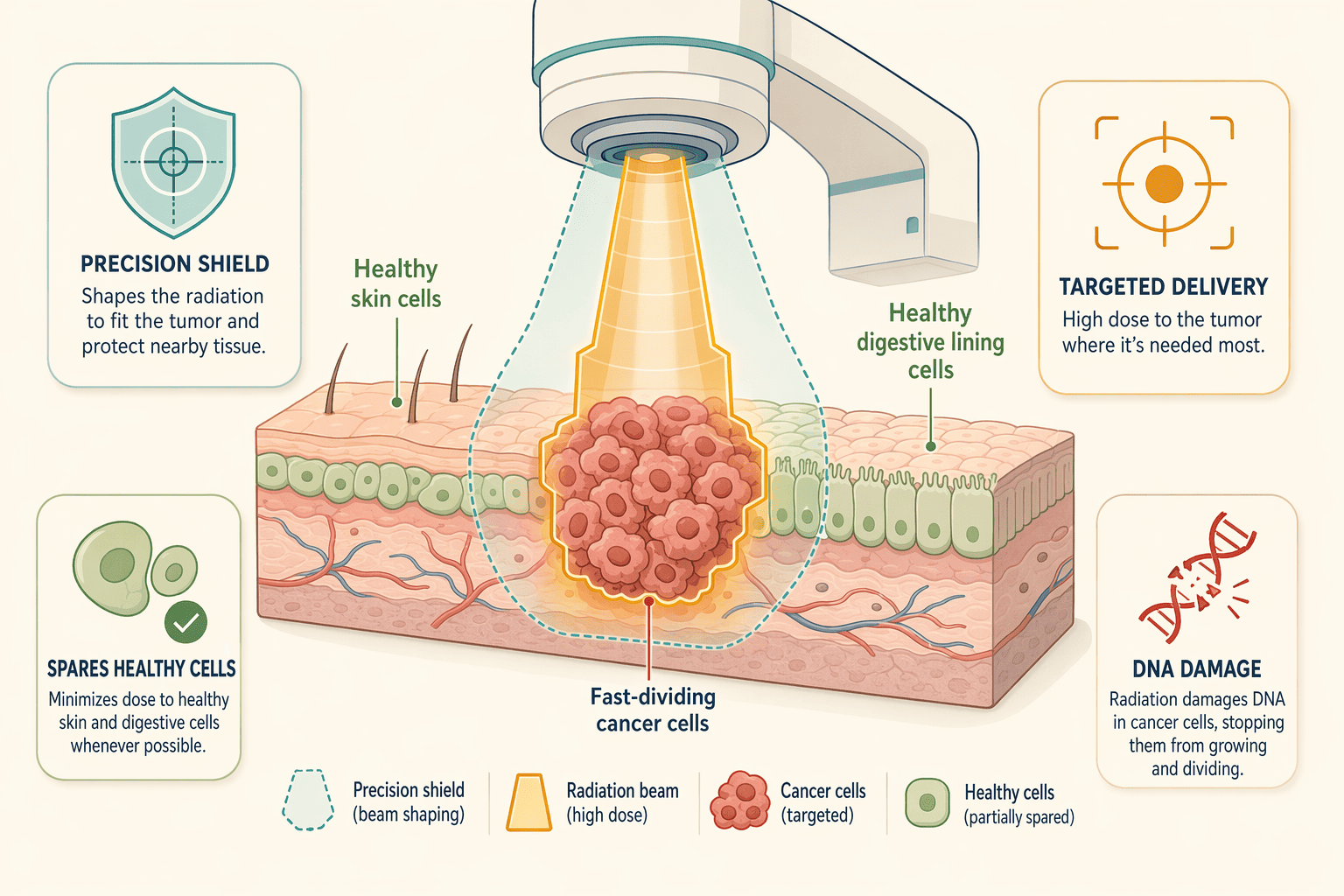
Common radiation therapy side effects include fatigue, skin reactions in the treated area, and emotional adjustment, appearing gradually during treatment and typically resolving weeks to months after completion. Understanding why these effects occur starts with how radiation works at the cellular level: radiation damages DNA in fast-dividing cells—cancer cells, but also healthy cells like skin and digestive lining. Modern precision techniques shape radiation beams to minimize healthy-tissue exposure, reducing but not eliminating these effects.
How Radiation Affects Healthy Tissue Around the Target
Radiation therapy delivers high-energy beams that break DNA in cancer cells, triggering cell death. Because the beams must pass through skin and surrounding structures to reach the tumor, they can also affect nearby healthy cells. Cells that divide rapidly, such as those in skin, hair follicles, the digestive tract lining, and bone marrow, are more vulnerable to radiation damage than slower-dividing tissues. Damage to healthy cells can cause side effects, ranging from skin redness and fatigue to bowel or bladder changes, depending on the treatment area. Healthy cells usually recover within a few months after treatment, though the repair timeline varies by tissue type and individual physiology.
Why Treatment Itself Is Painless but Side Effects Appear Later
Radiation therapy itself is painless, patients feel nothing during the session. The disconnect between painless delivery and delayed side effects confuses many patients. DNA breaks and cellular repair happen over days or weeks, not instantly. Fatigue, skin reactions, and other effects accumulate as damaged cells attempt repair or die off, typically appearing partway through a multi-week treatment course and sometimes persisting for weeks after the final session. This timing reflects the body's repair cycle, not the radiation dose delivered on a single day.
Precision Technology That Reduces Collateral Damage
Modern radiation oncology centers use precision technologies to shape radiation beams around healthy tissue, reducing collateral damage. Andromeda Cancer Hospital, for example, provides radiation therapy with TrueBeamSTx, a linear accelerator that delivers image-guided radiotherapy (IGRT), intensity-modulated radiation therapy (IMRT), volumetric modulated arc therapy (VMAT), and other techniques designed to concentrate dose on the tumor while sparing surrounding structures. These approaches represent one set of methods hospitals employ, many facilities now integrate CT simulation, respiratory gating, and daily imaging to verify beam position before each session. While no technique eliminates healthy-tissue exposure entirely, precision radiation has narrowed the margin between target and normal tissue compared to older broad-field approaches.
Understanding the mechanism behind side effects provides context for the symptoms that follow, now let's explore what those symptoms are and when they typically emerge.
Common Physical Side Effects and When They Appear
When planning radiation therapy, most patients ask the same question: *When will I start to feel these side effects?* Unlike static symptom lists that describe *what* might happen, this section answers *when* each effect typically appears, when it peaks, and when it resolves. Understanding the timeline helps you prepare, and recognize that what you feel today may shift by next week or next month.
Fatigue: the Most Universal Side Effect
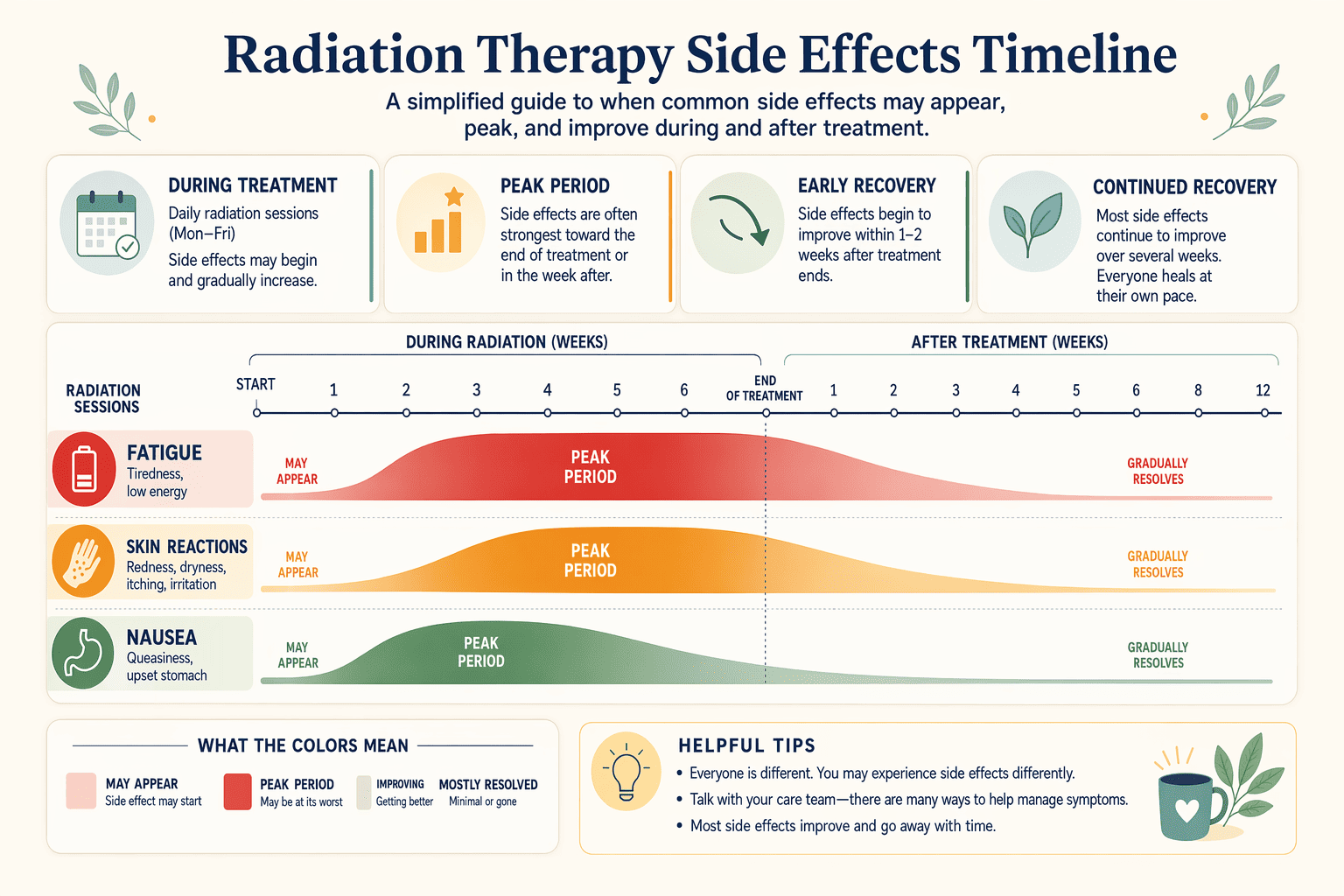
Fatigue is the most common side effect of radiation therapy, and it follows a cumulative pattern rather than appearing session-by-session. Fatigue typically begins 2 to 3 weeks into daily treatment, peaks toward the end of your course, and may last for several weeks to months after your final session. This isn't ordinary tiredness that extra sleep will fix, it's systemic exhaustion as your body channels energy toward healing. If your treatment targets areas of bone marrow (such as the pelvis), fatigue may deepen because radiation can reduce red blood cell counts, causing anemia.
Energy-management strategies include short walks, gentle yoga, or cycling if you're able, light movement can boost energy levels without pushing you beyond your threshold. Prioritize tasks, rest when needed, and ask friends or family for help with household responsibilities. If you're working, consider discussing part-time hours or temporary leave with your employer until treatment concludes.
Skin Reactions in the Treatment Area
Skin changes follow a predictable arc: redness or color shifts typically appear 1 to 2 weeks after treatment begins, and peeling or blistering may develop 3 to 4 weeks into your schedule. Most skin reactions settle within 2 to 4 weeks after your final radiation session, though some darkening or lightening may remain long-term.
Evidence-based skincare routines minimize discomfort and support healing. Follow these steps throughout treatment:
- Wash the treated area daily with gentle, fragrance-free soap and pat dry instead of rubbing.
- Apply a mild moisturizer every day to maintain skin hydration.
- Avoid direct sun exposure on treated skin; use SPF 50 or above sunscreen and continue for at least a year post-treatment.
- Do not use perfumed lotions, deodorants, or tight clothing over the radiated area.
- Skip shaving, waxing, or hair-removal creams in the treatment zone.
If your skin breaks open or becomes severely irritated, stop using products on that area and notify your care team immediately.
Location-Specific Effects Without Overwhelming the Reader
Side effects depend heavily on where you're treated. Rather than listing every anatomical region, here are three common examples that illustrate the principle:
- Head and neck radiation may cause dry mouth, difficulty swallowing, or throat soreness.
- Chest radiation can lead to cough or changes in breathing patterns.
- Pelvic radiation often triggers bowel urgency, bladder irritation, or changes in urinary habits.
Your radiation oncologist will outline the location-specific effects relevant to your treatment plan. These effects typically start by the second or third week of treatment and can persist for several weeks after your final session.
Hair Loss: Only in the Treated Area
Hair loss from radiation therapy occurs only in the area being treated, unlike chemotherapy, which can cause whole-body hair loss. If you're receiving radiation to your head, you may lose hair in that region; pelvic radiation does not affect scalp hair. This is one of the most misunderstood aspects of radiation therapy, often conflated with chemotherapy's systemic effects. Clarifying this upfront helps set realistic expectations and reduces unnecessary worry.
Physical symptoms are only part of the radiation therapy experience; the psychological and cognitive dimensions deserve equal attention.
Emotional and Cognitive Effects During Treatment
Radiation therapy brings not only physical changes but also a psychological journey that many patients are unprepared for. Recognizing these emotional responses as part of the treatment experience helps you prepare and seek support when needed.
Anxiety Before the First Session
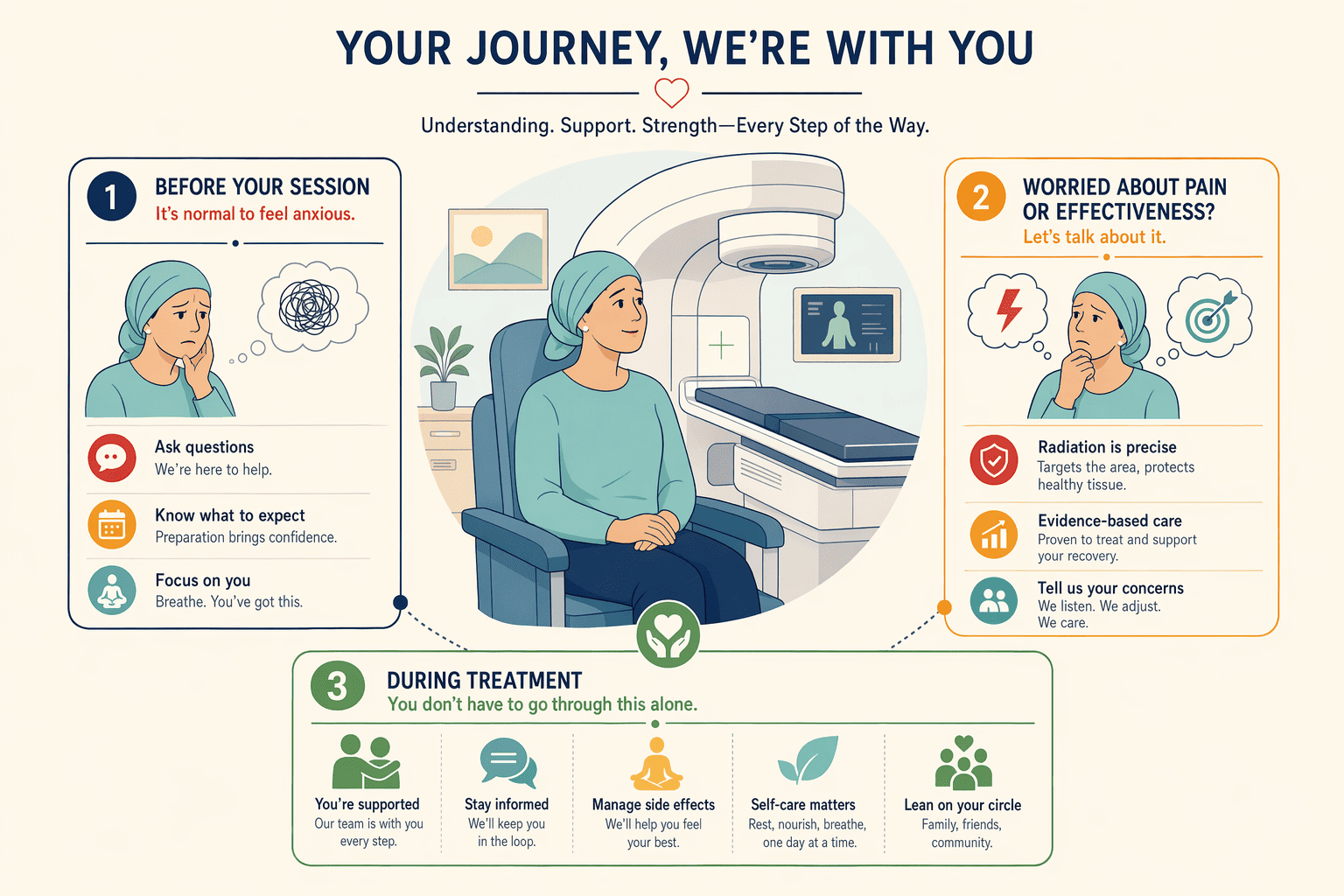
It is common to feel anxious before your first radiation session. Fear often centers on three concerns: worry that the treatment itself will hurt, uncertainty about which side effects will appear, and deeper fears about whether the treatment will work. The reality is that radiation therapy itself does not hurt, there is no sensation during the session, though positioning on the treatment table can feel uncomfortable. Side effects vary widely; some people have few or no side effects, while others have quite a few, and every person reacts differently to treatment. Discussing these concerns with your radiation oncologist before beginning treatment can reduce uncertainty and clarify what is truly likely versus what is imagined.
Adjustment Fatigue and the Mid-Treatment Emotional Dip
After the initial weeks, many patients experience a cumulative emotional toll. Conventional radiation schedules often run five days per week for five to seven weeks; the daily routine of travel, positioning, and waiting becomes draining even when each session lasts only minutes. Fatigue begins to compound, and you may feel worse physically and emotionally while simultaneously 'getting better.' This paradox is normal. Many patients are able to go to work, keep house, and enjoy leisure activities while receiving radiation therapy, but others find they need more rest than usual and cannot do as much. The adjustment fatigue is not a sign of poor coping, it reflects the body's allocation of energy toward healing and the stress of sustained disruption to your routine.
The Relief Paradox When Treatment Ends
Completing radiation therapy should feel like a milestone, yet some patients experience more anxiety after the final session than during treatment. The weekly contact with your care team provided structure and reassurance; once that routine ends, uncertainty about 'what's next' often surfaces. This relief paradox is documented and normal. If anxiety persists or interferes with daily life, contact your oncology team or a palliative care service for support. These services can help manage emotional distress alongside physical symptoms, and receiving palliative care does not mean other treatments must stop, it simply adds another layer of support during the transition from active treatment to follow-up care.
Knowing what to expect is the first step, understanding how your care team actively manages these challenges is the second.
How Andromeda's Care Team Manages Side Effects
Radiation therapy side effects, fatigue, skin irritation, nausea, and organ-specific symptoms, are not inevitable burdens patients must accept. Multidisciplinary interventions, combining radiation oncology with pain management, nutrition counseling, and psychological support, reduce the severity and duration of side effects. At Andromeda Cancer Hospital, this coordinated model operates from day one, not as a reactive rescue plan.

Radiation Oncology Team: Monitoring and Adjusting Treatment
The primary care loop begins with weekly on-treatment visits. Andromeda Cancer Hospital's radiation oncologists track symptom progression through structured assessments, not casual check-ins. When side effects escalate, severe skin reactions, uncontrolled nausea, or swallowing difficulty, the team adjusts dose fractionation, pauses treatment to allow recovery, or adds supportive medications. This iterative protocol, standard across multidisciplinary tumor boards, prevents minor discomfort from becoming treatment-limiting toxicity.
Pain and Palliative Care: Managing Discomfort Proactively
Palliative care is not end-of-life care, it is supportive care at any treatment stage. Andromeda Cancer Hospital's pain and palliative care specialists address radiation-induced pain, nausea, and emotional distress throughout therapy, not only when disease progresses. Interventions include targeted pain management protocols, anti-emetics tailored to treatment schedules, and counseling for anxiety surrounding side effects. MD Anderson's multidisciplinary approach validates this model: early palliative integration reduces symptom burden without conflicting with curative therapy.
Nutrition Counseling for Treatment-Area-Specific Diets
In some cancers, head and neck, gastrointestinal, dietary adjustments are not optional. Andromeda Cancer Hospital's nutrition counselors provide treatment-area-specific guidance: head-and-neck patients receive soft-food plans to manage radiation-induced swallowing difficulty, while GI patients follow low-fiber or low-residue diets to reduce bowel irritation. These interventions are integrated into the weekly review cycle, adjusting as symptoms evolve. Nutrition support is not an afterthought, it is a coordinated component of the care plan, aligned with radiation schedules and palliative protocols.
Even with expert management, certain symptoms require immediate medical attention; recognizing these red flags is key for safe treatment.
When to Contact Your Oncology Team: Clear Escalation Criteria
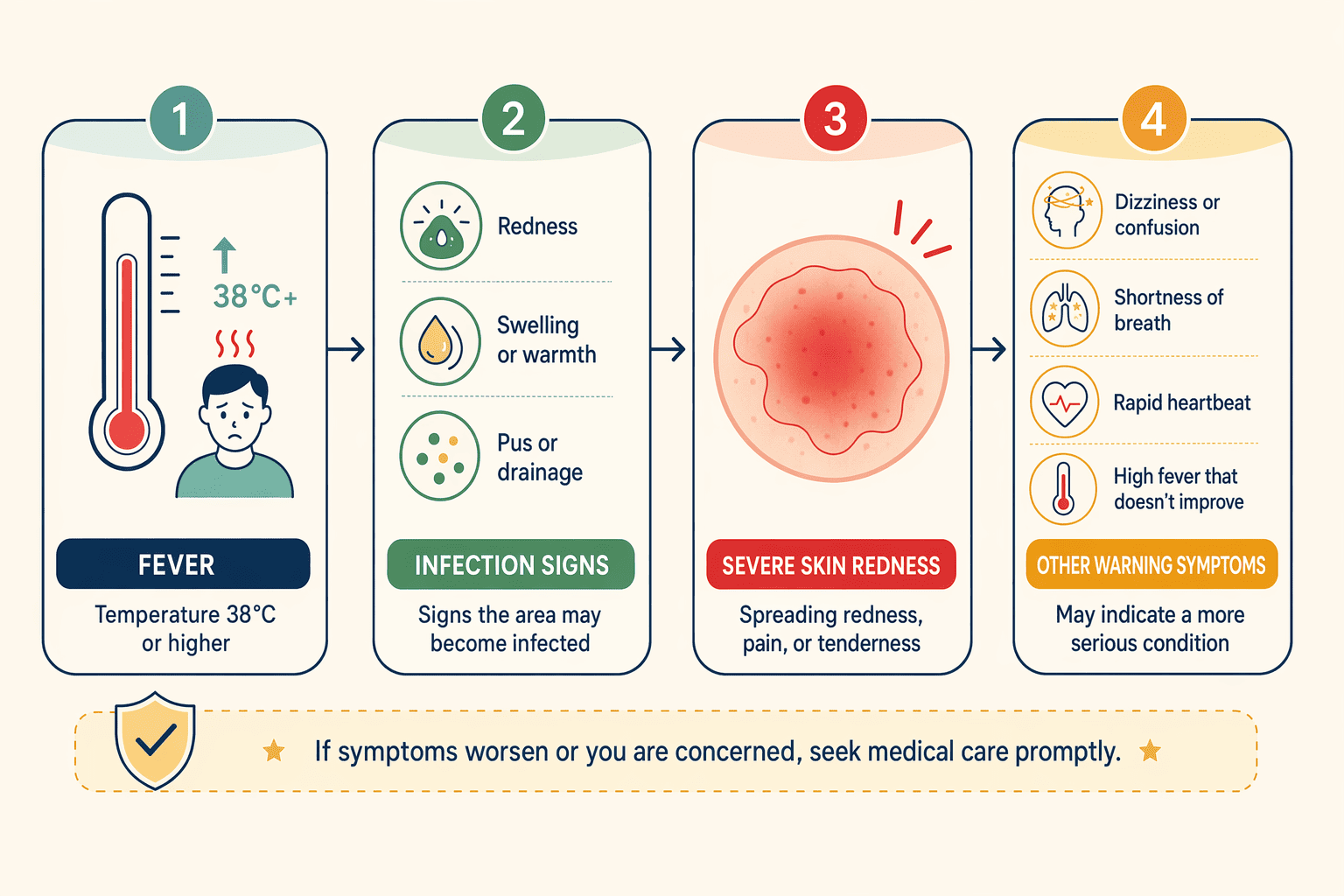
Knowing when to escalate concerns to your care team is important during radiation therapy. While mild side effects are expected and often manageable at home, certain symptoms require immediate medical attention. Below are the specific thresholds that signal it's time to contact your oncology team.
Fever and Infection Signs
A fever above 100.4°F (38°C), chills, or signs of infection in the treatment area should never be ignored. Call your team immediately if you experience a persistent fever or notice redness, warmth, or drainage from the skin being treated. These symptoms may indicate infection, which can escalate quickly in cancer patients undergoing treatment.
Severe or Uncontrolled Pain
Pain that over-the-counter medications don't relieve, pain that worsens despite prescribed medication, or new severe pain in the treatment area warrants a call to your oncology team. Uncontrolled pain can interfere with recovery and quality of life, and your team can adjust pain management strategies to help you stay comfortable.
Unexpected Bleeding, Swelling, or Breathing Changes
Bleeding from the treatment area, significant swelling, shortness of breath (especially after chest radiation), or difficulty swallowing (common with head and neck radiation) are immediate-contact triggers. Severe swelling or redness that spreads beyond the treatment zone may also signal complications that require urgent assessment.
Use this numbered checklist to assess when to call your team:
- Fever above 100.4°F (38°C) or chills
- Pain unrelieved by prescribed medication
- Bleeding from the treatment area
- Shortness of breath or difficulty swallowing
- Severe swelling or redness spreading beyond the treatment zone
Most radiation oncology centers, including Andromeda Cancer Hospital, provide 24/7 on-call access for urgent concerns during treatment. If you experience any of the symptoms above, contact your care team immediately rather than waiting for your next scheduled visit. In India, where access to specialized cancer care can be geographically uneven, having a clear escalation plan with your local oncology team becomes even more critical.
This guidance is informational only and not a substitute for professional medical advice. When in doubt, contact your oncology team, it is always better to ask than to wait.
Conclusion
Generic hospital radiation programs provide treatment but may lack integrated palliative care and nutrition counseling, Andromeda Cancer Hospital's multidisciplinary model coordinates these services from day one, reducing side-effect severity through proactive support. This integrated approach means your oncologist, dietitian, and palliative care specialist communicate in real time, adjusting your care plan as symptoms emerge rather than waiting for them to escalate.
As precision radiation technologies like IMRT, IGRT, and stereotactic techniques continue to improve, side-effect profiles are expected to narrow further, shorter treatment courses and more targeted delivery will make radiation therapy increasingly tolerable for a wider range of patients. These advances promise not only better outcomes but also gentler journeys through treatment.
Schedule a consultation with Andromeda Cancer Hospital's radiation oncology team to discuss your treatment plan and personalized side-effect management strategy. With 24/7 on-call support during treatment, you'll have expert guidance whenever concerns arise.
Frequently Asked Questions
Will I lose all my hair during radiation therapy?
Hair loss from radiation therapy occurs only in the area being treated, unlike chemotherapy, which can cause whole-body hair loss. If you're receiving radiation to your head, you may lose hair in that region; pelvic radiation does not affect scalp hair.
Is radiation therapy painful?
Radiation therapy itself is painless during the session, patients feel nothing. Skin soreness or other side effects may develop days or weeks later as tissue reacts, but the treatment delivery does not hurt.
Can I work during radiation therapy?
Many patients continue working during treatment, especially in the first few weeks before fatigue peaks. Whether you can work depends on job type, desk work versus physical labor, and your treatment schedule. Discuss flexible hours with your employer if needed.
How long do radiation therapy side effects last?
Most acute side effects like fatigue and skin reactions resolve within two to three months after treatment ends. Some location-specific effects, such as dry mouth from head and neck radiation, may linger longer or become permanent.
What skin care products can I use during radiation?
Use gentle fragrance-free soap, avoid perfumed lotions or deodorants on treated skin, minimize direct sun exposure, and wear loose clothing. Check with your care team before applying any new product to the treatment area.
Are older adults able to tolerate radiation therapy?
Radiotherapy is commonly and safely used in elderly patients and those with comorbidities, age alone is not a barrier. Treatment plans can be adjusted for individual tolerance, and weekly monitoring ensures side effects are managed proactively.
When should I call my doctor during radiation treatment?
Contact your oncology team immediately for fever above 100.4°F, uncontrolled pain despite medication, unexpected bleeding from the treatment area, severe swelling, or difficulty breathing or swallowing. Early escalation prevents complications.
Sources
- Radiation Therapy Side Effects - NCI - www.cancer.gov
- Radiation therapy - Mayo Clinic - www.mayoclinic.org
- Adverse Effects of Radiation Therapy - StatPearls - www.ncbi.nlm.nih.gov
- Side effects of radiation therapy | Canadian Cancer Society - cancer.ca
- Common Side Effects from Radiation Therapy - Fox Chase - www.foxchase.org
- Side effects of radiotherapy - NHS - www.nhs.uk
- Radiation Effects on Body | American Cancer Society - www.cancer.org
- Managing Side Effects from Radiation Therapy | Yale Medicine - www.yalemedicine.org