
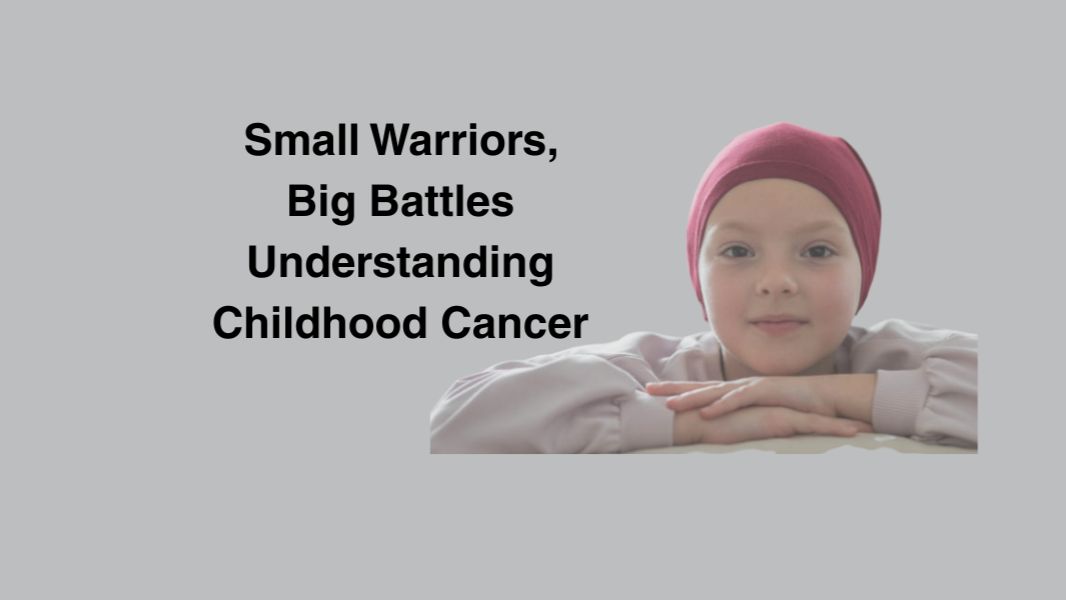
"Small Warriors, Big Battles: Understanding Childhood Cancer”
Childhood cancers, though relatively rare, represent a profound challenge in paediatric healthcare, affecting thousands of families across the globe each year. Unlike adult cancers, they often arise from unknown causes and progress rapidly, demanding swift diagnosis and specialized treatment. From leukaemia and brain tumours to neuroblastoma and Wilm’s tumour, these diseases strike at vulnerable ages, often before children can articulate their symptoms. Understanding the risk factors, common types, and evolving treatment landscape is crucial not only for clinicians but also for caregivers and policymakers. This newsletter explores the global and Indian context of childhood cancers, highlighting advances that offer renewed hope.
1. Risk Factors
Unlike adult cancers, most childhood cancers do not have well-established environmental or lifestyle risk factors. However, some known contributors include:
- Genetic mutations: Around 5–10% of childhood cancers are linked to inherited genetic changes.
- Infections: Chronic infections like HIV, Epstein-Barr virus, and malaria are associated with increased risk, especially in low- and middle-income countries (LMICs).
- Radiation exposure: Prenatal or early-life exposure to ionizing radiation may elevate risk.
- Congenital syndromes: Conditions like Li-Fraumeni syndrome, Down syndrome, and neurofibromatosis are associated with higher cancer susceptibility.
Despite extensive research, most childhood cancers arise spontaneously without identifiable external triggers.
2. Common Types of Childhood Cancers
Childhood cancers differ significantly from adult cancers in origin and behaviour. The most prevalent types include:
- Leukaemia: Especially Acute Lymphoblastic Leukaemia (ALL), accounting for nearly 30% of cases.
- Brain and central nervous system tumours: Including medulloblastomas and gliomas.
- Lymphomas: Both Hodgkin and non-Hodgkin types.
- Neuroblastoma: A cancer of nerve tissue, often affecting infants.
- Wilm’s tumour: A kidney cancer typically seen in children under 5.
- Bone cancers: Such as osteosarcoma and Ewing sarcoma.
- Retinoblastoma: A rare eye cancer, often diagnosed before age 5.
3. Incidence: Global and Indian
Globally, an estimated 400,000 children and adolescents (0–19 years) are diagnosed with cancer annually. The burden varies widely:
Region
Estimated Cure Rate
Key Challenges
High-income countries
>80%
Early diagnosis, access to care
LMICs (including India)
<30%
Delayed diagnosis, treatment abandonment
In India, approximately 50,000 new cases are reported each year. Childhood cancers represent about 4% of all cancers in the national registry. Delhi shows the highest age-adjusted incidence rates: 203.1/million (boys) and 125.4/million (girls).
4. Common Age at Risk
The paediatric age group is typically defined as 0–14 years, though some centres extend it to 18 years. Specific cancers tend to peak at different ages:
- Infants (<1 year): Neuroblastoma, retinoblastoma
- Toddlers (1–4 years): Wilm’s tumour, ALL
- School-age (5–9 years): Brain tumours, lymphomas
- Adolescents (10–19 years): Bone cancers, Hodgkin lymphoma
5. Common Symptoms
Detecting cancer in children is challenging due to symptom overlap with common illnesses. Key warning signs include:
- Persistent, unexplained weight loss
- Frequent headaches with morning vomiting
- Swelling or pain in bones/joints
- Lumps in abdomen, neck, or chest
- Whitish appearance in pupil or vision changes
- Recurrent fevers without infection
- Excessive bruising or bleeding
- Fatigue and paleness
Awareness among caregivers and primary physicians is crucial for early detection.
6. Genetic Testing
Genetic testing plays a growing role in:
- Identifying predisposition: For families with history of cancer or syndromic features.
- Guiding treatment: Certain mutations (e.g., TP53, ALK) influence therapy choices.
- Risk stratification: Helps determine prognosis and recurrence risk.
However, access to genetic counselling and testing remains limited in many Indian settings.
7. Diagnosis
Diagnosis involves a multidisciplinary approach:
- Clinical evaluation: History and physical examination.
- Imaging: MRI, CT scans, PET scans for tumour localization.
- Biopsy: Essential for histopathological confirmation.
- Blood tests: Including complete blood count, tumour markers.
- Bone marrow aspiration: Especially for leukaemia.
Timely and accurate diagnosis is often hindered in LMICs due to lack of infrastructure.
8. Treatment
Treatment depends on cancer type, stage, and patient age. Modalities include:
- Chemotherapy: Backbone of paediatric cancer treatment.
- Surgery: For localized solid tumours.
- Radiotherapy: Used selectively due to long-term side effects.
- Stem cell transplant: For high-risk leukaemia and relapsed cancers.
- Targeted therapy: Emerging options for specific mutations.
In India, specialized paediatric oncology units are essential but not uniformly available.
9. Prognosis
Prognosis varies by cancer type and healthcare access:
- High-income countries: Survival rates exceed 80% for many cancers.
- India: Estimated survival around 70%, but varies widely.
- Poor prognosis factors: Late-stage presentation Treatment abandonment Toxicity-related deaths Relapse
Long-term survivors may face challenges like growth delays, fertility issues, and secondary cancers.
10. Recent Advances
Exciting developments are reshaping childhood cancer care:
- Immunotherapy: CAR-T cell therapy shows promise in relapsed leukaemia.
- Precision medicine: Genomic profiling enables personalized treatment.
- Minimally invasive surgery: Reduces recovery time and complications.
- Digital health tools: Improve follow-up and symptom tracking.
- Global initiatives: WHO’s Global Initiative for Childhood Cancer aims to raise survival to 60% worldwide by 2030.
11. Psychosocial Impact and Support Systems
- Emotional toll: Childhood cancer affects not just the child but the entire family. Anxiety, depression, and post-traumatic stress are common.
- Support services: Play therapy, counselling, and parental support groups are vital but underprovided in many Indian hospitals.
12. Healthcare Infrastructure Gaps in India
- Less than 50% of tertiary hospitals in India offer essential services like brachytherapy, safe chemotherapy preparation, or daycare beds.
- Only 41.6% of public tertiary hospitals have dedicated paediatric oncology departments.
13. Data Systems and Policy Needs
- India lacks robust childhood cancer registries and data-driven policies, which hinders planning and resource allocation.
- WHO emphasizes that data systems are crucial for improving care quality and informing national strategies.
14. Long-Term Survivorship and Late Effects
- Survivors often face growth delays, cognitive impairments, fertility issues, and increased risk of secondary cancers.
- There's a growing need for survivorship clinics and long-term follow-up protocols.
15. Prevention and Public Awareness
- While most childhood cancers can't be prevented, public awareness can reduce delays in diagnosis and treatment abandonment.
- Campaigns tailored to rural and underserved communities are especially critical.
In India, efforts are underway to strengthen paediatric oncology infrastructure, data systems, and training.
Childhood cancers, though daunting, are increasingly treatable with timely diagnosis and evolving therapies. Global collaboration, improved access, and scientific innovation offer renewed hope for young patients. By raising awareness and strengthening care systems, we can transform outcomes—ensuring that every child, regardless of geography, has a fighting chance at life.