
India's cancer burden grows each year, yet fewer than 10% of eligible women undergo routine screening for cervical and breast cancer. This gap persists despite strong government programs offering free early detection services nationwide.
Key Takeaways
- Cancer screening rates in India remain below 10% for cervical and breast cancer despite free government programs under NPCDCS and Ayushman Bharat
- Awareness gaps, infrastructure shortages, sociocultural taboos, and urban-rural disparities prevent screening programs from reaching at-risk populations
- Equipment and trained staff remain concentrated in urban centers, while rural areas face long travel distances and high opportunity costs
- Early detection transforms outcomes — screening finds cancer before symptoms appear, when treatment is easier and survival rates are higher
- Government programs offer free screening but face capacity constraints; private hospitals provide faster access with advanced diagnostics at out-of-pocket cost
Why Are Cancer Screening Rates so Low in India Despite Government Programs?
India's cancer screening rates remain critically low — below 10% for cervical and breast cancer — despite the existence of strong government frameworks including the National Programme for Prevention and Control of Cancer, Diabetes, Cardiovascular Diseases and Stroke (NPCDCS) and Ayushman Bharat. This gap between policy and practice stems from a multi-barrier landscape: public awareness deficits, fragmented infrastructure, cultural hesitations around screening, and deep urban-rural divides.

The Paradox of Policy Vs. Practice
NPCDCS mandates free screening for oral, breast, and cervical cancers at primary health centres nationwide; Ayushman Bharat extends coverage to diagnostics and treatment. Yet participation lags. A 2024 scoping review documented that even in regions with active program infrastructure, uptake hovers near single digits due to delayed awareness campaigns, inconsistent supply chains for screening kits, and provider training gaps.
A Multi-Barrier Framework
Four pillars drive the shortfall: (1) awareness — many eligible women do not know screening programs exist or misunderstand cancer as symptomatic-only; (2) infrastructure, diagnostics remain concentrated in urban tertiary hospitals while rural health posts lack mammography and HPV testing; (3) cultural stigma, fear of diagnosis and social taboos delay help-seeking; (4) geographic access, transport costs and time burdens exclude remote populations. Urban providers such as Andromeda Cancer Hospital offer breast and cervical screening within integrated oncology settings, yet the majority of India's at-risk population resides beyond reach of such facilities.
Understanding the blueprint of India's screening framework reveals where policy meets reality, and where the gaps widen.
Government Programs Exist, so What's Missing?
Npcdcs and Ayushman Bharat: the Blueprint
India's National Programme for Prevention and Control of Cancer, Diabetes, Cardiovascular Diseases and Stroke (NPCDCS) was designed to deliver opportunistic screening for cervical, breast, and oral cancers at district hospitals and primary health centers. Ayushman Bharat Health and Wellness Centers expanded this blueprint by embedding screening protocols into the nation's community-level health infrastructure. On paper, the coverage is thorough, screening for the three most common cancers, delivered through a tiered network spanning urban hospitals and rural sub-centers. Yet the practical reach remains far narrower than the policy scope suggests.
Implementation Gaps: Functional Capacity Vs. Paper Coverage
The distance between blueprint and delivery is measured in missing equipment, untrained staff, and broken referral chains. Research on Ayushman Bharat centers reveals that fewer than half maintain the functional capacity for even basic screening, diagnostic tools sit idle, trained technicians rotate out, and pathology lab linkages collapse under rural geography and resource constraints. India lacks a dedicated policy to address these central-state disparities, leaving implementation to vary widely across jurisdictions. Follow-up compliance data expose an even sharper gap: patients screened through government programs show markedly lower adherence to diagnostic follow-up after a positive result compared to self-referred patients who seek care at private centers. The difference is not medical, it is systemic. Transportation barriers, weak referral coordination, and the absence of patient navigation services mean that a positive screen often ends in silence rather than treatment.
Beyond infrastructure and policy design, deeply rooted sociocultural factors shape whether women seek screening even when services are available nearby.
Awareness Gaps and Sociocultural Taboos
Awareness Gaps: What People Don't Know
Public knowledge of screening benefits remains limited even where programs exist. A cross-sectional survey of 1,046 eligible women in rural Bangladesh found that although 75.4% were aware of cervical cancer, only 28.3% correctly identified screening intervals. Awareness of breast and oral cancer screening was even lower, 11.5% and 6.2%, respectively. These figures illustrate that recognition of a cancer's existence does not translate into understanding of screening as a preventive tool. In India, national survey data show similar patterns: many women recognize the names of breast, cervical, and oral cancers but cannot articulate when, how, or why to seek screening. The barrier is not illiteracy alone, knowledge deficits persist across education levels because awareness campaigns often emphasize cancer's gravity without explaining that screening finds cancer before symptoms start, when treatment is easier. Institutions like Andromeda Cancer Hospital conduct community awareness programs to bridge this knowledge gap, but systemic barriers remain.

Sociocultural Barriers: Stigma, Fear, and Fatalism
Sociocultural taboos suppress screening uptake even in educated urban populations. Fear of diagnosis, stigma around reproductive health examinations, and fatalistic beliefs that 'cancer is fate, nothing can be done' operate as powerful deterrents. Gender norms restrict women's autonomy to seek preventive care without family permission, while cultural discomfort with pelvic examinations delays cervical screening. Qualitative research shows that many women equate a cancer diagnosis with social ostracism and economic ruin, reinforcing avoidance behavior. These barriers are not addressed by awareness campaigns alone, closing the gap requires multi-pronged intervention combining health education, trained community health workers who can navigate cultural sensitivities, and peer support networks that normalize screening. Mass media cannot dismantle deeply rooted fatalism; culturally adapted community-level engagement is key to shift behavior.
Even when awareness improves, physical access to functional screening equipment remains a critical barrier, one that varies dramatically by geography.
Infrastructure and Accessibility Barriers
Diagnostic Equipment and Facility Shortages
India's screening infrastructure remains severely imbalanced. While metros like Delhi concentrate advanced oncology centers, staffed by highly experienced oncologists and healthcare professionals equipped with cutting-edge diagnostic technologies such as radiotherapy, chemotherapy, and immunotherapy, rural and semi-urban districts face crippling shortages. Many primary health centers lack functional mammography machines, limiting breast cancer detection; cervical screening programs operate without adequate colposcopy units or trained cytologists to interpret Pap smears. This geographic mismatch leaves vulnerable populations dependent on distant tertiary facilities, forcing them to travel hundreds of kilometers for a single diagnostic test.
Human Resource Gaps: Radiologists, Pathologists, and Counselors
Equipment alone cannot close the screening gap. Trained personnel, radiologists to read mammograms, pathologists to process biopsies, and genetic counselors to explain hereditary risk, remain in short supply across most districts. Even when a facility acquires imaging hardware, the absence of qualified interpreters renders it underutilized. Follow-up compliance suffers further: without dedicated screening coordinators to track results and ensure post-detection care linkages, many screen-positive patients never complete the diagnostic loop. In contrast, Andromeda Cancer Hospital operates a multidisciplinary radiology team including specialists in oncologic imaging, illustrating the workforce density required for effective early detection programs, a standard few public-sector centers can currently meet.
The infrastructure gap between urban and rural India creates a stark divide in who can access timely cancer screening.
Urban-Rural Disparities in Screening Access
Cancer screening in India remains heavily concentrated in metropolitan areas, leaving rural and semi-urban populations with limited access to early detection services. While government programs aim for nationwide coverage, the reality on the ground reveals sharp geographic divides, both in facility availability and in the practical ability of women to access those facilities.
Regional Variation Data: Which States Lead, Which Lag
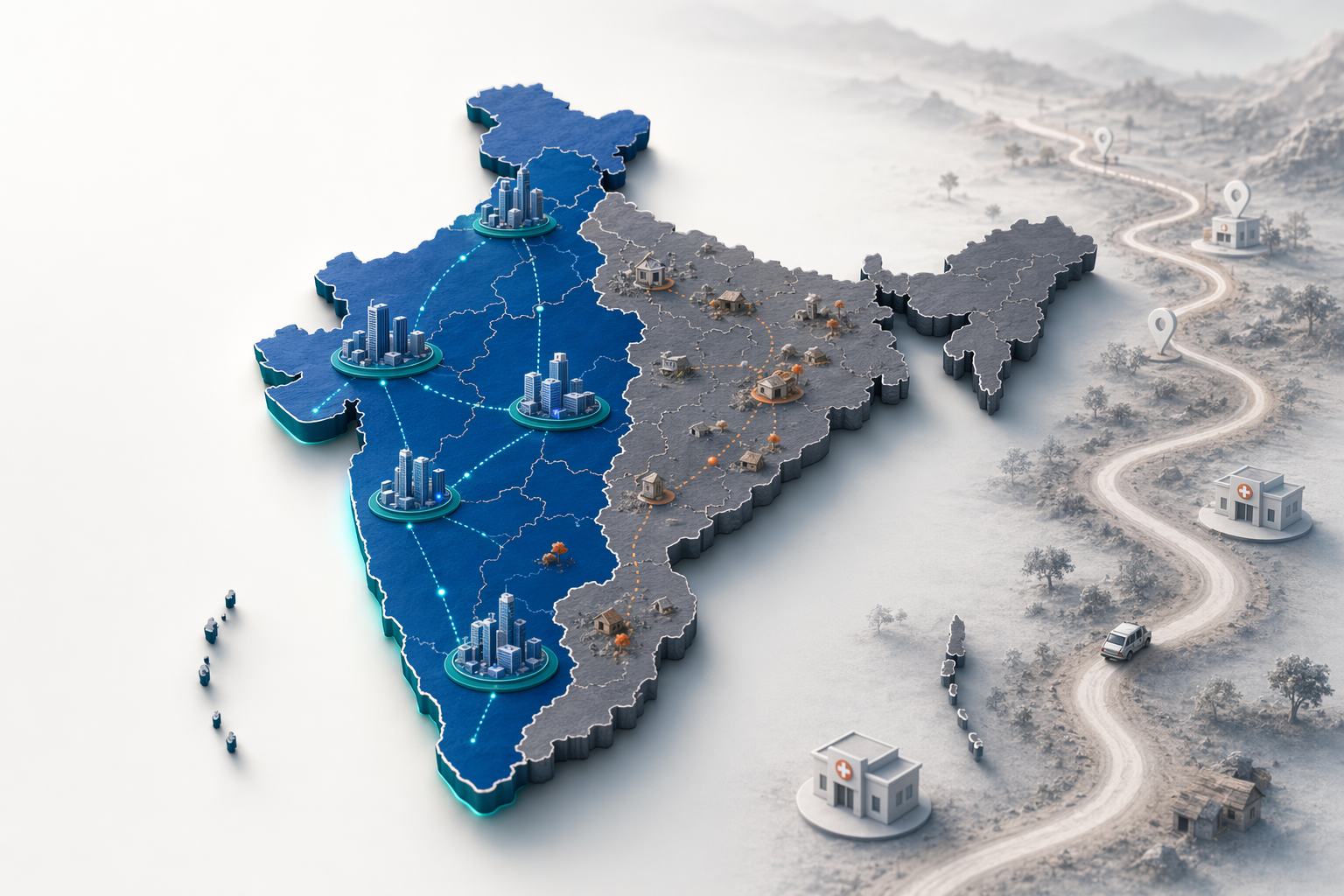
State-level screening uptake varies dramatically across India. District-wise analysis from the fifth round of National Family Health Survey (2019 to 2021) reveals these disparities in granular detail. Southern states such as Kerala and Tamil Nadu consistently report higher screening rates, driven by better female literacy, stronger primary healthcare infrastructure, and higher per-capita health spending. In contrast, northern and eastern states, including Uttar Pradesh and Bihar, show significantly lower uptake, even where government screening camps operate.
Urbanization remains the strongest predictor of screening access. Women in urban districts benefit from proximity to tertiary cancer centers listed among top facilities in Delhi NCR, shorter travel times, and higher awareness driven by media and community health workers. Rural districts, by contrast, depend on mobile screening camps that may visit once or twice a year, creating narrow windows that many women miss due to agricultural cycles, household obligations, or lack of timely information.
Travel, Cost, and Opportunity Barriers for Rural Populations
Even when screening services are technically 'free,' rural women face prohibitive barriers. Research on women in remote villages of Karnataka documents the compounding obstacles: lost daily wages from agricultural or domestic work, lack of reliable transportation to distant screening sites, and the need for a male family member to accompany them, itself a logistical and cultural hurdle.
Opportunity cost, the income or work a woman sacrifices to attend screening, often exceeds the perceived benefit, especially when symptoms are absent. Women cite concerns about childcare during their absence, fear of being judged by providers unfamiliar with local languages or customs, and the uncertainty of follow-up: even if screening detects abnormalities, accessing diagnostic and treatment facilities may require multiple trips to distant cities, further multiplying the burden.
This is the stage where 'free screening' alone becomes insufficient, not optional add-ons, but integrated solutions that address travel subsidies, mobile diagnostic units with same-day results, and teleconsultation follow-up become critical to closing the urban-rural divide.
Closing these gaps requires not just policy or infrastructure, but demonstrating how early detection changes lives, and ensuring patients can access that care.
How Early Detection Can Save Lives, What Andromeda Cancer Hospital Offers
The Survival Advantage of Early-Stage Diagnosis
Detecting cancer before symptoms appear transforms outcomes. In India, 50 to 60% of breast cancer cases are diagnosed at Stage 3 or beyond, compared to 10 to 20% in high-income countries. Late diagnosis narrows treatment windows and reduces five-year survival rates. Early screening identifies malignancies when they are smaller, localized, and more amenable to curative surgery or less-intensive systemic therapy.

Andromeda Cancer Hospital's Screening and Diagnostic Capabilities
Andromeda Cancer Hospital delivers cancer care through a multidisciplinary approach supported by the state-of-the-art www.andromedahospital.inadvanced diagnostic, imaging, surgical, and treatment technologies across its specialized oncology departments.
Advanced Technology Supporting Comprehensive Cancer Care https://www.andromedahospital.in/treatments
- Radiation Oncology is equipped with the TrueBeam STx Linear Accelerator, enabling advanced radiation techniques such as IMRT, IGRT, Deep Inspiration Breath Hold (DIBH), Respiratory Gating, and Hypofractionated Radiotherapy.https://www.andromedahospital.in/treatments/radiation-therapy
- Nuclear Medicine & Molecular Imaging offers PET-CT imaging for accurate cancer detection, staging, treatment planning, and response assessment.https://www.andromedahospital.in/treatments/nuclear-medicine-pet-ct
- Breast Oncology is supported by 3D Digital Mammography (Tomosynthesis),https://www.andromedahospital.in/treatments/radio-diagnosisHigh-Resolution Ultrasound with Elastography, and Stereotactic Breast Biopsy Systems for comprehensive breast cancer screening and diagnosis.https://www.andromedahospital.in/treatments/breast-oncology
- Surgical Oncology utilizes advanced surgical facilities for complex cancer procedures, including sentinel lymph node biopsy and oncoplastic reconstruction techniques.
- Medical Oncology provides chemotherapy, immunotherapy, targeted therapy, and hormone therapy through dedicated oncology treatment services.
- Pathology & Molecular Diagnostics offers Histopathology, Immunohistochemistry (IHC), and Molecular Diagnostic https://www.andromedahospital.in/treatments/onco-pathologytesting to support precise diagnosis and personalized treatment planning.
- Supportive Oncology Services include DEXA scanning, physiotherapy, rehabilitation, pain management, nutritional counselling, and survivorship support.
Together, these technologies and specialized services enable Andromeda Cancer Hospital to provide comprehensive, evidence-based cancer care across the continuum of diagnosis, treatment, and recovery.
Comparing Screening Options: Government Vs. Private Providers
| Provider | Screening Services Offered | City Coverage | Typical Wait Time |
|---|---|---|---|
| Government programs | Breast, cervical (visual inspection, Pap smear) | Rural & urban PHCs | Varies; high demand |
| Andromeda Cancer Hospital | Breast, cervical, oral; PET-CT, advanced imaging | Sonipat, NCR | Appointment-based |
| Apollo Hospitals Delhi | Cancer screening programme, IGRT, SBRT | Delhi NCR | Appointment-based |
| Fortis Cancer Institute Manesar | Early screening, molecular diagnostics | Gurgaon/Manesar | Appointment-based |
| Metro Cancer Hospital Preet Vihar | Thorough screening, IGRT, IMRT | Delhi | Appointment-based |
| Dharamshila Narayana Hospital | Surgical oncology, 24-hour access | Vasundhara Enclave, Delhi | Walk-in accepted |
| Venkateshwar Cancer Hospital | Dedicated cancer screening, multidisciplinary | Dwarka, Delhi | Appointment-based |
Government programs reach underserved populations at no cost but face capacity constraints. Private hospitals like Andromeda, Apollo, Fortis, and Metro offer shorter wait times and advanced imaging, though fees apply. Choosing between them depends on location, financial access, and the complexity of diagnostic follow-up required.
Conclusion
Government programs offer free screening but face capacity constraints and long wait times; private providers like Andromeda Cancer Hospital deliver faster access and advanced diagnostics but at out-of-pocket cost for uninsured patients. Each pathway trades convenience for affordability, leaving many eligible individuals caught between the two.
As India scales digital health infrastructure and trains more community health workers, the next frontier is closing the urban-rural screening gap through mobile screening units, telemedicine triage, and localized awareness campaigns tailored to regional languages and cultural contexts.
Assess your screening eligibility based on age and family history, then explore Andromeda Cancer Hospital's screening programs or visit your nearest Ayushman Bharat Health and Wellness Center to schedule a free screening.
Frequently Asked Questions
Why are cancer screening rates so low in India despite free government programs?
India's screening rates remain below 10% due to four systemic barriers: awareness gaps (many women don't know programs exist), infrastructure shortages (diagnostic equipment concentrated in cities), sociocultural taboos (stigma and fatalism discourage screening), and urban-rural disparities in access.
What is the National Program for Prevention and Control of Cancer (NPCDCS)?
NPCDCS is India's flagship cancer control program delivering opportunistic screening for cervical, breast, and oral cancers at district hospitals and primary health centers. It also covers treatment infrastructure and palliative care, though implementation gaps in equipment, trained staff, and referral chains limit functional capacity.
How does early detection improve cancer survival rates?
Early detection finds cancer before symptoms appear, when treatment is easier and survival rates are higher. In India, 50 to 60% of breast cancer cases are diagnosed at Stage 3 or beyond, compared to 10 to 20% in high-income countries. Screening shifts diagnosis to earlier stages with better outcomes.
Which cancers are covered under India's government screening programs?
NPCDCS and Ayushman Bharat programs cover cervical, breast, and oral cancers. Target populations include women aged 30 to 65 for cervical cancer (VIA screening), women aged 30+ for breast cancer (clinical breast exam), and adults 30+ for oral cancer (visual inspection).
What are the biggest barriers to cancer screening in rural India?
Rural barriers include travel distance, opportunity cost (lost wages and childcare), lack of local facilities with diagnostic equipment, and low awareness. Women cite concerns about provider language barriers, fear of judgment, and uncertainty about referral pathways when screenings detect abnormalities.
How much does cancer screening cost at private hospitals in India?
Government programs offer free screening but have limited capacity and long wait times. Private hospital costs vary: mammography ₹1,500 to 3,000, Pap smear ₹800 to 1,500, PET-CT ₹20,000 to 35,000. Private providers like Andromeda, Apollo, and Fortis offer shorter wait times and advanced imaging; insurance coverage depends on policy.
Does Andromeda Cancer Hospital participate in government screening programs?
Andromeda Cancer Hospital offers private screening services with advanced diagnostic technologies, including PET-CT and digital mammography, and supports community awareness initiatives. The hospital provides cancer screening programs with shorter wait times than government facilities, though fees apply for uninsured patients.
Sources
- Low participation in cancer screening in India: a scoping review - pmc.ncbi.nlm.nih.gov (2024)
- National Cancer Screening Programs in India: Early Detection - www.oncarecancer.com (2026)
- Current Status of Implementation of Cancer Screening Programme in India: A Review of Policies and Practice - pmc.ncbi.nlm.nih.gov
- Overcoming barriers of cervical cancer elimination in India - www.sciencedirect.com (2024)
- Knowledge, Attitudes, and Health-Seeking Behavior for Cervical ... - ascopubs.org
- Best Cancer Hospitals in Delhi - Peace Medical Tourism - peacemedicaltourism.com
- Cancer screening uptake by women from India's largest state Uttar Pradesh: district-wise analysis from the fifth round of National Family Health Survey (2019–2021) - ecancer.org (2021)
- Barriers to screening of breast and cervical cancer among women in remote villages of Karnataka: an analysis using the Health Belief Model - ecancer.org
- Top 10 Cancer Hospitals in Delhi: Government and Private - www.careinsurance.com