
Persistent or escalating cancer pain despite medication is a distressing experience that affects many patients. Understanding whether your pain stems from breakthrough episodes, medication tolerance, or disease progression guides appropriate treatment adjustments.
Key Takeaways
- Breakthrough cancer pain manifests as spontaneous flares, incident pain triggered by movement, or end-of-dose pain before scheduled medication.
- Pharmacologic tolerance develops through receptor desensitization and accelerated drug metabolism, requiring dose escalation over weeks to months.
- Disease progression—new metastases, tumor growth, or nerve infiltration—creates pain sources that exceed existing medication capacity.
- Red-flag symptoms include breakthrough episodes exceeding four per day or rapid dose escalation beyond 50% over two weeks.
- Multidisciplinary interventions including nerve blocks, palliative radiation, and opioid rotation provide relief when oral medications plateau.
What Is Breakthrough Cancer Pain?
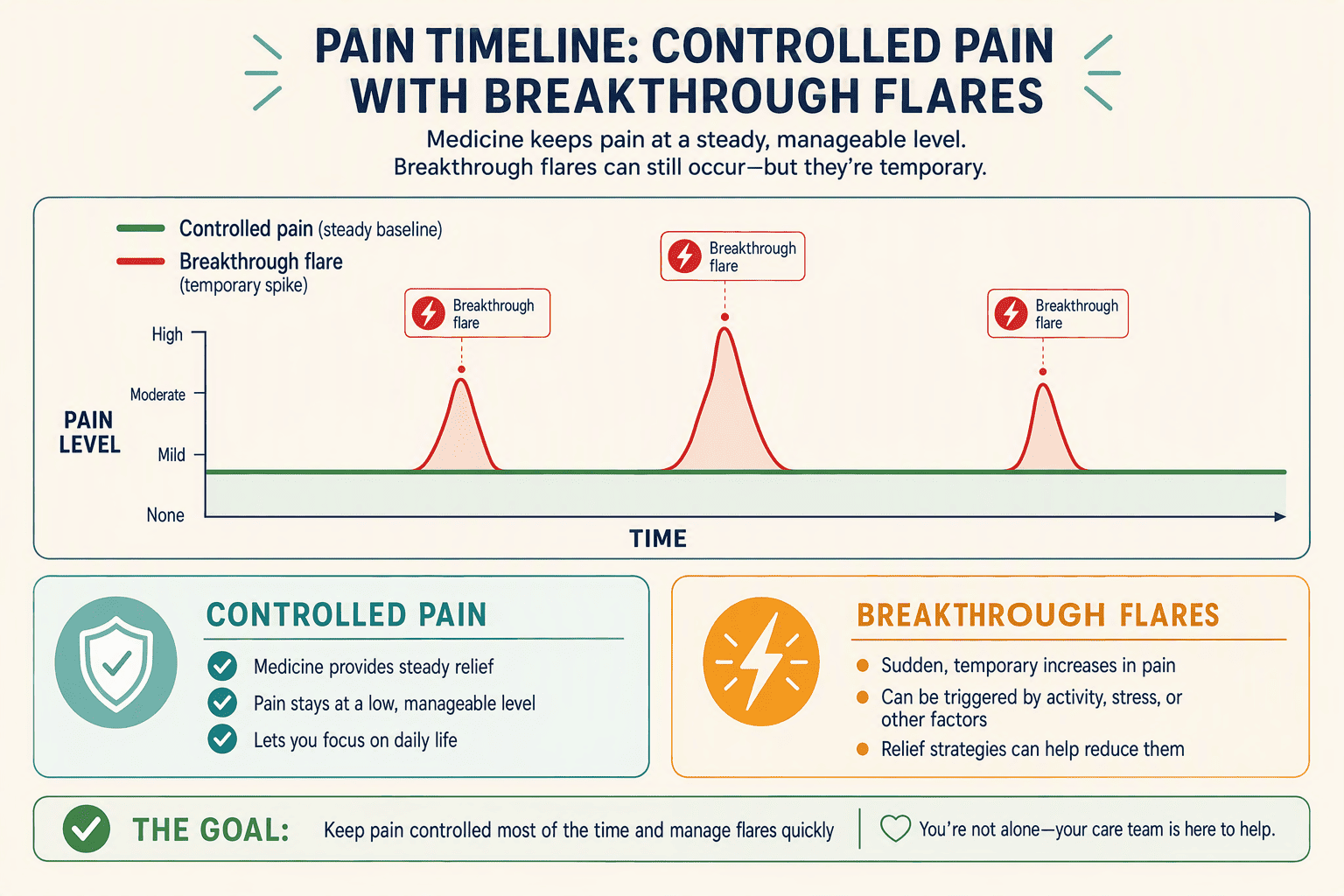
Why is my cancer pain getting worse despite medication? Three core mechanisms explain worsening pain: breakthrough pain (episodic flares superimposed on controlled baseline pain), tolerance (declining opioid responsiveness over time), and disease progression (tumor growth compressing nerves or bone). Breakthrough pain is the most common culprit when scheduled medication suddenly 'stops working' intermittently.
Definition and Triggers of Breakthrough Pain
Breakthrough cancer pain (BTcP) is defined as a temporary exacerbation of pain that arises despite the use of around-the-clock opioids. Unlike baseline chronic pain, which remains relatively stable throughout the day, breakthrough pain occurs as episodic flares—lasting minutes to hours—superimposed on otherwise controlled background pain. Between 40% and 80% of cancer patients experience this phenomenon, making it one of the most common reasons medication appears to fail intermittently.
Breakthrough pain is classified into three subtypes based on triggers: spontaneous (no identifiable trigger, pain erupts unpredictably), incident (triggered by movement, coughing, swallowing, or procedural interventions like dressing changes), and end-of-dose (pain resurfaces when scheduled medication wears off before the next dose). Understanding which subtype applies helps clinicians tailor rescue medication timing, spontaneous flares require fast-acting agents on standby, incident pain may need pre-emptive dosing before predictable activities, and end-of-dose breakthrough signals the need for baseline regimen adjustment rather than rescue medication alone.
Prevalence and Impact on Quality of Life
Prevalence estimates vary due to inconsistent definitions, but as many as 50% of patients diagnosed with cancer and chronic pain have pain levels that are not adequately controlled. Breakthrough pain creates multiple burdens: it increases prescriber visits, hospital admissions, and the duration of in-hospital stays, driving total pain-related costs to $560 to 635 billion annually in the United States alone. Beyond economic impact, uncontrolled breakthrough pain severely impairs daily function, patients report reduced mobility, interrupted sleep, and withdrawal from social activities. Mental health comorbidities such as depression and anxiety are common when pain repeatedly 'breaks through' despite medication.
Andromeda Cancer Hospital's Department of Pain and Palliative Care is one center offering structured breakthrough pain assessment alongside other multidisciplinary programs in northern India. Thorough breakthrough pain management requires matching rescue medication pharmacokinetics (onset, peak, duration) to the pain episode's temporal profile, a mismatch explains why some patients find their 'as-needed' pills ineffective.
Beyond episodic breakthrough pain, some patients experience declining effectiveness of their baseline medication regimen over time.
Why Pain Medications Lose Effectiveness Over Time
When pain persists despite medication, two distinct mechanisms may be at work, pharmacologic tolerance and untreated disease progression. Understanding the difference guides appropriate escalation strategies.
Opioid Receptor Desensitization and Downregulation
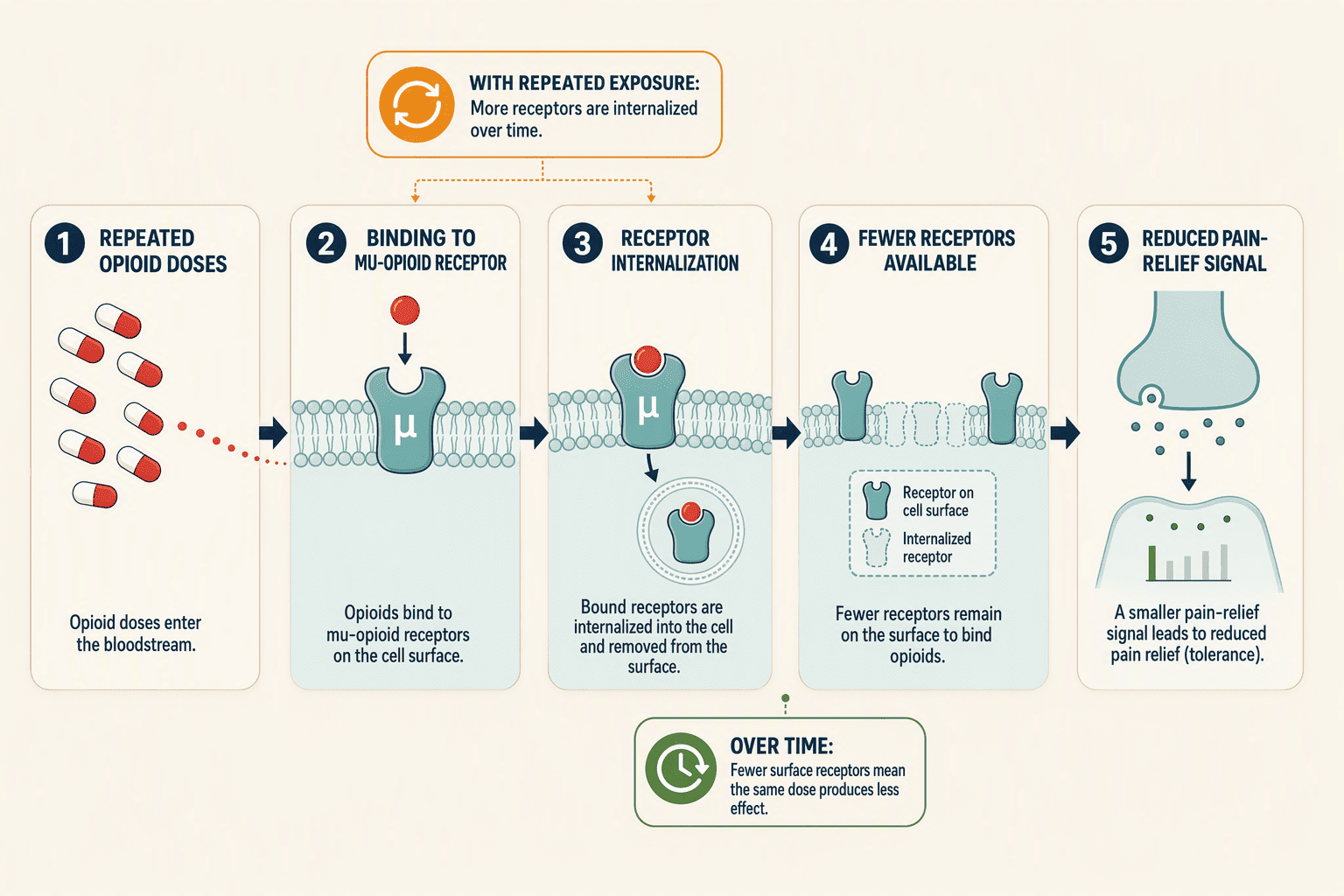
Repeated opioid exposure triggers cellular adaptation at mu-opioid receptors. The receptor proteins internalize, moving from the cell surface into the cytoplasm, and overall surface receptor density declines. This desensitization means the same dose produces less pain relief over time. Effective pain control often requires dose escalation: guidelines recommend 25 to 50% increments over weeks to months when tolerance develops.
Pharmacokinetic Tolerance: Metabolic Enzyme Induction
Chronic opioid use induces hepatic cytochrome P450 enzymes, accelerating drug metabolism and clearance. The body breaks down each dose faster, reducing effective plasma concentration even when intake remains constant. This pharmacokinetic adaptation compounds receptor-level tolerance, requiring either higher doses or switching to a different opioid class (opioid rotation) to restore analgesia.
Distinguishing Tolerance From Pseudotolerance
Pseudotolerance, worsening pain despite stable dosing, reflects untreated disease progression, not pharmacologic adaptation. New bone metastases, tumor growth, or nerve compression escalate pain independent of receptor changes. When dose escalation alone fails to restore control, imaging and specialist consultation are critical. Andromeda Cancer Hospital's pain and palliative care program offers opioid rotation protocols and interventional escalation, nerve blocks, epidurals, or targeted procedures, as part of multidisciplinary management.
While tolerance affects how the body responds to existing medication, cancer itself may change, creating entirely new sources of pain.
Disease Progression and New Pain Sources
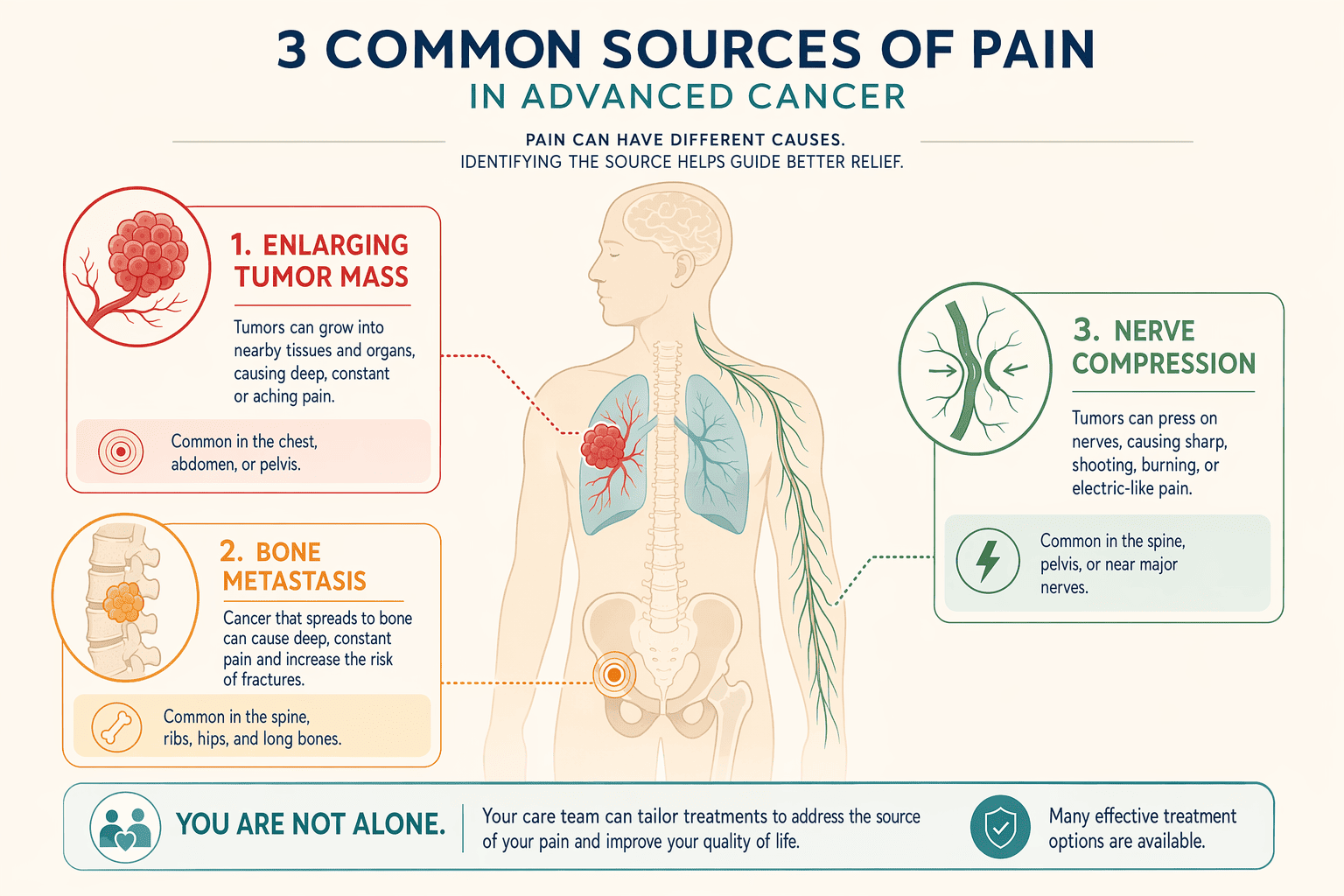
Cancer pain can worsen despite stable medication regimens when the disease itself changes, new metastases form, tumors enlarge, or cancer infiltrates previously uninvolved tissues. Pain is one of the most common symptoms in people with cancer, and people with advanced cancer have more severe pain. Understanding which anatomic structures are affected helps explain why some pain escalates despite opioids and points toward the interventions that actually work.
Bone Metastases: the Most Common Source of New Cancer Pain
Bone metastases produce pain through three mechanisms: periosteal stretch (the bone's outer membrane distends as the tumor grows), microfractures in weakened cortical bone, and release of inflammatory cytokines such as prostaglandins and tumor necrosis factor that sensitize local nociceptors. This explains why weight-bearing bones, spine, pelvis, femur, are particularly painful and why immobilization or bracing provides partial relief. Palliative radiation therapy remains first-line treatment for localized bone pain because it shrinks tumor bulk and reduces cytokine release, often delivering relief within days to weeks. Imaging with PET-CT or MRI identifies new metastatic deposits, enabling targeted radiation planning before microfractures progress to pathologic fractures.
Nerve Compression and Neuropathic Pain Mechanisms
Tumor infiltration or compression of nerve plexuses, brachial plexus in lung cancer, lumbosacral plexus in pelvic malignancies, produces neuropathic pain described as burning, shooting, or electric-shock sensations. This pain responds poorly to opioid escalation alone because the mechanism is neural injury rather than tissue inflammation. Adjuvant agents (gabapentin, pregabalin, duloxetine, tricyclic antidepressants) stabilize nerve membranes and reduce ectopic firing, often providing better relief than doubling opioid doses. In advanced stages where a cure is not possible, treatment focuses on managing symptoms, improving quality of life, and providing support to the patient and their family.
Visceral Involvement and Referred Pain Patterns
Liver capsule distension, bowel obstruction, or mesenteric infiltration produces diffuse, cramping pain poorly responsive to systemic opioids. Visceral nociceptors transmit signals through autonomic pathways with less precise localization than somatic pain, so patients report vague abdominal or chest discomfort that shifts location. Targeted interventions, celiac plexus block for pancreatic cancer, epidural infusion for pelvic tumors, interrupt these pathways at the spinal or ganglionic level, providing relief when oral or intravenous opioids reach dose-limiting side effects without adequate analgesia.
Recognizing when pain control has deteriorated beyond medication adjustment alone requires clear communication with your care team.
When to Contact Your Oncology or Palliative Care Team
Red-Flag Symptoms Requiring Urgent Assessment
Worsening pain despite medication is a red-flag symptom requiring urgent oncology or palliative care consultation. Do not delay seeking medical advice when any of the following appear:
- Sudden pain escalation unresponsive to breakthrough medication, pain that intensifies within hours despite taking prescribed short-acting opioids signals undertreated disease progression or complication.
- New weakness, numbness, or bowel/bladder dysfunction, these neurologic deficits may indicate spinal cord compression, a surgical emergency requiring immediate imaging and intervention.
- Fever accompanied by bone pain, suggests possible infection or pathologic fracture at a metastatic site, both requiring urgent diagnostic workup.
- More than four breakthrough pain episodes daily despite scheduled opioids, persistent breakthrough pain indicates inadequate baseline analgesia and necessitates medication adjustment.
- Uncontrolled nausea or vomiting preventing oral medication, inability to keep down pain medications will lead to rapid loss of symptom control and may require intravenous or transdermal alternatives.
Andromeda Cancer Hospital's Department of Pain and Palliative Care offers pain management and palliative interventions, including consultation for pain emergencies. Patients experiencing any red-flag symptom can contact Dr. Divya, a palliative care specialist, for assessment.
Pain Assessment Tools for Patient Self-Monitoring
Between clinic visits, use structured pain-tracking tools to document patterns and support escalation decisions. A 0 to 10 numeric rating scale (0 = no pain, 10 = worst imaginable) captures pain intensity at consistent intervals. Body-map diagrams help pinpoint new or shifting pain locations, alerting your team to possible metastatic sites. The Edmonton Symptom Assessment System scores multiple symptoms (pain, fatigue, nausea, dyspnea) simultaneously, revealing which dimensions need urgent attention. Maintaining a pain diary with timestamps, medication doses, and activity triggers provides objective data your oncology or palliative team can use to refine your regimen. In India, accessible palliative care resources include the CGHS-empaneled hospital network and specialized facilities such as Shanthibhavan, India's first no-bill palliative hospital, which operates entirely on donations and offers 24/7 medical supervision.
When oral opioid dose escalation reaches limits or side effects become intolerable, interventional approaches offer targeted relief.
How Multidisciplinary Pain Management Addresses Worsening Pain
When oral opioid titration plateaus or side effects become limiting, multidisciplinary teams deploy interventional procedures and complementary modalities to restore relief without escalating systemic toxicity. Breakthrough pain affects 50 to 90% of hospitalized cancer patients, signaling the need for targeted strategies beyond oral medications.
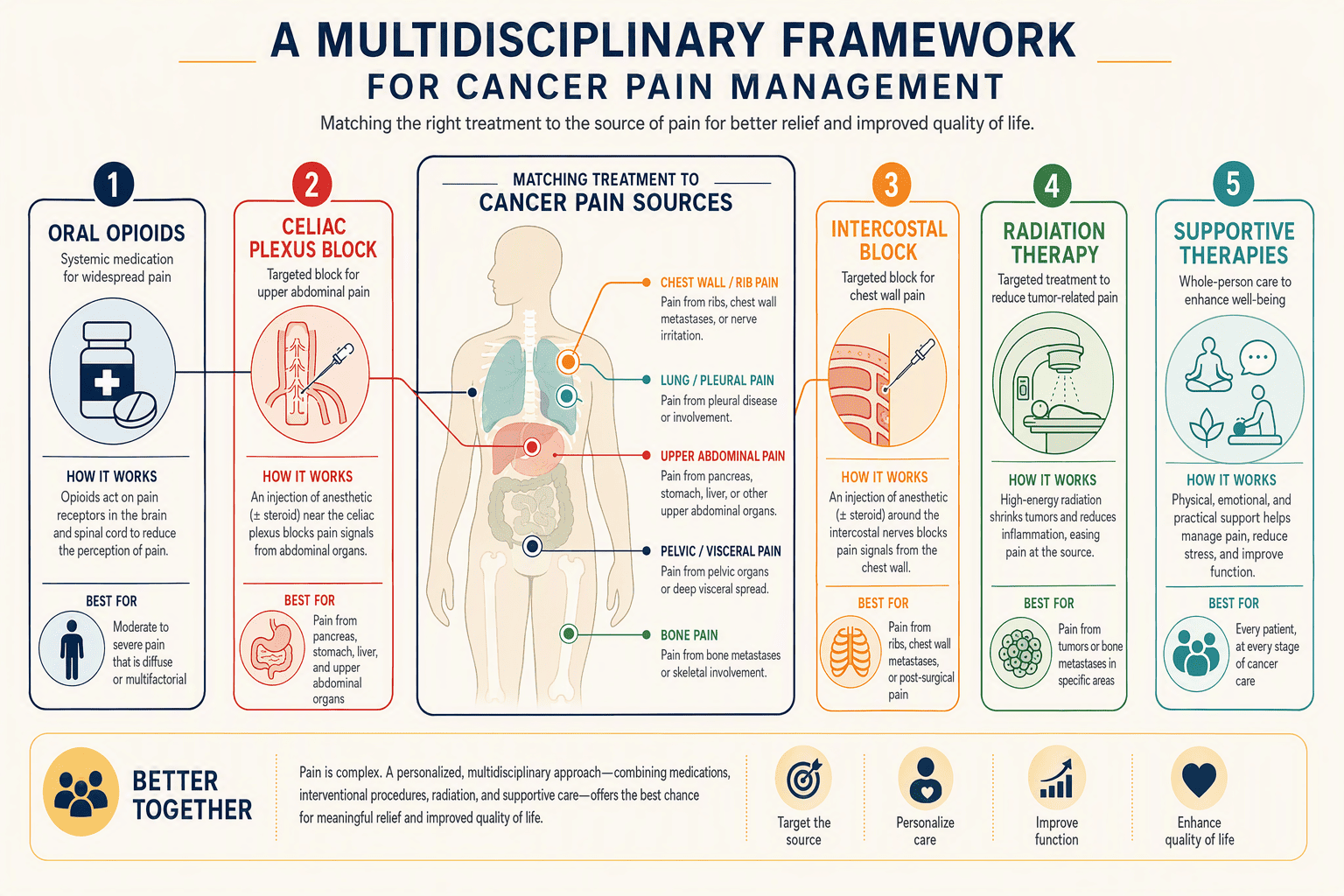
Interventional Procedures: Nerve Blocks and Epidural Infusions
Celiac plexus blocks reduce visceral pain from pancreatic or gastric tumors by interrupting sympathetic nerve transmission; intercostal blocks address chest-wall pain in patients with rib metastases or post-thoracotomy pain syndrome. Epidural infusions deliver local anesthetic and low-dose opioid directly to spinal receptors, achieving 30 to 50% reductions in systemic opioid dose while preserving pain control. Andromeda Cancer Hospital's Department of Pain and Palliative Care https://andromedahospital.in/doctors/dr-divya offers nerve blocks, epidurals, and infusion techniques starting at diagnosis, ensuring early access before tolerance develops. Patients considering these options may reference Shanthibhavan Palliative Hospital, the first palliative hospital in India, as a complementary care model embedding interventional pain services within thorough palliative frameworks.
Palliative Radiation for Bone Metastases
Single-fraction or short-course radiation (8 Gy × 1 or 20 Gy / 5 fractions) reduces tumor bulk and inflammatory cytokine release, providing pain relief in 70 to 80% of patients within 2 to 4 weeks. Andromeda Cancer Hospital uses the Varian TrueBeam STx for image-guided delivery, enabling precise targeting of vertebral or long-bone lesions while sparing adjacent marrow and soft tissue. Patients whose pain worsens despite medication escalation should discuss palliative radiation timing with their oncology team; early intervention often prevents pathologic fracture and preserves mobility.
Non-Pharmacologic Adjuncts and Psychological Support
Transcutaneous electrical nerve stimulation (TENS), acupuncture, and physical therapy serve as complementary strategies that reduce pain-related distress and improve function but do not replace pharmacologic or interventional management for severe pain. Andromeda Cancer Hospital provides rehabilitation and physiotherapy services, supportive care including psychological support and nutritional guidance, helping patients sustain daily activities and cope with pain flares. Cognitive-behavioral techniques, addressing catastrophizing and sleep hygiene, lower emotional amplification of nociceptive signals, creating space for lower opioid doses without sacrificing relief.
Conclusion
Single-specialist management suits early-stage pain controlled with oral opioids, offering simplicity and convenience. Multidisciplinary care, integrating anesthesia nerve blocks, palliative radiation, and psychological support, adds value when pain becomes refractory to dose escalation or when interventional procedures can reduce systemic opioid burden by 30-50%, addressing both efficacy plateaus and intolerable side effects.
As cancer survivorship increases and treatment timelines extend, early integration of palliative care, starting at diagnosis rather than end-of-life, is becoming standard practice. This approach improves pain control, reduces hospitalization, and enhances quality of life throughout the cancer journey, shifting perception from last-resort comfort to proactive symptom management.
Schedule a pain assessment with https://andromedahospital.in/support/contact , Andromeda Cancer Hospital's Pain and Palliative Care team to explore opioid rotation, nerve blocks, or palliative radiation if your current regimen requires frequent dose escalation or breakthrough pain exceeds four episodes daily.
Frequently Asked Questions
How quickly does opioid tolerance develop in cancer patients?
Tolerance develops over weeks to months, typically requiring 25-50% dose escalation. Speed varies by opioid formulation, baseline dose, and individual metabolism. Not all patients develop tolerance at the same rate; some maintain stable doses throughout treatment while others require frequent adjustments.
What is the difference between breakthrough pain and end-of-dose pain?
Breakthrough pain occurs spontaneously or with movement, unrelated to scheduled dosing. End-of-dose pain appears predictably before the next scheduled dose as medication wears off. End-of-dose pain indicates the dosing interval is too long, not that tolerance has developed.
When should I ask about nerve blocks or epidural pain management?
Ask when oral opioids require frequent escalation (>50% increase over two weeks), breakthrough episodes exceed four per day, or pain localizes to a specific region amenable to targeted block. These interventions reduce systemic opioid needs by 30-50% while improving regional pain control.
Can imaging tests show why my pain is getting worse?
PET-CT or MRI can identify new metastatic sites, nerve compression from tumor growth, or pathologic fractures. Bone metastases produce pain through periosteal stretch, microfractures, and inflammatory cytokine release. Worsening pain without clear dose-related cause warrants imaging to guide treatment escalation.
Is palliative radiation effective for bone pain from metastases?
Single-fraction or short-course radiation provides pain relief in 70-80% of patients within 2-4 weeks. It works by reducing tumor bulk and inflammatory mediator release, not curing the metastasis. Radiation is typically combined with continued systemic analgesia for optimal control.
What non-drug options help with cancer pain?
TENS, acupuncture, physical therapy, and cognitive-behavioral techniques reduce pain-related distress and improve function. These adjuncts complement, not replace, pharmacologic management. They are most effective for chronic baseline pain rather than severe acute flares, addressing the psychological dimension of pain perception.
Should I be worried if my pain medicine needs to be increased?
Dose escalation is a normal part of cancer pain management. Both pharmacologic tolerance and disease progression may require adjustments. Worsening pain is neither inevitable nor untreatable; early escalation to multidisciplinary care, anesthesia, palliative specialists, radiation oncology, improves outcomes significantly.
Sources
- Breaking Through Breakthrough Cancer Pain - Pharmacy Times - pharmacytimes.com (2017)
- Breakthrough Cancer Pain: Review of Prevalence, Characteristics and Management - PMC - pmc.ncbi.nlm.nih.gov
- Types of pain - Macmillan Cancer Support - macmillan.org.uk
- What Is Cancer Pain? - Cleveland Clinic - my.clevelandclinic.org
- Indian Society for Study of Pain, Cancer Pain Special Interest Group Guidelines - PMC - pmc.ncbi.nlm.nih.gov
- Pain and Cancer Treatment - NCI - www.cancer.gov
- Cancer Pain Management: A Narrative Review - PMC - pmc.ncbi.nlm.nih.gov
- Cancer Pain (PDQ®) - NCI - www.cancer.gov
- Cancer pain: Relief is possible - Mayo Clinic - www.mayoclinic.org (2024)
- Management of pain in cancer patients – an update - ecancer - ecancer.org (2024)
- Shanthibhavan Palliative Hospital Services - shanthibhavan.in
- Shanthibhavan Palliative Hospital - Palliative India - palliativeindia.in
- Breakthrough cancer pain – still a challenge - Dove Medical Press - www.dovepress.com