
Cancer treatment often requires coordination between surgery, chemotherapy, and radiation. Many patients search for facilities where surgical and medical oncologists work together daily, but identifying truly integrated care remains challenging.
Key Takeaways
- Cancer hospitals with both surgical and medical oncology under one roof exist across India, but listing both specialities does not guarantee active coordination.
- True integration requires regularly scheduled tumour board meetings where specialists review each case together to decide the optimal treatment.
- Fragmented care adds weeks to diagnosis-to-treatment timelines and often forces patients to repeat scans and biopsies.
- Verification criteria include same-day multi-speciality consults, co-located diagnostics, and on-site radiation oncology.
- Integrated centres reduce out-of-pocket costs by eliminating duplicate tests and consolidating billing structures.
What Does 'Under One Roof' Mean in Cancer Care?
Yes, hospitals with both surgical and medical oncology under one roof exist across India — but having both specialities listed on a hospital's website does not guarantee they work together. True integration requires active collaboration through structured tumour boards and shared decision-making pathways, not just physical proximity within the same building or hospital network.
Physical Co-Location Vs. Clinical Coordination
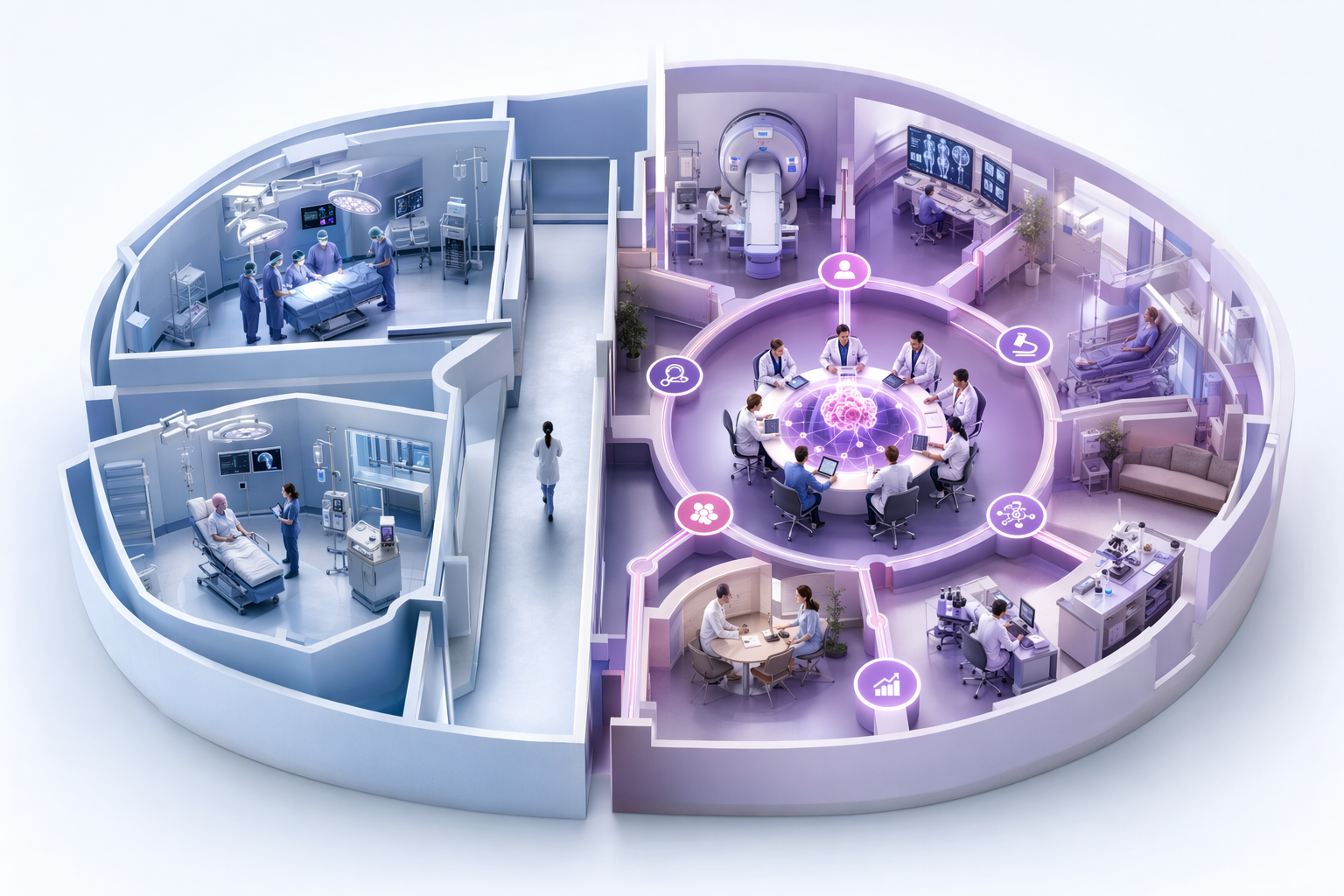
Many hospitals market themselves as thorough oncology services under one roof, listing medical, surgical, and radiation specialists on their websites. However, physical co-location — having these specialists somewhere within the same hospital network — differs fundamentally from operational integration. A hospital may employ both a surgical oncologist and a medical oncologist yet operate them in separate departments with minimal cross-consultation. The patient's experience in such settings often involves scheduling separate appointments, repeating medical history, and navigating conflicting recommendations without a unified treatment strategy.
The Multidisciplinary Tumour Board Standard
Verified integration shows up in regularly scheduled, site-specific tumour boards where medical, surgical, and radiation oncologists review each patient's case together before treatment begins. For example, Prisma Health's Multidisciplinary Centre schedules breast cancer reviews every Monday afternoon and Thursday morning, with designated days for pancreatic, thoracic, brain, and GI cancers. Atlantic Surgical Oncology convenes regularly scheduled site-specific tumour boards consisting of physicians from a variety of cancer specialities to provide personalised treatment paths. These structured case conferences — not ad hoc hallway consultations- distinguish operational integration from marketing claims.
What Surgical and Medical Oncology Each Contribute
Surgical oncology focuses on tumor resection, staging through biopsy, and managing disease through operative intervention. Medical oncology delivers systemic therapies, chemotherapy, targeted therapy, immunotherapy, and hormone therapy, that travel through the bloodstream to address cancer cells throughout the body. In integrated settings, these specialties collaborate from diagnosis forward: the medical oncologist may administer neoadjuvant chemotherapy to shrink a tumor before the surgical oncologist operates, then resume adjuvant therapy post-surgery to reduce recurrence risk. Without active coordination, patients may undergo surgery first only to learn later that upfront chemotherapy would have improved outcomes.
Understanding what 'under one roof' means clinically helps explain why integration matters for treatment outcomes and patient experience.
Why Surgical and Medical Oncology Integration Matters
Faster Treatment Start Times
Referral-based care chains add weeks between diagnosis and treatment initiation. When surgical and medical oncology operate under separate facilities, patients complete their surgical consultation, wait for pathology results at one site, then schedule a fresh appointment with a medical oncologist at another. Each handoff introduces scheduling lag, record transfer delays, and duplicate administrative steps. Integrated centers eliminate these gaps by allowing specialists to review imaging, pathology, and staging data simultaneously. The tumor board convenes surgery, medical oncology, and radiation teams in one session, so the treatment sequence, whether neoadjuvant chemotherapy followed by resection or surgery-first followed by adjuvant therapy, is decided during the patient's first consultation cycle rather than after multiple facility visits[4].

Coordinated Treatment Sequencing
Treatment often involves a combination of therapies requiring coordination between surgical resection, systemic chemotherapy, and radiation. In referral models, the surgical team may complete resection and discharge the patient before the medical oncologist receives complete pathology margins and receptor status, delaying the adjuvant decision. Integrated programs allow oncologists to plan neoadjuvant regimens while the surgeon prepares the operative approach, adjusting timing based on tumor response. When co-located, the medical oncologist participates in pre-operative tumor board discussions, tailoring chemotherapy cycles to surgical windows. This simultaneity reduces the time between surgery and adjuvant treatment start, critical for aggressive histologies where early systemic control affects recurrence risk[5]. The sequence adapts in real time rather than through asynchronous referral letters.
Fewer Diagnostic Re-Tests
Fragmented care often forces patients to repeat scans and biopsies because each facility requires its own institutional imaging protocols or pathology slides. A patient who undergoes CT staging at a surgical center may be asked to repeat the scan at the chemotherapy facility, duplicating radiation exposure and out-of-pocket costs. Integrated hospitals share radiology and pathology infrastructure across surgical and medical oncology departments, so the initial biopsy slide and staging PET-CT serve both teams. This reduces diagnostic redundancy and the financial toxicity documented across Indian cancer care, where two-thirds of households rely on out-of-pocket health expenditure[4]. Fewer repeat tests mean lower transport costs, fewer work days lost to appointments, and faster progression to definitive treatment.
With the stakes clear, patients need practical tools to separate marketing claims from operational reality when evaluating cancer hospitals.
How to Identify a Truly Integrated Cancer Hospital
Red Flags: Marketing Claims Without Verification
Be cautious of facilities that list multiple oncology specialties without operational evidence of coordination. Warning signs include specialists described as 'available on request' rather than on-site full-time, no mention of regular tumor boards or joint treatment planning, imaging and pathology services listed as 'outsourced' or 'partner facilities,' and generic website language about 'thorough care' without specifics on how medical, surgical, and radiation teams collaborate. Hospitals that schedule each specialist visit separately, requiring multiple trips for initial consultations, often lack the infrastructure for true integration.
Green Flags: Verified Integration Signals
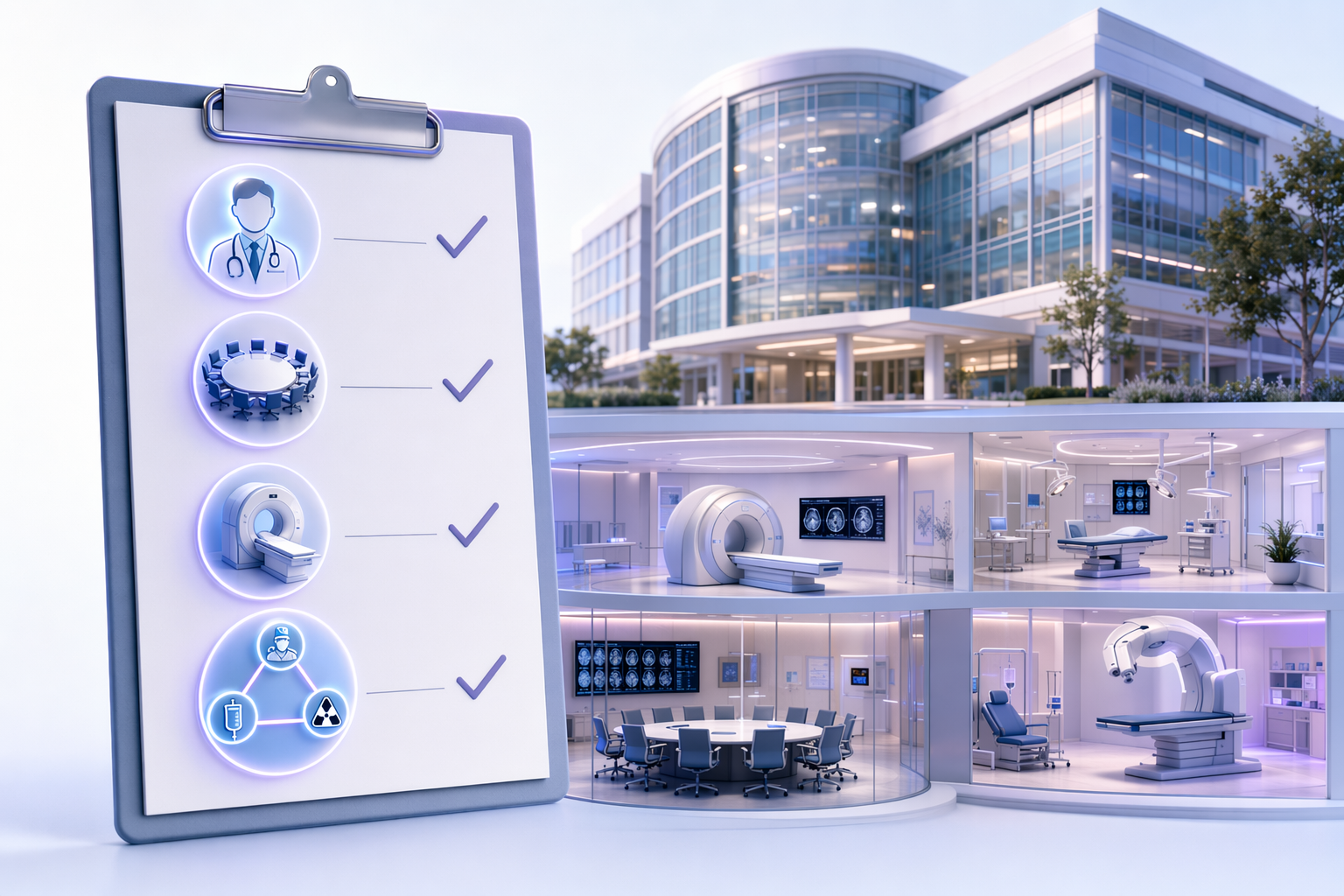
Look for explicit evidence of coordinated care: weekly tumor boards where cases are discussed by medical, surgical, and radiation oncologists together; same-day or same-week multi-specialty consultations offered as standard practice; on-site pathology, radiology, and nuclear medicine departments (not referral-based); and named department heads for each oncology discipline. Andromeda Cancer Hospital, for example, lists its multidisciplinary team structure including oncoplastic breast surgeons, medical oncologists, radiation oncologists, radiologists, pathologists, and palliative care specialists, the kind of transparency that allows verification.
Questions to Ask During Hospital Selection
Before choosing a facility, ask these specific questions:
- How often does your tumor board meet, and which specialists participate?
- Can I see a medical oncologist, surgical oncologist, and radiation oncologist during my first visit, or will I need separate appointments?
- Are pathology, radiology, and nuclear medicine services performed on-site or outsourced?
- Who will coordinate my treatment plan if I need surgery, chemotherapy, and radiation?
- Can I see documentation of your team's collaborative approach, such as a recent tumor board schedule or integrated care pathway?
- What is the typical timeline from biopsy to treatment plan discussion involving all relevant specialists?
Facilities with genuine integration will answer these questions directly, often providing specific schedules and introducing you to the coordinating team member.
Once you've verified integration, understanding what daily coordination looks like helps set realistic expectations for the treatment journey.
What to Expect at a Multidisciplinary Cancer Centre
The Multidisciplinary Tumor Board Process
At a thorough cancer centre, the tumor board is where specialists meet to decide the best treatment path for each patient. The radiologist presents imaging findings, the pathologist shares biopsy results, and surgical, medical, and radiation oncologists debate whether surgery should come first or whether chemotherapy might shrink the tumor before any blade touches tissue. This collaborative approach ensures the most effective treatment plan for each patient, drawing on expertise from multiple disciplines to balance cure rates with quality of life. In centres offering all three modalities under one roof, coordination happens faster, staging decisions that might take weeks elsewhere are resolved in days, and patients spend less time shuttling between disconnected facilities.

Thorough Care Beyond Surgery and Chemo
Integrated centres provide more than surgical, medical, and radiation oncology. Pain and palliative care specialists manage symptoms that can derail treatment adherence. Clinical psychologists address the anxiety and depression that accompany a cancer diagnosis. Breast care nurses coordinate appointments, educate patients about side effects, and serve as the communication bridge between the oncology team and the patient's family. Nutritionists, physiotherapists, and social workers round out the care ecosystem, because cancer treatment affects every dimension of a patient's life, not just the tumor site.
Case Study: Andromeda Cancer Hospital's Multidisciplinary Model
One example of this model in practice is Andromeda Cancer Hospital, where the verified team structure includes surgical oncologists, medical oncologists, radiation oncologists, radiologists, pathologists, pain and palliative care specialists, clinical psychologists, and breast care nurses. The hospital convenes multidisciplinary tumor board meetings twice weekly to ensure coordinated treatment planning across specialties. This configuration addresses the urgency, more than 1,300 Indians succumb to cancer every day [6], by offering thorough care from early screening through diagnosis and advanced treatment in one location. The surgical oncology department is led by Dr. Arun Kumar Goel, the breast oncology team by Dr. Vaishali Nitin Zamre, with dedicated medical oncology specialists collaborating across diagnosis, treatment planning, and follow-up. Readers can verify the current staffing and team composition on the hospital's About page and doctors page.
Beyond clinical coordination, the financial architecture of integrated care plays a critical role in making treatment accessible.
Affordable Cancer Treatment and Support Pathways
Affordability in cancer care extends beyond hospital pricing, it encompasses a coordinated ecosystem of government schemes, NGO assistance, and integrated care pathways that reduce out-of-pocket expenditure. As many as two-thirds of Indians cover their health expenses through out-of-pocket expenses [7], with treatment costs ranging from ₹2.5 lakh for six months to ₹20 lakh for novel therapies[7]. Navigating this financial landscape becomes simpler when surgical and medical oncology operate under one roof, patients face fewer referral delays, duplicate tests, and transport costs.
Cost Transparency at Integrated Centers
Integrated facilities provide clearer cost estimates because all treatment modalities, surgery, chemotherapy, radiation, share a single billing structure. Breast cancer treatment ranges from ₹2.5 lakh to ₹6.7 lakh[10], while a cancer evaluation package costs ₹42,000 to ₹1.25 lakh[10]. When specialists bill separately across referral chains, hidden costs accumulate; unified centers eliminate that opacity.
Government and NGO Financial Assistance
The Government of India has introduced strong policies, strategic interventions, and financial assistance schemes [8] to enhance prevention, early detection, and patient care nationwide. Ayushman Bharat covers cancer care for eligible families; state-level schemes provide additional support. Leading institutions like Tata Memorial Centre treat almost 70% of their patients for free or subsidized care [7]. NGOs bridge remaining gaps with medicine subsidies, accommodation, and food assistance[7].
Advanced Therapies: Car-T, Targeted Therapy Cost Benchmarks
Complex immunotherapies carry different price structures. CAR-T cell therapy costs ₹30 to 50 lakhs in India compared to ₹3 to 4 crores internationally [9], achieving 70 to 83% response rates in relapsed/refractory cases[9]. Cancer treatment in India costs 60 to 90% less than the United States [11] across surgery, chemotherapy, and diagnostics while top centers deliver outcomes comparable to major American hospitals[11]. Treatment variability persists, costs depend on cancer type, stage, and modality, but integrated hospitals improve cost predictability by consolidating care pathways.
Conclusion
Large multi-location cancer networks offer geographic reach but may lack daily coordination between specialists at different branches, while single-location integrated centers like Andromeda prioritize co-located team collaboration over network breadth. Hospitals claiming 'thorough cancer care' often list many services yet may refer complex cases externally, verify that advanced modalities such as radiation oncology, pathology, and radiology are managed in-house before choosing a facility.
As cancer incidence rises in India, the market is expanding rapidly with new branded cancer institutes and centers. Patient education on verifying integration claims will become more critical as marketing language outpaces operational coordination in many facilities.
Explore Andromeda Cancer Hospital's multidisciplinary oncology team and schedule a consultation to discuss your care options with co-located surgical, medical, and radiation oncology specialists.
Frequently Asked Questions
What is the difference between surgical oncology and medical oncology?
Surgical oncology focuses on tumor resection, staging through biopsy, and managing cancer through operative intervention[1][2]. Medical oncology delivers systemic therapies, chemotherapy, targeted therapy, immunotherapy, and hormone therapy, that travel through the bloodstream to address cancer cells throughout the body[3]. Multidisciplinary teams include both specialties to tailor treatment plans.
How do I verify that a cancer hospital has true multidisciplinary integration?
Ask about tumor board frequency and whether medical, surgical, and radiation oncologists attend regularly. Confirm that same-day multi-specialty consultations are available and that pathology and radiology services operate on-site. Warning signs include specialists described as 'available on request' rather than full-time, no mention of joint treatment planning, or outsourced diagnostics.
Does every cancer patient need both surgery and chemotherapy?
Not every patient requires all treatment modalities. Some cancers respond to surgery alone, others to systemic therapy alone, and many require multimodal approaches[6]. At tumor boards, specialists review imaging, pathology, and patient factors to determine whether surgery should come first or follow chemotherapy, tailoring the plan to each case.
What financial assistance is available for cancer treatment in India?
Two-thirds of Indians cover health expenses through out-of-pocket expenditure, making assistance critical[7]. Government programs like Ayushman Bharat provide coverage, and the Government of India has introduced strategic financial schemes to support prevention and early detection[8]. NGO organizations also offer support pathways[9], reducing financial toxicity through coordinated ecosystems.
How much does CAR-T cell therapy cost in India compared to abroad?
CAR-T cell therapy costs ₹30 to 50 lakhs in India compared to ₹3 to 4 crores internationally, achieving 70 to 83% response rates in relapsed or refractory blood cancer cases[9]. This advanced immunotherapy is specific to certain blood cancers, not all cancer types, and availability remains limited to select centers offering complex cellular therapies.
What does Andromeda Cancer Hospital's multidisciplinary team include?
Andromeda Cancer Hospital's verified team structure includes oncoplastic breast surgeons, medical oncologists, radiation oncologists, radiologists, pathologists, pain and palliative care specialists, clinical psychologists, and breast care nurses under one roof[6]. This co-located model enables daily coordination across specialties for thorough patient care.
Why do integrated cancer centers reduce treatment costs?
Integration eliminates duplicate diagnostic tests, reduces transport expenses between facilities, and provides clearer upfront cost estimates because all services bill through one facility[7][8]. Since two-thirds of Indians pay out-of-pocket for health expenses, fragmented care worsens financial toxicity[9] by multiplying referral-related costs and requiring repeated imaging and pathology work.
Sources
- Oncology – Multispeciality - gemcarehospitals.com
- Prisma Health Cancer Institute Multidisciplinary Center - prismahealth.org
- Atlantic Surgical Oncology- Atlantic Medical Group - ahs.atlantichealth.org
- Financial toxicity of cancer treatment in India: towards closing the cancer care gap - www.frontiersin.org (2023)
- Indian Surgical Oncologist Offers Insights Into Delivering Equitable Cancer Care - ascopost.com (2021)
- Aster Hospitals Bangalore launches 'Aster International Institute of Oncology' - thisweekindia.news (2022)
- Affordable Treatment for Poor Cancer Patients by Hospitals - www.cancerassist.in
- Towards a Cancer-Free India - PIB - www.pib.gov.in
- Best Blood Cancer Treatment Centers with CAR-T Cell Therapy - www.picancercare.com
- Cancer Treatment Cost in India at Best Hospitals - www.indicure.com
- India vs USA Cancer Treatment Cost Comparison - macsforcancer.com