
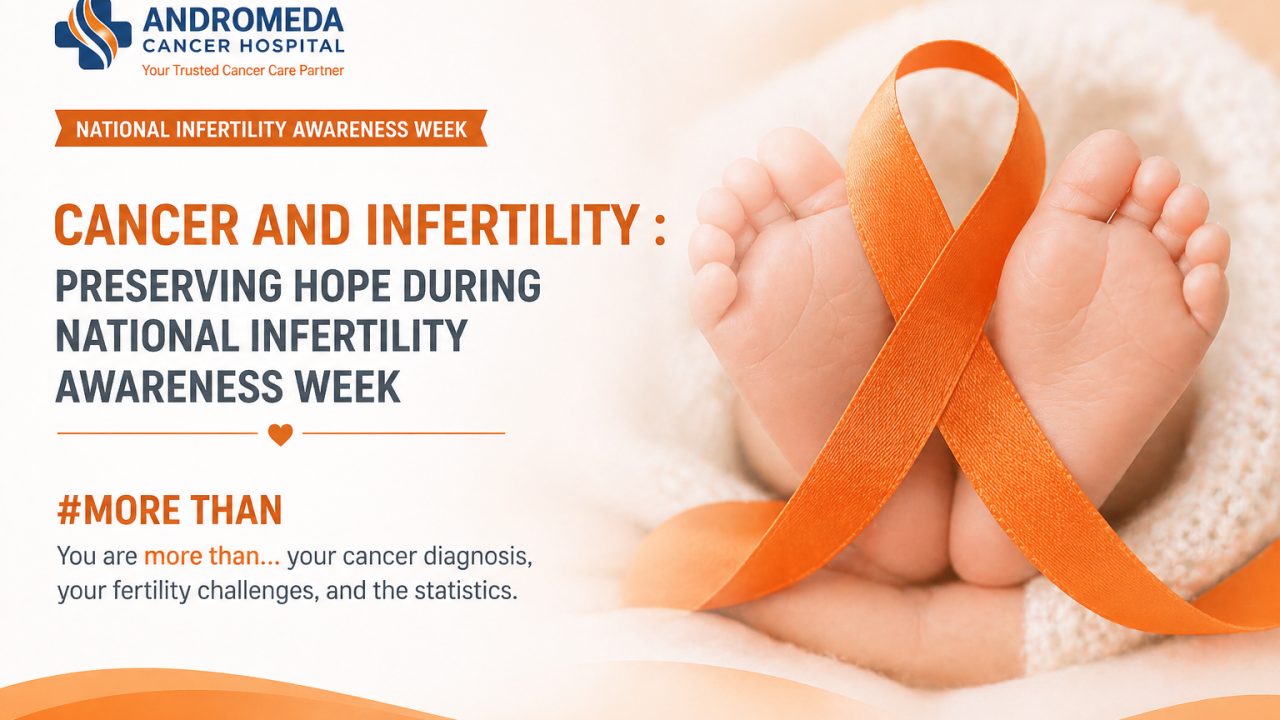
From April 19–25, 2026, National Infertility Awareness Week (NIAW) is being observed globally to raise awareness about reproductive challenges and to break long-standing stigma surrounding infertility. Established by RESOLVE: The National Infertility Association, this year’s theme, #MoreThan, emphasizes a powerful message: individuals facing infertility are more than a diagnosis, more than a statistic, and more than a medical condition.
Infertility affects approximately 1 in 6 people worldwide, making it a significant public health concern. At our hospital, we believe a cancer diagnosis should be a fight for your life—not a forfeit of your future.
As we observe National Infertility Awareness Week, we highlight a crucial yet often overlooked concern: fertility in cancer patients.
For many young individuals, one question quietly sits beside the diagnosis: “Will I be able to have children?”
Can Cancer Itself Cause Infertility?
Yes—infertility is not always just a side effect of treatment. Certain cancers can directly impair reproductive function.
1. Cancers Affecting Reproductive Organs
- Testicular cancer → damages sperm-producing cells
- Ovarian cancer → affects egg reserve and ovulation
2. Cancers of the Reproductive Tract
- Cervical, uterine, and vaginal cancers may:
3. Hormone-Related Tumors
- Pituitary gland tumors can disrupt the production of reproductive hormones like FSH and LH
How Cancer Treatments Affect Fertility
Most infertility in cancer survivors is due to treatment rather than the disease itself.
1. Chemotherapy
- Drugs (especially alkylating agents like cyclophosphamide) target rapidly dividing cells
- Unfortunately, reproductive cells are also fast-dividing
Effect:
- Damage to ovarian follicles → premature ovarian failure
- Destruction of spermatogonia → reduced or absent sperm production
2. Radiotherapy
- Ionizing radiation causes direct DNA damage
Effects depend on location:
- Pelvic radiation:
- Testicular radiation:
3. Surgery
- Removal of reproductive organs
Effect:
- Immediate and permanent loss of natural fertility
Who is Most Vulnerable?
High-risk groups include:
- Adolescents and Young Adults (AYAs)
- Patients yet to complete their families
- Prepubertal children
Even in children, treatments may damage stem cells, affecting future fertility after puberty.
The Power of Early Fertility Counseling
Recent data (2025–2026, ASCO) shows: Only ~50.7% of eligible cancer patients receive fertility counseling before treatment
Why Early Counseling Matters
- Reduced regret later in life
- Better mental health during treatment
- Informed decision-making
- Helps patients feel they still have control over their future
FERTILITY PRESERVATION OPTIONS
The best fertility preservation method depends on:
- Age
- Type of cancer
- Urgency of treatment
- Marital status
- Hormonal sensitivity of tumor
FOR WOMEN
1. Egg Freezing (Oocyte Cryopreservation)
Preserving healthy eggs for future use
Cost (India): ₹1.2 – ₹2.5 lakh per cycle + ₹10,000–₹30,000/year storage
Best Suited For:
- Breast cancer (before chemotherapy)
- Lymphoma patients
- Women who need urgent treatment but can wait ~2 weeks
- Unmarried patients
Success Chances:
- Per cycle: ~10–30% pregnancy rate
- Under 35 years: up to 70–80% cumulative success
2. Embryo Freezing
Fertilized embryos frozen for future use
Cost (India):
- IVF + freezing: ₹2.5 – ₹4.5 lakh per cycle (approximately depends on IVF center)
Best Suited For:
- Married or partnered women
- Breast cancer patients delaying treatment briefly
- Patients with good ovarian reserve
Success Chances:
- Higher than egg freezing
- ~40–60% per IVF cycle (age-dependent)
3. Ovarian Tissue Freezing
Ovarian tissue preserved for future fertility
Cost (India):
- ₹2 – ₹5 lakh (limited availability, specialized centers)
Best Suited For:
- Children (pre-pubertal girls)
- Patients needing immediate chemotherapy (no delay possible)
- Aggressive cancers
Success Chances:
- Still evolving
- Live birth rates improving (~30–40% in advanced centers globally)
4. Oocyte Maturation (IVM)
Maturing eggs in the lab before freezing
Cost (India):
- ₹1.5 – ₹3 lakh (varies widely)
Best Suited For:
- Patients who cannot take hormone injections
- Hormone-sensitive cancers (e.g., estrogen-positive breast cancer)
Success Chances:
- Lower than IVF
- ~20–40% (depends on lab expertise)
FOR MEN FERTILITY PRESERVATION OPTIONS
1. Sperm Banking
Freezing and storing sperm for future use
Cost (India):
- ₹5,000 – ₹20,000 initial
- ₹5,000 – ₹15,000/year storage
Best Suited For:
- Testicular cancer
- Before chemotherapy or radiotherapy
- Any male cancer patient of reproductive age
Success Chances:
- Very high
- Comparable to normal IVF outcomes
2. Testicular Sperm Extraction (TESE)
Retrieving sperm directly from testicular tissue
Cost (India):
- ₹50,000 – ₹1.5 lakh
Best Suited For:
- When no sperm is present in semen
- Testicular cancer patients
- Post-chemotherapy azoospermia
Success Chances:
- Depends on sperm retrieval success
- Often used with IVF/ICSI

Life After Cancer Treatment: Fertility Recovery & Reality
Fertility after cancer is not always predictable—but it is often possible with the right support.
For Men
- Sperm production may recover in 1–5 years after chemotherapy
- Sperm banking before treatment is strongly recommended
- Even a single sample can preserve future options
For Women
- Menstrual cycles may return—but this does not guarantee fertility
Important Considerations:
- Reduced ovarian reserve (fewer eggs left)
- Early menopause risk
- Shorter reproductive window
Medical Tools to Assess Fertility Post-Treatment:
- AMH (Anti-Müllerian Hormone) levels
- Antral follicle count (AFC) via ultrasound
Pregnancy After Cancer: Is It Safe?
In many cases—yes, with proper guidance.
General Recommendations:
- Wait 6 months to 2 years after treatment (depends on cancer type)
- Ensure disease remission
- Close coordination between:
Modern Options for Parenthood After Cancer
Even if natural conception is difficult, options exist:
- IVF using preserved eggs or embryos
- Donor eggs or sperm
- Surrogacy (when uterus is affected)
- Adoption
Emotional & Psychological Recovery
Fertility is not just biological—it is deeply emotional.
Patients may experience:
- Anxiety about future parenthood
- Grief over fertility loss
- Fear of recurrence
Support Matters:
- Counseling
- Support groups
- Partner and family involvement
Conclusion: Hope Beyond Survival
Cancer treatment today is not just about survival—it is about quality of life after survival.
With early counseling, informed choices, and advancing medical science, parenthood remains a possibility for many cancer survivors.
#CancerAndFertility#Naionalinfertilityawarenessweek#FertilityPreservation#InfertilityAwareness