
Introduction
A persistent cough in a life-long non-smoker from Delhi is no longer a medical anomaly. It is a reality backed by disturbing genomic evidence. Up to 1 in 4 lung cancer cases worldwide arise in people who never smoked, and in India, the air they breathe is increasingly the culprit. Fine particulate matter (PM2.5) is silently driving a surge in lung malignancies, mimicking the cellular damage previously attributed solely to tobacco. This article examines the direct biological evidence linking urban air pollution to lung cancer in never-smokers and quantifies the specific risk burden born by Indian city dwellers.
Key Takeaways
The genomic and epidemiological data establishes a clear, causal chain between India’s urban air and mutations in healthy lung tissue.
- Genomic Proof: A 2025 NIH-led study found that high PM2.5 exposure triggers a 3.9-fold increase in the SBS4 mutational signature, a DNA damage pattern historically linked to tobacco smoking.
- India’s Exposure Burden: Ambient PM2.5 levels in major Indian cities frequently exceed WHO safe limits by 5 to 10 times, placing non-smokers at a considerably elevated attributable risk of lung cancer.
- Mutation Risk: The same research links air pollution to a 1.6 times higher likelihood of mutations in the critical tumor-suppressor gene TP53.
- Risk Comparision: Contrary to common belief, second-hand smoke showed no increase in cancer-driving mutations in the same study, suggesting outdoor air pollution is a more potent genomic threat to never-smokers in high-exposure areas.
- Actionable Prevention: Consistent use of N95 masks and HEPA air purifiers can significantly reduce the inhalation of these carcinogenic particles.
The Direct Evidence: How Air Pollution Triggers Lung Cancer in Never-Smokers
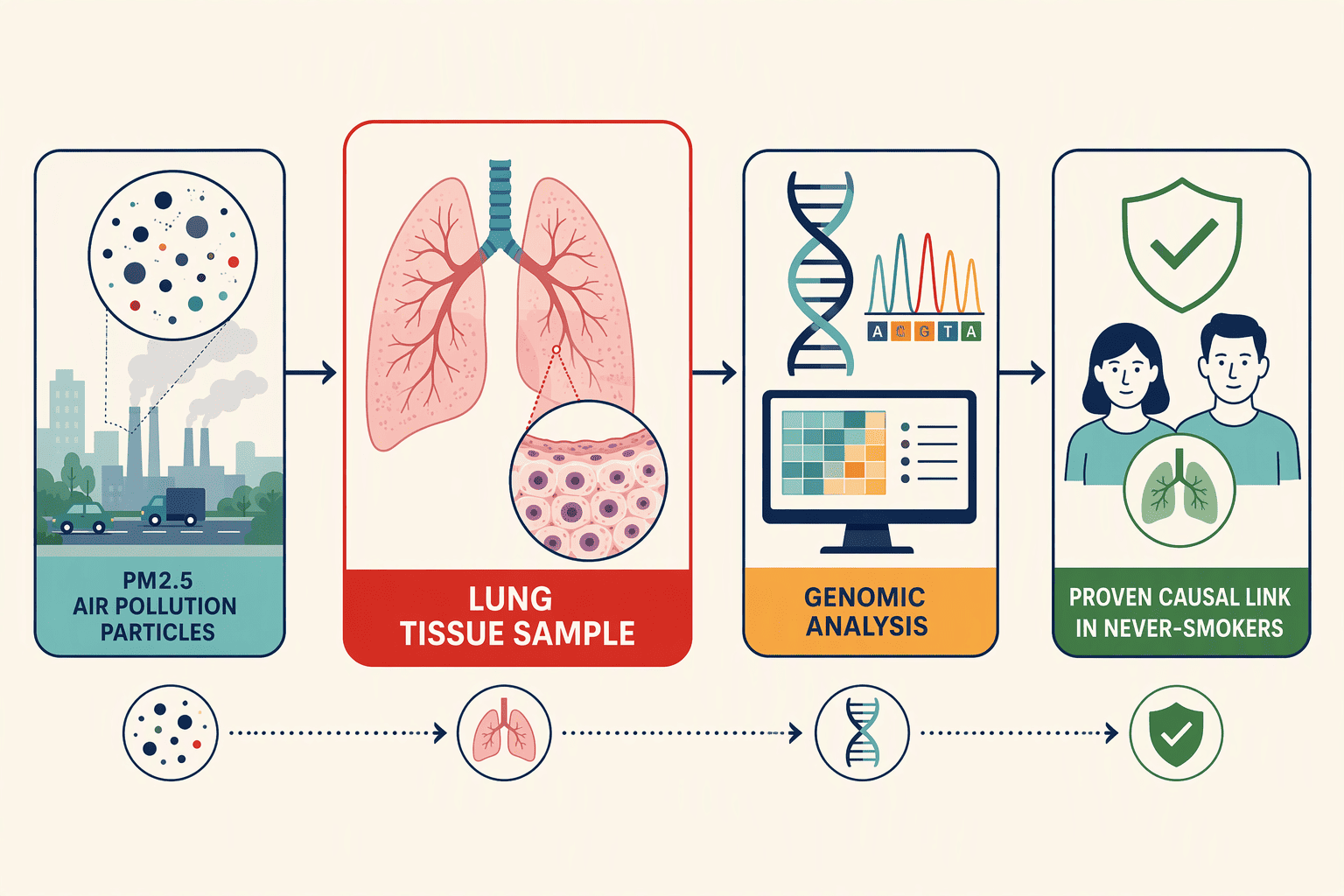
The link is no longer just statistical; it is written into the DNA of lung tumors. A landmark 2025 genomic study led by the National Institutes of Health (NIH) provided the definitive biological proof that particulate pollution causes lung cancer in people who have never smoked.
The study analyzed lung tumors from 871 never-smoker patients across 28 geographic locations worldwide. The demographics were telling: 79% were female, and 86% were diagnosed with adenocarcinoma, a lung cancer subtype known for striking non-smokers.
Researchers meticulously mapped the environmental exposures of these patients and cross-referenced them with the mutational signatures in their tumors. The team discovered a stark epigenetic footprint. Increased exposure to ambient PM2.5 was consistently associated with the presence of specific DNA damage patterns.
This included a 3.9-fold increase in a mutational signature called SBS4. SBS4 is a specific fingerprint of genetic change typically seen exclusively in people who smoke heavily, representing the cell's specific defense reaction to polycyclic aromatic hydrocarbons (PAHs) found in tar and vehicle exhaust. The fact that this signature is now prevalent in non-smokers living in polluted cities shatters the old view that such DNA damage is self-inflicted by habit.
The cancer-driving mechanism became further evident when they looked at specific genes. The tumor-suppressor gene TP53, often called the 'guardian of the genome' because it prevents cells with damaged DNA from multiplying, was found to be mutated at a rate 1.6 times higher in those with high PM2.5 exposure. When TP53 is disabled, cells accumulate mutations unchecked and progress toward cancer.
India’s Air Pollution Burden: Quantifying Urban PM2.5 Exposure and Cancer Risk
India carries a disproportionate share of this genomic danger. The key reasons are:
- High regulatory classification: The International Agency for Research on Cancer has classified outdoor air pollution and particulate matter as Group 1 carcinogens30261-4/fulltext), the same category as tobacco and asbestos.
- Extreme ambient levels: Ambient PM2.5 levels in most Indian metropolitan areas don't just exceed the global safety threshold, they obliterate it, with concentrations routinely running 5 to 10 times above the World Health Organization's air quality guidelines, especially during the winter months.
- Direct DNA damage: Air pollution is the second leading cause of lung cancer globally, trailing only active tobacco use, and for non-smokers living in high-pollution settings like Delhi, Mumbai, or Kolkata, the Lancet Planetary Health analysis confirms a considerable attributable risk of lung cancer from ambient PM2.5, with tumors showing a distinct pattern of DNA damage linked to polycyclic aromatic hydrocarbons present in PM2.5.
The Cellular Mechanism: From Inhaled Particles to DNA Mutations and Tumors
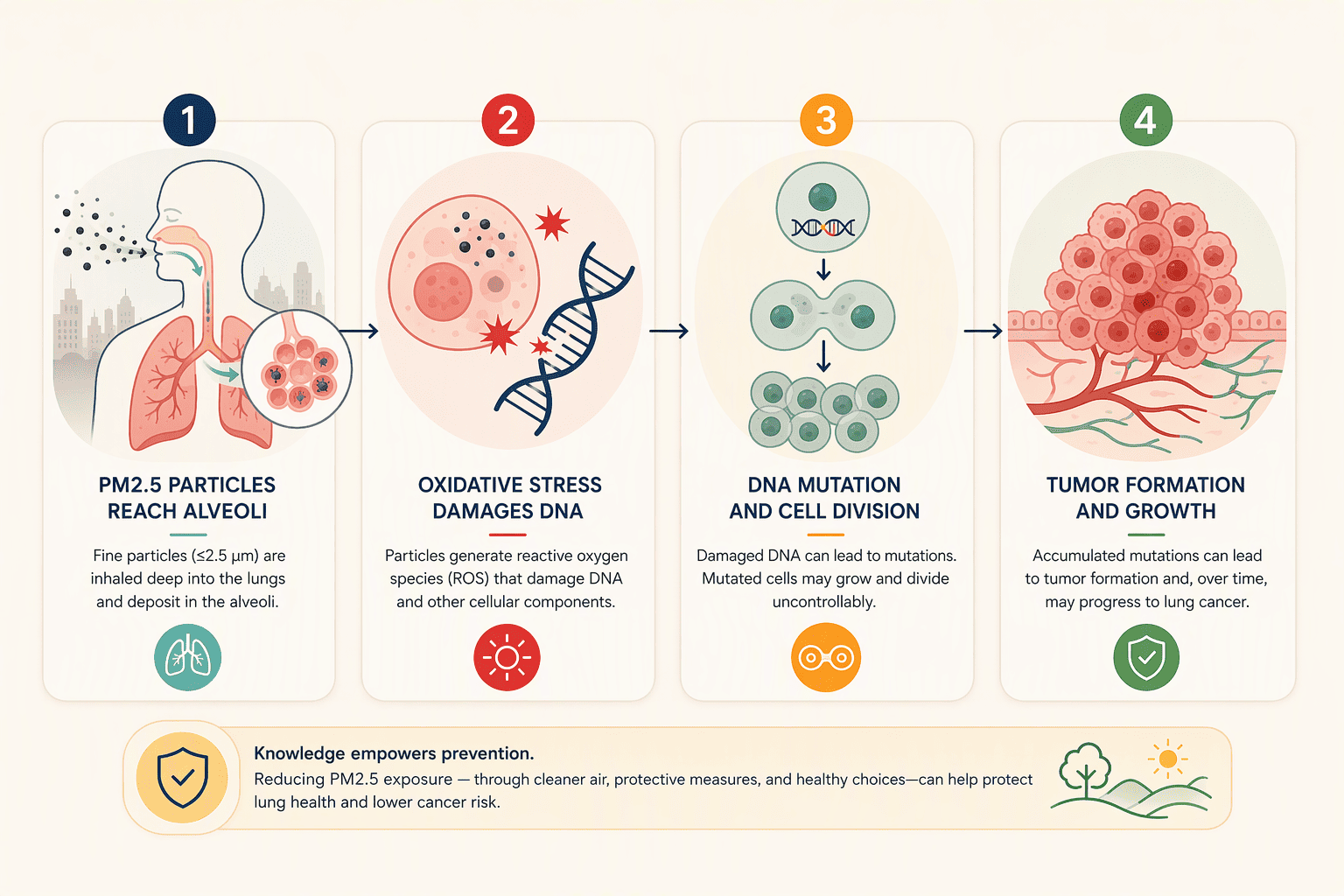
The pathway from a polluted sky to a malignant tumor is a four-step biological cascade that begins with a single breath:
- Initial inhalation and deep lung deposit: PM2.5 particles are small enough (roughly 1/30th the diameter of a human hair) to slip past the upper respiratory defenses and travel deep into the alveoli, the delicate air sacs of the lungs, where they stay.
- Oxidative stress on DNA: The particles carry carcinogens like polycyclic aromatic hydrocarbons that trigger oxidative stress, an imbalance between free radicals and the body's ability to neutralize them, which strips electrons from DNA molecules and causes structural breaks.
- Chronic inflammation and accelerated cell division: The immune system attacks the trapped inorganic particles without pause, releasing cytokines that accidentally speed up cell division, as an IASLC review on carcinogenicity mechanisms describes.
- Driver mutation establishment: This ongoing cycle of cell death and regrowth creates a high-pressure evolutionary setting where mutated cells, those carrying TP53 defects or SBS4 signatures, take hold and spread, leading to adenocarcinoma, a lung cancer subtype common in non-smokers, by turning healthy lung cells into tumor-initiating cells.
Comparing Carcinogenic Risks: Why Outdoor Air Pollution Outweighs Second-Hand Smoke
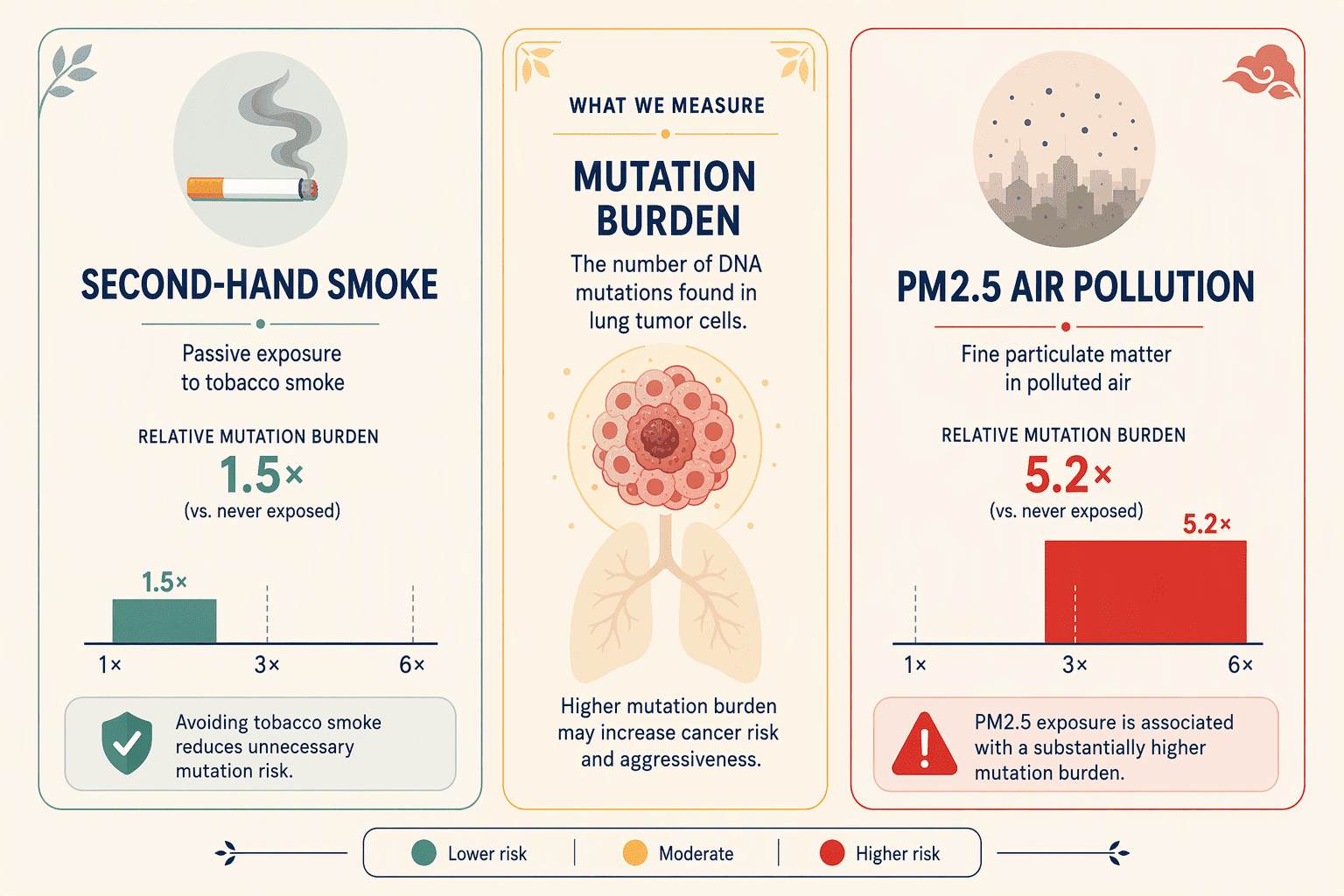
The genomic evidence has upended a common assumption: that passive smoking is the primary environmental danger for non-smokers. The 2025 NIH-led study provides a stark comparison at the molecular level.
When researchers compared the tumors of people exposed to second-hand cigarette smoke against those exposed to high levels of PM2.5, the biological impact was far from equal. Second-hand smoke exposure was linked to only a slight increase in total mutations, with no increase in cancer-driving mutations or mutational signatures. It did not light up the SBS4 mutational signature or cause the TP53 mutations definitively seen with air pollution.
Instead, second-hand smoke was linked to something more subtle: shorter telomeres, the protective caps at the ends of chromosomes. In contrast, high PM2.5 exposure was strongly associated with increased genomic changes that directly drive tumor growth.
While second-hand smoke remains the third most common cause of lung cancer in many Western cohorts, in the context of Indian cities where outdoor pollution is extreme, the genomic weight of ambient air is heavier. Air pollution and smoking are also synergistic, meaning that in the rare case a non-smoker later starts smoking, or is exposed to both, the risk escalates far more than the sum of the parts.
This puts Indian urban residents in a unique risk category. The data suggests that simply breathing the ambient air in a traffic-heavy Delhi market for an extended period may present a more potent genomic threat for specific mutations than living in a home with a regular smoker.
The Clinical Picture: Adenocarcinoma, Demographics, and Diagnosis for the Non-Smoker Patient
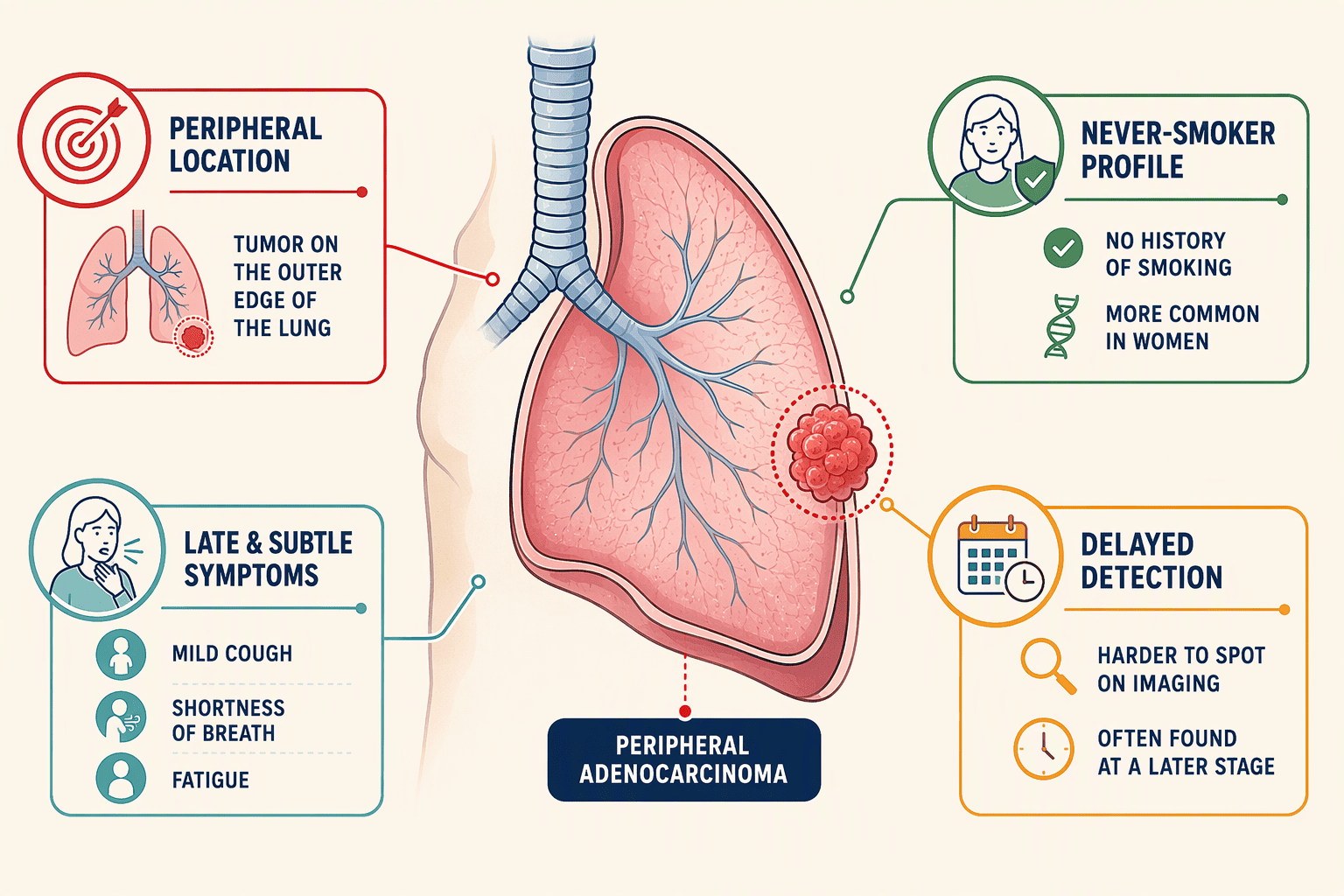
For a non-smoker, lung cancer almost always takes the form of adenocarcinoma. This cancer originates in the glandular cells on the outer edges of the lungs, distant from the central bronchial tubes that smoking typically damages. The patient profile often defies traditional expectations: a middle-aged woman who has never smoked, presenting with subtle, ambiguous symptoms.
Because the tumor grows in the lung's periphery, symptoms arrive late and mimic other conditions. A dry, nagging cough becomes persistent. Shortness of breath creeps into routine tasks like climbing stairs. Many patients report unusual fatigue and gradual weight loss with no change in diet. These symptoms overlap with common respiratory infections and post-viral syndromes common in polluted air, so the delay between first symptom and clinical investigation is often dangerously long.
The reality is simple: delayed screening costs lives. A low-dose spiral CT scan (LDCT) is the current gold standard for detecting these peripheral nodules early, long before they become inoperable. A definitive diagnosis is always reached through a biopsy, where the tissue is analyzed to confirm the adenocarcinoma subtype and sent for genomic profiling to check for EGFR and ALK mutations, which are particularly prevalent in this demographic.
Practical Risk Reduction: Reducing Personal Exposure in Polluted Indian Cities
While systemic policy change is a long-term goal, personal risk can be slashed immediately by blocking the particles at the gates of entry. These steps reduce the lifetime dose of carcinogenic PM2.5 deposited in the lungs.
- Wear a fitted N95 or N99 mask: A certified N95 or N99 respirator that seals tightly against the face physically filters out over 95% of fine combustion particles when you step outdoors on high AQI days.
- Create clean indoor air zones: Deploy a HEPA-filter air purifier in the rooms where you spend the most time, particularly the bedroom. These filters mechanically trap PM2.5 that infiltrates indoors, giving your lungs a repair window of about 8 hours each night.
- Monitor and modify timing: Check the real-time Air Quality Index (AQI) daily. Reschedule outdoor exercise or walking to the early morning hours when vehicle exhaust is lower, and strictly avoid outdoor physical activity during peak traffic congestion in the evening.
- Antioxidant-rich dietary support: A diet high in green leafy vegetables and fruits can neutralize some free radicals, supporting the body's natural defense against the oxidative stress triggered by particulate matter.
Treatment Pathways at Andromeda Cancer Hospital: Radiotherapy, Surgery, and Genomic Insights

For those diagnosed with adenocarcinoma linked to environmental exposure, modern oncology offers highly effective multi-modal treatments that target the specific biology of non-smoker lung cancer. Andromeda Cancer Hospital integrates surgical oncology, medical oncology, and radiation oncology under one roof, delivering these advanced modalities. The table below outlines the primary treatment pillars available for lung cancer patients.
| Treatment Modality | Technique & Technology | Clinical Application for Non-Smoker Lung Cancer |
|---|---|---|
| Genomically-Guided Drug Therapy | Targeted therapy based on EGFR, ALK, and other mutation tests; advanced drug therapy includes chemotherapy and immunotherapy | Primary first-line treatment for metastatic adenocarcinoma with identifiable driver mutations; often more effective than chemotherapy in this group. |
| High-Precision Radiotherapy | Varian TrueBeam STx system; techniques include IGRT, SBRT, and Radical Radiotherapy | Used with curative intent for early-stage, inoperable tumors via SBRT; also applied as adjuvant or palliative therapy. Radiation therapy itself is painless. |
| Minimally Invasive Surgery | VATS (Video-Assisted Thoracoscopic Surgery) and oncoplastic resections tailored to tumour location | Allows removal of localized stage I-II tumors with smaller incisions, reduced pain, and shorter recovery than traditional open thoracotomy. |
| Integrated Diagnostic Support | On-site PET-CT imaging including FDG (glucose-based) and Ga68-DOTA PET scans | Essential for staging, restaging, and recurrence detection, differentiating scar tissue from active malignancy without invasive exploration. |
Conclusion
Biology has settled what belief debated. The DNA signatures found in the lung tumors of India's urban non-smokers match the mutations we once tied exclusively to decades of heavy smoking. PM2.5 linked to 88.2 lakh cancer cases raises concern for India. With particulate levels routinely exceeding safety thresholds, the risk for non-smokers is not a possibility; it is a documented reality with measurable clinical endpoints.
That reality forces two parallel actions. The first is personal mitigation: masks rated for fine particulate filtration and indoor air purifiers in the spaces where you spend most hours. The second is clinical awareness. In an environment where the air itself bypasses prevention, survival swings on how early a tumor is caught and how quickly a multidisciplinary team coordinates the treatment plan.
Frequently Asked Questions
What does the latest genomic research say about PM2.5 and lung cancer in people who have never smoked?
A 2025 NIH-led study of 871 never-smokers globally proves a causal genomic link. High PM2.5 exposure causes a 3.9-fold increase in the SBS4 mutational signature, a DNA damage pattern previously exclusive to tobacco smoking. It also drives a 1.6 times higher likelihood of TP53 mutations, disabling a critical tumor-suppressor gene.
How high are PM2.5 levels in major Indian cities, and what does that mean for my cancer risk?
PM2.5 concentrations in Indian cities like Delhi routinely exceed the WHO’s safe limits by 5 to 10 times, especially in winter. This extreme exposure translates into a considerably elevated attributable risk of developing adenocarcinoma, a non-smoker type of lung cancer that30261-4/fulltext) is caused by the mutation patterns driving the DNA damage in exposed lungs.
How does air pollution actually cause lung cancer at the cellular level?
PM2.5 particles lodge in the lung's alveoli and induce a dual assault: direct oxidative stress that physically breaks DNA strands, and chronic inflammation that forces rapid cell proliferation. This cycle of damage and repair creates driver mutations in genes like TP53, which the International Agency for Research on Cancer classifies as a Group 1 carcinogenic process.
Is breathing polluted air in an Indian city more dangerous than living with a smoker?
Surprisingly, the genomic data suggests it can be a stronger driver for certain mutations. The 2025 NIH study found second-hand smoke resulted in no increase in cancer-driving mutations, while air pollution triggered the SBS4 signature. In high-pollution Indian urban settings, outdoor air can be a more potent carcinogenic trigger for never-smokers.
What practical steps can I take today to reduce my lung cancer risk from city air?
For a non-smoker living in a polluted urban area, here are the key protective measures:
- Wear a tightly fitted N95/N99 mask outdoors on high-pollution days.
- Run a HEPA air purifier in your bedroom to create a clean sleep environment.
- Monitor the local AQI and avoid outdoor exercise during peak traffic hours.
- Eat antioxidant-rich foods to support your body’s ability to counter the oxidative stress from inhaled particles.
Sources
- Factors linked to lung cancer in never-smokers | National Institutes of Health (NIH) - www.nih.gov
- Risk Factors Associated With Incidence of Lung Cancer in Never-Smokers: A Systematic Review and Meta-Analysis - PMC - pmc.ncbi.nlm.nih.gov
- Cancer of the lung - Outdoor air pollution - NCBI Bookshelf - NIH - www.ncbi.nlm.nih.gov
- Air Pollution and Lung Cancer: A Review by International Association for the Study of Lung Cancer Early Detection and Screening Committee - PubMed - pubmed.ncbi.nlm.nih.gov
- NIH study links particulate air pollution to increased mutations in lung cancers - NCI - www.cancer.gov
- PM2.5 air pollution linked to 88.2 lakh cancer cases, raises concern for India - India Today - www.indiatoday.in