

Delhi NCR hosts dozens of cancer hospitals, yet not all deliver true multidisciplinary breast cancer care — weekly tumor boards, oncoplastic surgery, and integrated radiation plus medical oncology.
This guide identifies facilities that offer evidence-based treatment planning through specialist collaboration, helping you distinguish between thorough care and single-department surgery.
Key Takeaways
- True multidisciplinary breast cancer care requires weekly tumor boards convening surgical oncologists, medical oncologists, radiation oncologists, pathologists, and radiologists before treatment begins.
- Breast conservation surgery plus radiation achieves equivalent survival to mastectomy for early-stage disease when rigorous patient selection and oncoplastic techniques are applied.
- Verify hospital capabilities using a six-item checklist: tumor board frequency, same-roof specialists, breast conservation track record, oncoplastic surgery expertise, in-house radiation equipment, and diagnostic turnaround times.
- Marketing materials listing multiple oncology departments do not prove weekly tumor board activity or coordinated treatment planning.
- Delhi NCR cancer hospitals vary widely in breast conservation rates — institutions with dedicated oncoplastic surgeons and active tumor boards offer alternatives to default mastectomy recommendations.
Why 'Cancer Hospital' Doesn't Always Mean Multidisciplinary Cancer Care
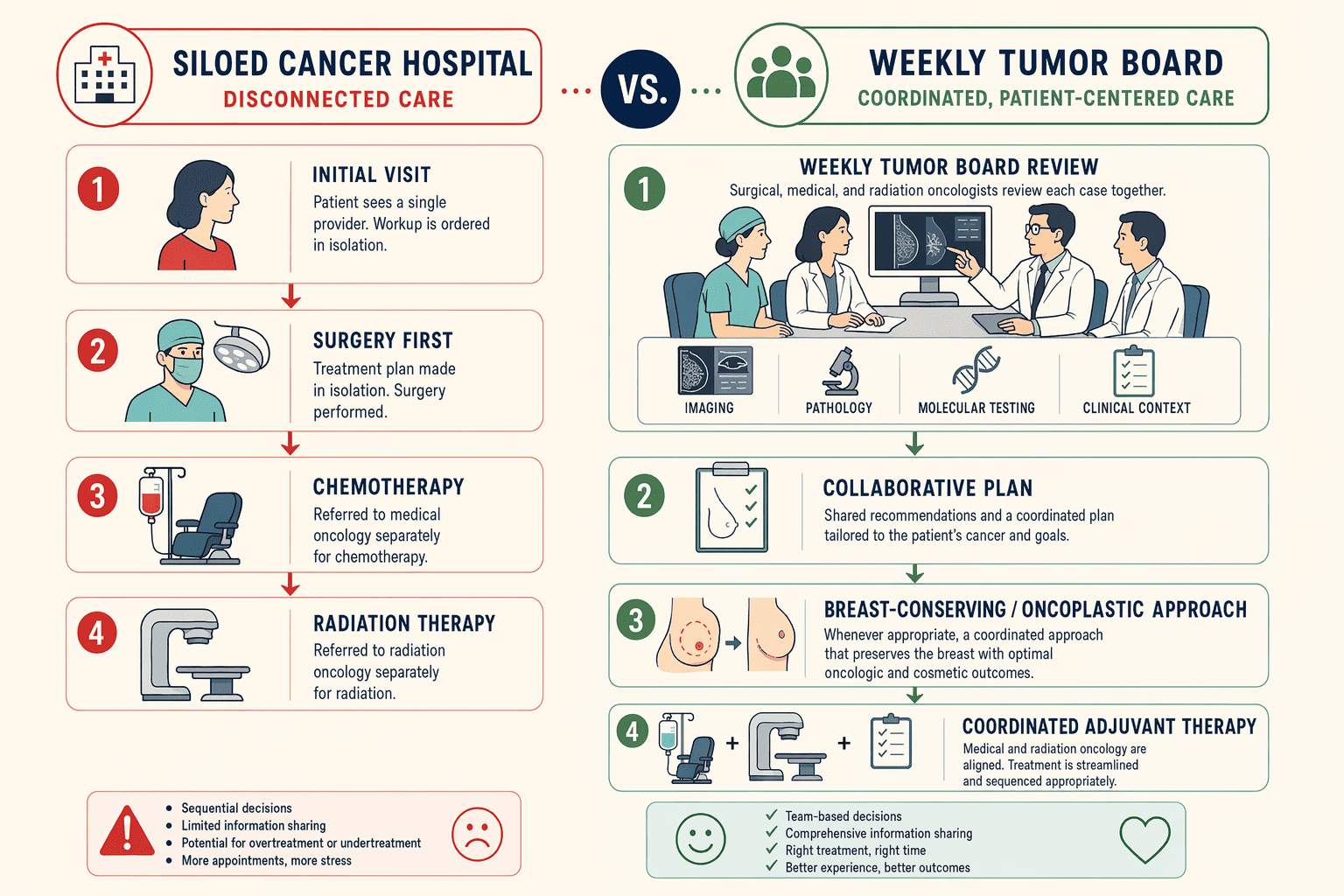
The best cancer hospitals in Delhi NCR for multidisciplinary breast cancer treatment are those that convene weekly tumor boards with surgical, medical, and radiation oncologists reviewing imaging, pathology, and molecular testing before finalizing treatment plans — not facilities that offer surgery alone or refer patients across silos for chemotherapy and radiation. Many hospitals labeled 'cancer centers' lack this integrated model, defaulting to mastectomy when breast conservation with oncoplastic surgery might be feasible.
The Mastectomy-First Bias in Delhi NCR
Across Delhi NCR, surgical oncology departments often operate independently of medical and radiation oncology teams. When hospitals lack weekly tumor boards or breast conservation expertise, surgeons may recommend mastectomy as the safest path forward — even for Stage 2 cases where breast-conserving surgery followed by radiation could achieve equivalent survival outcomes. Facilities like Max Institute of Cancer Care mention 'multidisciplinary' in marketing materials, but the term alone does not guarantee same-roof coordination or oncoplastic training. Referral-based silos — surgery at Hospital A, radiation at Hospital B, medical oncology at Hospital C — fragment decision-making and delay tumor board review until after the mastectomy is already complete.
What 'Multidisciplinary' Actually Means in Breast Cancer Care
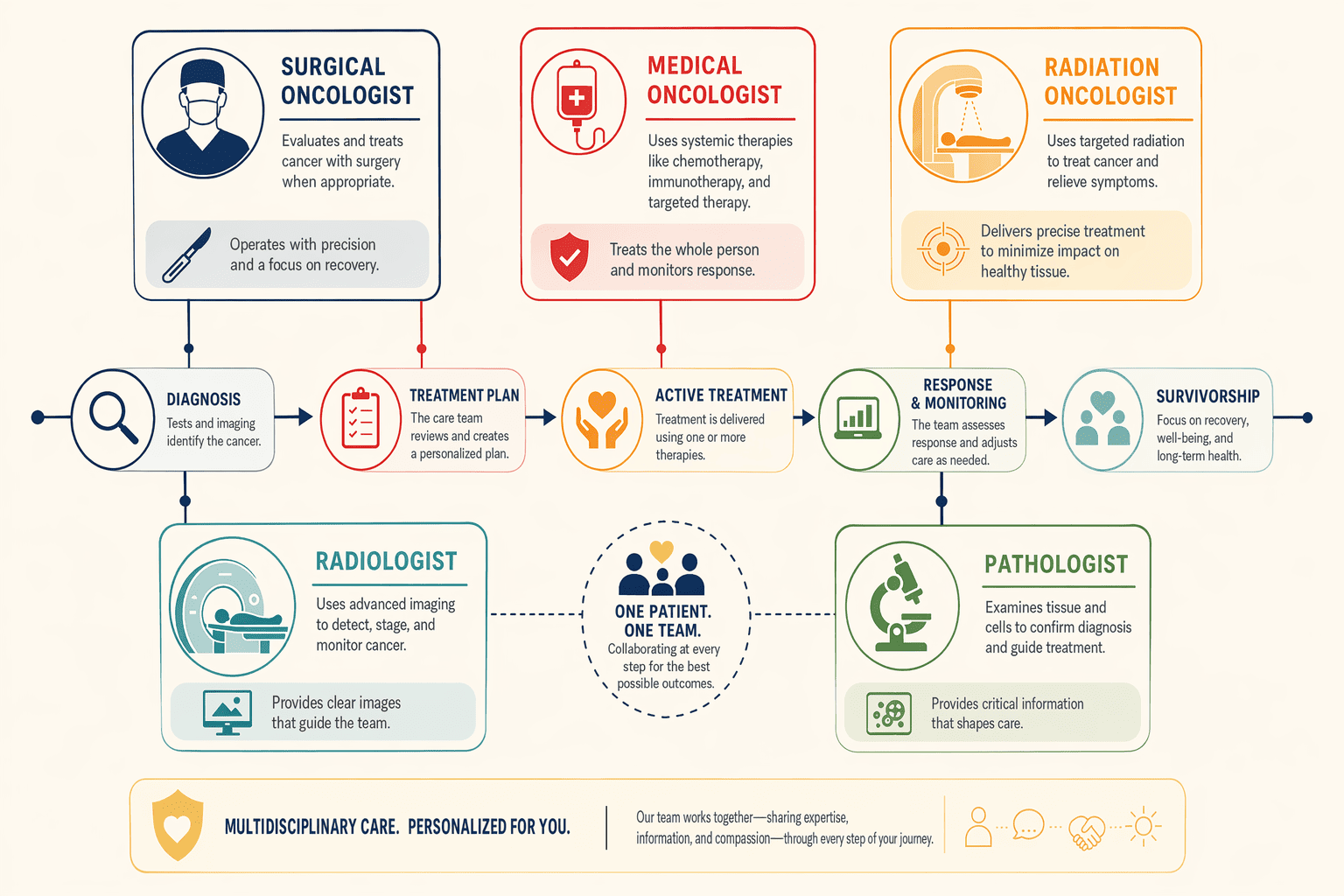
True multidisciplinary breast cancer care requires a minimum team of five specialists, surgical oncologist, medical oncologist, radiation oncologist, pathologist, and radiologist, convening weekly to review each new case before treatment begins. At these tumor boards, the team evaluates pre- and post-neoadjuvant imaging, molecular subtyping, and patient preferences to determine whether breast conservation, oncoplastic resection, or mastectomy with reconstruction best fits the clinical picture. Same-roof services matter: when all specialists practice under one hospital system, the tumor board can adjust the plan in real time rather than waiting for external referrals to complete the loop.
Understanding the structural requirements of multidisciplinary care clarifies what to look for when evaluating hospitals.
What Multidisciplinary Breast Cancer Treatment Actually Includes
The Core Specialist Team
True multidisciplinary breast cancer care begins with a core team of five specialist roles working together from diagnosis through survivorship. A surgical oncologist evaluates operability and selects the appropriate technique, breast-conserving surgery (lumpectomy) or mastectomy, based on tumor size, location, and patient preference. A medical oncologist manages systemic therapies: chemotherapy, hormonal therapy, and targeted drugs that travel through the bloodstream to reach cancer cells. A radiation oncologist plans adjuvant or neoadjuvant radiation to shrink tumors before surgery or eliminate residual disease after. A pathologist confirms the diagnosis through tissue analysis and identifies molecular markers that guide treatment decisions. A radiologist interprets mammograms, ultrasound, MRI, and PET-CT scans to stage the cancer accurately and monitor response. Andromeda Cancer Hospital's multidisciplinary team includes oncoplastic breast surgeonshttps://www.andromedahospital.in/treatments/breast-oncology, medical oncologists, radiation oncologists, radiologists, pathologists, pain and palliative care specialists, clinical psychologists, and breast care nurses, all collaborating on personalized treatment plans.
Diagnostic and Molecular Testing Integration
Multidisciplinary care depends on thorough diagnostic workup coordinated under one roof. PET-CT detects distant metastases and guides staging decisions, if cancer has spread to distant organs, systemic therapy typically precedes surgery. MRI provides detailed breast-tissue imaging to measure tumor extent and assess response to neoadjuvant chemotherapy. Immunohistochemistry (IHC) testing identifies estrogen receptor (ER), progesterone receptor (PR), and HER2 status, which determine eligibility for hormonal therapy (tamoxifen, aromatase inhibitors) and HER2-targeted agents (trastuzumab). Gene expression panels like Oncotype DX and MammaPrint quantify recurrence risk and help decide whether chemotherapy is necessary for early-stage, hormone-receptor-positive disease. Andromeda Cancer Hospital is one Delhi NCR facility where PET-CT, MRI, and IHC testing are coordinated under one roof, enabling same-week multidisciplinary tumor board review. Results typically take a few hours to 10 days depending on the test and imaging center, but integrated facilities simplify turnaround.
Treatment Modality Coordination
The multidisciplinary team sequences surgery, radiation, chemotherapy, hormonal therapy, and targeted therapy based on stage, tumor biology, and patient factors, not every patient requires every modality. In early-stage, ER-positive, HER2-negative disease with low-risk genomic scores, surgery followed by hormonal therapy alone may suffice. Locally advanced cases often receive neoadjuvant chemotherapy first to shrink the tumor, making breast conservation feasible. After surgery, adjuvant radiation targets the tumor bed to reduce local recurrence, and systemic therapies continue for months or years. Weekly tumor board meetings, where all specialists review new cases together, ensure each treatment decision reflects collective expertise rather than a single clinician's judgment, minimizing variation in care.
The tumor board process transforms individual specialist opinions into coordinated, evidence-based treatment plans.
The Role of Tumor Boards in Treatment Decisions
What Happens in a Tumor Board Meeting
A tumor board meeting brings together surgical oncologists, medical oncologists, radiation oncologists, radiologists, and pathologists to review each new breast cancer case before treatment begins. The primary oncologist presents the patient's clinical history and examination findings. The radiologist walks through imaging studies, mammography, ultrasound, MRI, or PET-CT, highlighting tumor size, lymph node involvement, and any suspicious distant findings. The pathologist discusses histology results, receptor status (ER/PR/HER2), and molecular markers like Ki-67 proliferation index.
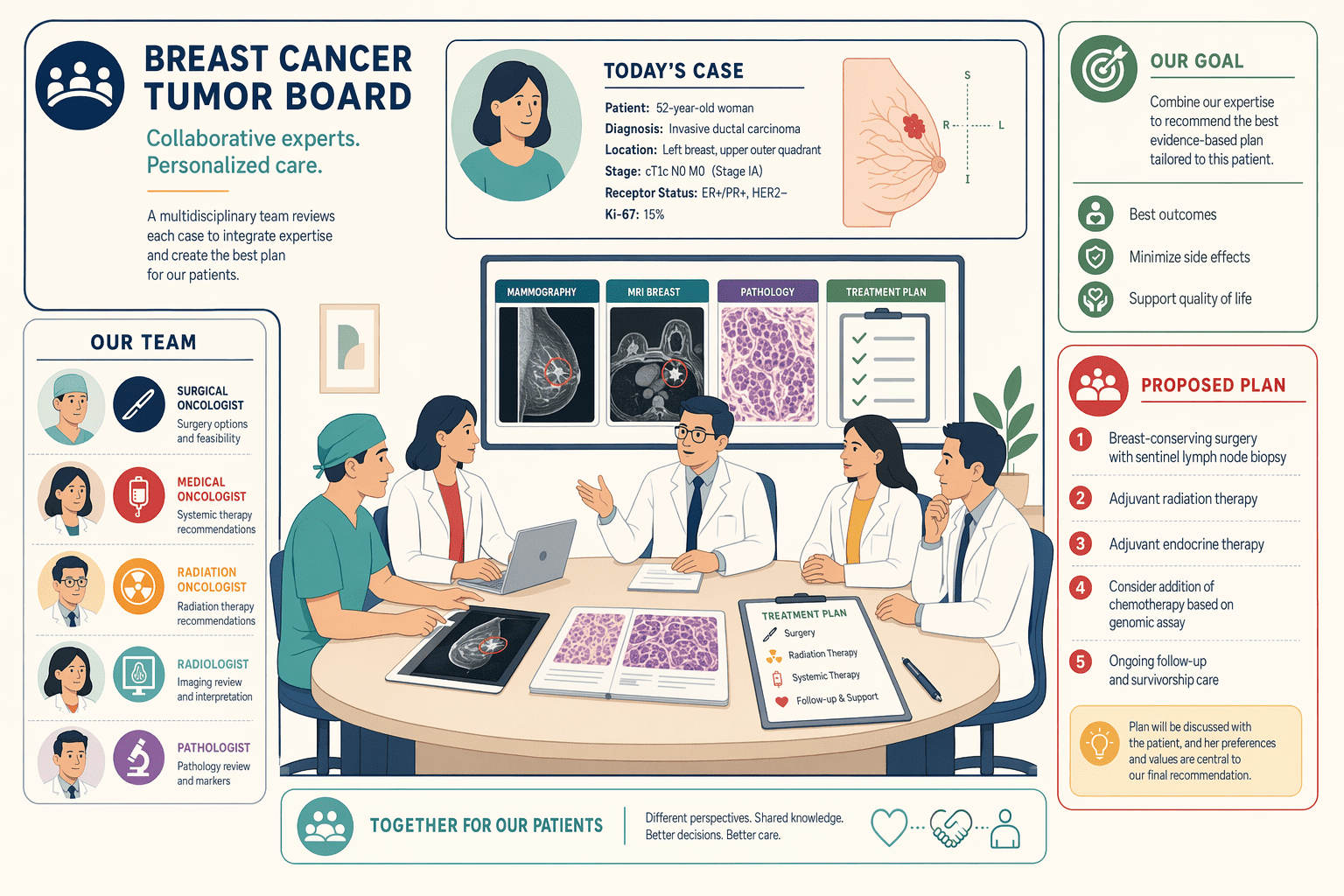
The team then debates treatment options: whether the patient is a candidate for breast conservation with adjuvant radiation or requires mastectomy; whether neoadjuvant chemotherapy should precede surgery to shrink the tumor and improve surgical outcomes; and what systemic therapy regimen best matches the tumor biology. Research shows tumor boards change treatment recommendations in 20 to 30% of breast cancer cases, often identifying patients eligible for breast conservation who would otherwise receive mastectomy, or sequencing neoadjuvant therapy before surgery to optimize tumor response. The consensus recommendation is documented in the patient's medical record and communicated during the next consultation.
At Andromeda Cancer Hospital, every woman is evaluated in a multidisciplinary tumor board, ensuring treatment plans reflect current guidelines and collective expertise rather than a single specialist's perspective.
Active Vs. Nominal Tumor Boards
Not all tumor boards function with the same rigor. An active tumor board meets weekly, mandates attendance for all new cases, and documents decisions in the patient chart. A nominal tumor board convenes irregularly, treats review as optional, and may lack formal documentation. Patients can verify whether a hospital operates an active model by asking three questions: (1) How often does the tumor board meet? Weekly sessions indicate active engagement; monthly or ad hoc meetings suggest nominal participation. (2) Is tumor board review mandatory for all new breast cancer cases? Hospitals describing review as 'available upon request' typically operate nominal boards. (3) Are tumor board recommendations documented in your medical record? If recommendations remain verbal-only, the board functions as informal consultation rather than structured oversight.
Competitor hospitals like Amerix Cancer Hospital and BigOHealth promote tumor board consultations but do not specify meeting frequency or documentation protocols. Virtual tumor boards, modeled on India's National Cancer Grid, provide valuable second opinions and guideline adherence in resource-limited settings, but weekly in-house boards enable faster turnaround and continuity of care; the patient's treating oncologists participate directly rather than relying on asynchronous consultation.
Having multiple treatment options available depends on surgical expertise and institutional philosophy regarding breast preservation.
Breast Conservation Vs. Mastectomy: Why Options Matter
Breast conservation surgery is feasible and safe for many early-stage breast cancer patients, provided rigorous selection and oncoplastic technique. The choice between breast-conserving surgery (BCS) and mastectomy affects not only oncologic outcomes but also quality of life, recovery time, and cost, yet many treatment facilities frame mastectomy as the default rather than presenting both options when clinically appropriate.
When Breast Conservation Surgery Is Feasible
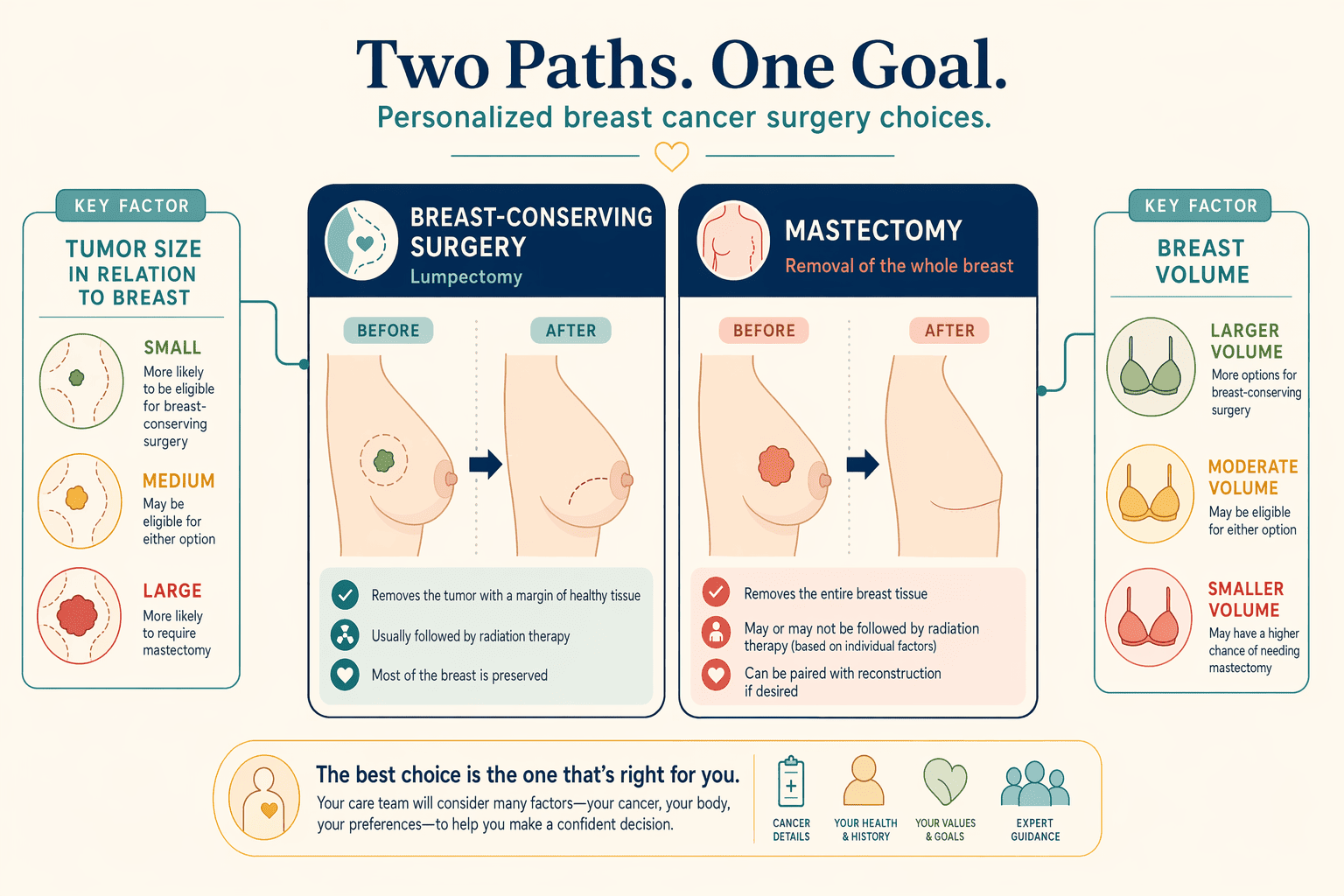
BCS candidacy depends on tumor-to-breast-volume ratio, disease extent, and patient willingness to undergo adjuvant radiation. ICMR guidelines recommend BCS for tumors ≤3 cm in smaller breasts or ≤5 cm in larger breasts when unifocal disease is confirmed and clear surgical margins are achievable. The patient must accept adjuvant radiation therapy, typically 3 to 6 weeks of daily sessions, and have no contraindications such as prior chest radiation, pregnancy, or connective tissue disease that precludes safe radiation delivery.
Multicentric disease (multiple tumor foci in different breast quadrants) or extensive ductal carcinoma in situ (DCIS) where clear margins cannot be obtained without removing most of the breast tissue typically requires mastectomy. Imaging, bilateral mammogram for women over 30, ultrasound of breast and axilla, and in selected cases MRI, guides the multidisciplinary team in determining whether breast conservation is achievable.
The Role of Oncoplastic Techniques
Oncoplastic breast surgery combines wide local excision of the tumor with plastic surgery techniques, volume displacement (rearranging remaining breast tissue) or volume replacement (using fat grafting or flaps), to preserve breast shape and symmetry after cancer removal. This approach requires a surgical oncologist trained in oncoplastic techniques or collaboration with a plastic surgeon in the operating room.
Resections are tailored to body habitus and tumor location, enabling BCS in patients who might otherwise require mastectomy for larger tumors or tumors in cosmetically sensitive areas. Many facilities mention breast cancer surgery without defining oncoplastic methods or explaining who should consider them; V Care Cancer Center, for example, describes treatment planning and second-opinion services but does not outline oncoplastic surgery techniques or BCS candidacy criteria, a common gap in patient-facing information.
Mastectomy With Reconstruction: Cost and Hospitalization Considerations
Mastectomy with immediate reconstruction typically requires 2 to 4 days of hospitalization and involves either implant-based reconstruction (tissue expander placement followed by later implant exchange, two surgeries) or autologous reconstruction using flaps from the abdomen or back (DIEP/TRAM flap), which requires microsurgery and 5 to 7 days of hospitalization. BCS, by contrast, is often an outpatient procedure with same-day discharge, followed by 3 to 6 weeks of adjuvant radiation. The upfront cost and recovery burden are lower for BCS, though radiation compliance is mandatory for optimal outcomes.
At Andromeda Cancer Hospital, breast conservation is a philosophy of care, not simply a surgical technique, the multidisciplinary tumor board includes oncoplastic breast surgeons, medical oncologists, and radiation oncologists who evaluate each patient's candidacy for BCS and present both BCS and mastectomy with reconstruction options when either approach is clinically appropriate, ensuring the decision reflects patient values, cosmetic goals, and treatment feasibility rather than defaulting to one pathway.
Translating these principles into hospital selection requires specific verification questions during consultation.
Evaluating a Hospital's Multidisciplinary Capabilities
Six Criteria for Verifying Multidisciplinary Care
Most Delhi NCR cancer hospitals list surgical oncology, medical oncology, and radiation oncology on their websites, yet marketing materials do not prove weekly tumor board activity or oncoplastic expertise. The six verification questions below, grounded in ICMR's emphasis on multidisciplinary evaluation and evidence-based protocols, help patients distinguish true integrated centers from referral-based silos.
- Does the hospital convene a weekly multidisciplinary tumor board for breast cancer cases? Ask for meeting frequency and mandatory participation policy. Integrated centers hold structured case reviews every week; referral silos may meet monthly or ad hoc.
- Are surgical oncology, medical oncology, radiation oncology, pathology, and radiology available under the same hospital system? Same-roof services enable coordinated treatment plans; referral silos outsource one or more disciplines.
- What percentage of the hospital's early-stage breast cancer patients undergo breast conservation surgery versus mastectomy? Track record of offering breast-conserving surgery (BCS) signals adherence to international guidelines that prioritize organ preservation when clinically feasible.
- Does the hospital offer oncoplastic breast surgery, and are surgeons trained in oncoplastic techniques? Oncoplastic capability, tailoring resections to body habitus and tumor location, is key for achieving good cosmetic outcomes after BCS.
- What radiation therapy equipment does the hospital use, and is it in-house or outsourced? Modern linear accelerators like Varian TrueBeam enable precise dose delivery; outsourced radiation introduces coordination delays.
- Are PET-CT and immunohistochemistry (IHC) testing available in-house or outsourced, and what is the typical turnaround time? Coordinated molecular testing with turnaround under one week supports timely tumor board review and personalized treatment planning.
Andromeda Cancer Hospital meets all six criteria: weekly tumor board (every Wednesday), same-roof surgical/medical/radiation oncology plus pathology and radiology, oncoplastic breast surgery capability tailored to body habitus and tumor location, in-house Varian TrueBeam STx linear accelerator for radiation, and coordinated PET-CT plus IHC testing turnaround within one week for tumor board review. Fortis Cancer Institute, Manesar emphasizes breast oncoplastic surgery and breast conservation but does not publish tumor board frequency or PET-CT turnaround data. Moolchand Cancer Institute mentions cancer care but does not disclose tumor board frequency or breast conservation statistics, illustrating the transparency gap patients face when evaluating hospitals.
BigOHealth aggregates Delhi NCR oncologists from Apollo Hospitals, Fortis Hospital, and Max Healthcare but does not provide hospital-level multidisciplinary capability data, underscoring the need for patients to ask the six verification questions directly. Most Delhi NCR cancer hospitals offer surgery and may have medical oncology or radiation oncology affiliations, but lack integrated weekly tumor boards or oncoplastic expertise; the six-item checklist helps patients distinguish true multidisciplinary centers from referral-based silos.
One Delhi NCR institution demonstrates how multidisciplinary breast cancer care operates in practice.
How Andromeda Cancer Hospital Delivers Integrated Breast Cancer Care
Andromeda Cancer Hospital illustrates the multidisciplinary model, with weekly tumor boards, oncoplastic surgery capability, and integrated radiation and medical oncology under one roof in Sonipat, Delhi NCR. The center's approach maps directly to the six evaluation criteria described above.
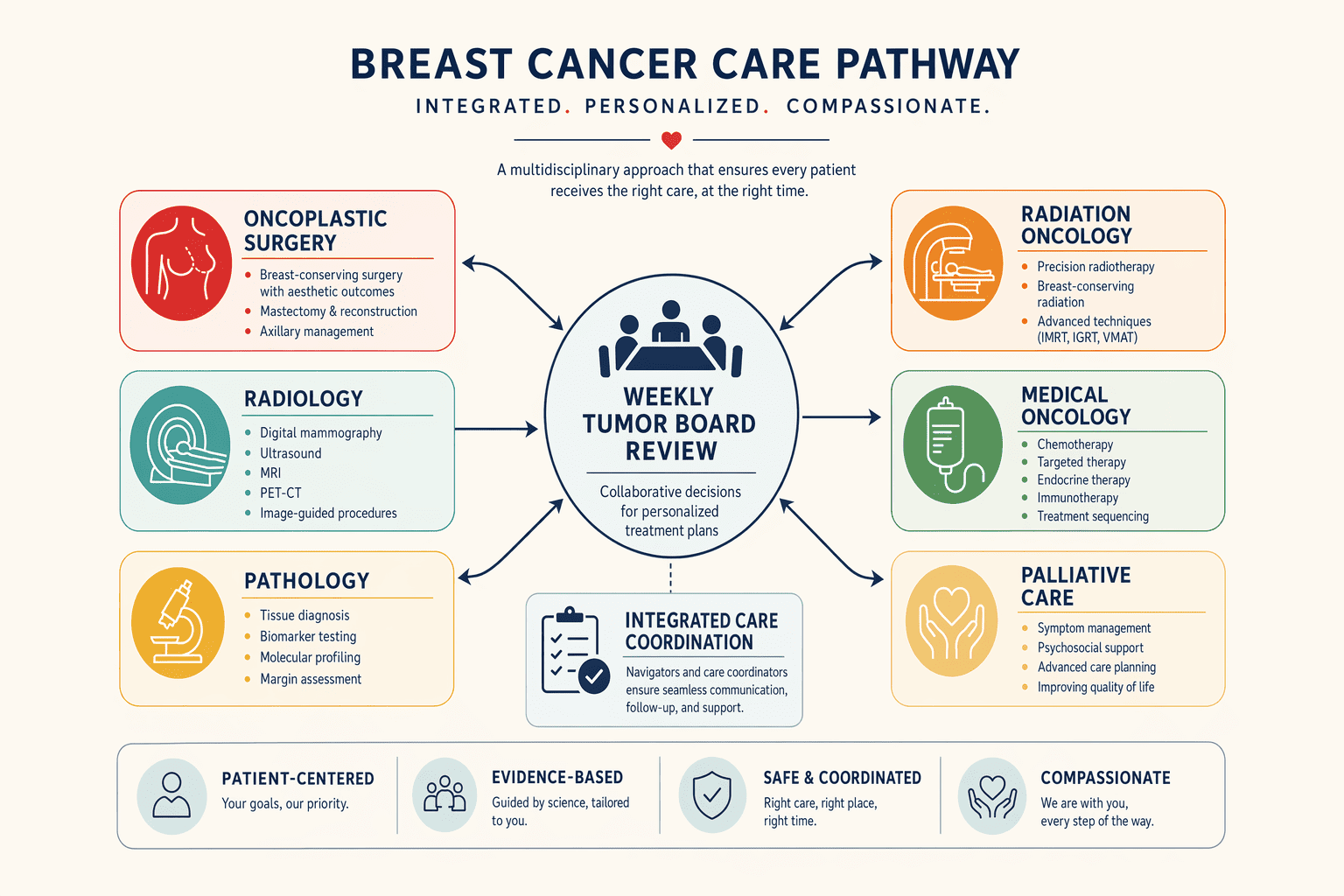
Multidisciplinary Tumor Board Model
Every woman is evaluated in a multidisciplinary tumor board that includes oncoplastic breast surgeons, medical oncologists, radiation oncologists, radiologists, pathologists, and pain and palliative care specialists. Personalized treatment planning emerges from these multidisciplinary discussions, guided by international management guidelines. Tumor board recommendations are documented and discussed with each patient in a joint consultation.
Oncoplastic Surgery and Breast Conservation Track Record
The surgical oncology team performs oncoplastic resections tailored to body habitus and tumor location, emphasizing breast-conserving approaches feasible for many patients when rigorous selection and technique are followed. Dr. Vaishali Zamre, Director and Head of Breast Oncology Services
,https://www.andromedahospital.in/doctors/dr-vaishali-zamre specializes in breast cancer surgeries and oncoplastic reconstructions. The center offers partial, total, implant-based, and autologous reconstruction options after mastectomy.
Radiation and Medical Oncology Integration
In-house radiation therapy and medical oncology enable coordinated adjuvant or neoadjuvant planning by the multidisciplinary team. IHC testing for ER/PR/HER2 status is currently outsourced to partner laboratories with a typical turnaround of 3-5 days; Andromeda is establishing an in-house molecular diagnostics facility to reduce turnaround and enable same-week tumor board review for complex cases. Routine pathology reports are typically available within 24 hours; complex cases requiring additional staining may take longer, with urgent cases prioritized.
Choosing the Right Cancer Hospital in Delhi NCR
Large multi-specialty hospitals like Fortis, Apollo, and Max offer broad oncology services across multiple Delhi NCR locations, but weekly tumor board frequency and oncoplastic surgery capability vary by branch, verify which campus hosts the breast cancer multidisciplinary team before selecting a location. Smaller cancer-focused centers like Rajiv Gandhi Cancer Institute and Andromeda Cancer Hospital may have more consistent tumor board processes and higher breast conservation rates due to specialized focus, but fewer non-oncology services under the same roof.
As India's breast cancer incidence rises and awareness of early detection improves, the gap between hospitals that offer surgery and those that deliver true multidisciplinary care will become more visible; patients who verify tumor board activity and breast conservation capability before committing to treatment will secure better outcomes and preserve quality of life.
https://www.andromedahospital.in/support/contact to have your breast cancer case reviewed by the weekly tumor board, surgical, medical, radiation oncology, plus pathology and radiology, before finalizing your treatment plan.
Frequently Asked Questions
What is a multidisciplinary tumor board for breast cancer?
A tumor board is a weekly meeting where surgical oncologists, medical oncologists, radiation oncologists, pathologists, and radiologists review imaging, pathology, and molecular testing for each new breast cancer case to recommend evidence-based treatment. Studies show tumor boards change treatment recommendations in 20-30% of cases, often identifying breast conservation candidates who would otherwise receive mastectomy.
How do I know if a hospital offers true multidisciplinary breast cancer care?
Ask six verification questions: tumor board meeting frequency with mandatory attendance, same-roof availability of surgical/medical/radiation oncologists plus pathology and radiology, breast conservation surgery percentage for early-stage disease, oncoplastic surgery capability, in-house radiation equipment types, and PET-CT plus IHC testing turnaround times. Marketing materials listing oncology departments do not prove weekly tumor board activity or oncoplastic expertise.
Is breast conservation surgery as effective as mastectomy for early-stage breast cancer?
Breast conservation surgery plus adjuvant radiation has equivalent long-term survival to mastectomy for early-stage breast cancer, provided rigorous patient selection: tumor ≤3-5 cm relative to breast volume, unifocal disease, clear margins, and patient willingness to undergo radiation. BCS is feasible and safe for many patients when oncoplastic techniques preserve breast shape after tumor removal.
What is oncoplastic breast surgery?
Oncoplastic surgery combines cancer resection (wide local excision) with plastic surgery techniques, volume displacement by rearranging remaining breast tissue or volume replacement using fat grafting or flaps, to preserve breast shape and symmetry after lumpectomy. It requires surgical oncologists trained in oncoplastic techniques or collaboration with plastic surgeons, and is not available at all Delhi NCR cancer hospitals.
Why does Andromeda Cancer Hospital convene weekly tumor boards?
Weekly tumor boards enable timely multidisciplinary review of imaging, pathology, and molecular testing before treatment initiation, reducing delays and ensuring every patient's case is evaluated by the full specialist team. Tumor board review changes treatment recommendations in 20-30% of breast cancer cases, often identifying breast conservation candidates who would otherwise receive mastectomy.
Does Andromeda Cancer Hospital offer breast reconstruction after mastectomy?
Andromeda offers immediate or delayed breast reconstruction (implant-based and autologous options) coordinated by the surgical oncology and plastic surgery team. Reconstruction requires advanced surgical skills, longer hospitalization (2-4 days for implant-based, 5-7 days for autologous flap), and higher cost compared to breast conservation surgery plus radiation, which is why the multidisciplinary tumor board presents both options to eligible patients.
What role does molecular testing play in breast cancer treatment planning?
Immunohistochemistry testing for ER/PR/HER2 status and gene expression panels (Oncotype DX, MammaPrint) guide decisions on chemotherapy necessity, targeted therapy (trastuzumab for HER2+ disease, CDK4/6 inhibitors for HR+ disease), and hormonal therapy. Andromeda currently outsources IHC testing with 3-5 day turnaround and is establishing an in-house facility to coordinate molecular results with multidisciplinary treatment planning.
Sources
- Best Cancer Hospital in Delhi NCR, India: Book Oncologist - www.maxhealthcare.in
- Mastectomy Still Standard of Care for Multicentric Breast Cancer - www.cancernetwork.com (2006)
- ICMR Standard Treatment Workflow (STW) BREAST CANCER - www.icmr.gov.in
- V Care Cancer Center Process - vcarecancercenter.com
- Standard Treatment Workflows - Indian Council of Medical Research - www.icmr.gov.in
- Fortis Cancer Institute (FCI), Manesar - www.fortishealthcare.com
- Moolchand Cancer Institute | Advanced Cancer Hospital in Delhi - moolchandhealthcare.com
- Getting Mammogram and Other Test Results - Breast Cancer.org - www.breastcancer.org