
Haryana residents seeking cancer treatment face a critical question: which hospitals combine thorough care with affordability? This guide teaches you to evaluate hospitals using treatment breadth, financial mechanisms, and geographic access — not just brand reputation.
Key Takeaways
- Thorough cancer care requires surgical oncology, medical oncology, and radiation therapy under one roof with multidisciplinary tumor board coordination
- Affordability depends on insurance network participation, Ayushman Bharat empanelment scope, and transparent itemized cost estimates — not just quoted treatment prices
- Modern linear accelerators (TrueBeam STx) deliver more precise radiation than cobalt machines, reducing side effects and supportive care costs
- Gurgaon and Delhi NCR form the primary care corridor for Haryana residents, with district day-care centers handling chemotherapy referrals
- Verify financial counseling, cashless treatment workflows, and scheme coverage during initial consultations at 2-3 shortlisted hospitals before committing
What Defines Thorough Cancer Care Near Haryana? (Treatment Modalities to Look For)
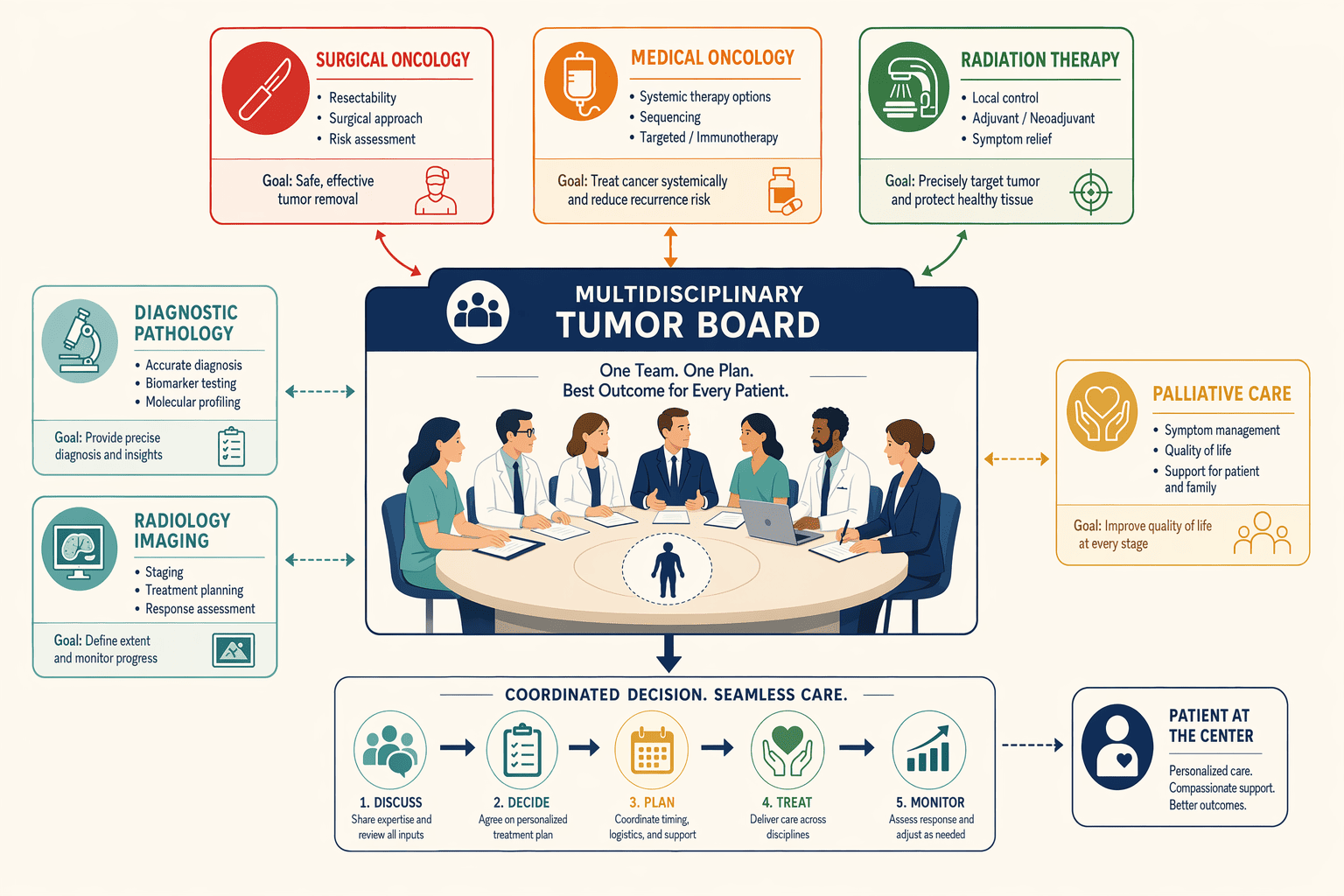
Thorough cancer care near Haryana requires three non-negotiable treatment pillars—surgical oncology, medical oncology, and radiation therapy—supported by advanced diagnostics and palliative services, with multidisciplinary tumor boards coordinating care across specialties to avoid fragmented treatment plans that delay outcomes.
Core Oncology Services: the Three-Pillar Foundation
Surgical oncology removes tumors and provides tissue for diagnosis; medical oncology delivers systemic therapies (chemotherapy, targeted therapy, immunotherapy) that travel through the bloodstream; radiation therapy uses targeted beams to destroy cancer cells while sparing surrounding tissue. A hospital missing any pillar forces patients to seek external referrals, fragmenting records and delaying adjuvant treatment windows. Diagnostic infrastructure—onco-pathology for tissue analysis, PET-CT for staging, and 3D mammography for breast cancer, ensures accurate treatment planning before the first intervention. Supportive care includes pain management, palliative interventions, and psychosocial support, which studies show improve treatment adherence and quality of life even during aggressive therapy.
Radiation Therapy Technology: Linear Accelerators Vs. Cobalt Machines
Modern linear accelerators, such as the Varian TrueBeam STx used at facilities like Andromeda Cancer Hospital in Sonipat, deliver image-guided radiotherapy (IGRT) with sub-millimeter precision, reducing radiation scatter to healthy organs and lowering side-effect severity compared to older cobalt-60 machines. CT simulation technology enables personalized treatment planning by mapping tumor geometry before each session, a capability absent in cobalt-based setups. While cobalt machines remain common in government hospitals due to lower upfront costs, many centers still use outdated cobalt machines instead of modern linear accelerators, resulting in longer session times and higher cumulative doses. When evaluating hospitals, ask specifically whether the facility operates a linear accelerator or cobalt unit, and request details on IGRT and respiratory gating capabilities for thoracic cancers, technology differences directly affect treatment duration, skin toxicity, and long-term organ function.
Multidisciplinary Tumor Boards: Coordination as a Quality Marker
Multidisciplinary tumor boards convene surgical oncologists, medical oncologists, radiation oncologists, pathologists, and radiologists to review each case collaboratively, discussing diagnosis, treatment sequencing, and patient management in a single session. This coordination prevents sequential consultations where specialists operate in silos, a pattern that delays neoadjuvant therapy and increases recurrence risk. Studies show tumor board review improves treatment outcomes by catching staging errors and identifying clinical trial eligibility. Before scheduling a first appointment, ask three verification questions: (1) Does the hospital operate a weekly tumor board? (2) Which specialties participate in the board? (3) Will your case be presented to the board before finalizing the treatment plan? Tumor board quality varies independently of facility size, smaller specialized centers may offer more rigorous case review than large multi-specialty hospitals where oncology is one department among many. Hospitals that cannot confirm active tumor board operations lack the coordination infrastructure that defines thorough care, regardless of equipment inventory.
Once you understand the treatment pillars that define thorough care, the next question emerges: how do you compare costs when hospitals quote wildly different prices for the same treatment?
How to Evaluate Affordability Beyond Sticker Price
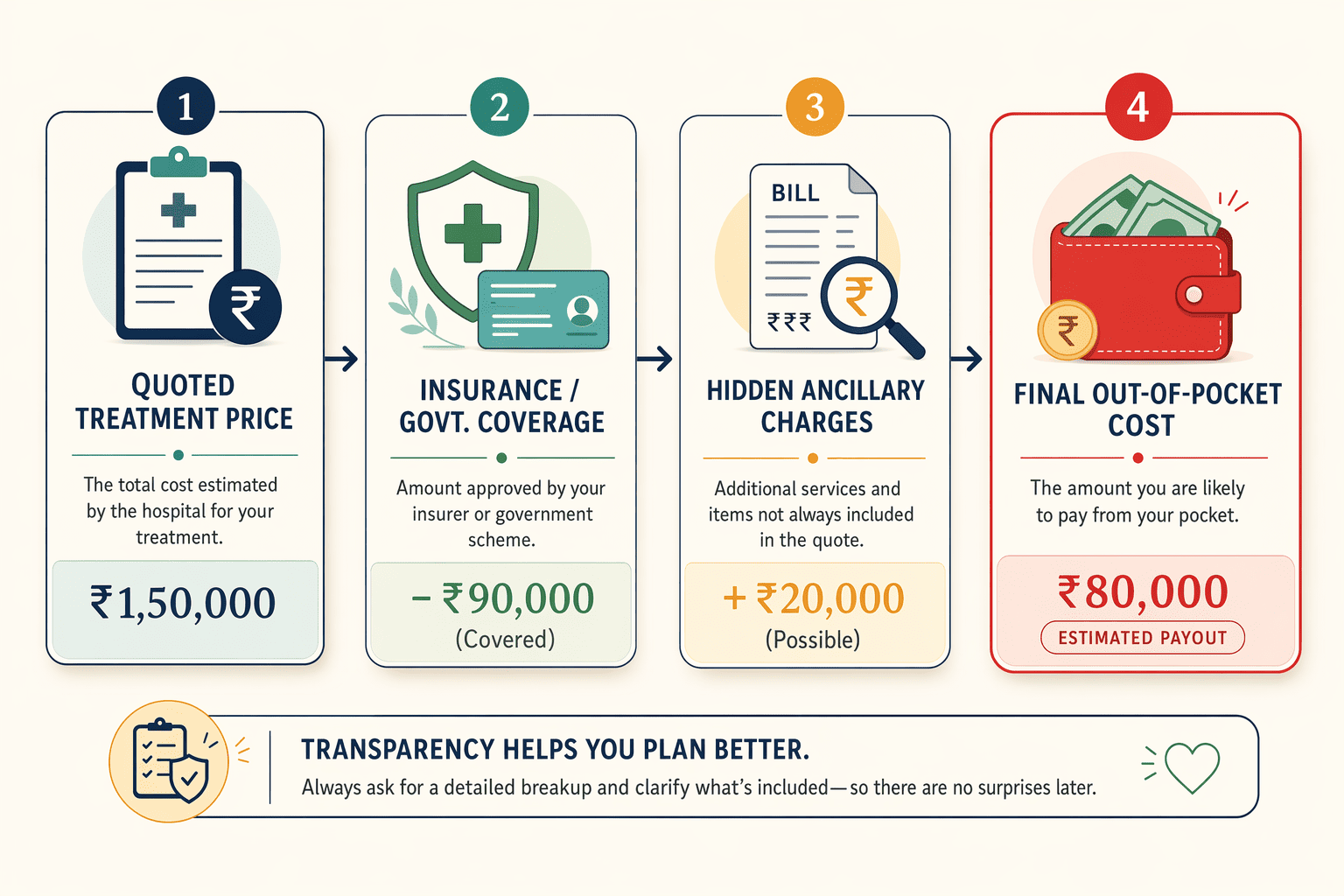
The hospital with the lowest quoted treatment cost is rarely the most affordable option over the full care journey. A single-center radiotherapy price estimate in Delhi can range from ₹50,000 to ₹3,00,000 per course, yet that sticker price says nothing about your out-of-pocket exposure after insurance reimbursement, government scheme coverage, or hidden ancillary charges (repeat scans, consumables, outpatient drugs). Real affordability is a function of four dimensions: upfront treatment cost transparency, insurance network participation model, government scheme eligibility confirmation, and financial counseling availability at the point of care.
Insurance Network Participation: Cashless Vs. Reimbursement Models
Verifying a hospital's insurance network participation before admission determines whether you access cashless treatment or must front costs and wait weeks for reimbursement. In a cashless arrangement, the hospital's Third-Party Administrator (TPA) settles claims directly with your insurer; you pay only co-pays and exclusions. Under a reimbursement model, common when the hospital is outside your insurer's preferred network, you deposit ₹2 to 5 lakh upfront, collect itemized bills, and file post-discharge for reimbursement that may take 30 to 90 days. The distinction matters most for multi-cycle chemotherapy or 30-fraction radiotherapy courses: cashless models protect liquidity; reimbursement models expose families to interim financing stress even when eventual coverage is identical.
Government Schemes: Ayushman Bharat and Haryana State Programs
Ayushman Bharat PM-JAY provides ₹5 lakh annual coverage per family for secondary and tertiary cancer care, covering over 200 treatment packages including chemotherapy, surgery, radiation, and 37 targeted-therapy protocols. Eligible families below the income threshold access cashless treatment at empaneled hospitals; enrollment is verified through the PM-JAY portal or hospital social workers. Haryana expanded access in December 2024 by launching day-care cancer centers at 22 district hospitals, enabling outpatient chemotherapy administration for stable cases near patients' homes. However, advanced radiation protocols, intensity-modulated radiotherapy (IMRT), stereotactic techniques, remain concentrated in NCR tertiary centers; when day-care suffices clinically (stable blood counts, oral supportive drugs adequate), families save transport and lodging costs, but complex cases still require NCR referral and its associated expenses.
Transparent Pricing and Financial Counseling: What to Ask During Initial Consult
A hospital offering upfront financial counseling arms you with the data to compare real costs, not quoted rates. Use this four-question script during your initial consultation:
- Can you provide an itemized treatment cost estimate covering surgery/radiation cycles, imaging, pathology, consumables, and post-treatment follow-up for my specific diagnosis and stage?
- Does this hospital accept my insurer under a cashless (TPA) arrangement, or will I need to seek reimbursement post-discharge?
- Am I eligible for Ayushman Bharat PM-JAY or Haryana state schemes, and will your team assist with enrollment documentation and pre-authorization filing?
- Do you offer installment payment plans, interest-free financing, or patient assistance funds for co-pays not covered by insurance or government schemes?
Hospitals with dedicated financial counselors answer these questions in writing within 48 hours. Choosing a facility solely because it accepts your insurance, without verifying the cashless vs. Reimbursement model, can leave you fronting ₹2 to 5 lakh out-of-pocket for weeks while paperwork processes, negating the affordability advantage of scheme eligibility.
With affordability mechanisms clarified, the practical question becomes: which hospitals near Haryana meet these criteria, and how do you weigh geographic access against treatment depth?
Cancer Hospitals Near Haryana: Geographic Access and Referral Networks
Gurgaon and Delhi NCR: the Primary Referral Corridor
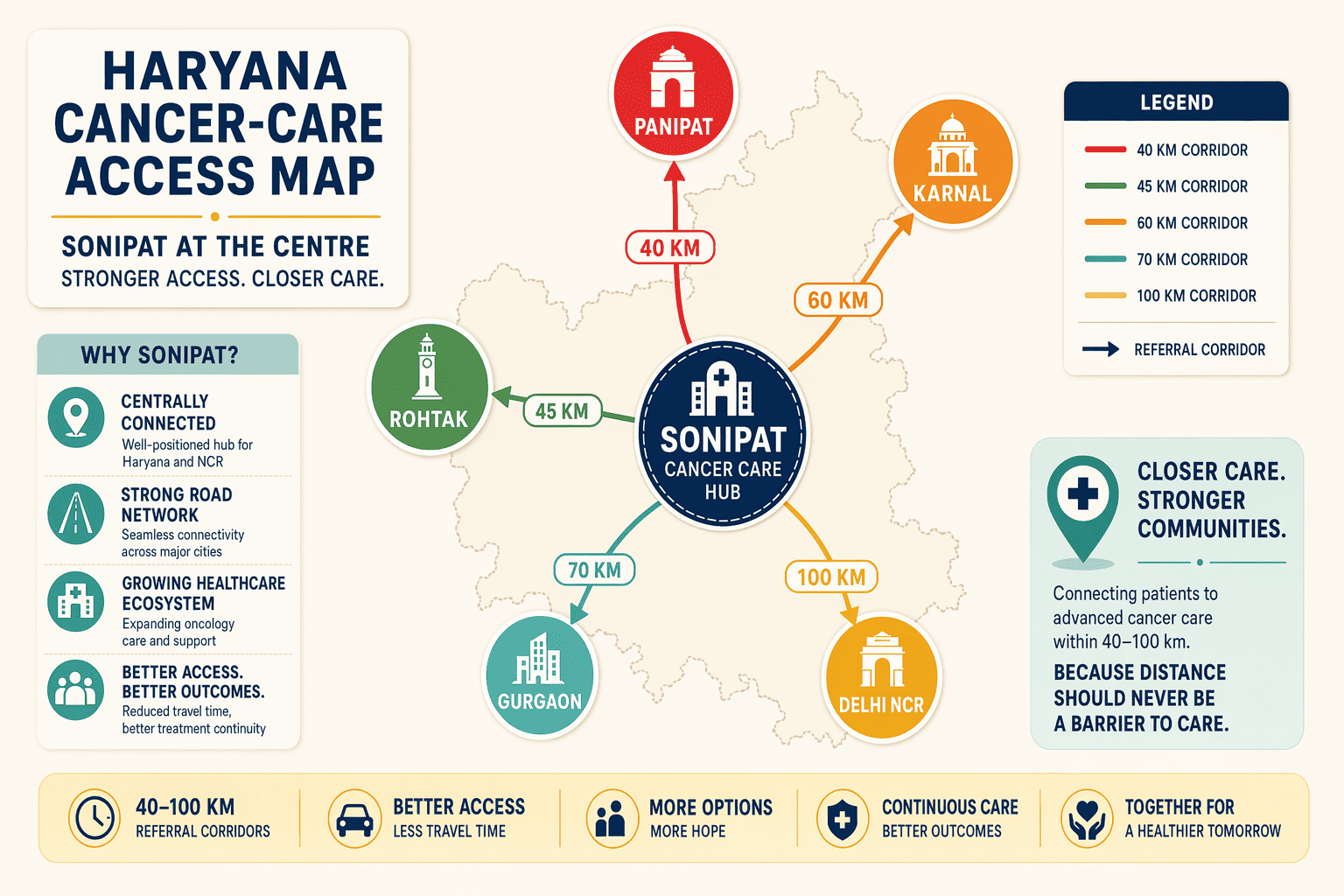
For Haryana residents, Gurgaon (20 to 50 km from most Haryana districts) and Delhi NCR (50 to 100 km) form the primary thorough care corridor. Daily radiation therapy spans 5 to 7 weeks, travel fatigue and cost turn a 100+ km commute into an adherence risk, making geographic proximity a clinical factor, not just convenience. Andromeda Cancer Hospital in Sonipat, for example, sits 40 to 60 km from Panipat, Rohtak, and Karnal districts, offering TrueBeam STx radiation technology and multidisciplinary tumor boards within feasible commute range for patients requiring daily fractionated treatment.
Hospital Options: Facilities Offering Surgical + Medical + Radiation Oncology
The table below compares six hospitals accessible from Haryana, organized by CRITERIA, what to compare, rather than hospital-vs-hospital ranking. Delhi NCR hosts numerous world-class hospitals equipped with advanced treatment options, but choosing the facility with the most Google reviews or highest search ranking without verifying radiation technology (linear accelerator vs. Cobalt) and multidisciplinary coordination can lock you into a facility where equipment limitations delay treatment or increase side effects.
| Criterion | Andromeda Cancer Hospital | American Oncology Institute, Gurugram | Amerix Cancer Hospital | Mediworld Cancer Hospital | Rajiv Gandhi Cancer Institute, Delhi | BLK-Max Super Speciality Hospital, Delhi |
|---|---|---|---|---|---|---|
| Location (from Haryana) | Sonipat, Haryana (40–60 km from Panipat/Rohtak/Karnal) | Sector 90, Gurugram (20–50 km from South Haryana) | Delhi NCR (50–100 km from central Haryana) | Delhi NCR (50–100 km from central Haryana) | Rohini, Delhi (60–90 km from West Haryana) | Pusa Road, Delhi (70–100 km from West Haryana) |
| Consultation Cost | Contact facility for pricing | Contact facility for pricing | Contact facility for pricing | Contact facility for pricing | Contact facility for pricing | Contact facility for pricing |
| Radiotherapy Range | TrueBeam STx (IMRT, VMAT, SRS/SRT, SBRT, IGRT) | Linear accelerator-based IMRT | Advanced radiation therapy available | Linear accelerator-based therapy | Advanced radiotherapy options | Thorough radiation oncology |
| Thorough Services | Surgical oncology, medical oncology, radiation oncology, pathology, pain & palliative care | Surgical, medical, radiation oncology; multidisciplinary tumor boards | Surgical, medical, radiation oncology | Surgical, medical, radiation oncology | Surgical, medical, radiation oncology; research focus | Surgical, medical, radiation oncology; advanced diagnostics |
Referral Pathways From Haryana District Hospitals
Haryana's 22 district day-care centers initiate cancer diagnosis and basic chemotherapy, but radiation and surgical oncology require NCR referrals. Facilities like Andromeda Cancer Hospital coordinate with Haryana district hospitals for smooth radiation/surgical referrals, with financial counseling to navigate Ayushman Bharat and state scheme documentation. Patients should expect a referral letter specifying diagnosis stage, prior treatment, and urgency; NCR hospitals then schedule consultations within 7 to 10 days for non-emergency cases. For more on hospital selection frameworks, see Best Cancer Hospitals Thorough Treatment Delhi NCR and Best Affordable Cancer Hospitals Delhi NCR.
Geographic access narrows your options, but treatment quality varies significantly among facilities in the same corridor. The distinguishing factor lies in care coordination models.
Comparing Multidisciplinary Care Models: What Sets Facilities Apart
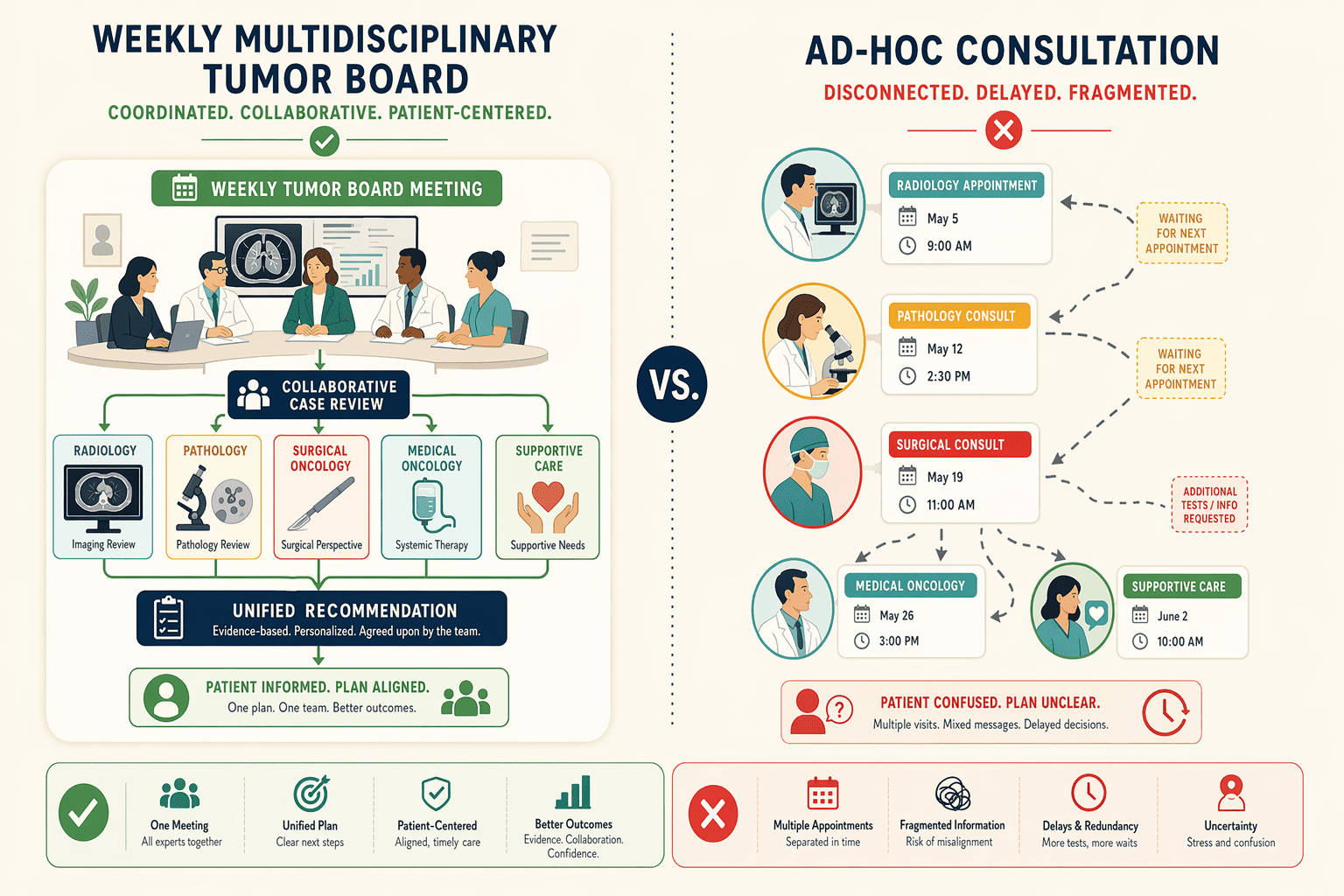
Tumor Board Functioning: Weekly Case Review Vs. Ad-Hoc Consultation
A multidisciplinary tumor board is a structured meeting where specialists from oncology, radiology, pathology, surgery, and supportive care evaluate each patient's case collectively [F2-2, F2-12]. Structured boards meet weekly or biweekly, review complete clinical data (imaging, biopsy reports, functional status), and reach consensus recommendations documented in medical records [F2-10, F2-13]. Ad-hoc consultation models, by contrast, rely on the patient to coordinate separate appointments with each specialist over weeks, risking fragmented decisions when one physician lacks full diagnostic context. High-functioning boards standardize case presentation formats, track specialist attendance, and follow up on outcome data, turning 'multidisciplinary care' from a marketing claim into measurable coordination.
Care Coordinator Role: Navigation Support as a Service Differentiator
Dedicated care coordinators schedule appointments across specialties, assist with insurance claim documentation, and manage treatment timelines, preventing the common scenario where a patient receives a radiation oncology referral but waits three weeks to book an appointment because clinic phone lines are busy. Coordinators also preemptively flag side-effect concerns to the treating team; proactive intervention during radiation therapy reduces acute toxicity when the radiation oncologist, medical oncologist, and supportive care team synchronize management. Facilities without coordinators shift this administrative and clinical navigation burden onto patients and family members, extending time-to-treatment and increasing dropout risk.
Integrated Diagnostics: On-Site Pet-Ct, MRI, and Pathology Turnaround
On-site advanced diagnostics, PET-CT, MRI, molecular pathology, compress diagnostic-to-treatment intervals to 24-72 hours. Centers like Andromeda Cancer Hospital offer on-site https://www.andromedahospital.in/treatments PET-CT and advanced imaging, reducing diagnostic delays. Facilities outsourcing diagnostics face 1-3 week turnarounds; treatment delays are associated with advanced stage, poor response to treatment, and increased mortality risk [F4-1, F4-2, F4-3]. In aggressive cancers (triple-negative breast cancer, high-grade sarcomas), every week matters, integrated diagnostics directly affect survival outcomes, making turnaround time a tangible care model differentiator, not a convenience feature.
Understanding what makes multidisciplinary care effective prepares you to verify the financial mechanisms that turn treatment plans into accessible reality.
Insurance, Government Schemes, and Financial Counseling: Affordability Mechanisms in Practice
Cashless Treatment Process: TPA Network Mechanics
Cashless treatment through Third-Party Administrators (TPAs) follows a five-step workflow that patients should verify before admission:
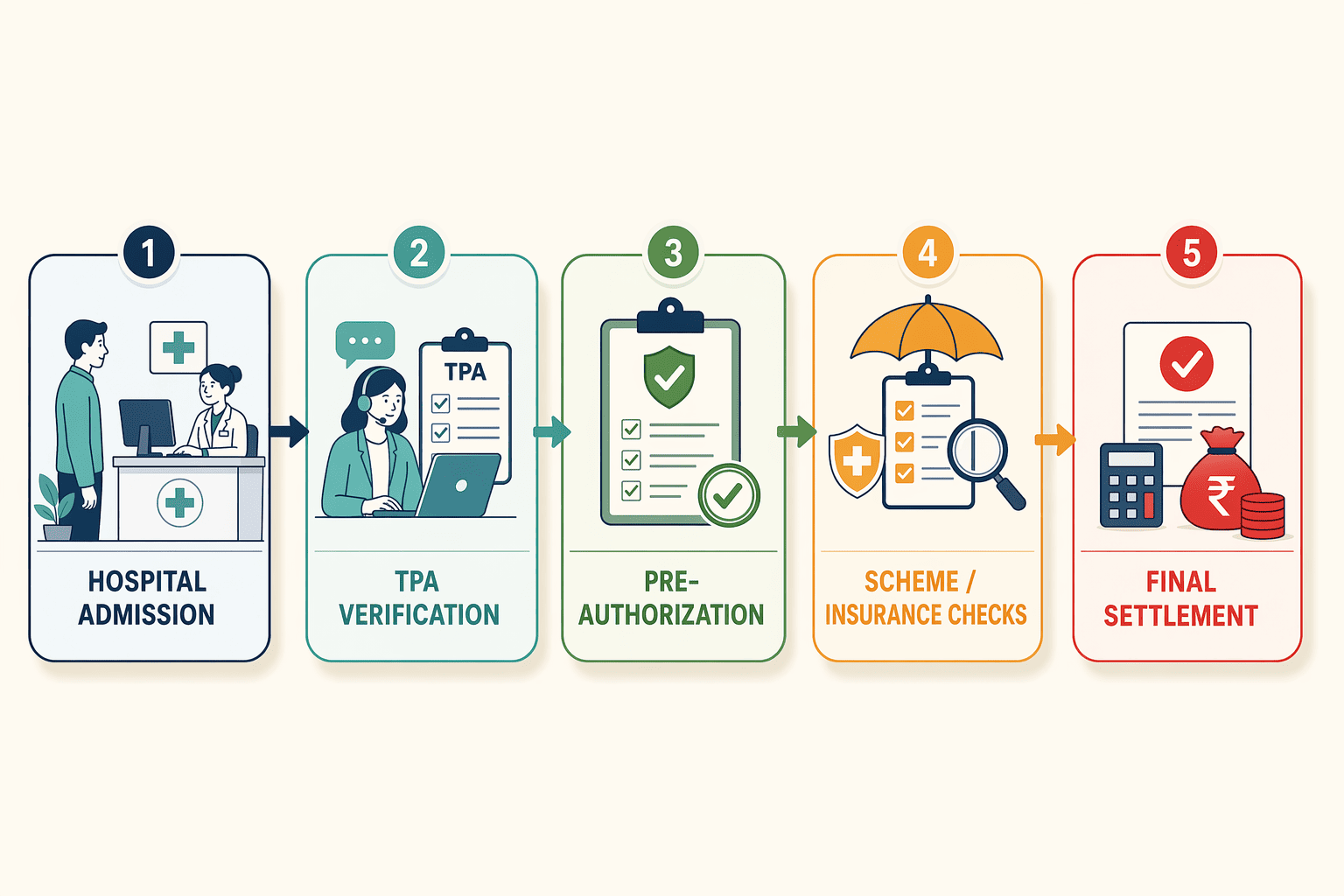
- Confirm the hospital is in your TPA's empaneled network, not all cancer centers accept all insurers.
- Submit a pre-authorization request with your oncologist's treatment plan (radiation protocol, chemotherapy cycles, surgical scope).
- Await TPA approval, typically 24-72 hours; expedited approvals exist for urgent procedures.
- Review coverage limits, co-pays, and exclusions, many policies cap radiation at ₹2 lakh or exclude targeted therapy drugs.
- Proceed with cashless admission only after written confirmation of covered services.
What can derail this process: sub-limits on specific treatments (e.g., ₹50,000 cap on supportive care when anti-nausea medications and nutritional supplements add ₹20,000/month), disease-specific waiting periods that void coverage for pre-existing cancers, and room-rent caps that force downgrade from private to shared wards mid-treatment.
Ayushman Bharat Pmjay: Enrollment, Empanelment, and Claims Documentation
Ayushman Bharat (PMJAY) covers ₹5 lakh/year for cancer treatment, but enrollment and empanelment verification are critical pre-admission steps. Generate your e-card via the Ayushman Setu app or Common Service Centre, then cross-check the hospital's empanelment status on the NHA portal, empanelment is procedure-specific, not blanket. A hospital may be empaneled for medical oncology but not radiation oncology, leaving you with a ₹2 lakh radiation bill despite scheme eligibility. Required documentation at admission: e-card, Aadhaar, income certificate (if applicable), and oncologist's treatment plan. To escalate claim denials or delays, contact the NHA grievance helpline (14555) within 7 days of denial, delays beyond this window can void your claim cycle.
Financial Counseling as a Pre-Treatment Checkpoint
Effective financial counseling delivers three outputs before you commit to a facility: (1) an itemized cost estimate, per-fraction pricing × total fractions, not vague ₹2-5 lakh ranges, (2) scheme eligibility verification across insurance, PMJAY, and state-specific programs, and (3) installment or assistance program options for uncovered gaps. Hospitals like Andromeda Cancer Hospital provide dedicated financial counseling to navigate scheme documentation and surface assistance programs, ensuring affordability surprises don't derail care mid-treatment. Identify this service by asking: 'Can I receive a written cost breakdown and scheme-eligibility report before admission?', facilities without structured counseling typically deflect with 'costs depend on your case,' a red flag for hidden fees.
Making Your Decision: Balancing Access, Quality, and Affordability
Hospitals closer to Haryana district headquarters (Sonipat, Panipat) minimize daily radiation commute burden but may have smaller specialist teams; larger NCR tertiary centers (Delhi) offer deeper subspecialty expertise but impose 100+ km travel for rural Haryana residents, the right choice depends on cancer stage, treatment intensity, and family support logistics. Cashless treatment through TPA networks eliminates upfront cost but may face pre-authorization delays (24-72 hours); reimbursement models require fronting ₹2-5 lakh but avoid network hospital restrictions, verify your insurance model and financial runway before admission.
As Haryana expands district-level day-care chemotherapy centers and NCR hospitals adopt precision radiation technologies (IGRT, SBRT), the affordability-quality gap is narrowing, but patients must actively verify multidisciplinary coordination and scheme acceptance rather than assume 'empaneled hospital' guarantees thorough coverage.
Compare hospitals using the criteria framework from this guide, verify radiation technology (linear accelerator vs. Cobalt), tumor board presence, and Ayushman Bharat empanelment scope during your initial consultation, then choose based on evidence rather than proximity or reviews alone. Schedule consultations at 2-3 shortlisted facilities to verify financial counseling and cashless treatment processes firsthand, with Andromeda Cancer Hospital as one option to evaluate alongside others in the NCR corridor.
Frequently Asked Questions
What is the difference between comprehensive cancer care and single-specialty treatment?
Thorough care integrates surgical oncology, medical oncology, radiation therapy, diagnostics, and supportive services under one roof with multidisciplinary tumor boards. Single-specialty centers require patients to coordinate referrals across facilities, delaying treatment sequencing. Tumor boards convene specialists weekly to collaboratively review cases, preventing sequential consultations that fragment care.
How do I verify if a hospital accepts Ayushman Bharat PMJAY for my specific treatment?
Follow three verification steps: (1) check the NHA portal for PMJAY-empaneled hospitals, (2) confirm empanelment for your specific treatment (e.g., radiation oncology, not just medical oncology), (3) request written confirmation of coverage scope during your initial consultation. Generate your e-card via Ayushman Setu app before admission to enable cashless treatment authorization.
Why does radiation therapy technology (linear accelerator vs. Cobalt) matter for treatment cost and outcomes?
Linear accelerators like the Varian TrueBeam STx deliver image-guided radiotherapy with sub-millimeter precision, reducing radiation scatter to healthy organs and lowering side-effect severity compared to cobalt-based machines. This precision decreases supportive care costs for managing toxicity and reduces treatment delays. Modern linear accelerators compress treatment courses through higher dose-per-fraction capability.
What questions should I ask during the initial consultation to assess affordability?
Ask four critical questions: (1) Can you provide an itemized cost estimate for my full treatment plan with per-fraction pricing? (2) Do you accept my insurance or government scheme for cashless treatment? (3) What documentation do I need for scheme claims? (4) Are installment plans or patient assistance programs available? Effective financial counseling delivers these answers before admission commitment.
How do Haryana's district day-care cancer centers integrate with NCR hospitals for advanced treatment?
The 22 district day-care centers handle chemotherapy for stable outpatient cases, but radiation therapy and complex surgeries require referral to NCR hospitals. Ayushman Bharat PM-JAY covers ₹5 lakh annually across empaneled facilities, but patients must verify scheme portability and referral documentation to avoid coverage gaps during handoff between district and tertiary centers.
What is a multidisciplinary tumor board and how do I confirm a hospital has one?
A tumor board is a weekly cross-specialty case review where surgical oncologists, medical oncologists, radiation oncologists, radiologists, and pathologists collaboratively discuss diagnosis, treatment sequencing, and patient management. Verify presence by asking: (1) Does the tumor board meet weekly? (2) Which specialties participate? (3) Will my case be included? Documented treatment recommendations from tumor boards prevent sequential consultation delays.
When is day-care chemotherapy appropriate vs. Inpatient administration?
Day-care chemotherapy suits stable patients receiving standard protocols with low toxicity risk, where outpatient monitoring suffices. Inpatient administration is required for intensive regimens, neutropenia risk, or patients with comorbidities needing 24-hour observation. Clinical suitability, not just cost savings, drives this decision. Haryana's district day-care centers handle stable cases, referring complex administrations to NCR facilities.