
Choosing an affordable cancer hospital in Delhi NCR requires balancing cost transparency, surgical oncology expertise, and multidisciplinary coordination—factors that determine both treatment success and final expense.
Key Takeaways
- Affordable surgical oncology in Delhi NCR typically ranges ₹2-6 lakh at private accessible-pricing centers, compared to ₹50,000-1.5 lakh at government institutes (with 4-6 month waitlists) and ₹8-15 lakh at premium corporate chains
- Quality depends on surgical oncology credentials (FACS/FSSO qualifications), AERB-certified PET-CT availability, and weekly tumor board meetings—not hospital brand name alone
- CGHS empanelment status must be verified for oncology-specific services, as hospitals may be empanelled for general care but not specialized cancer treatment
- Hidden costs include ICU per-day charges, implant/prosthesis expenses, and post-operative radiation therapy pricing—always request all-in cost breakdowns before admission
- Government institutes like AIIMS offer free/subsidized care but require months-long waitlists; private centers provide 1-2 week turnaround for non-emergency surgical slots
What Makes a Cancer Hospital 'Affordable' Without Compromising Quality?
'Affordable' in Delhi NCR's surgical oncology landscape typically means accessible private-tier pricing of ₹2-6 lakh per treatment episode — a middle ground between government subsidized care (₹50,000-1.5 lakh with 4-6 month waitlists) and premium corporate chains (₹8-15 lakh). Quality, however, demands verification beyond the invoice: look for AERB-certified PET-CT access, a surgical oncology team trained in oncoplastic techniques, documented weekly tumor board reviews, and post-surgery recovery infrastructure including physiotherapy and pain management protocols.
Cost Range Definitions Across Delhi NCR
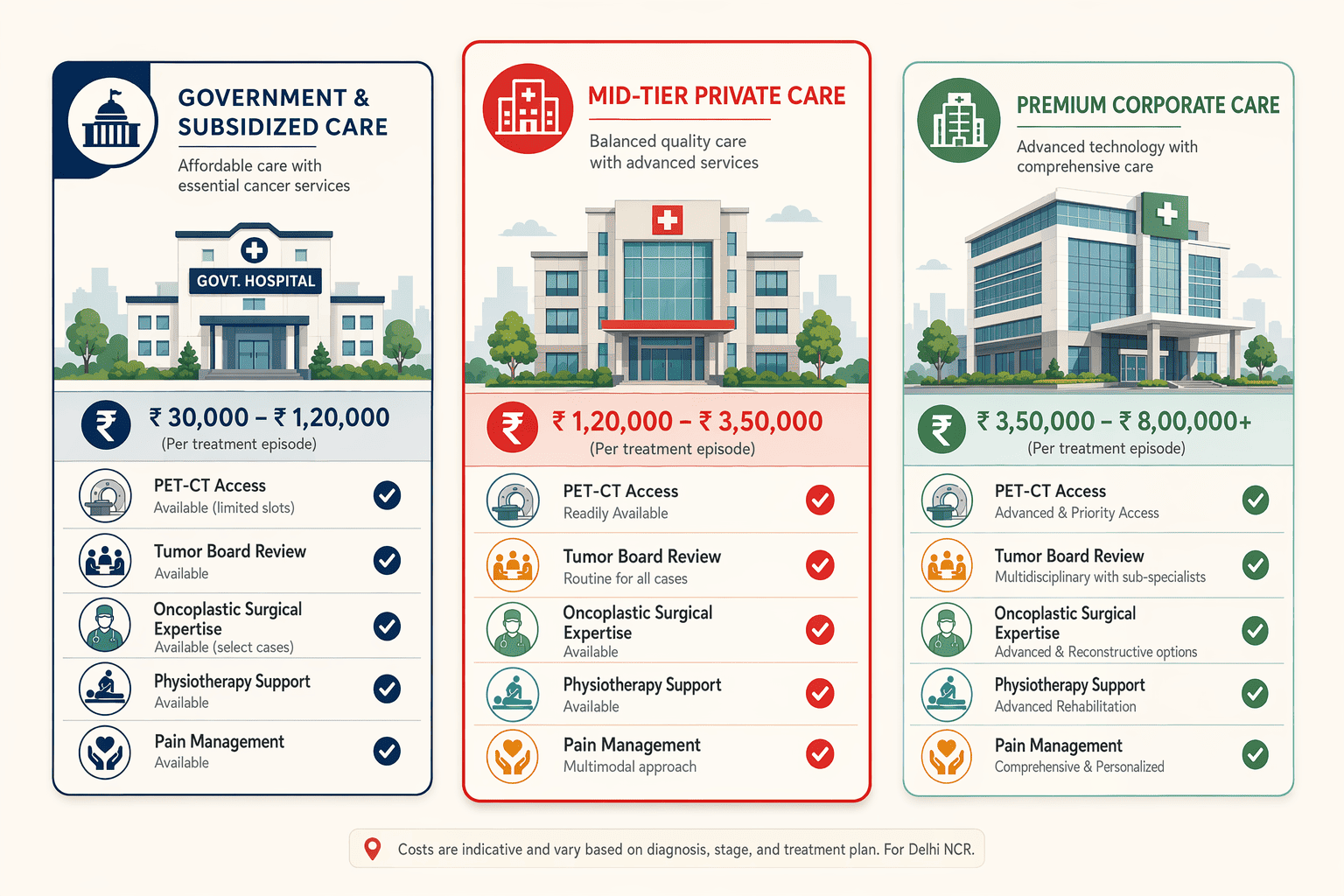
Delhi NCR's cancer surgery pricing breaks into three distinct tiers:
- Government subsidized (₹50,000-1.5 lakh) — centers like AIIMS Delhi offer free or heavily subsidized care, but capacity constraints mean 4-6 month waitlists for surgical oncology slots. Radiation and chemotherapy cycles add separate wait periods.
- Private accessible (₹2-6 lakh), mid-tier hospitals including Andromeda Cancer Hospital (₹2-5 lakh for standard surgical oncology procedures ) target this bracket. Costs typically cover surgery, 3-5 day hospitalization, and immediate post-operative care; chemotherapy and radiation are billed separately.
- Premium (₹8-15 lakh), corporate chains in South Delhi and Gurgaon bundle surgical oncology with luxury amenities, international second-opinion services, and extended recovery suites. Surgery itself accounts for ₹3-5 lakh; the remainder funds infrastructure and concierge support.
Final treatment expenses vary by cancer type, stage, and whether surgery, chemotherapy, and radiation are combined, a breast-conserving lumpectomy with adjuvant chemotherapy may total ₹4-7 lakh in the accessible tier, while a complex gastrointestinal resection requiring ICU care can exceed ₹10 lakh even at mid-tier centers.
Quality Signals Beyond the Price Tag
Affordable pricing means little if the hospital cannot execute precision cancer surgery or manage post-operative recovery. Ask these verification questions:
- Surgical oncology team size and credentials, how many surgeons are trained specifically in oncoplastic techniques versus general surgical oncology? A single oncoplastic breast surgeon handling 200+ cases annually signals depth; a rotating pool of general surgeons flags limited specialization.
- AERB-certified PET-CT access, Delhi NCR hospitals frequently cite PET-CT availability, but AERB certification (Atomic Energy Regulatory Board) confirms radioisotope handling meets safety standards. Request the AERB license number and verify through the regulator's public database.
- Weekly tumor board documentation, multidisciplinary tumor boards (surgical oncology, medical oncology, radiation oncology, pathology, radiology) are standard in thorough cancer care, yet attendance and documentation vary. Ask to see anonymized tumor board minutes showing case review frequency and specialist participation rates.
- Post-surgery recovery infrastructure, physiotherapy, pain management protocols, and dedicated recovery areas reduce complications. Verify the hospital employs full-time physiotherapists trained in post-cancer-surgery rehabilitation, not outsourced contractors visiting twice weekly.
These markers, team depth, regulatory compliance, documented collaboration, recovery support, separate hospitals that deliver quality surgical oncology from those that simply list oncology as a department. Frequently cited centers in third-party roundups provide a starting roster, but each claim (team credentials, certification status, infrastructure) requires independent verification before scheduling treatment.
Understanding affordability without quality compromise requires examining the specific criteria that separate marketing claims from measurable surgical oncology performance.
Selection Criteria: How We Evaluated Surgical Oncology Programs in Delhi NCR
Most cancer hospital comparisons list institutions by specialty or ownership type but omit the surgery-specific factors patients actually need. We applied four filters designed to surface hospitals where surgical oncology integrates seamlessly with diagnostics, medical oncology, and radiation planning, not just shared buildings, but coordinated care timelines.
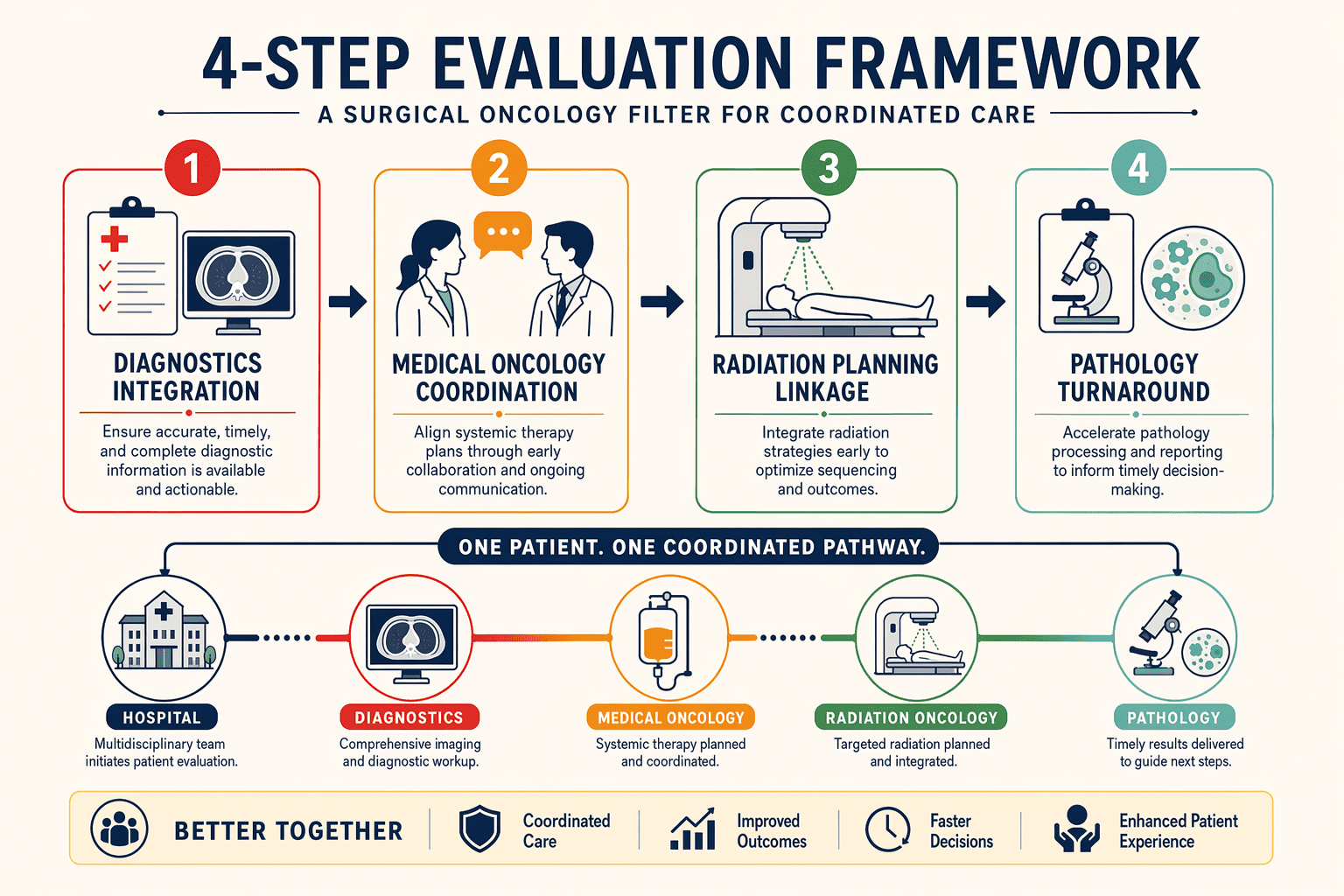
- Cost transparency at surgical oncology level, Hospital-wide pricing is insufficient. We prioritized facilities disclosing surgery-specific ranges (laparoscopic versus open resection), ICU per-day charges, implant costs for reconstruction, and post-operative radiation or chemotherapy pricing. Hidden cost factors, anesthesia consumables, pathology frozen sections during surgery, additional hospital stays for complications, must appear in quoted estimates or be flagged as variable line items.
- Surgical oncology team credentials and depth, Verifiable team signals matter: department head fellowship training in oncoplastic or minimally invasive techniques, ratio of board-certified surgical oncologists to general surgeons performing cancer cases, and published complication rates. Marketing claims about multidisciplinary expertise are common; readers should demand résumés, case-volume data, and outcomes dashboards.
- Same-roof multidisciplinary integration, Co-location differs from integration. We required weekly tumor board documentation (meeting notes listing attendees and case reviews), same-roof medical oncology plus radiation oncology with shared electronic health records, pathology turnaround commitments (frozen section availability within 20 to 30 minutes, radical surgery histopathology reporting within 7 to 10 days), and IHC coordination timelines. Listing oncology departments does not guarantee coordinated treatment planning; verification checklist: ask for tumor board schedule, request sample case timelines showing diagnostic-to-surgery lag, and confirm pathology reporting SLAs in writing.
- Advanced diagnostics and AERB compliance, AERB-certified PET-CT availability on-site (not referral-only), in-house immunohistochemistry versus outsourced testing, and diagnostic turnaround commitments. Unlicensed PET-CT centers pose safety risks; readers can verify AERB certification status through the Atomic Energy Regulatory Board's public registry of licensed facilities or by requesting the hospital's current AERB license certificate during consultation.
These criteria eliminate facilities where surgical oncology operates in isolation, referred patients wait weeks for medical oncology appointments, radiation planning happens off-site with delayed case discussions, and pathology results require follow-up visits to interpret. The hospitals reviewed below met threshold standards on at least three of four dimensions.
Applying these criteria to Delhi NCR's cancer care landscape reveals distinct cost-quality tiers across government, accessible-pricing, and premium hospital segments.
Comparison Table: Cost, Technology, and Multidisciplinary Care Across 8 Hospitals
How to Read the Table
Each row below captures cost range (₹ lakh), surgical oncology team lead, AERB-certified PET-CT availability, and CGHS empanelment status. Cost range reflects typical surgical oncology procedures; final expenses vary by cancer type, stage, and whether surgery is combined with chemotherapy or radiation. CGHS status shown is for general verification, beneficiaries should confirm current oncology-specific empanelment before admission.
| Hospital | Est. Surgery Cost Range (₹ Lakh) | Surgical Oncology Lead | AERB PET-CT | CGHS Empanelled |
|---|---|---|---|---|
| Andromeda Cancer Hospital | 2–5 | Dr. Arun Kumar Goel | Yes | Yes |
| Rajiv Gandhi Cancer Institute | 3–7 | Multiple consultants | Yes | Yes |
| Indraprastha Apollo | 6–12 | Multiple consultants | Yes | Partial |
| Max Super Speciality, Saket | 6–12 | Multiple consultants | Yes | Partial |
| BLK-Max Super Speciality | 5–10 | Multiple consultants | Yes | Partial |
| Fortis Memorial Research Institute | 5–11 | Multiple consultants | Yes | Partial |
Key Patterns Across the 6 Centers
Government-subsidized centers offer lower entry costs but longer waitlists. Private accessible hospitals (₹2 to 6 lakh) deliver faster turnaround yet variable multidisciplinary integration, some institutions list surgical, medical, and radiation oncology specialists but operate them in separate departments with minimal cross-consultation. Corporate premium centers (₹6 to 12 lakh) provide advanced imaging and on-site post-surgery recovery infrastructure, though coordination gaps persist by location.
Government and Safety-Net Institutes: Aiims Delhi, Rajiv Gandhi Cancer Institute, and Safdarjung
Aiims Delhi: Free Treatment With 4-6 Month Waitlists
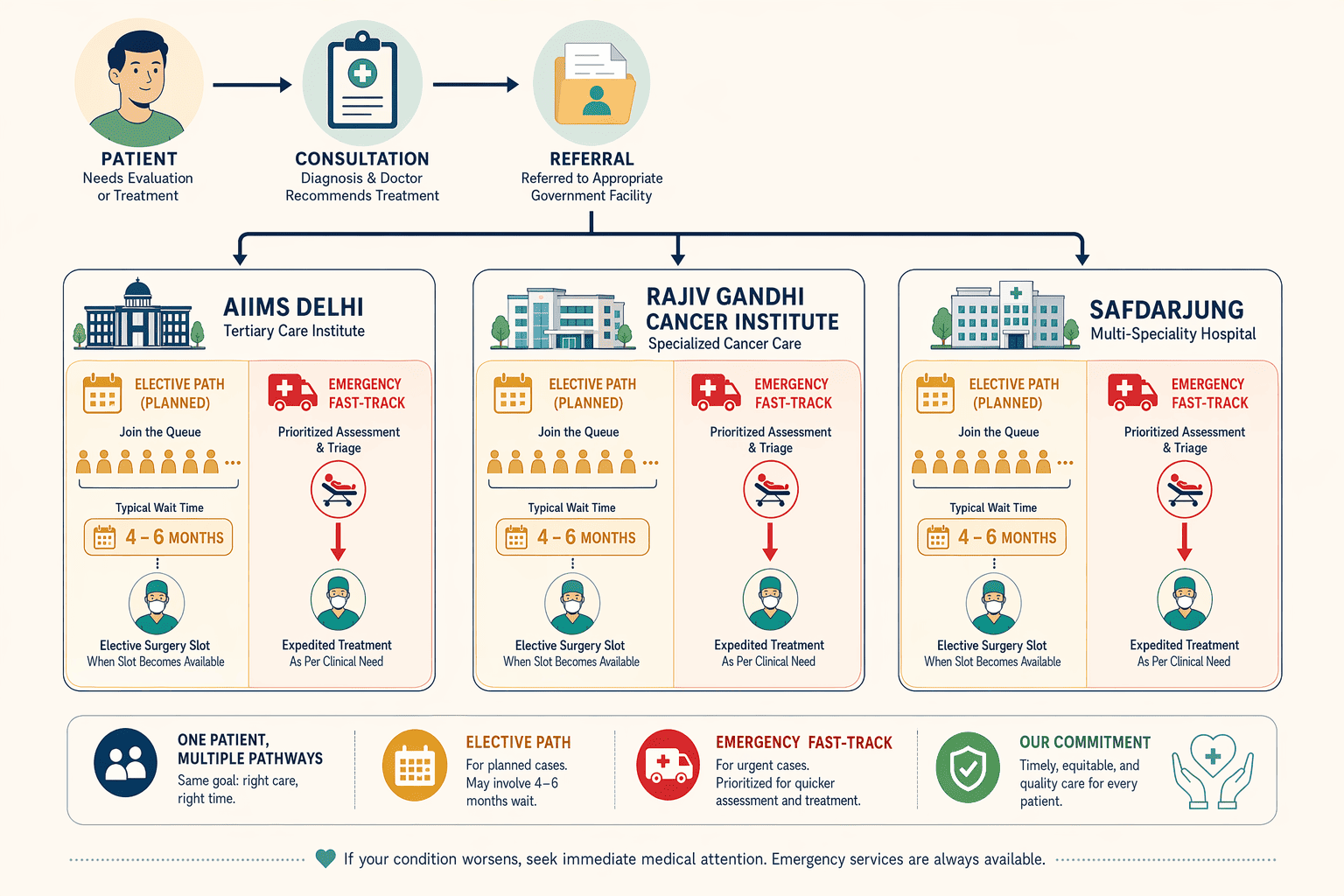
AIIMS Delhi provides free or subsidized cancer care for eligible patients, covering surgical oncology through its dedicated department staffed by senior faculty and residents. Reported waitlists extend 4 to 6 months for non-emergency surgical slots per patient accounts, a trade-off for families prioritizing zero out-of-pocket cost. Patients must navigate referral protocols and appointment queues; emergency cases receive expedited access, but elective resections often face capacity constraints inherent to high-volume government hospitals.
Rajiv Gandhi Cancer Institute: Cghs-Empanelled Specialist Center
Rajiv Gandhi Cancer Institute & Research Centre is a not-for-profit oncology hospital in Delhi, established in 1996 and serving over 3.5 lakh patients. User-generated review platforms report a 5.0 rating based on 23 patient stories. The facility spans over 2 lakh square feet with 500+ beds and introduced robotic surgery, TrueBeam precision radiotherapy, and molecular laboratory gene profiling first in India. Surgical oncology services operate within a ₹3 to 7 lakh range for typical procedures; however, CGHS empanelment status must be verified, hospitals may be empanelled for general care only, not oncology services. Beneficiaries should confirm current status before admission. The institute combines multidisciplinary medical, surgical, and radiation oncology under one roof.
Safdarjung Hospital: Safety-Net Option for Delhi Residents
Safdarjung Hospital offers subsidized oncology care via referral pathways from primary health centers and district hospitals. The surgical oncology unit handles head-and-neck, gastrointestinal, and breast cases within a public-sector infrastructure, longer wait times and limited advanced technology access remain consistent with government safety-net capacity constraints.
For patients who cannot access government subsidies yet find premium-tier pricing prohibitive, mid-tier private hospitals offer structured cost-quality alternatives.
Private Accessible-Pricing Centers: Andromeda Cancer Hospital, Action Cancer Hospital, and Blk-Max
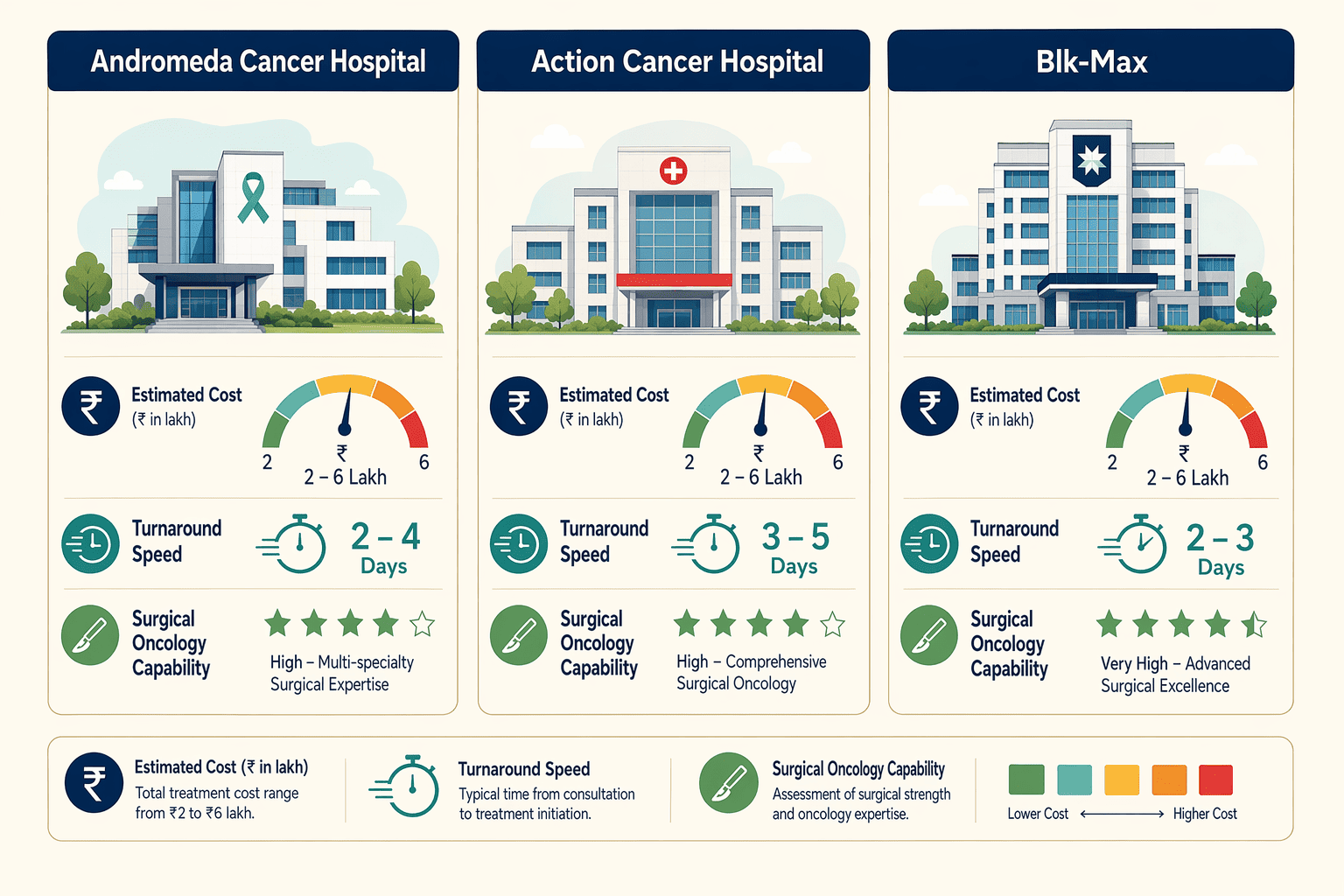
For patients who cannot access government-subsidized cancer care and cannot afford ₹8 to 15 lakh premium-tier surgical oncology, mid-tier private hospitals offer a cost-quality sweet spot: faster turnaround than AIIMS, more transparent pricing than corporate chains, and experienced surgical teams. Below are two accessible-pricing centers near Delhi that handle complex solid-tumor resections in the ₹2 to 6 lakh range.
Andromeda Cancer Hospital: Surgical Oncology Under Dr. Arun Kumar Goel
Andromeda Cancer Hospital operates an accessible pricing model with surgical oncology procedures estimated at ₹2 to 5 lakh. The surgical oncology department is led by Dr. Arun Kumar Goel, and patients can schedule consultations with co-located surgical, medical, and radiation oncology specialists under one roof.
Strengths: Transparent cost breakdown during pre-treatment consultation; experienced surgical oncology leadership with FACS and FSSO credentials; same-roof multidisciplinary care reduces inter-hospital coordination delays. Limitations: Smaller surgical oncology team size compared to 500-bed corporate chains; public data on weekly tumor board frequency not disclosed. Best for: Patients prioritizing upfront cost transparency and surgeon credentials over brand-name recognition, particularly those seeking second opinions after government-hospital wait lists.
Post-surgery recovery infrastructure matters, cancer surgery recovery depends on on-site physiotherapy, pain management protocols, and nutritional counseling. Verify whether the hospital's accessible-pricing tier includes these ancillary services or charges them separately.
Blk-Max Super Speciality Hospital: Mid-Tier Corporate Option
BLK-Max Super Speciality Hospital positions itself between accessible-pricing centers and premium chains, with a 700-bed facility offering robotic surgery availability for select oncology cases. The hospital holds a 4.4-star patient rating and provides 24×7 emergency oncology support.
Strengths: Robotic surgery platform expands minimally invasive options for thoracic and GI cancers; NABH and NABL accreditation; established since 1959 with specialist depth across bone marrow transplant and oncology verticals. Limitations: Pricing not publicly disclosed, cost estimates require direct sales conversation; mid-tier branding may lack the research reputation of AIIMS or premium chains. Best for: Patients seeking robotic-surgery capability and corporate-hospital infrastructure without paying ₹10+ lakh premium-tier rates, provided upfront cost uncertainty is acceptable.
Premium corporate chains deliver advanced infrastructure and brand recognition but require careful verification of multidisciplinary coordination at each specific location.
High-Volume Corporate Chains: Max Healthcare, Fortis Memorial, and Artemis Hospital
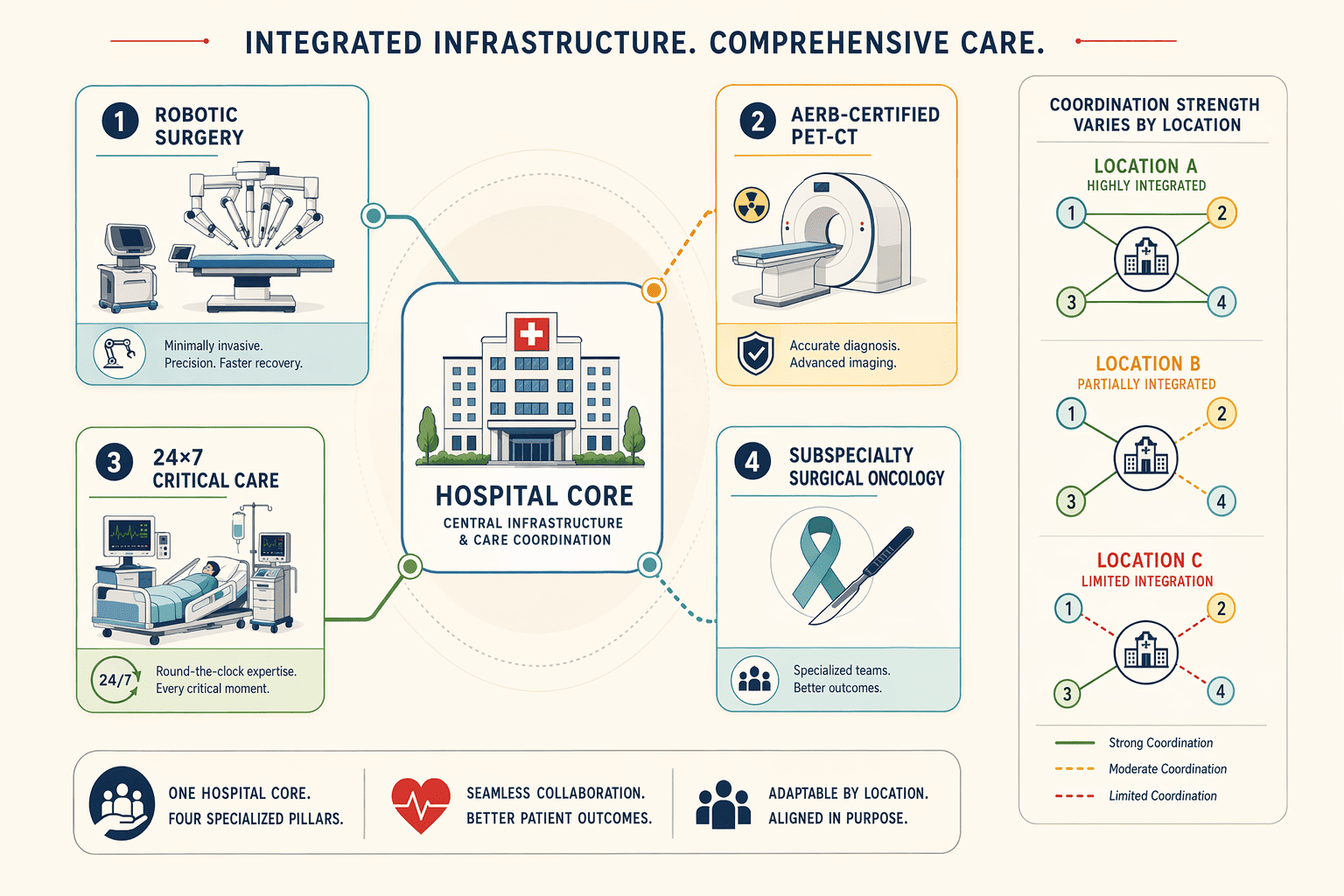
Premium corporate chains deliver advanced surgical oncology infrastructure, robotic platforms, AERB-certified PET-CT, 24×7 critical-care units, at higher cost than accessible-pricing centers. Technology access comes with trade-offs: multidisciplinary coordination varies by location, and cost transparency is often opaque until pre-admission estimates.
Max Healthcare: Multi-Location Oncology Network With Coordination Gaps
Max's surgical oncology services span locations in Saket, Mohali, and Patparganj, with robotic surgery platforms and subspecialty surgical oncologists (breast, GI, thoracic). Estimated cost range: ₹6-12 lakh for major cancer surgery. The network lists multidisciplinary tumor boards, medical oncology, radiation oncology, pathology, but coordination protocols are location-dependent; some Max sites run weekly documented case reviews, others list departments on the same campus without formalized integration pathways.
Fortis Memorial Research Institute: Premium Surgical Oncology in Gurgaon
Fortis Memorial (Gurgaon) positions as the network's flagship oncology site, offering minimally invasive and robotic-assisted procedures, advanced imaging (3T MRI, PET-CT), and a 262-bed surgical oncology unit. Cost positioning: ₹8-15 lakh range for complex resections. Strengths include technology access and 24×7 anesthesia support; limitations include higher upfront cost and variable multidisciplinary integration across Fortis locations.
Artemis Hospital: Corporate Chain Alternative in Gurgaon
Artemis Hospital's surgical oncology directory lists subspecialty oncologists in breast, GI, and head-neck cancer surgery, with minimally invasive and robotic capabilities. Cost positioning overlaps with Fortis Memorial (₹7-14 lakh). The hospital website emphasizes multidisciplinary care, medical oncology, radiation specialists, supportive care, but actual coordination depth requires case-by-case verification at consultation.
Beyond hospital selection, pre-admission due diligence protects against credential misrepresentation and coordination failures that inflate costs and delay treatment.
How to Verify Surgical Oncology Credentials and Multidisciplinary Integration Before Admission
Before committing to a cancer hospital, verify the surgical oncology team's qualifications and the facility's coordinated care protocols. This checklist ensures the hospital can deliver evidence-based, multidisciplinary treatment.
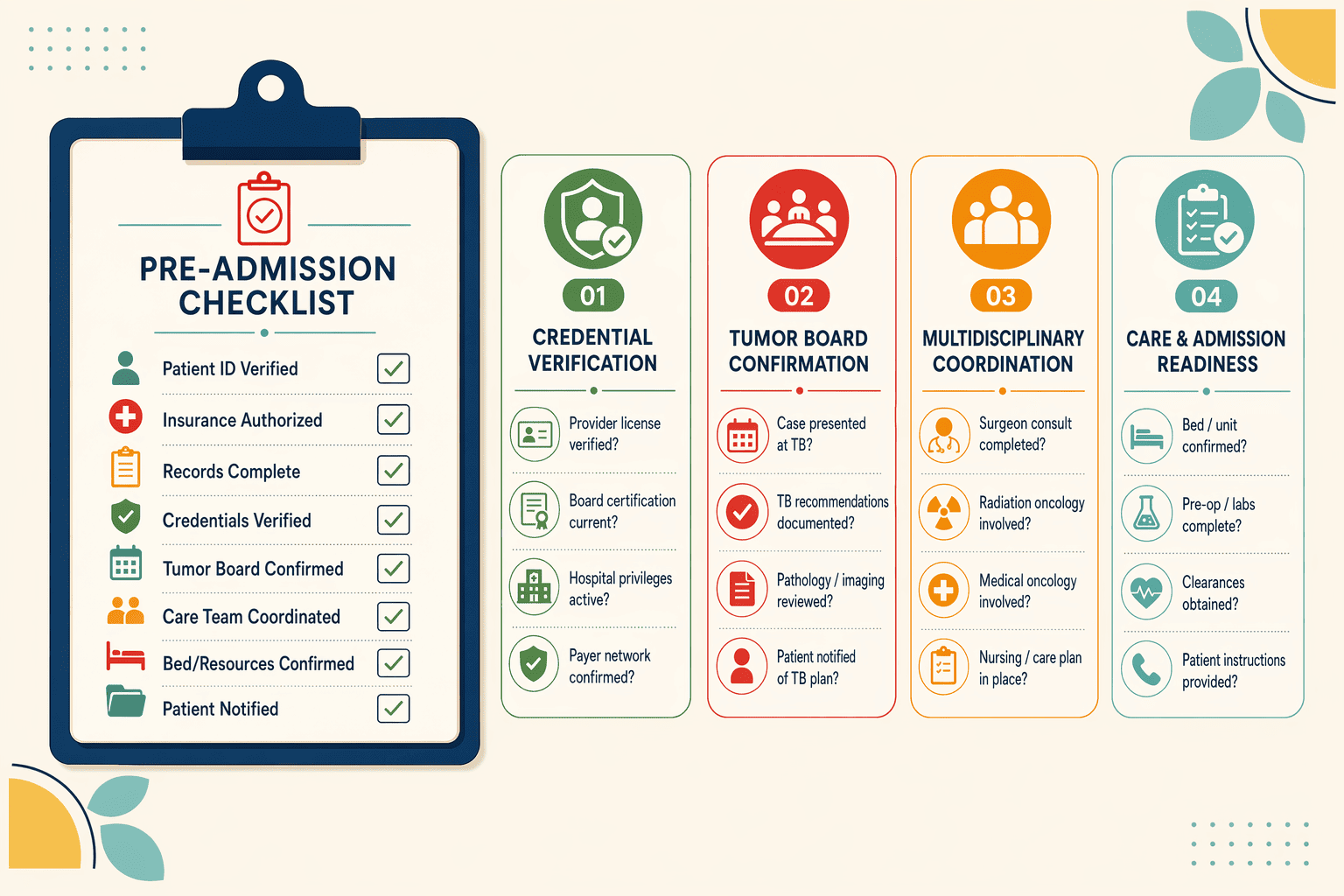
- Request Surgical Oncology Team Composition and Training Backgrounds. Ask how many surgical oncologists are on staff, the split between oncoplastic and general surgical oncology, their training institutions, and years of experience in your specific cancer type. Centers like Andromeda Cancer Hospital provide team credentials and leadership details upfront, the surgical oncology department is led by experienced specialists trained in minimally invasive and oncoplastic techniques.
- Confirm Weekly Tumor Board Documentation and Attendance. Request the tumor board meeting schedule and documented case review records. Verify that surgical oncologists, medical oncologists, radiation oncologists, pathologists, and radiologists attend regularly. Twice-weekly tumor boards indicate strong coordination.
- Verify AERB PET-CT Certification Status. Unlicensed PET-CT centers pose safety risks. Request the facility's AERB license number and verify it on the AERB website. Confirm that specialty tracers for your cancer type are available and that the nuclear medicine team participates in tumor board reviews.
- Check CGHS Empanelment for Oncology Services Specifically. Hospitals may be empanelled for general care only, not oncology. Verify current oncology-specific empanelment status on the CGHS portal or consult our CGHS empanelment verification guide.
- Request Follow-Up Care Documentation. All cancer survivors should have follow-up care that includes regular check-ups, bloodwork, and other tests. Ask whether the hospital provides a survivorship care plan, a summary of your treatment and recommendations for post-treatment care, and confirm that your oncologist will coordinate with your primary care provider.
The following questions address the most common concerns patients raise when comparing surgical oncology programs across Delhi NCR's three pricing tiers.
Making Your Choice: Balancing Cost, Credentials, and Coordination
Government-subsidized centers (AIIMS, Safdarjung) offer free or low-cost care but require 4-6 month waitlists for non-emergency surgical slots, acceptable for early-stage cases with time to plan, unsuitable for aggressive cancers requiring faster intervention. Premium corporate chains (Max ₹6-12 lakh, Fortis ₹8-15 lakh) provide advanced robotic surgery and brand recognition but vary in multidisciplinary coordination by location, some have formalized weekly tumor boards, others list departments without integrated planning.
As Delhi NCR's cancer care landscape expands, cost transparency and multidisciplinary integration verification will become standard patient expectations. Hospitals that document tumor board activity and disclose all-in surgical oncology costs (including ICU, implants, post-op therapy) will earn patient trust over those relying on brand name alone.
Compare surgical oncology programs by requesting team credentials, tumor board schedules, and CGHS empanelment verification from your shortlisted hospitals, include Andromeda Cancer Hospital's accessible-pricing program (₹2-5 lakh range, Dr. Arun Kumar Goel's surgical oncology leadership) in your evaluation.
Frequently Asked Questions
What is the typical cost range for surgical oncology in Delhi NCR hospitals?
Government-subsidized centers (AIIMS, Safdarjung) charge ₹50,000-1.5 lakh with 4-6 month waitlists. Private accessible-pricing hospitals (Andromeda ₹2-5 lakh, RGCI ₹3-7 lakh) offer middle-ground options. Premium corporate chains (Max ₹6-12 lakh, Fortis ₹8-15 lakh) provide faster access at higher cost. Final expenses vary by cancer type, stage, and combined treatments, always request all-in breakdowns including ICU, implants, and post-op therapy.
How do I verify if a hospital is CGHS-empanelled for oncology services?
Check the CGHS online portal for current empanelment status, then confirm oncology-specific empanelment category, hospitals may be empanelled for general care only. Request the hospital billing department's current CGHS rate list for your specific surgical oncology procedure before admission to avoid out-of-pocket surprises.
What is the difference between multidisciplinary 'listed' and multidisciplinary 'integrated' cancer care?
'Listed' means surgical oncology, medical oncology, and radiation departments exist on-campus but operate independently. 'Integrated' requires weekly tumor board meetings with documented case reviews, same-roof pathology/radiology with fast turnaround, and coordinated treatment plans across specialties. Request tumor board schedules and attendance records to verify true integration before admission.
Why does AERB PET-CT certification matter when choosing a cancer hospital?
AERB (Atomic Energy Regulatory Board) certification ensures PET-CT centers meet radiation safety standards and use verified tracer quality. Unlicensed centers pose safety risks through improper radiation handling. PET-CT pricing ranges ₹20,000-35,000 depending on tracer type and AERB compliance. Request the AERB license number from the hospital and verify current certification status on the AERB website.
What are typical wait times for surgical oncology at government vs private hospitals in Delhi?
AIIMS Delhi reports 4-6 month waitlists for non-emergency surgical slots. Private accessible-pricing centers (Andromeda, RGCI, Action Cancer Hospital) and premium corporate chains (Max, Fortis) typically schedule within 1-2 weeks for non-emergency cases. Actual turnaround depends on case complexity and department availability, confirm scheduling timelines during initial consultation.
Does Andromeda Cancer Hospital accept CGHS for surgical oncology procedures?
CGHS beneficiaries should confirm current oncology-specific empanelment status before admission, as hospitals may be empanelled for general care but not specialized cancer services. Call Andromeda Cancer Hospital's billing department to verify the current CGHS rate list for your specific surgical oncology procedure and confirm eligibility.
What post-surgery recovery support should I expect from a quality surgical oncology program?
Quality programs provide on-site physiotherapy for mobility recovery, nutrition counseling for post-operative dietary management, structured pain management protocols beyond discharge medication, and coordinated follow-up care scheduling. Ask hospitals about these services during pre-admission consultations, bundled recovery support reduces readmission risk and improves functional outcomes.