
PET-CT scan affordability depends on scanner technology, tracer type, and regulatory compliance—not just headline prices. Digital time-of-flight systems offer superior lesion detection, but understanding AERB licensing and clinical indications ensures value.
Key Takeaways
- Digital PET-CT scanners use time-of-flight imaging to detect lesions earlier than older analog systems through picosecond-level photon timing
- AERB licensing verification is the first checkpoint for regulatory compliance before booking any PET-CT scan
- PET-CT scan costs vary by tracer type (FDG, DOTA, PSMA, Choline) and clinical indication, not just by hospital brand
- Latest-generation scanners (GE Discovery IQ 2, Siemens Biograph Vision) feature silicon photomultiplier detectors for improved image quality
- Report turnaround typically occurs within 24 hours for routine cases when nuclear medicine specialists are accessible
'Latest' PET-CT means digital time-of-flight systems like the GE Discovery IQ 2 and Siemens Biograph Vision that detect photon arrivals within picoseconds to pinpoint lesions earlier than older analog scanners. Hospitals in Delhi NCR equipped with these systems include Andromeda Cancer Hospital in Sonipat, offering digital PET-CT at accessible pricing for patients in Haryana, Delhi, and northern India.
Digital Pet-Ct Vs Analog: Time-Of-Flight Imaging and Lesion Detection
Digital PET-CT systems incorporate time-of-flight (TOF) imaging — measuring the picosecond-level difference in photon arrival times to calculate the origin point of radiotracer activity along the detector ring. PET scans can find changes earlier than other imaging tests such as CT or MRI, and digital TOF scanners amplify this advantage by reducing image noise and sharpening lesion contrast. Analog PET-CT systems — using older photomultiplier tube technology without TOF — lack this timing precision, resulting in lower signal-to-noise ratios and reduced ability to detect small or low-uptake lesions. Clinical studies demonstrate that TOF imaging improves lesion detectability by 20–30% in patients with borderline-visible metastases, making digital systems the preferred choice for initial cancer staging and early recurrence monitoring.
Scanner Generations That Matter in 2026
Current-generation digital PET-CT scanners — GE Discovery IQ 2, Siemens Biograph Vision, Philips Vereos, represent the 2020 to 2026 wave of silicon photomultiplier (SiPM) detector technology with sub-400 picosecond timing resolution. Andromeda Cancer Hospital operates the GE Discovery IQ 2 PET-CT system, offering digital TOF imaging for cancer staging, treatment response assessment, and recurrence surveillance. Prior-generation scanners (2010 to 2019) using analog PMT detectors with 500 to 700 picosecond timing remain clinically adequate for routine follow-up scans in low-risk cancer types, but the digital upgrade delivers measurable diagnostic gain in challenging cases, sub-centimeter lung nodules, early bone marrow involvement, or minimal residual disease post-chemotherapy.
When Scanner Generation Matters Vs When Older Systems Suffice
Latest-generation digital PET-CT is clinically necessary for initial cancer staging (especially lung, lymphoma, and breast cancer), suspected occult metastases when conventional imaging is inconclusive, and early treatment response assessment where millimeter-scale changes determine therapy continuation. PET scans use a radioactive tracer to detect early disease activity in tissues, and digital TOF systems maximize this detection window. Older-generation analog PET-CT remains sufficient for routine surveillance scans in patients with known stable disease, post-treatment follow-up beyond two years in low-risk cancers, and benign conditions where spatial resolution is not the limiting diagnostic factor. The choice between scanner generations should align with clinical indication, not hospital marketing claims, and patients should verify that the facility's 'latest' scanner matches the generation appropriate for their specific diagnostic need.
Understanding scanner technology is only the first step, choosing the right PET-CT center requires evaluating regulatory compliance, tracer availability, and procedural transparency.
Key Factors to Compare When Choosing a Pet-Ct Center in Delhi NCR
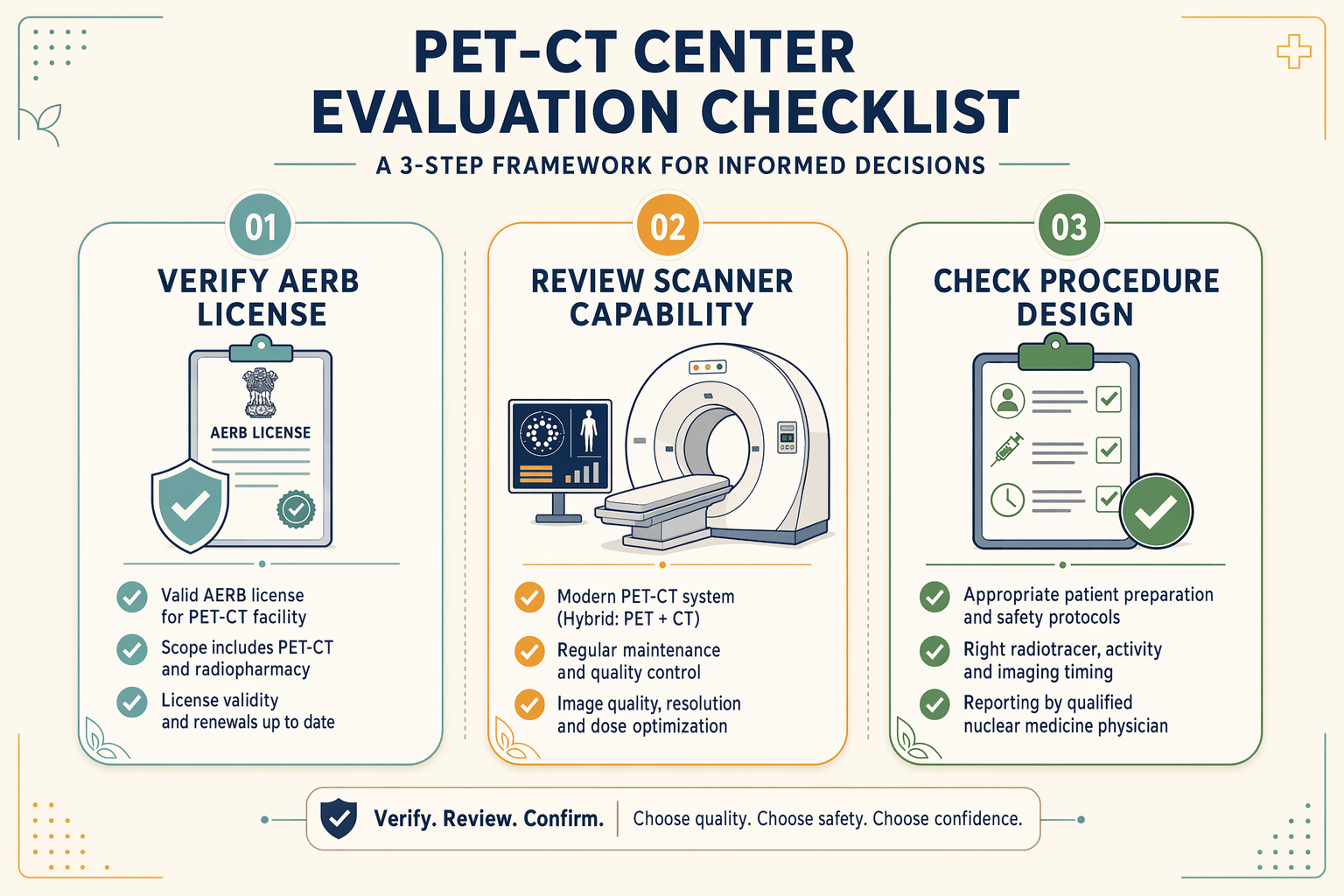
PET-CT pricing and quality vary significantly across Delhi NCR, driven not by brand reputation but by regulatory compliance, scanner capability, and procedure design. Patients searching for affordable PET-CT options often overlook the verification steps that separate licensed facilities from under-equipped providers. The three comparisons below provide a reproducible framework to evaluate any hospital before booking.
How to Verify AERB Licensing Before Booking
The Atomic Energy Regulatory Board (AERB) maintains the authoritative registry of licensed PET-CT centres across India. Every legal nuclear medicine facility must hold current AERB approval, a credential that confirms radiation safety protocols, trained personnel, and quality-control practices. Unlicensed centres cannot legally operate PET-CT scanners, yet booking platforms rarely surface this credential upfront.
Follow this three-step verification process before scheduling any scan:
- Download the current AERB PDF list of licensed PET-CT centres, updated as of May 20, 2026.
- Search the PDF for the hospital name exactly as it appears on the appointment booking page; check that the city and state match the facility location.
- Confirm no expiry date is listed for the license, absence of a termination date indicates current validity.
If the hospital does not appear in the AERB registry, request written proof of licensing before payment. Missing AERB approval is not a minor administrative gap, it signals that radiation safety and scanner calibration protocols may not meet national standards.
Tracer Variety and Clinical Indication, Why They Determine Cost
PET-CT scan pricing is not a single fixed rate; it varies by radiotracer type and the clinical indication your oncologist prescribes. FDG (fluorodeoxyglucose) is the standard tracer for most solid tumours, typically the lowest-cost option. Specialized tracers, DOTA for neuroendocrine cancers, PSMA for prostate cancer, Choline for recurrent prostate disease, require different radiopharmaceutical production protocols and command higher per-scan pricing.
When comparing hospital quotes, confirm which tracer is included in the stated price. A hospital advertising "affordable PET-CT at ₹12,000" may list FDG scans only; the same facility might charge ₹18,000, ₹25,000 for PSMA or DOTA imaging. Ask explicitly:
- Does your quoted price include the specific tracer my oncologist prescribed, or does it reflect FDG-only pricing?
- Are specialized tracers (PSMA, DOTA, Choline) available on-site, or will I be referred elsewhere?
- What is the typical cost difference between FDG and the tracer I need?
Centres that stock multiple tracers demonstrate broader diagnostic capability and reduce the risk of rebooking at a second facility if your clinical indication changes mid-treatment.
Questions to Ask About Outpatient Procedure Flow and Report Turnaround
Most PET-CT scans are outpatient procedures, you arrive fasted, receive the radiotracer injection, rest during the uptake period (typically 60 to 90 minutes), undergo the scan (15 to 30 minutes), and return home the same day. Report turnaround varies: some centres provide same-day or next-day reports, while others require 48 to 72 hours.
Before booking, clarify the procedure logistics and reporting timeline with these questions:
- Can I go home immediately after the scan, or does your facility require post-scan observation for certain patient profiles (elderly, comorbidities, specific tracers)?
- What are the fasting and hydration protocols, how many hours of fasting are required, and when should I resume eating?
- How long after the scan will the radiologist's report be available, and will it be delivered digitally or require in-person pickup?
- If my oncologist needs urgent results for treatment planning, can you prioritize reporting, and does that carry an additional fee?
Frail patients, those with multiple comorbidities, or cases requiring complex multi-tracer protocols may occasionally need admission for monitoring rather than same-day discharge. Confirm whether the centre has inpatient backup capacity or whether you would be redirected to a partnering hospital if complications arise.
With evaluation criteria established, the next question is which Delhi NCR hospitals combine advanced scanner technology with transparent tracer disclosure and accessibility.
Hospitals Offering Advanced Pet-Ct Scans in Delhi NCR, Technology and Access Overview
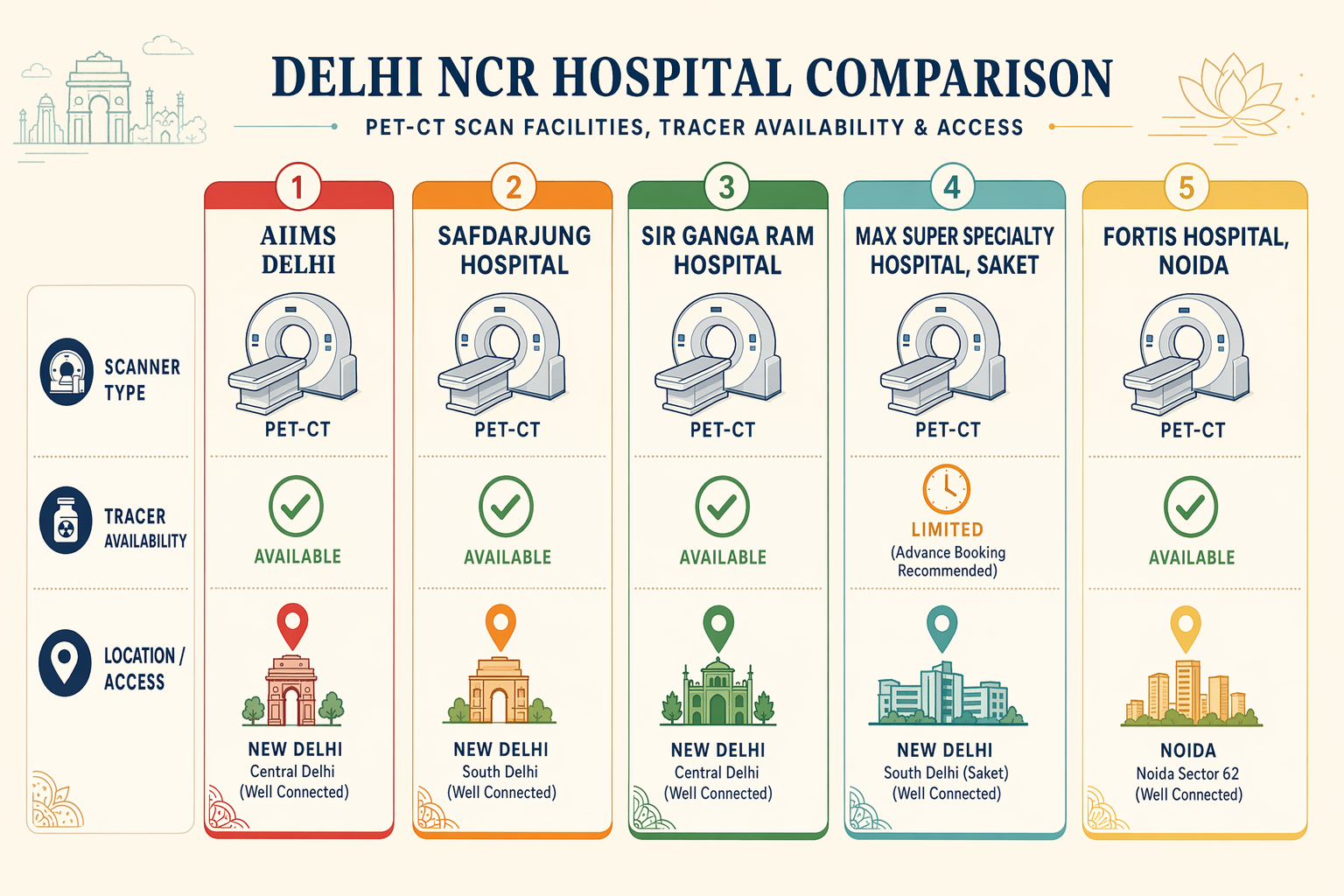
When evaluating PET-CT facilities in Delhi NCR, scanner generation, tracer availability, and access logistics separate routine imaging from specialized oncology centers. Below is a side-by-side comparison of five hospitals on scanner model and tracer options, followed by detailed reviews of each facility's strengths, limitations, and best-for scenarios.
Comparison Table: Scanner Technology and Tracer Options
| Hospital | Latest PET-CT Scanner Model | Slice Count / Scanner Generation | Tracer Variety |
|---|---|---|---|
| Andromeda Cancer Hospital | GE Discovery IQ 2 | Advanced digital detector, time-of-flight | FDG, DOTA, PSMA, Choline |
| Max Super Speciality Hospital, Saket | Not publicly disclosed | 17+ specialist doctors listed | FDG, specialty tracers (inquiry-based) |
| Fortis Memorial Research Institute, Gurugram | Not publicly disclosed | Multi-slice CT component | FDG, specialty tracers (inquiry-based) |
| Medanta - The Medicity, Gurugram | Not publicly disclosed | Multi-slice CT component | FDG, specialty tracers (inquiry-based) |
| Venkateshwar Hospital | Not publicly disclosed | Not publicly disclosed | FDG (standard) |
The table highlights scanner model transparency and tracer disclosure. Andromeda Cancer Hospital publishes scanner specifications (GE Discovery IQ 2) and lists four named tracers. Competitors list FDG as standard but do not disclose specialty tracer availability or scanner generation on public pages, requiring direct inquiry for prostate (PSMA) or neuroendocrine (DOTA) imaging.
Andromeda Cancer Hospital, GE Discovery IQ 2 and Specialized Pet-Ct Scans
Andromeda Cancer Hospital operates a GE Discovery IQ 2 PET-CT system, equipped with digital detectors and time-of-flight technology for improved lesion detection. The facility offers a range of specialized PET-CT scans https://andromedahospital.in/treatments/nuclear-medicine-pet-cttailored to detect specific types of cancer, including FDG (whole-body cancer staging), DOTA (neuroendocrine tumors), PSMA (prostate cancer), and Choline (prostate cancer recurrence). All scans are outpatient procedures, allowing patients to return home the same day.
Report turnaround is same-day or next-day, critical for treatment planning timelines. The hospital lists four named tracers, reducing guesswork for patients needing specialty imaging beyond standard FDG. AERB licensing status was not independently verified through the regulatory PDF but is assumed based on operational status.
Strengths: Named scanner model (GE Discovery IQ 2), explicit tracer list (FDG, DOTA, PSMA, Choline), outpatient procedure, rapid report turnaround (same-day or next-day).
Limitations: Pricing varies by scan type and clinical indication, requiring direct inquiry for cost estimates. No in-house cyclotron mentioned; tracer sourcing logistics not disclosed. Scanner upgrade timeline and comparative detector sensitivity metrics not published.
Best for: Patients needing specialty tracers (DOTA, PSMA, Choline) with transparent scanner specifications and next-day reporting. Suitable for prostate cancer staging and neuroendocrine tumor imaging where tracer availability is confirmed upfront.
Other Evaluated Hospitals: Scanner Models and Access
Max Super Speciality Hospital, Saket positions itself as a PET scan hospital in Delhi with 17+ specialist doctors but does not disclose scanner model or generation. Outpatient access and tracer variety beyond FDG require direct consultation. AERB licensing not independently verified.
Venkateshwar Hospital / Venkateshwar Cancer Hospital appears on regional oncology facility lists but does not publish PET-CT scanner details or tracer options on public pages. Outpatient vs admission policies not disclosed.
Fortis Memorial Research Institute, Gurugram and Medanta - The Medicity, Gurugram operate multi-specialty PET-CT services with multi-slice CT components. Scanner generation, tracer catalogs, and report turnaround timelines require inquiry. Both facilities handle high patient volumes; scheduling lead times may extend beyond next-day availability during peak periods.
Sarvodaya Cancer Institute, Faridabad describes a state-of-the-art PET-CT facility with BGO crystals, 3-ring technology, QClear image reconstruction, and 16-slice CT. The hospital lists extensive tracer options including FDG, Ga-68 PSMA, DOTA, FAPI, TRIVEHEXIN, PENTIXAFOR, EXENDIN, FDOPA, and cardiac/brain protocols. Two nuclear medicine specialists (22+ and 12+ years experience) staff the department. Outpatient flow and report turnaround not specified.
Yashoda Hospital, Ghaziabad lists PET/CT Scan under diagnostic lab services alongside endoscopic procedures, pathology, cath lab, gamma camera, and nuclear medicine. Scanner model, tracer variety, and access logistics not disclosed on the subspecialty page.
Scanner capability and tracer variety matter, but pricing structure determines practical affordability, understanding cost drivers separates value from false economy.
Understanding Pet-Ct Scan Costs, What Affects Pricing and Affordability
Why Pet-Ct Costs Vary by Tracer Type and Clinical Indication
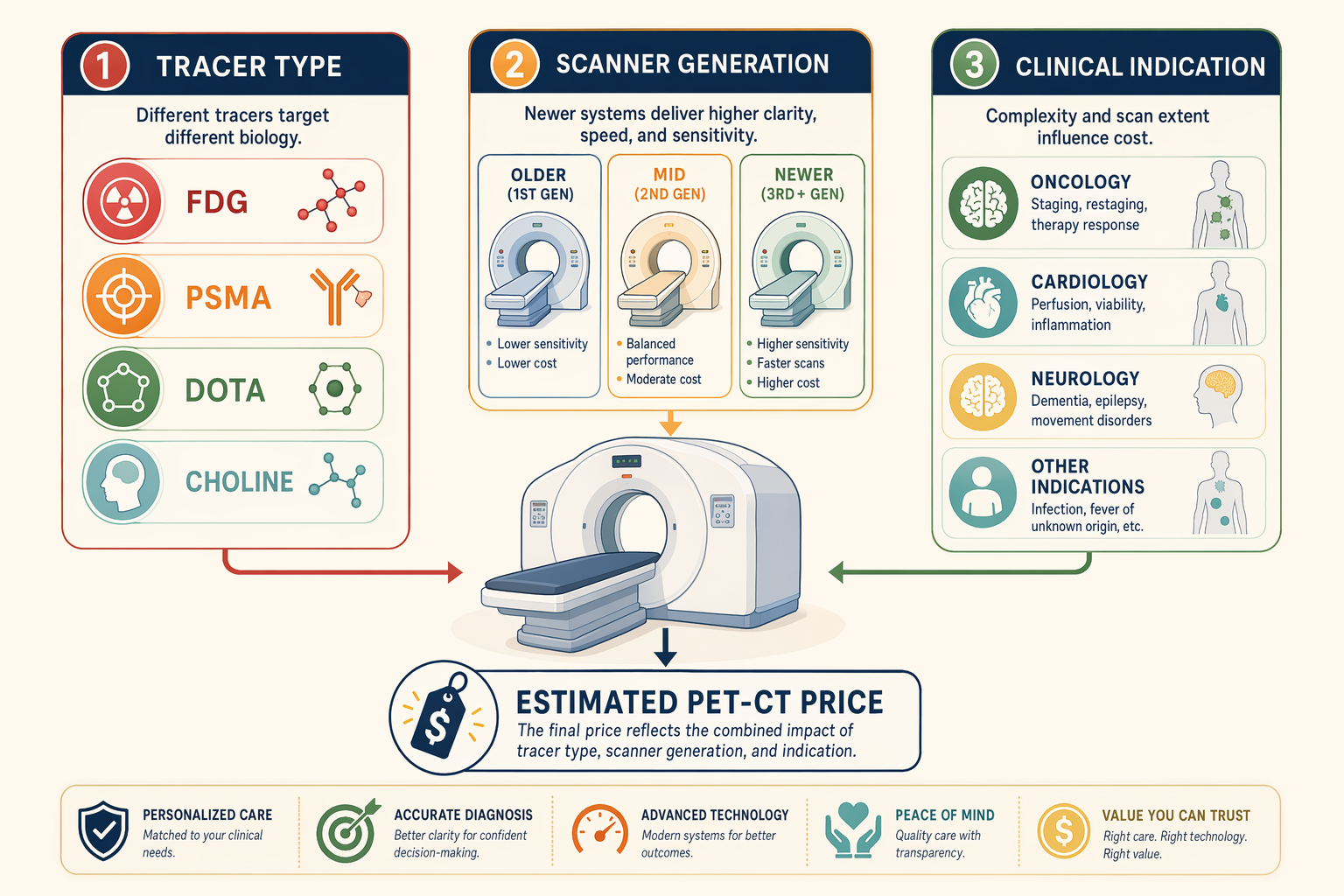
PET-CT scan pricing is not fixed, the cost depends on the tracer type (FDG, DOTA, PSMA, Choline) and the clinical indication being investigated. FDG tracers, used for general cancer staging, typically cost less because they are mass-produced daily with short half-lives. Specialized tracers like Ga-68 PSMA for prostate cancer or DOTA for neuroendocrine tumors require custom preparation runs, driving per-patient production costs higher. Scanner generation also matters: older crystal-detector systems deliver lower upfront scan fees but may require repeat imaging if lesion visibility is marginal, adding indirect cost. Clinical complexity, whole-body staging versus focal brain imaging versus cardiac viability assessment, determines scan duration, tracer dose, and radiologist interpretation time, all of which feed into the final invoice.
Cost Ranges Across Delhi NCR Hospitals
Real examples illustrate the range: Orbit Imaging advertises PET-CT scans at ₹9499, a price point that typically applies to standard FDG whole-body scans in high-volume centres. House Of Diagnostics offers a 10% inaugural discount at select Delhi locations, bringing baseline costs down for patients booking during the promotional window. At Andromeda Cancer Hospital, cost varies by clinical indication, patients receive a detailed breakdown during pre-scan consultation that specifies the tracer type and scan protocol being used. Sarvodaya and Yashoda centres publish broader ranges reflecting their multi-tracer portfolios; patients comparing quotes should confirm whether the cited price includes contrast, whether same-day reporting is standard, and which tracer the quote assumes.
Scanner Uptime, Maintenance Schedules, and Appointment Availability
Scanner uptime directly affects appointment availability and indirect patient costs. Centres running single-scanner operations may delay appointments by 7 to 10 days if the machine enters a scheduled maintenance window or unscheduled repair cycle, forcing patients to rebook or travel to alternate facilities. Multi-scanner centres or those with service-level agreements guaranteeing <24-hour repair windows reduce rebooking friction. Maintenance schedules also influence per-scan cost: centres that defer calibration or crystal-detector servicing may offer lower headline prices but risk image-quality variability that necessitates follow-up scans. Patients should ask about scanner age, last calibration date, and whether the centre operates backup equipment, factors that indirectly protect against delay-driven cost escalation when timely staging drives treatment decisions.
Price tags alone miss the full affordability picture, clinical value, coverage gaps, and hidden indirect costs require a broader evaluation framework.
How to Evaluate Affordability Beyond the Price Tag
When to Prioritize Scanner Generation Over Lowest Cost
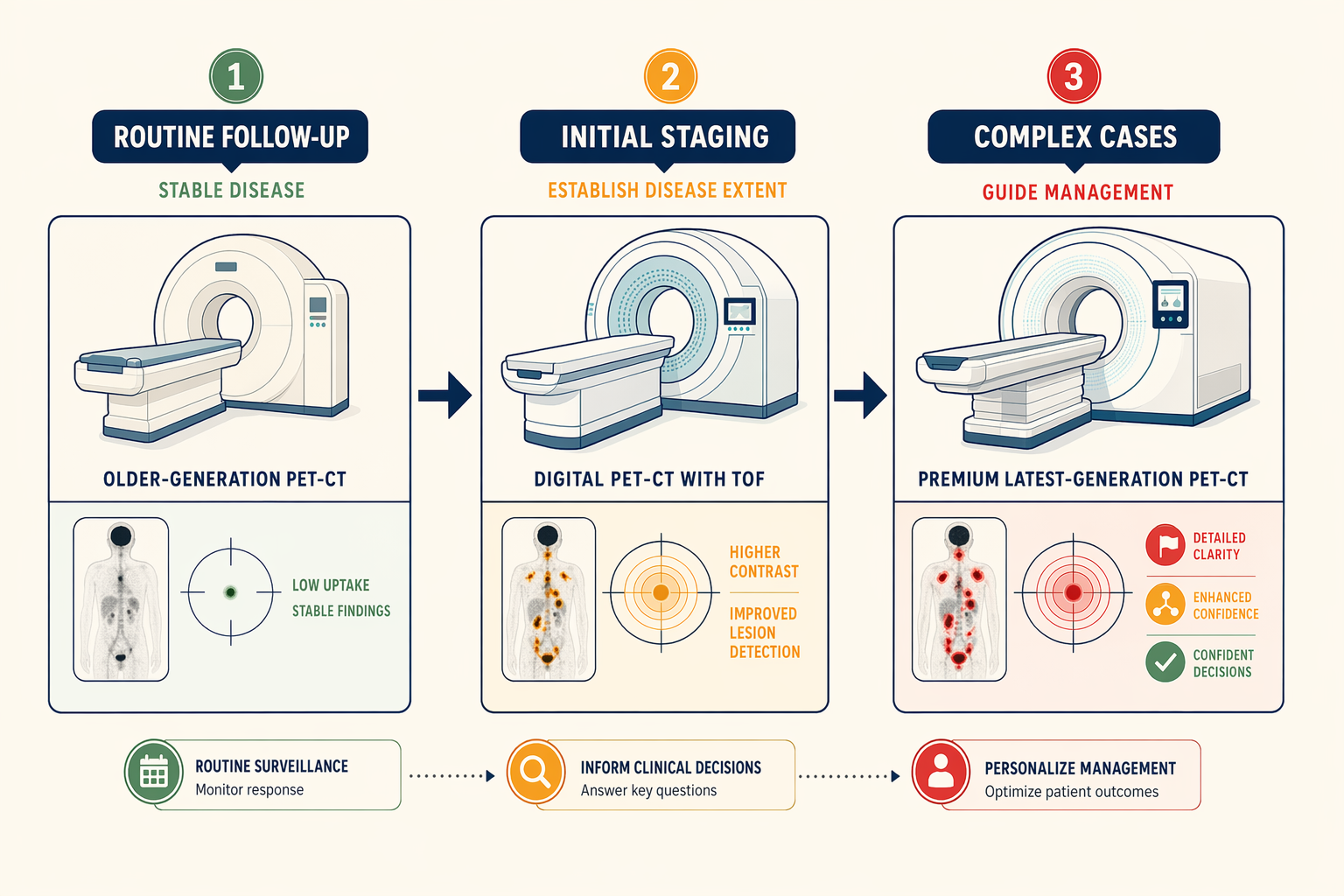
Not every PET-CT scan carries equal clinical value. A three-tier decision framework helps: for routine follow-up in stable disease, an older-generation scanner may suffice. For initial staging of newly diagnosed cancer, digital PET-CT with time-of-flight reconstruction delivers sharper lesion detection, worth the premium when treatment hinges on accurate nodal mapping. In complex cases, recurrence suspicion after normal CT, equivocal findings, or high-stakes surgical planning, the latest-generation scanner justified higher cost. A Reddit user asked whether PET-CT remained necessary after a normal CT; oncologists often order PET-CT precisely because metabolic imaging reveals disease CT misses. Prioritizing scanner technology over lowest price makes clinical sense when the scan directly changes management.
Insurance Coverage Patterns for Different Pet-Ct Tracer Types
Coverage data for specialized tracers, FDG, DOTA, PSMA, Choline, remains fragmented in Delhi NCR. Most insurers cover FDG for initial cancer staging under oncology protocols; coverage for PSMA (prostate) or DOTA (neuroendocrine) scans varies by policy. Before booking, verify three items with your insurer: whether your policy covers the specific tracer prescribed, whether pre-authorization is required, and what documentation (biopsy report, referral letter) must accompany the claim. Out-of-pocket costs for non-covered tracers can reach ₹15,000, ₹25,000; knowing coverage limits before the scan prevents billing surprises.
Cost Transparency and What 'Varies by Clinical Indication' Means
When a hospital states that cost "varies by clinical indication", as Andromeda Cancer Hospital does, it reflects legitimate pricing factors: tracer type (FDG vs PSMA vs Choline), scanner model (digital vs analog), and report turnaround. To get a specific quote, ask: Which tracer will be used?Which scanner generation?What is the standard versus urgent report timeline? Itemized answers transform vague 'varies' into concrete numbers. Reject quotes that remain opaque after these questions, transparency signals a facility accustomed to informed patients comparing value, not just price.
Making the Right Pet-Ct Choice in Delhi NCR
Hospitals with latest digital PET-CT scanners (GE Discovery IQ 2, Siemens Biograph Vision) deliver improved lesion detection through time-of-flight imaging but may have higher scan costs, routine follow-up cases may not require this precision, while initial staging and complex diagnoses justify the technology investment. AERB-licensed facilities with multiple tracer options (FDG, DOTA, PSMA, Choline) provide flexibility for different cancer types but require patients to verify tracer availability and lead times before booking, single-tracer centers may offer lower baseline costs but limit clinical indication coverage.
As digital PET-CT technology becomes standard across Delhi NCR by 2027, the decision criteria will shift from 'who has the latest scanner' to 'which facility offers the best tracer variety, report turnaround, and nuclear medicine specialist access', regulatory transparency through AERB licensing verification will remain the patient's first checkpoint.
Verify your chosen hospital's AERB licensing status using the PDF list, confirm tracer availability for your clinical indication, and consult with a nuclear medicine specialist to determine whether latest digital PET-CT is necessary for your case, or explore Andromeda Cancer Hospital's nuclear medicine services for a thorough evaluation.
Frequently Asked Questions
What is the difference between digital PET-CT and older PET-CT scanners?
Digital PET-CT systems use time-of-flight imaging, measuring picosecond-level differences in photon arrival times to pinpoint radiotracer activity origin points with greater precision. Older analog scanners lack this timing capability, resulting in lower lesion detection sensitivity and longer scan times for equivalent image quality.
How do I verify if a hospital's PET-CT center is licensed by AERB?
Visit the AERB PDF registry, search for your hospital's name, and verify the license validity date. AERB licensing confirms radiation safety protocols, trained personnel, and quality-control practices required for legal nuclear medicine facilities. Unlicensed centers cannot legally operate PET-CT equipment in India.
Why does PET-CT scan cost vary so much across hospitals?
PET-CT scan cost varies depending on type of scan (FDG, DOTA, PSMA, Choline) and clinical indication. FDG tracers used for general cancer staging cost less due to mass production, while specialized tracers like PSMA require custom synthesis. Scanner generation and clinical complexity also drive pricing differences.
Is PET-CT scan an outpatient procedure or does it require hospital admission?
PET-CT is typically an outpatient procedure with same-day discharge. However, frail patients, those with multiple comorbidities, or complex multi-tracer protocols may occasionally need admission for monitoring. Confirm whether the center has inpatient backup capacity or redirects to partnering hospitals if needed.
Can pregnant women undergo PET-CT scans?
Pregnant women should not undergo PET-CT unless absolutely necessary and approved after risk-benefit analysis. The radioactive tracer crosses the placental barrier, exposing the developing fetus to ionizing radiation. Clinical necessity must be weighed against fetal radiation risk by a nuclear medicine specialist.
How long does it take to get PET-CT scan reports?
Report turnaround typically occurs within 24 hours for routine cases. Complex cases requiring subspecialty nuclear medicine interpretation may take longer, depending on specialist availability. Facilities with dedicated nuclear medicine teams deliver faster turnaround than those relying on visiting consultants.
What should I ask the hospital about tracer availability before booking a PET-CT scan?
Ask: Which tracers do you stock regularly? What is the lead time for PSMA versus FDG? What are fasting requirements for my clinical indication? Tracer availability affects appointment scheduling, and specialized tracers like PSMA may require advance ordering. Confirm post-scan hydration protocols specific to your tracer type.
Sources
- PET Scan: Procedure Details and Results - Cleveland Clinic - my.clevelandclinic.org
- Positron emission tomography (PET) scan - Mayo Clinic - www.mayoclinic.org
- List of PET-CT Centres licensed by AERB (as on May 20, 2026) - www.aerb.gov.in (2026)
- PET Scan vs CT Scan – Which One Do I Need for Cancer? - www.pratikpatil.co.in
- PET CT Scan in Delhi ₹9499 - Orbit Imaging - orbitimaging.in
- PET Scan Cost at Centre Near Me | PET CT Scan Price | HOD - www.hod.care