

Breast cancer treatment in Haryana spans ₹2-5 lakh for early-stage cases, but affordability depends on government scheme empanelment, transparent pricing models, and multidisciplinary care coordination—not just comparing hospital names.
Key Takeaways
- Early-stage breast cancer treatment costs ₹2-5 lakh at empaneled facilities, with stage-based variability in surgery, radiation, and systemic therapy combinations
- PMJAY/Ayushman Bharat covers up to ₹5 lakh per family annually for cancer treatment, but empanelment verification before admission is critical to avoid out-of-pocket expenses
- Same-roof multidisciplinary oncology services reduce indirect costs—travel, lodging, lost wages—while improving protocol adherence through real-time coordination
- Haryana's 22 day-care cancer centres in 17 districts bring affordable chemotherapy closer to home for patients outside Gurgaon and Faridabad
- Treatment success depends on cancer stage, type, and biology—verify transparent outcome reporting and multidisciplinary team presence when evaluating hospitals
Breast cancer treatment costs in Haryana typically range from ₹2-5 lakh for early-stage cases at empaneled facilities offering transparent pricing, though final expenses vary significantly by cancer stage, tumor biology, and the combination of modalities required. Stage dictates treatment intensity more than hospital brand name—early-stage patients may avoid chemotherapy entirely, while advanced-stage disease demands multimodal protocols that extend duration and cost. Understanding stage-based cost drivers helps patients set realistic budgets and prioritize facilities with published, itemized pricing over those requiring sales conversations for estimates.
Early-Stage (I-II) Treatment Cost Ranges
Stage I-II breast cancer treatment centers on surgery—breast-conserving lumpectomy with sentinel node biopsy or mastectomy, followed by adjuvant radiation to sterilize the tumor bed. Early detection through mammography shifts patients into this lower-cost pathway before systemic therapy becomes necessary. Radiation therapy (typically 15-25 fractions) and short-course hormonal therapy (tamoxifen or aromatase inhibitors) add incremental cost but remain surgery-dominant. Facilities publishing stage-specific estimates (₹2-3.5 lakh for surgery + radiation in empaneled centers ) provide patients with actionable budgets; those quoting "contact for pricing" often layer undisclosed consultation and diagnostics fees that inflate final bills 30-50% beyond initial quotes.
Advanced-Stage (Iii-Iv) Multimodal Treatment Costs
Stage III-IV disease requires neoadjuvant chemotherapy (4-8 cycles), surgery, radiation, and extended systemic therapy, targeted agents for HER2-positive tumors, immunotherapy for triple-negative cases, driving treatment duration to 12-18 months. Chemotherapy regimens (anthracycline-taxane combinations) and targeted biologics (trastuzumab, pertuzumab) dominate cost, with single-cycle trastuzumab exceeding ₹80,000 in private facilities. Multi-cycle protocols and supportive medications (anti-emetics, growth factors) compound expenses. Transparent centers itemize drug costs separately from administration fees; opaque facilities bundle charges and resist releasing line-item breakdowns until after initial consultations, trapping patients in sunk-cost decision-making.
Why Stage Dictates Cost More Than Hospital Name
Tumor size, nodal involvement, and receptor status, not brand prestige, determine protocol complexity. A 1.5 cm ER-positive, node-negative tumor requires surgery and hormonal therapy (₹2-2.5 lakh); a 4 cm triple-negative tumor with nodal spread demands neoadjuvant chemotherapy, surgery, radiation, and adjuvant immunotherapy (₹6-8 lakh+). Hospital infrastructure (on-site PET-CT, daycare chemo suites, same-roof radiation) reduces logistical costs and travel burden but does not override stage-driven treatment intensity. Patients comparing costs should request stage-specific, receptor-matched estimates, generic "breast cancer treatment" quotes obscure the 3-4× cost differential between early and advanced disease.
Understanding stage-based costs is only the first step, breaking down the individual components reveals where expenses accumulate and which treatments drive total outlay.
Key Cost Drivers: Surgery, Radiation, and Systemic Therapy
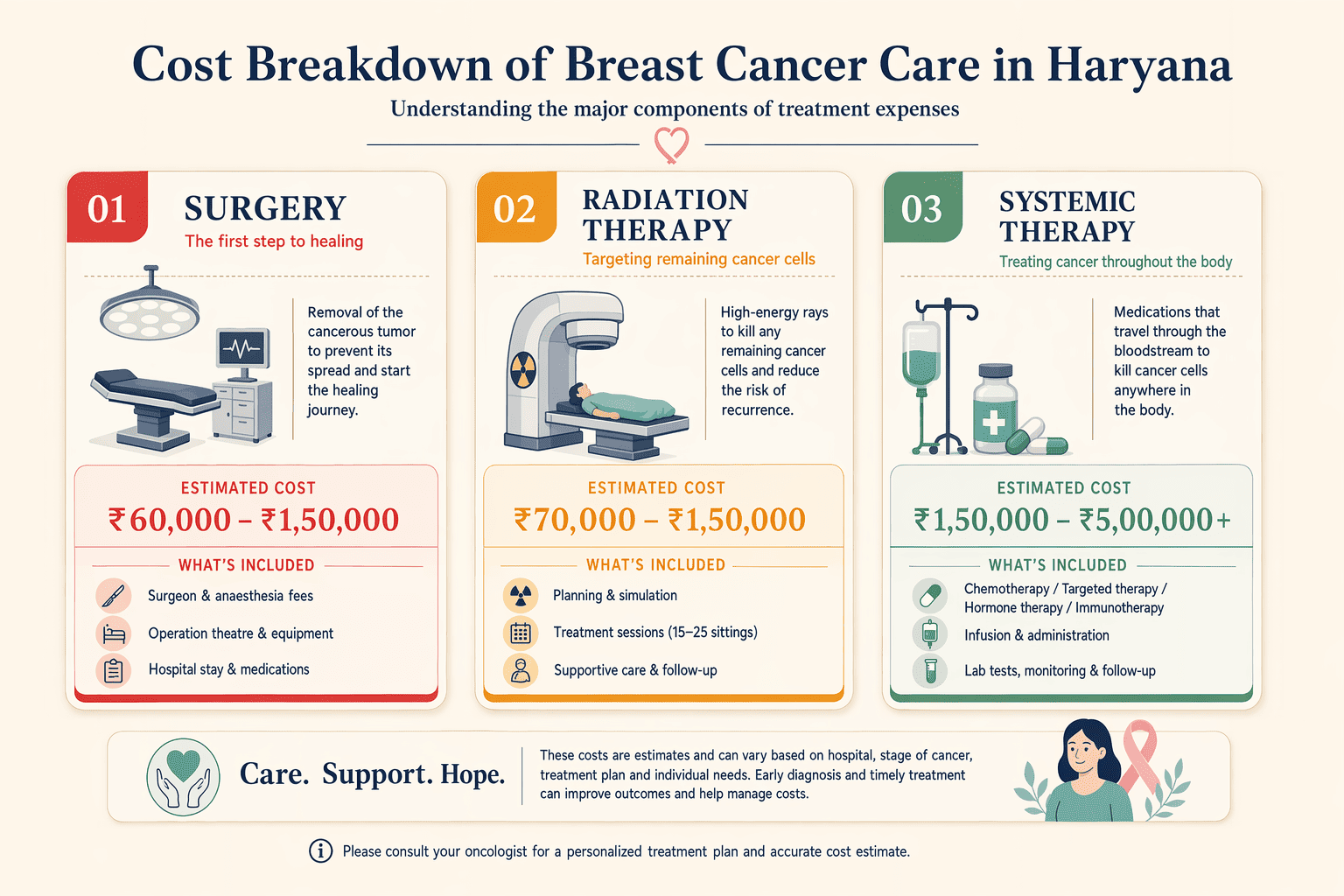
Breast cancer treatment costs in Haryana vary significantly across three major components. Understanding where budgets are allocated helps patients and families plan for care without unexpected financial strain. Early detection through mammography can shift the balance toward surgical candidates and reduce chemotherapy cycles, lowering overall systemic therapy expenses.
Surgical Costs: Lumpectomy Vs. Mastectomy
Surgical expenses depend on whether the patient undergoes breast-conserving surgery or complete removal. Lumpectomy typically costs ₹80,000, ₹1.5 lakhs, while mastectomy ranges from ₹1 lakh, ₹2.5 lakhs. Reconstruction surgery adds ₹1.5 lakh, ₹3.5 lakhs, and sentinel lymph node biopsy contributes ₹70,000, ₹1.2 lakhs. Choosing surgery-first versus neoadjuvant chemotherapy affects both the surgical complexity and the total cost, neoadjuvant protocols may downstage tumors, enabling breast conservation and reducing reconstruction needs.
Radiation Therapy: Conventional Vs. Modern Techniques
Radiation modality influences both cost and treatment duration. Conventional 3D conformal radiotherapy (3D-CRT) typically requires 25 to 30 sessions over 5 to 6 weeks, while intensity-modulated radiotherapy (IMRT) delivers more precise dose distribution with fewer side effects but at higher per-session costs. Hypofractionated regimens reduce treatment days to 15 to 20, lowering indirect expenses like travel and lost wages, though equipment fees remain higher for advanced techniques.
Systemic Therapy: Chemotherapy, Hormonal, and Targeted Agents
Systemic therapy costs vary by treatment type, duration, and prescribed medications, no fixed pricing can be promised. Anthracycline-taxane chemotherapy regimens span 4 to 6 cycles, with each cycle costing mid-five figures depending on the hospital and drug brand. Anti-HER2 agents like trastuzumab add substantial expense over 12 months. Hormonal therapies (tamoxifen, aromatase inhibitors) are lower-cost but extend 5 to 10 years. Treatment sequencing decisions, surgery-first versus neoadjuvant chemotherapy, affect both the number of cycles and the final expenditure, because neoadjuvant protocols may reduce tumor burden and enable less extensive surgery.
Once you understand cost drivers, the next question becomes whether lower-priced facilities compromise clinical outcomes, quality indicators separate affordable care from substandard care.
Evaluating Affordability Vs. Success Rates: Quality Indicators That Matter
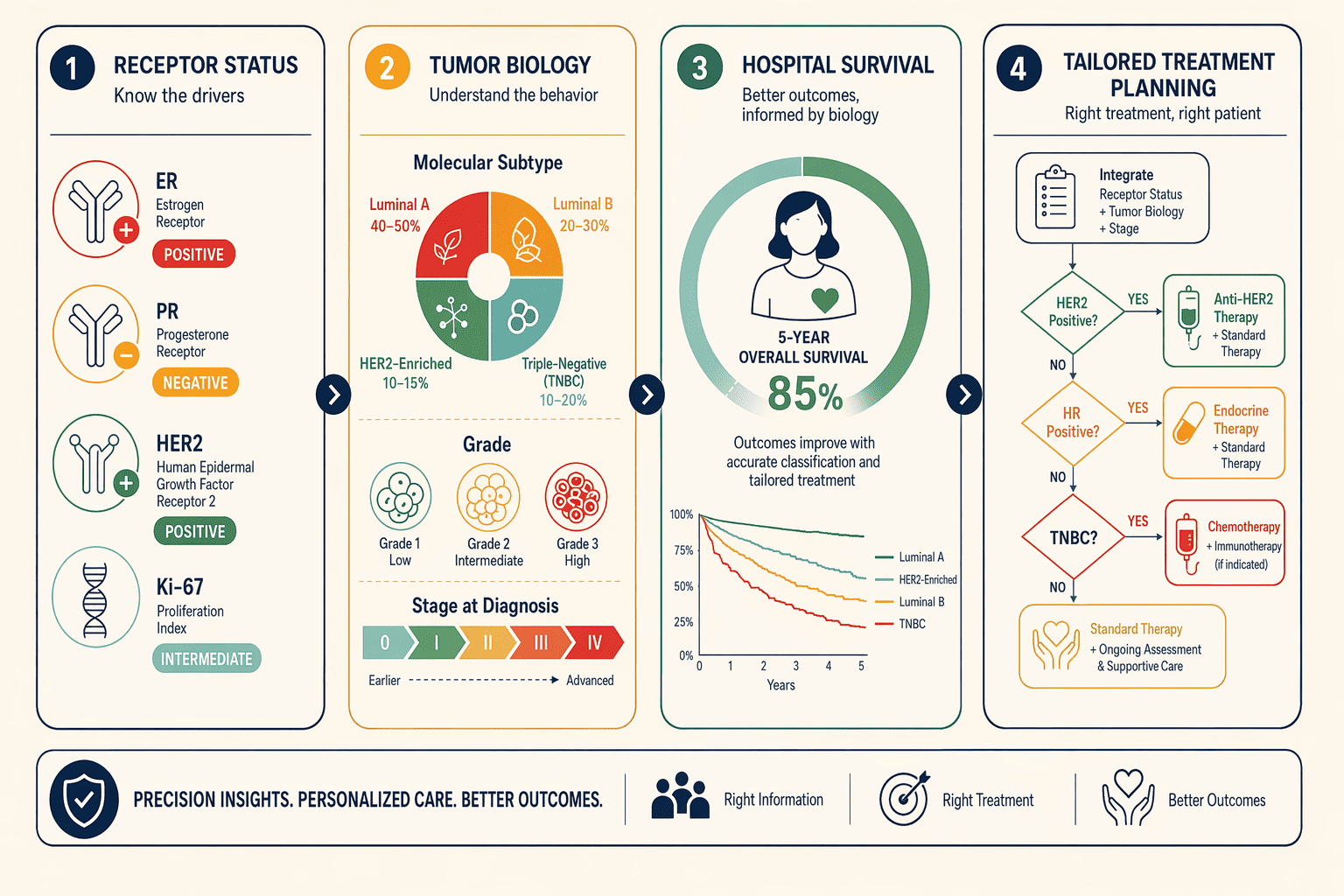
Low-cost treatment loses its value when clinical outcomes suffer. But published success rates can mislead patients if hospitals report aggregate survival figures without stratifying by cancer stage, tumor biology, and receptor status. A facility's infrastructure matters less than whether its treatment team tailors therapy to individual disease characteristics.
Why Success Rates Depend on Stage and Biology, Not Just Facility
Treatment success depends on cancer stage, type, and biology, not just facility features. A hospital reporting "85% survival" without specifying whether that figure reflects Stage I hormone-receptor-positive cases or Stage III triple-negative disease provides no meaningful decision-making data. Patients should ask for stage-specific, receptor-stratified outcome data rather than accepting facility-wide averages.
Multidisciplinary Team Coordination as a Quality Proxy
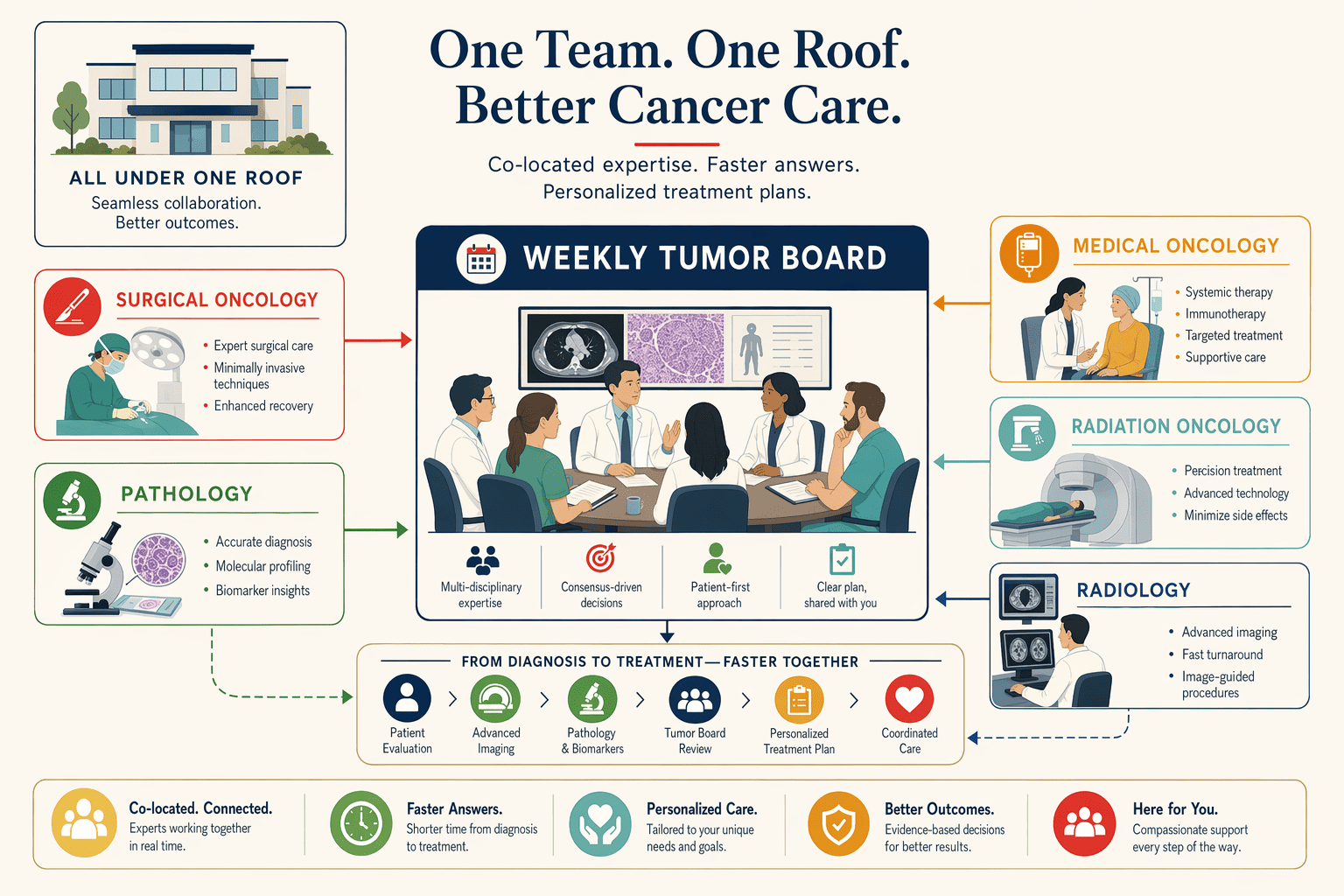
Same-roof coordination of surgical, medical, and radiation oncology reduces care fragmentation and improves protocol adherence. Andromeda Cancer Hospital personalizes breast cancer treatment through multidisciplinary team discussions based on international management guidelines. When specialists review cases together weekly, discussing tumor biology, patient comorbidities, and evidence-based pathways, treatment plans reflect coordinated expertise rather than siloed department recommendations. This collaborative model reduces delays between diagnosis and treatment initiation, a known survival determinant.
What to Ask: Success-Rate Transparency Checklist
Before admission, patients should verify that hospitals disclose stage-specific survival data, complication rates, and outcome reporting timelines. Ask:
- Do you publish stage-stratified survival rates for my cancer type, or only facility-wide aggregates?
- What is your average time from diagnostic mammogram to treatment initiation? (screening mammogram results can take a few hours to 10 days; delays beyond two weeks signal coordination gaps)
- How often does your tumor board meet, and which specialists participate in treatment planning?
- What percentage of patients receive surgery, chemotherapy, and radiation at this facility versus being referred elsewhere mid-treatment?
Hospitals that cannot answer these questions, or that deflect with vague "world-class care" claims, may lack the outcome-tracking infrastructure necessary for transparent quality assessment. Read more about common challenges in Indian breast cancer care delivery in our systemic care gaps analysis.
Quality indicators matter only if you can access them financially, government schemes transform treatment feasibility for middle-income families, but navigation requires systematic verification.
Government Schemes and Financial Navigation: Pmjay, Ayushman Bharat, and Hospital Empanelment
Pmjay and Ayushman Bharat Coverage for Breast Cancer
Pradhan Mantri Jan Arogya Yojana (PMJAY), commonly referred to as Ayushman Bharat, provides coverage of up to ₹5 lakh per family per year for secondary and tertiary hospitalization across India. For Haryana residents, this coverage extends to breast cancer diagnosis and treatment, including chemotherapy, surgery, radiation therapy, and hospital stays. The scheme operates on a cashless basis at empanelled hospitals, meaning eligible patients do not pay upfront for covered procedures.
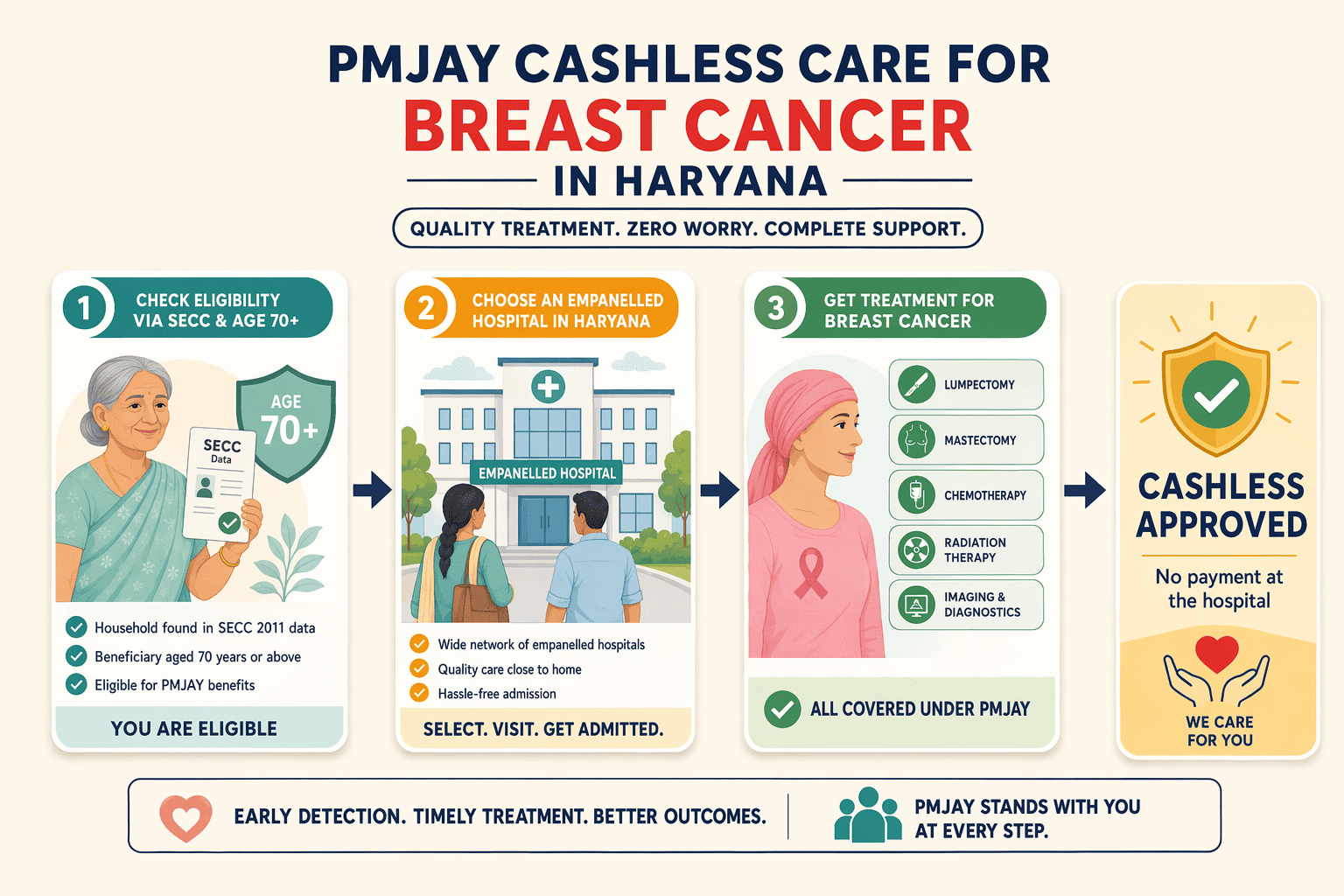
Eligibility is primarily determined by Socio-Economic Caste Census (SECC) data, though coverage has expanded to include senior citizens aged 70 and above regardless of income. Covered treatments typically include lumpectomy, mastectomy, adjuvant chemotherapy regimens, radiation therapy cycles, and associated diagnostic imaging. Patients should verify that their planned treatment package appears on the PMJAY Health Benefit Package (HBP) list before admission, as not all investigational or emerging therapies may be included.
Empanelment Verification: Step-By-Step Before Admission
Empanelment status changes periodically, and not every hospital offering cancer care accepts PMJAY claims. Patients must verify a hospital's current empanelment before booking treatment to avoid out-of-pocket expenses. The Haryana state portal maintains an up-to-date district-wise list.
- Visit the official Ayushman Bharat Haryana portal at ayushmanbharat.haryana.gov.in/pm-jay.
- Select your district from the list (e.g., Ambala, Faridabad, Gurugram, Jhajjar, Sonipat).
- Download the district-specific PDF dated 16th Dec 2025 onwards to see empanelled hospitals, their addresses, and contact numbers.
- Cross-check the hospital's name and empanelment date; facilities added or removed mid-year may not appear in older lists.
- Call the hospital's Ayushman Mitra or patient coordinator to confirm current acceptance of PMJAY beneficiaries and the specific breast cancer packages covered.
- Obtain a written confirmation or screenshot of the empanelment record before scheduling admission or surgical procedures.
Fast diagnostic turnaround also matters when coordinating PMJAY approvals. Most screening mammogram results are available within 24 to 72 hours, and many imaging centers now deliver results the same day or the next business day. Prompt imaging reports allow patients to complete the pre-authorization paperwork required by PMJAY before treatment begins, reducing delays between diagnosis and surgery or chemotherapy initiation.
CGHS and Other Government Scheme Options
Central Government Health Scheme (CGHS) beneficiaries, primarily central government employees and pensioners, can access cancer treatment at CGHS-empanelled hospitals in Haryana. Beyond PMJAY and CGHS, the state operates the Mukhymantri Muft Ilaaj Yojana (MMIY), which offers free OPD services, free drug supply, and free indoor services for residents, covering surgeries under a prescribed package list. Additionally, the Dr. Ambedkar Medical Aid Scheme provides up to ₹1.75 lakh for cancer surgery, chemotherapy, or radiotherapy for Scheduled Caste and Scheduled Tribe patients with annual family incomes not exceeding ₹1 lakh.
Haryana has expanded local access to affordable chemotherapy by inaugurating 22 day-care cancer centres in 17 districts, now operational across all 22 districts of the state. These centres function under a 'Hub and Spoke' model, with facilities such as PGIMS Rohtak, National Cancer Institute Jhajjar, Sarvodaya Hospital Faridabad, and Atal Cancer Care Centre Ambala Cantonment serving as hubs that provide expert guidance to district hospitals. The initiative aims to save patients up to ₹3.3 lakh per patient by reducing travel, accommodation, and related expenses, and by offering free chemotherapy, follow-up treatment, palliative and supportive care, and symptom management services within patients' own districts.
Government coverage unlocks affordability, but care delivery models determine whether that coverage translates into successful outcomes without hidden costs.
Multidisciplinary Care Models: Why Same-Roof Coordination Impacts Outcomes and Costs
Same-Roof Oncology Services: Surgical, Medical, and Radiation Under One Roof
Co-located oncology departments eliminate patient travel between facilities for successive treatments. Andromeda Cancer Hospital, for instance, integrates surgical, medical, and radiation oncology plus pathology and radiology on site, enabling weekly tumor boards to review PET-CT, MRI, and IHC results the same week. Streamlined diagnostic-to-treatment pathways reduce time from screening to care initiation; the NHS model demonstrates results delivered within two weeks and further tests scheduled with minimal delay. Same-roof coordination also improves protocol adherence, oncoplastic breast surgeons, medical oncologists, radiation oncologists, radiologists, pathologists, and palliative care specialists confer in person rather than relying on mailed reports or phone tag.
Fragmented Care: Hidden Costs of Multi-Hospital Coordination
When surgery, chemotherapy, and radiation occur at separate facilities, patients incur travel fares, lodging for out-of-town caregivers during multi-week radiation schedules, and lost wages from repeated absences. Care transitions introduce report-transfer delays and risk of miscommunication between departments that do not share electronic records. Quality of care varies widely according to treatment location; most patients receive inadequate and inappropriate treatment due to lack of high-quality infrastructure and, above all, financial resources. The hidden-cost itemization, transport, accommodation, caregiver wages, often exceeds the direct medical-fee savings offered by lower-tier facilities, shifting the burden from institutional budgets to household finances.
Clinical Outcomes: Does Coordination Improve Survival?
Evidence from centers providing multimodality protocol-based treatment shows improved adherence when oncologists confer in real time rather than sequentially. Early diagnosis through coordinated imaging and biopsy pathways may make cancer easier to treat and reduce the likelihood of mastectomy. Same-roof facilities lower complication rates by enabling immediate consultation when surgical findings require adjusted chemotherapy regimens; fragmented models defer those adjustments until the next scheduled appointment, extending time to optimal therapy and potentially affecting stage-specific survival.
Multidisciplinary coordination principles come to life in facilities that operationalize transparent pricing and same-roof services, concrete examples show how accessible models function in practice.
Andromeda Cancer Hospital's Accessible Pricing Model: Transparent Cost Framework
₹2-5 Lakh Accessible Range: What's Included
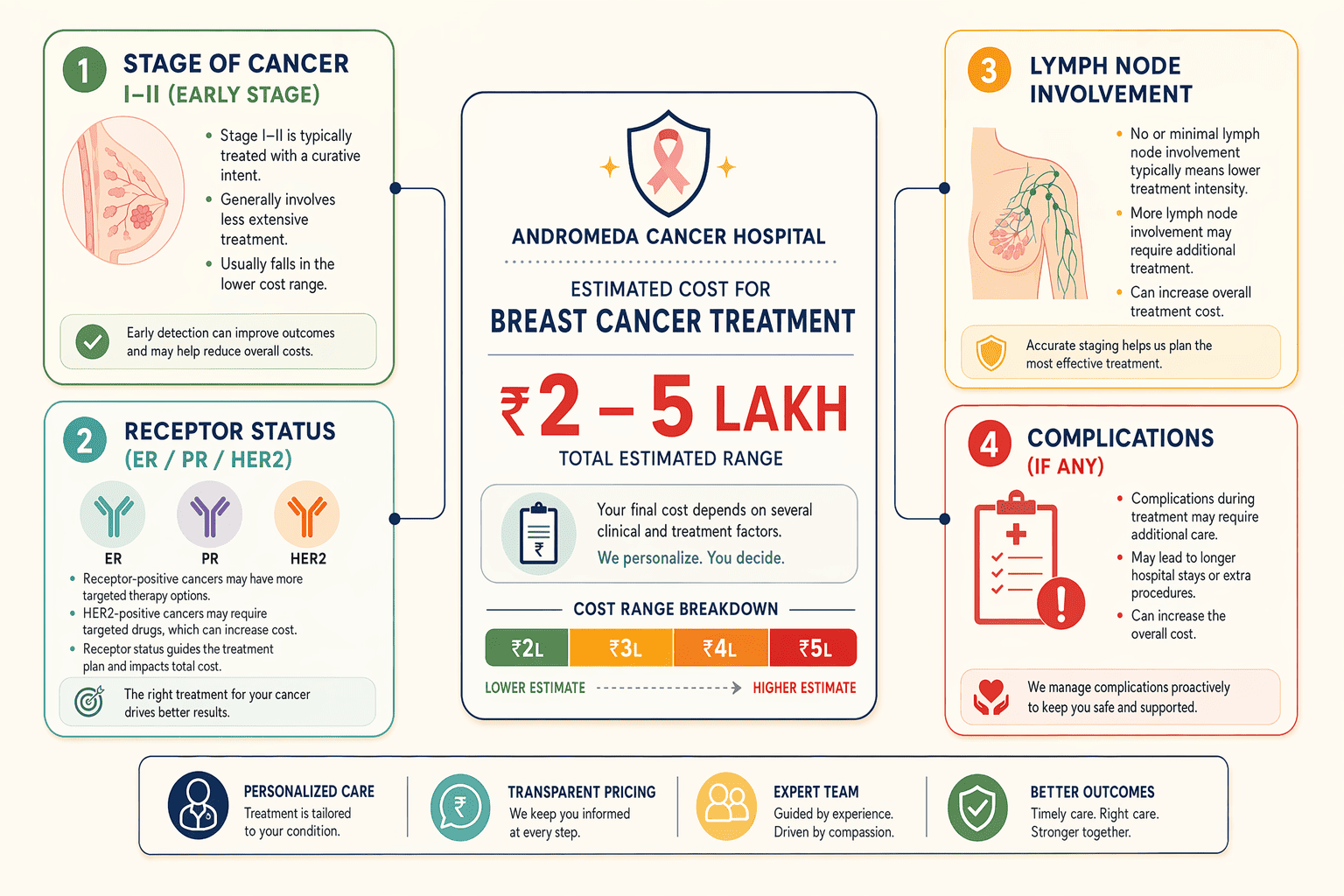
Andromeda Cancer Hospital's estimated cost range is ₹2-5 lakh, described as an accessible pricing model. This range covers stage I-II breast cancer treatment protocols including surgery (lumpectomy or mastectomy), radiation, and systemic therapy when indicated. Final costs vary by receptor status (ER/PR/HER2), lymph node involvement, and whether complications arise. Max Healthcare and Apollo Cancer Centres position similar multidisciplinary care in Delhi-NCR; Andromeda competes as one transparent-pricing option among several.
Pre-Consultation Cost Breakdown Process
At Andromeda Cancer Hospital, cost varies by clinical indication; patients receive a detailed breakdown during pre-consultation that specifies the treatment protocol being used. This itemization lists surgery, radiation sessions, systemic therapy cycles, and diagnostic imaging before admission, transparency that helps families plan financially. Diagnostic quality affects cost predictability: MQSA-compliant mammography facilities deliver standardized imaging, reducing diagnostic re-work and downstream costs.
Government Scheme Acceptance and Empanelment Status
Patients should confirm that oncology services appear in the hospital's empanelment certificate; some hospitals are empanelled for general care only. Andromeda Cancer Hospital provides verification support to help families check PMJAY/Ayushman Bharat/CGHS coverage before treatment. This pre-admission verification reduces financial surprises and ensures eligible families access government-funded care.
Transparent pricing models work best when matched to regional access patterns, Haryana's cancer care infrastructure varies significantly between metropolitan hubs and district-level facilities.
Regional Access Considerations: Gurgaon, Faridabad, and Beyond
Gurgaon and Faridabad: NCR Accessibility and Cost
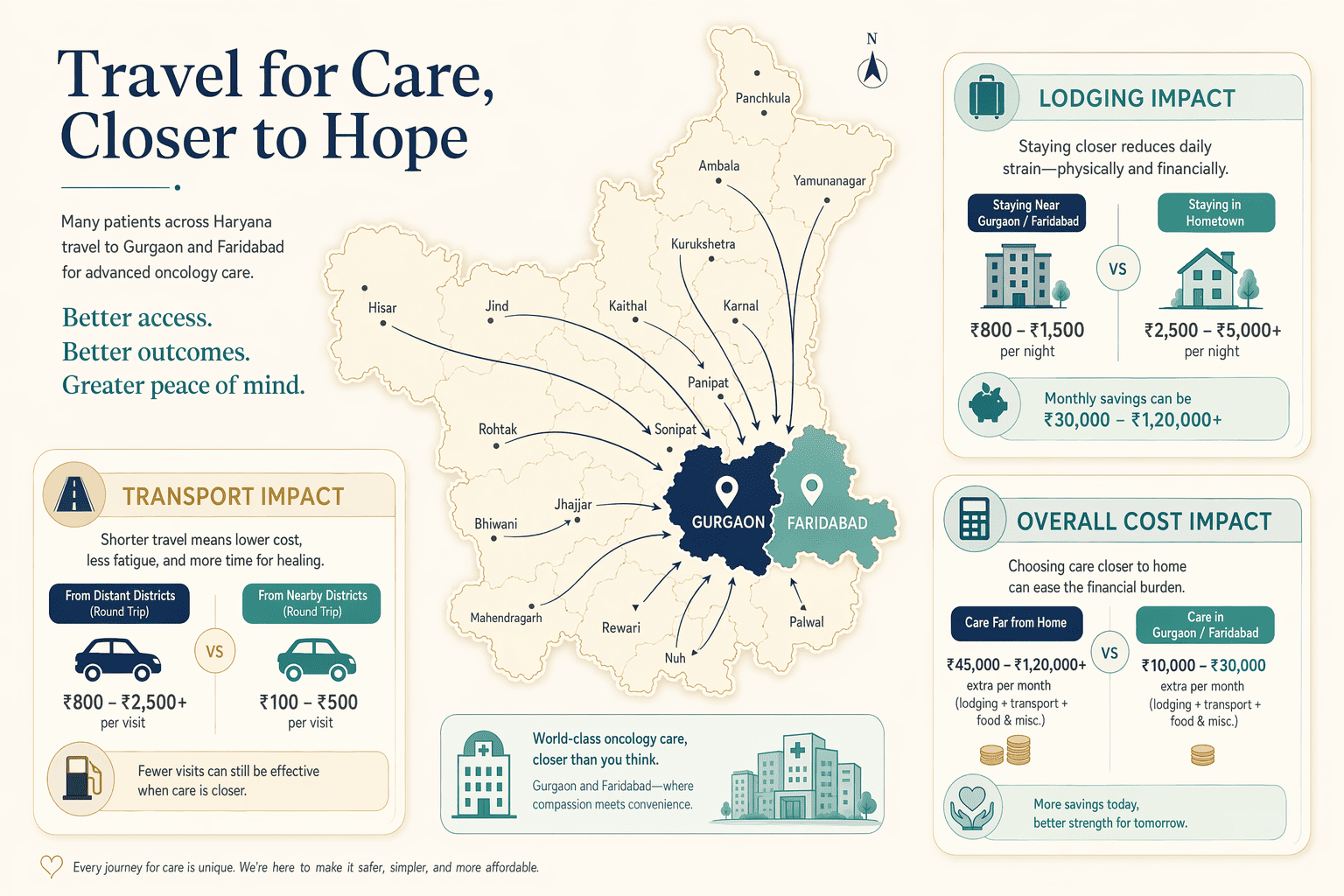
Gurgaon and Faridabad have many empaneled hospitals that offer same-roof multidisciplinary care, including surgery, radiation, and medical oncology, all under one referral. Travel from other Haryana districts to these NCR hubs adds lodging and transport costs. Still, early-stage breast cancer surgery often justifies the trip when oncoplastic reconstruction and integrated tumor boards are available. Patients compare facility reviews and consultation fees on aggregator platforms before committing to the journey.
Day-Care Cancer Centres Across Haryana Districts
Haryana inaugurated 22 day-care cancer centres in 17 districts, now operational in all 22 districts. These centres provide chemotherapy, follow-up treatment, and palliative care closer to home, potentially saving patients up to ₹3.3 lakh in travel and accommodation expenses. The Hub and Spoke model links district facilities to hubs at PGIMS Rohtak, National Cancer Institute Jhajjar, Sarvodaya Hospital Faridabad, and Atal Cancer Care Centre Ambala Cantonment.
When to Travel Vs. When to Stay Local
Early-stage breast cancer requiring oncoplastic surgery and radiation planning favors same-roof facilities in Gurgaon or Faridabad, coordination reduces treatment delays. Routine chemotherapy cycles, follow-up imaging, and symptom management fit better at local day-care centres, patients avoid repeated overnight stays. Haryana's district-level screening drives, such as the Rohtak mammography initiative that identified 13 breast cancer cases, support early detection close to home, reducing the need for late-stage travel.
Regional infrastructure shapes access, but the final decision requires a systematic checklist that integrates clinical quality, financial protection, and logistical feasibility into one framework.
Making the Decision: Selection Checklist for Haryana Patients
Pre-Treatment Verification: 5-Step Checklist
Before committing to treatment, verify these five criteria to protect both clinical outcomes and financial stability:
- Empanelment verification: Confirm the hospital is empanelled under your government health scheme, Ayushman Bharat PMJAY, Chirayu Haryana, or district-level programs, before admission. Ask for written confirmation and the claim-processing timeline.
- Cost breakdown request: Obtain an itemized estimate specifying the treatment protocol, chemotherapy regimen, radiation sessions, and surgical approach during your pre-consultation. Vague "package" quotes often exclude critical add-ons.
- Multidisciplinary team confirmation: Ask whether a tumour board, including surgical oncologists, medical oncologists, radiation oncologists, radiologists, and pathologists, reviews your case. Single-specialist plans may miss better-tolerated alternatives.
- Success-rate transparency: Request stage-specific survival data and complication rates for your breast cancer subtype. Hospitals confident in their outcomes publish this data; refusal to disclose is a red flag.
- Hidden-cost assessment: Beyond direct medical expenses, budget for travel, lodging, caregiver wages, and lost income. A prospective study found these indirect costs significantly increase financial toxicity, yet few hospitals include them in upfront estimates.
Questions to Ask During Hospital Consultation
- What is your five-year overall survival rate for my stage and receptor status?
- What percentage of your patients experience Grade 3+ complications after this surgery or chemotherapy regimen?
- Why is this treatment sequence recommended over alternative protocols?
- Do you offer caregiver training or psychosocial support during and after treatment?
Red Flags: When to Seek a Second Opinion
- Care fragmentation: Diagnostic scans, chemotherapy, and surgery are performed at separate facilities with no shared medical records.
- Vague cost estimates: The hospital cannot provide line-item pricing or claims "final cost depends on complications."
- Missing multidisciplinary coordination: No tumour board review is mentioned, or treatment decisions rest with a single clinician.
- Pressure to start immediately: You are discouraged from obtaining a second opinion or waiting for biopsy/molecular testing results before committing to mastectomy or neoadjuvant therapy.
Conclusion
Same-roof multidisciplinary facilities reduce indirect costs, travel, lodging, and caregiver wages, but may carry higher direct medical costs than fragmented care models; evaluate total cost including hidden expenses. Gurgaon and Faridabad hospitals offer concentrated oncology expertise and empanelment options, but Haryana's 22 day-care cancer centres bring affordable chemotherapy closer to home for routine systemic therapy; match facility choice to treatment phase.
As Haryana expands district-level cancer infrastructure through 22 day-care centres and doorstep mammography drives, middle-income families will gain more decentralized treatment options, but government scheme empanelment verification and transparent cost breakdowns remain critical for navigating affordability.
Request a pre-consultation cost breakdown from Andromeda Cancer Hospital to see itemized treatment protocol pricing, verify PMJAY/Ayushman Bharat empanelment status, and compare total cost, direct plus indirect, before committing to treatment.
Frequently Asked Questions
What is the most affordable breast cancer treatment cost in Haryana for early-stage cases?
Accessible pricing models at empaneled multidisciplinary facilities start at ₹2-5 lakh for early-stage breast cancer in Haryana. Final costs vary significantly by cancer stage, tumor biology (hormone-receptor status, HER2 expression), and the combination of surgery, radiation, and systemic therapy required.
Does PMJAY cover breast cancer treatment in Haryana hospitals?
PMJAY (Ayushman Bharat) provides up to ₹5 lakh per family per year for cancer treatment in India, including surgery, chemotherapy, and radiation. Coverage extends to Haryana residents, but empanelment status must be verified before admission to avoid out-of-pocket expenses.
How do I verify if a Haryana hospital accepts Ayushman Bharat for breast cancer treatment?
Visit the Ayushman Bharat Haryana portal (ayushmanbharat.haryana.gov.in/pm-jay) and enter the hospital name or ROHINI ID to confirm current empanelment status. Check that breast cancer treatment packages appear in the empanelment certificate, some hospitals are empaneled for general care only.
What hidden costs should I budget for beyond the hospital bill for breast cancer treatment?
When treatment occurs at separate facilities, patients incur travel fares, lodging for out-of-town caregivers during multi-week radiation schedules, and lost wages from repeated absences. Middle-income families often underestimate these indirect costs, which can add 20-40% to total treatment expenses.
Do success rates for breast cancer treatment vary by hospital in Haryana?
Treatment success depends primarily on cancer stage, type, and biology, not just facility features. Hospitals reporting survival rates without specifying whether figures reflect Stage I hormone-receptor-positive cases or Stage III triple-negative disease provide misleading comparisons; multidisciplinary coordination affects outcomes, but stage remains the primary driver.
What is the advantage of same-roof oncology services for breast cancer treatment?
Same-roof surgical, medical, and radiation oncology eliminates patient travel between facilities, enables real-time tumor boards for treatment protocol adjustments, and improves protocol adherence. This coordination also reduces indirect costs, lodging, lost wages, and caregiver support that accumulate when care is fragmented across multiple locations.
How many day-care cancer centres are available in Haryana for affordable chemotherapy?
Haryana has 22 day-care cancer centres operational across all 22 districts, inaugurated in 17 districts under a Hub and Spoke model. These centres reduce travel burden for systemic therapy and lower indirect costs for patients outside Gurgaon and Faridabad.
Sources
- Stage, duration and cost of Breast Cancer treatment in India - researchgate.net (2023)
- Cost analysis of breast cancer: a comparison between private and public hospitals in Iran - pmc.ncbi.nlm.nih.gov
- Mammograms - NCI - cancer.gov
- Breast Cancer Treatment Cost in India 2026 | Surgery, Chemo - shifamhealth.com (2026)
- Getting Mammogram and Other Test Results - Breast Cancer.org - breastcancer.org (2026)
- AB-PMJAY Empanelled Hospitals | Ayushman Bharat, Haryana | India - ayushmanbharat.haryana.gov.in
- List of Funding Schemes for Cancer Treatments in Haryana - www.1mg.com
- Affordable chemotherapy reaches 22 of Haryana's 23 districts; CM unveils 22 day-care cancer centres in 17 districts | Chandigarh News - The Times of India - timesofindia.indiatimes.com
- How Long Does It Take to Get Mammography Results? - raddoctor.net
- Breast Cancer Care in India: The Current Scenario and the Challenges for the Future - pmc.ncbi.nlm.nih.gov (2008)
- Your breast screening results - www.nhs.uk (2025)
- Out-of-pocket payment and financial risk protection for breast cancer treatment: a prospective study from India - PMC - pmc.ncbi.nlm.nih.gov
- Frontiers | Financial toxicity of cancer treatment in India: towards closing the cancer care gap - www.frontiersin.org (2023)