

Introduction
A cancer diagnosis in Haryana often forces a cruel choice: deplete your life's savings or compromise on the quality of care. The financial strain is immediate and relentless. A family watching a breadwinner battle a tumor while simultaneously calculating the cost of the next chemotherapy cycle faces a specific kind of devastation. This financial toxicity is a documented reality, with cancer treatment costs ranging between ₹2 lakh and ₹25 lakh for most Indian patients, and the average dragged up to ₹8.4 lakh by complex cases.
Thorough care is not a luxury; it is the clinical standard. Effective oncology demands a coordinated arsenal: precise surgery, targeted radiation, cytotoxic chemotherapy, and increasingly, immunotherapy and genomic-guided targeted therapy. A facility that offers only one modality, without a multidisciplinary tumor board merging pathology with radiological staging, is practicing fragmented medicine. In Haryana, the bridge between financial calamity and this gold-standard care is structural, not charitable.
The Ayushman Bharat Pradhan Mantri Jan Arogya Yojana (AB-PMJAY) provides a critical safety net, delivering free coverage of up to ₹5 lakh per family per year for secondary and tertiary care at empanelled hospitals. This list, including the one updated as of 03rd August 2026, transforms cancer treatment from an unthinkable expense into an actionable medical plan for millions. This article profiles the facilities across Haryana and the NCR that blend this public funding with clinical depth.
Key Takeaways
Several pathways exist to access world-class oncology without financial ruin in Haryana. These points summarize the important checklist before you choose a center.
- Affordability is a Spectrum: Pure government hospitals like PGIMS Rohtak offer the lowest out-of-pocket cost. Transparent private models such as Oncare Cancer can reduce expenses up to 40% compared to opaque private peers.
- Ayushman Bharat is Foundational: Always verify AB-PMJAY empanelment first via the official Haryana portal. This ₹5 lakh annual cover is the primary instrument neutralizing the cost of cancer surgery and chemotherapy at listed hospitals.
- Thorough Care Means Coordination: A true cancer center houses medical, surgical, and radiation oncology under one roof, governed by a tumor board. Beware of facilities where these departments operate in silos.
- Written Cost Estimates are a Patient's Right: Never admit without a documented, upfront cost-estimate session that breaks down surgery, medicine cycles, and radiation fractions.
- Hub-and-Spoke Matters: District-level chemotherapy units like Civil Hospital Panchkula minimize wage loss and travel, a critical and often hidden aspect of the total cost of cancer.
1. Andromeda Cancer Hospital, Sonipat
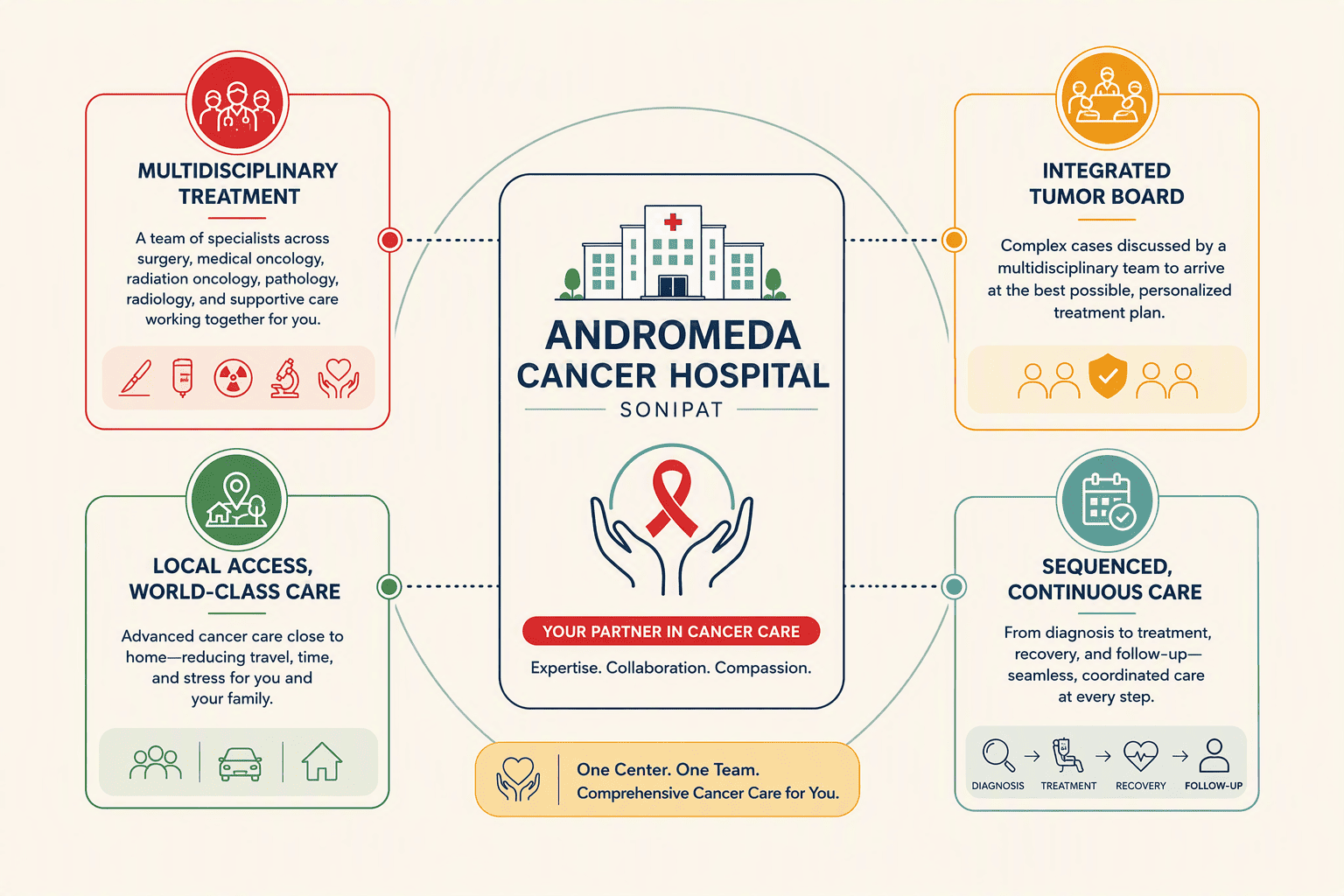
Andromeda Cancer Hospital in Sonipat runs as a single-specialty oncology center so patients in the region can get sequenced, multimodal treatment without leaving the district. Its core disciplines sit inside one structured multidisciplinary framework instead of being scattered across loosely connected general departments. For families in Sonipat and the surrounding belt, the hospital takes away the daily trip to Delhi and the costs that come with it.
- Integrated Tumor Board: The hospital holds multidisciplinary tumor board meetings twice a week. A surgical oncologist, a radiation specialist, and a medical oncologist sit together and sequence treatments using coordinated PET-CT and IHC testing. Most of that workup turns around within a week.
- Therapeutic Range: The treatment list covers definitive and palliative care. Medical oncology runs chemotherapy, immunotherapy, targeted therapy, and endocrine therapy. Surgical oncology handles breast procedures including immediate or delayed reconstruction, and the True BeamSTx linear accelerator delivers high-precision radiation.
- Diagnostic Anchoring: An in-house histopathology lab processes biopsies and resections, backed by cytology services like FNAC and Pap smears. Digital TOF PET-CT imaging anchors staging and recurrence tracking so the hospital does not wait on outside diagnostics.
- Sub-Specialist Leadership: Depth on the surgical side comes from clinicians like Dr. Arun Kumar Goel, an AIIMS, New Delhi alumnus with MBBS and MS degrees, Dr. Vaishali Zamre a leading Breast Cancer Surgeon in northern India with over 25 years of surgical experience, including the last 15 years dedicated exclusively to breast cancer , anchoring surgical protocols after years of high-volume institutional work.
2. Oncare Cancer, Gurugram
Oncare Cancer has carved a distinct position in Gurugram's expensive healthcare market by attacking the problem of opaque billing head-on. The center provides breast oncology, chemotherapy, immunotherapy, targeted therapy, and radiation therapy under one roof, but its primary innovation is administrative, not just clinical. By making an upfront cost-estimate session standard practice before a single line is inserted, it dismantles the fear of a financially catastrophic discharge bill.
This model translates into a specific, verifiable claim: the hospital reports that its treatment plans run up to 40% lower in cost compared to standard private rates. The logic is built on clinical efficiency and a day-care-centric approach. Many chemotherapy regimens are administered as day care, where the patient receives the infusion in the morning and goes home the same evening, a protocol that lowers costs significantly by stripping away unnecessary inpatient room charges and minimizing hospital-acquired infection risks. The center accepts all major insurance and cashless networks, ensuring that its transparent sticker price is matched by smooth third-party payment mechanisms. The clinical team includes specialists with 15-plus years of experience, including training from AIIMS and Tata Memorial Hospital, ensuring the bargain price does not signal a discount on expertise.
3. Pandit Bhagwat Dayal Sharma Post Graduate Institute of Medical Sciences (PGIMS), Rohtak
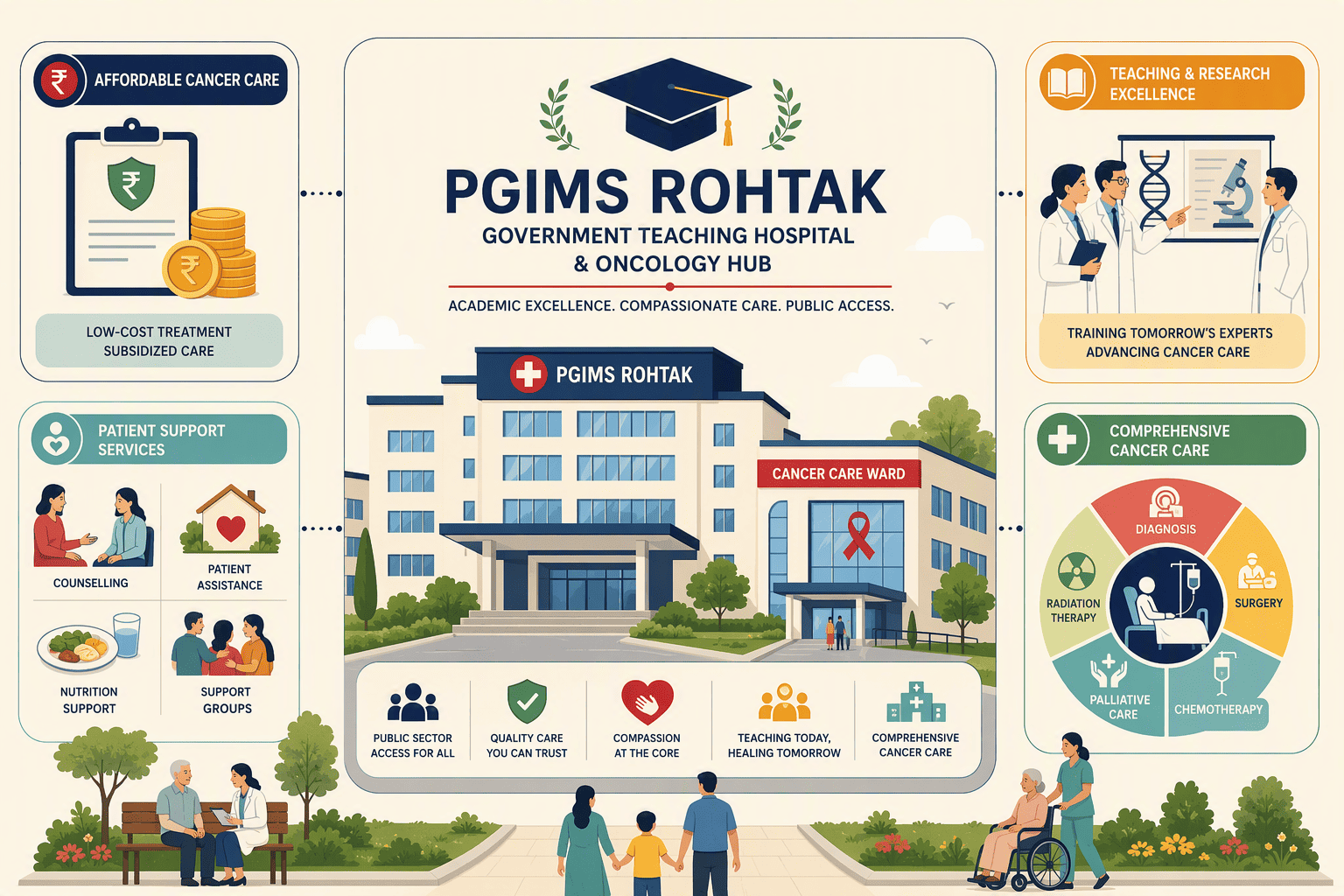
PGIMS Rohtak is the bedrock of heavily subsidized, public-sector oncology in Haryana. As a government-funded tertiary hub, it operates on a cost structure that makes it the state's most affordable option for complex cancer care. The institution is not merely a hospital; it is a teaching center where state-of-the-art protocols are often deployed in standard practice because of its academic mandate. For a family without private insurance or the means to pay out-of-pocket, the general wards here represent a clinical safety net that can arrest a cancer without liquidating assets.
The hospital houses thorough surgical, radiation, and medical oncology departments. This co-location is critical because it facilitates the 'single-roof' multidisciplinary evaluation that international guidelines mandate. Patients benefit from a sequential care plan where surgeons and radiation oncologists are literally down the corridor from each other, drastically reducing the friction that leads to protocol deviations in rural care pathways.
The cost advantage is structural and massive. National data reveals a 2x gap in median cost between government-aided cancer hospitals and premium private chains. Government centers come in at a median of approximately ₹5 lakh for the treatment arc, while private giants run at ₹10 lakh. For a BPL family enrolled in AB-PMJAY, the out-of-pocket expense at PGIMS for the ₹5 lakh package approaches zero.
Expect high patient volumes and administrative processing times that are longer than in the private sector. The trade-off is real: you exchange time and a degree of comfort for financial survival.
4. AIIMS, New Delhi (NCR Reference Center)
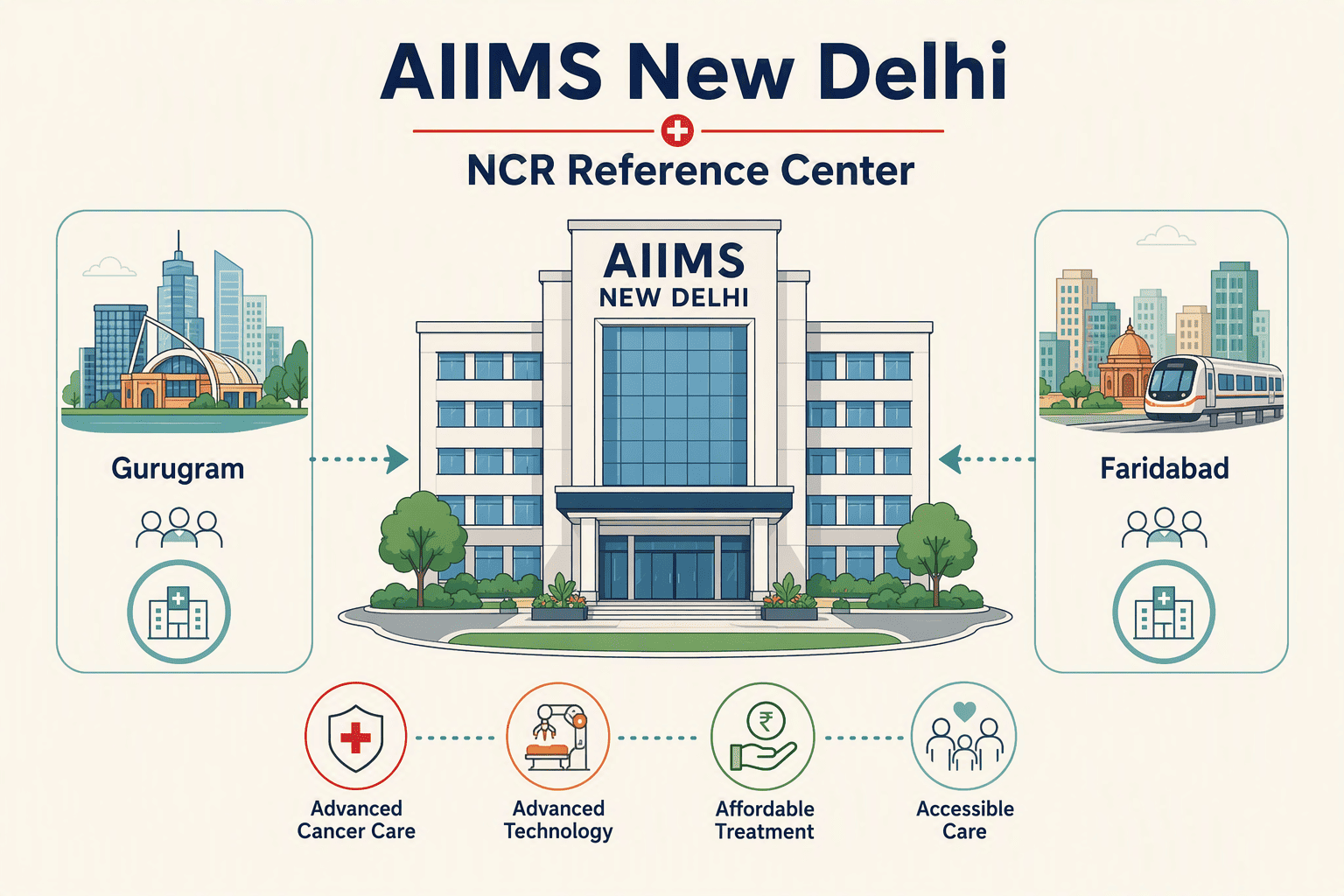
For Haryana residents in the NCR districts of Faridabad and Gurugram, the All India Institute of Medical Sciences (AIIMS) in New Delhi is often the final referral destination for complex or recurrent cancers. It operates as the ultimate public-sector benchmark, a facility where high clinical volume converges with cutting-edge research. In the context of affordability, AIIMS delivers every major treatment modality at a heavily subsidized cost structure unmatched by private enterprise.
When local oncology units exhaust their protocol options, a referral to the thorough tumor boards at AIIMS becomes the next logical step. For Haryana citizens, this pathway often requires navigating the state quota and inter-state referral formalities. The institution has evolved its protocols to include the newest advances noted in global rankings, appearing as India's representative in lists like Newsweek's World's Best Hospitals 2026 where genomic-guided treatment and advanced cellular therapies are now standard practice.
The practical cost of treatment here can be startlingly low for the biological complexity managed, but accessing it requires persistence. Patients must be prepared for diagnostic waiting lists that can stretch weeks. For a Haryana family with a tumor that is biologically aggressive but slow-growing, enduring the AIIMS queue makes absolute financial sense. For a rapidly progressing high-grade lymphoma needing a PET-CT and chemotherapy initiation within a 48-hour window, the queue-dependent logistics of a massive central government institute may, paradoxically, impose a clinical cost that outweighs the financial saving.
5. Rajiv Gandhi Cancer Institute and Research Centre, New Delhi (NCR Reference Center)
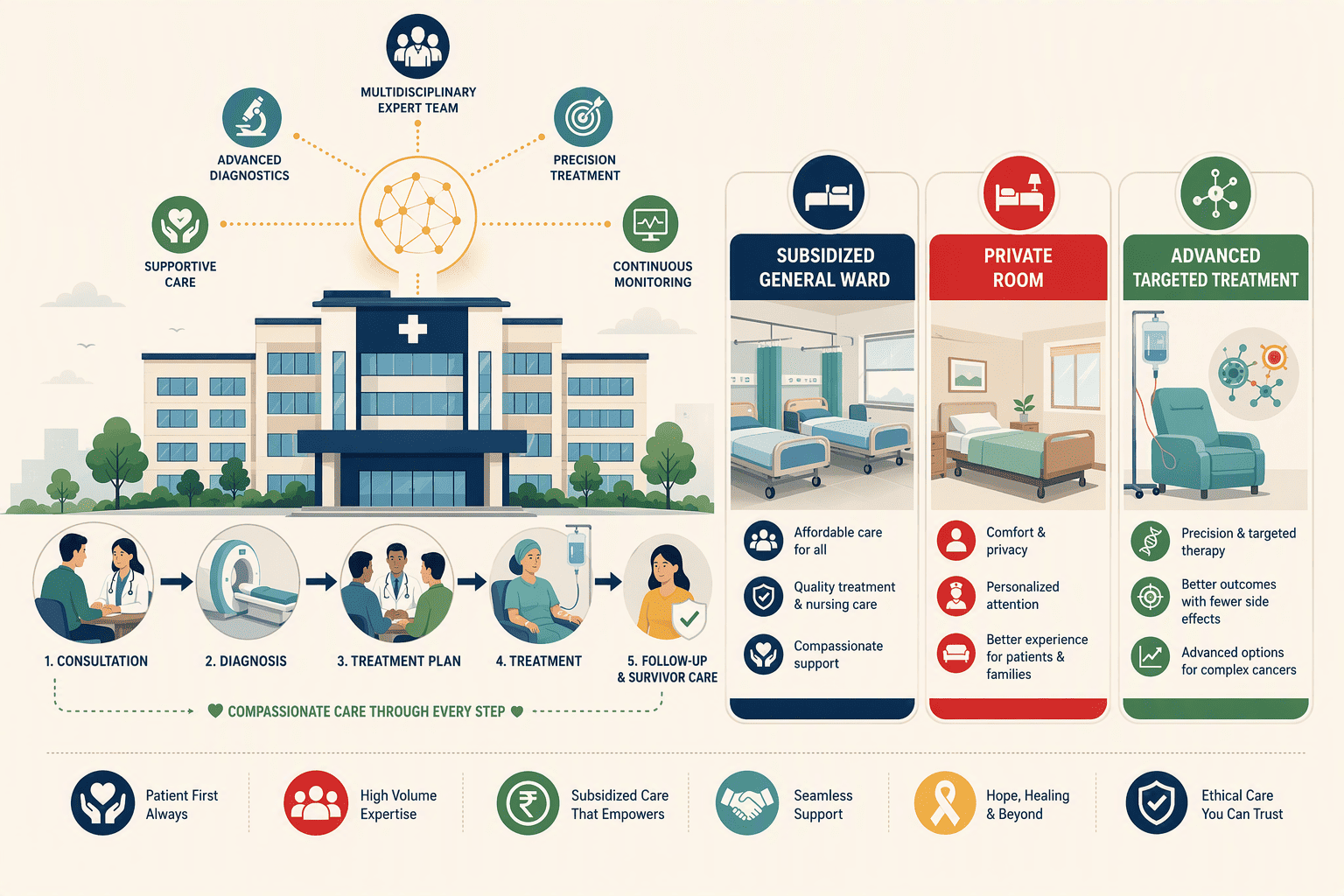
Rajiv Gandhi Cancer Institute (RGCI) in Delhi operates as a high-volume super-specialty center where the depth of oncological expertise is backed by deep technology penetration, often rivaling global centers. For Haryana's NCR-based patients who need a step up from general oncology to targeted interventions, RGCI's general wards present a viable mixed-model affordability route.
| Feature | RGCI General Ward | RGCI Private Room |
|---|---|---|
| Cost Structure | Heavily subsidized; often aligned with CGHS/AB-PMJAY package rates. | Standard private sector premium pricing. |
| Technology Access | Same institutional access to robotic surgery and bone marrow transplant expertise. | Same access, with faster scheduling for non-emergency diagnostics. |
| Multidisciplinary Input | Standard tumor board protocols apply regardless of ward category. | Consultant-led panels with prioritized time slots. |
| Best Fit | Patients from Haryana NCR with AB-PMJAY coverage or tight cash constraints needing advanced surgery. | Patients with private insurance coverage who prioritize personalized room amenities. |
The general ward here functions on a subsidy model that effectively cross-subsidizes care from the institute's private wing revenue. RGCI handles a staggering volume of oncology cases annually; this repetitive volume generates a level of subspecialty surgical expertise that low-volume centers cannot replicate. The Central Government Health Scheme (CGHS) rate revisions, including those dated 27-07-2026, frequently anchor the pricing for these subsidized beds, making the institute surprisingly accessible for a city otherwise dominated by high-cost corporate chains.
6. Civil Hospital, Panchkula (AB-PMJAY Empanelled)
Civil Hospital Panchkula handles cancer through a district-level screening-and-treatment node model under the AB-PMJAY umbrella. It is not a standalone tertiary cancer super-center. It is a front-line facility that stops the financial damage caused by travel and indirect costs. It handles the stable, repetitive, and often long-duration elements of oncology care at no charge to the patient.
- Free Chemotherapy Access: The hospital provides chemotherapy administration cycles for common protocols, acting as a free dispensing and monitoring point for regimens initiated at higher referral centers.
- Screening and Referral Hub: Minor surgical oncology services and biopsy procedures are handled in-house. For complex resections or advanced TrueBeam-based IMRT radiation, the hospital acts as a formal referral gateway to PGIMS Rohtak. This keeps the care pathway inside the same AB-PMJAY scheme umbrella.
- Financial Neutralizer: By providing this care in a district hospital setting, the model directly eliminates the non-medical catastrophic costs that households face. The patient avoids the accommodation and daily-wage loss tied to staying in a large city for weeks of fractionated radiation.
7. Medanta, The Medicity, Gurugram (High-Volume Public-Private Model)
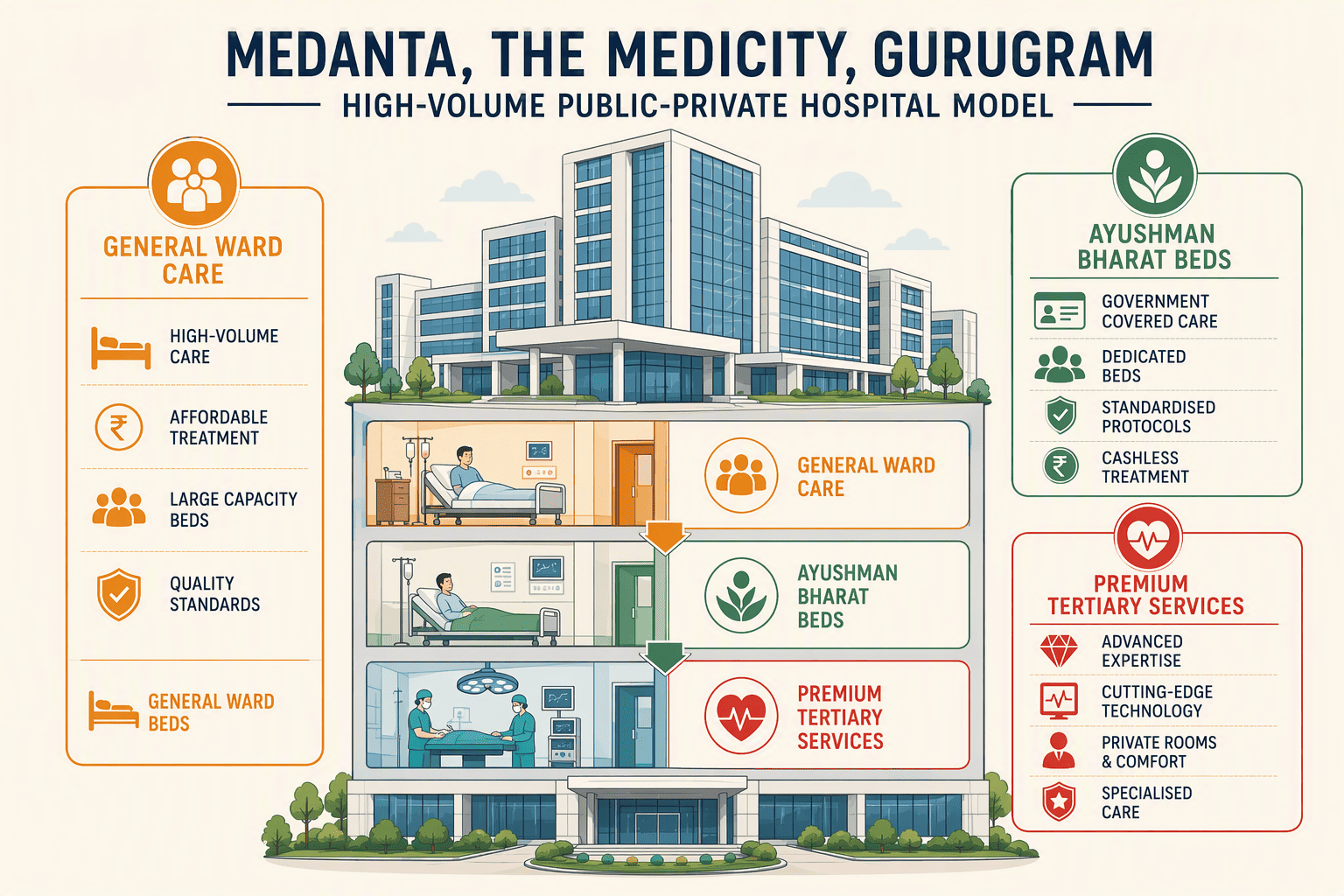
Medanta in Gurugram is often perceived as the apex of private tertiary care, a perception defined by hotel-style lobbies and cutting-edge robotic surgery suites. The lesser-told story is its internal stratified care model, which makes it materially relevant to the 'affordable cancer care' search in Haryana.
Medanta operates a formal, internally regulated general ward system and a quota of dedicated Ayushman Bharat (AB-PMJAY) beds. This is not a public relations gesture; it is a structural feature mandated for mixed public-private institutions. For a Haryana family, admission through the AB-PMJAY pathway into these designated beds translates to receiving a robotic-assisted prostatectomy or a highly conformal IMRT plan at a fraction of the listed private price. Data confirms the stark contrast: while a course in the private wing aligns with the upper tier of India's USD 3,000 to USD 35,000 treatment cost range, occupying an Ayushman Bharat bed caps the entire package.
The institution also operates on a massive volume scale. This high throughput in general wards, powered by a constant stream of complex hepatobiliary and thoracic oncology cases from across North India, drives up the technical competency of the entire faculty. It creates a system where a subsidized-bed patient can benefit from the same intraoperative decisions of a high-volume robotic surgeon attending a private case on the floor above.
Availability in these subsidized categories is finite and demand outstrips supply. Early coordination with the hospital's social welfare or insurance desk is key.
8. District Hospital, Hisar (Government Oncology Unit)
A farmer from Fatehabad doesn't need a better cancer drug. He needs a treatment centre he can reach and afford to visit 12 times. That is the problem the District Hospital oncology unit in Hisar was built to solve. Operating under AB-PMJAY, the unit runs chemotherapy protocols and post-operative surveillance that, by being local, cut the true cost of treatment. Daily wage loss and a caregiver's lost income typically hit harder than the price of the cytotoxic drugs themselves. Delivering those drugs in Hisar instead of a distant metro removes most of that collateral damage. The unit works as a spoke in Haryana's hub-and-spoke cancer network, with PGIMS Rohtak as the hub. A patient with operable colon cancer gets the definitive resection at PGIMS over a five-day stay and then returns to Hisar for all 12 adjuvant chemotherapy cycles and CEA marker checks. The protocol stays centralized at Rohtak; the chair the patient sits in is 15 kilometres from home, not 150. The design targets a specific, grim failure point in Indian oncology: the post-surgical drop-off. Too many patients never return for the remaining cycles because travel and cost make it impossible. A unit like Hisar is the answer to that one narrow problem, and for families in Sirsa, Fatehabad, and the western belt, that single fix can determine whether treatment gets finished or abandoned.
Conclusion
Affordable cancer care in Haryana is not a single hospital. It is a structured spectrum.
The lowest-cost path starts with verifying your eligibility on the AB-PMJAY Haryana portal. Next, get an upfront written cost estimate that itemizes every drug and every radiation Gray. Then confirm that a named tumor board has met to sequence your care.
For a chemotherapy-only protocol, a local AB-PMJAY hub like District Hospital Hisar cuts out the second disaster: lost income from travel.
For a complex sarcoma that needs advanced reconstruction, the general wards at PGIMS or Medanta's scheme-linked quota provide clinical rigor. So does the transparent, efficiency-driven model of a center like Andromeda Cancer Hospital. Each removes the financial fatality.
Frequently Asked Questions
What makes a cancer hospital affordable without compromising thorough care in India?
Affordability in India is driven by AB-PMJAY empanelment and public funding. A hospital maintains thorough care by housing medical, surgical, and radiation oncology under one roof. The model works when a multidisciplinary tumor board coordinates free or capped-cost treatments, preventing fragmented, repeated spending on disconnected consultations across different facilities.
What does thorough oncology care include and what should patients look for?
It includes surgery, chemotherapy, immunotherapy, targeted therapy, and radiation therapy, all coordinated by a pathological and radiological tumor board. Patients should look for a formal tumor board meeting schedule, in-house advanced diagnostics like PET-CT and IHC, and integrated treatment plans, not merely a list of outsourced departments operating in isolation.
How do multidisciplinary tumor boards and integrated diagnostics improve cancer outcomes?
A tumor board merges pathology, radiology, and oncology expertise to improve staging accuracy and sequence treatments logically. This prevents surgery performed too late or radiation given without prior chemo-sensitization. Coordinated diagnostics ensure scans and biomarker testing are completed and reviewed within days, ensuring the biology of the tumor dictates the protocol, not administrative delays.
Which affordable cancer hospitals in Haryana offer breast oncology and targeted therapy under one roof?
Andromeda Cancer Hospital in Sonipat provides breast surgery, reconstruction, and endocrine/targeted therapies under a twice-weekly tumor board. Oncare Cancer in Gurugram offers breast oncology and targeted therapy with an upfront cost estimate and a transparent, day-care-driven model designed to reduce inpatient expenses by a significant margin.
What are the typical subsidized costs for cancer surgery and chemotherapy under Ayushman Bharat in Haryana?
For AB-PMJAY cardholders, entitled surgeries and chemotherapy cycles at empanelled hospitals are completely free up to the ₹5 lakh annual family cap. In non-package public wards at facilities like PGIMS Rohtak, complex treatment arcs often average a heavily subsidized median cost around ₹5 lakh, a 2x reduction compared to private chains.
How should a patient verify billing transparency and coordination at a cancer hospital before admission?
Before choosing a cancer treatment provider, check these three key factors:
- Itemized cost estimate: Request a written, itemized cost-estimate before treatment begins, detailing planned medicines and cycles.
- AB-PMJAY empanelment: Check the AB-PMJAY empanelment list on the official Haryana government portal for active status.
- Regular tumor board and diagnostics: Confirm a regular tumor board meets to plan the sequence, and verify that diagnostic coordination, such as PET-CT and pathology turnaround, occurs in under one week.
Sources
- AB-PMJAY Empanelled Hospitals | Ayushman Bharat, Haryana | India - ayushmanbharat.haryana.gov.in
- Welfare Circulars | Department of Ex-servicemen Welfare | Ministry of Defence | Government of India - www.desw.gov.in
- Best Quality & Affordable Cancer Treatment in India | Oncare - www.oncarecancer.com
- Best Cancer Hospitals in India 2026 | Cost and Results | My 1Health - my1health.com
- Cancer Treatment Cost in India: Stage-Wise & Hospital Guide - pages.milaap.org