
Introduction
A breast lump diagnosis arrives with two immediate, paralysing questions for families across Haryana: "Can we afford the treatment?" and "Will she survive?" When savings are limited and the nearest thorough cancer centre is hours away in Gurugram or Delhi, the path forward feels blocked before it even begins. Out-of-pocket medical expenditure remains one of the single biggest drivers of financial catastrophe in India, and a diagnosis of breast cancer, the most common malignancy in women, often forces impossible choices between quality care and complete bankruptcy.
Yet the equation is shifting. The Haryana hospital ecosystem, spanning heavily subsidized government tertiary centres, dedicated private cancer hospitals in Sonipat, and high-volume corporate flagships in the NCR, has created tangible, low-cost pathways that did not exist a decade ago. When paired with central and state-level financial shields, the genuine out-of-pocket cost can drop from several lakhs of rupees to nearly zero for eligible families.
This article maps those pathways. It identifies the specific facilities where clinical quality and affordability intersect, and it details the exact government schemes, from the Rs. 5 lakh annual cover under Ayushman Bharat to the Haryana Mukhyamantri Muft Ilaj Yojana, that can make treatment financially viable. This is a practical geography of survival, built for the moment when a treatment plan must be drawn up against a tight budget.
Key Takeaways
Where you start your treatment journey in Haryana dictates your financial exposure more than almost any other variable. Here is the immediate framework for decision-making:
- Government vs. Private Cost: Government hospitals like PGIMS Rohtak operate on a virtually zero-bill model for ward-based care, while private NCR hospitals without insurance empanelment range from Rs. 1.5 lakh to Rs. 5 lakh+ for a full treatment cycle.
- Top Ayushman Bharat Facility: Medanta, Gurugram is the most prominent high-volume private hospital empaneled under Ayushman Bharat PM-JAY in the region, offering tertiary surgical oncology without direct cash payment for eligible cardholders.
- Critical State Scheme: The Haryana Mukhyamantri Muft Ilaj Yojana and the central PM-JAY provide overlapping Rs. 5 lakh annual covers; checking your SECC 2011 eligibility is the single most important financial step before admission.
- Middle-Ground Private Value: Andromeda Cancer Hospital in Sonipat offers an integrated, biopsy-to-therapy private model that eliminates costly diagnostic delays and referral fragmentation, often compressing the pre-treatment timeline to under one week.
1. Andromeda Cancer Hospital, Sonipat: Integrated Biopsy-to-Palliation Under One Roof
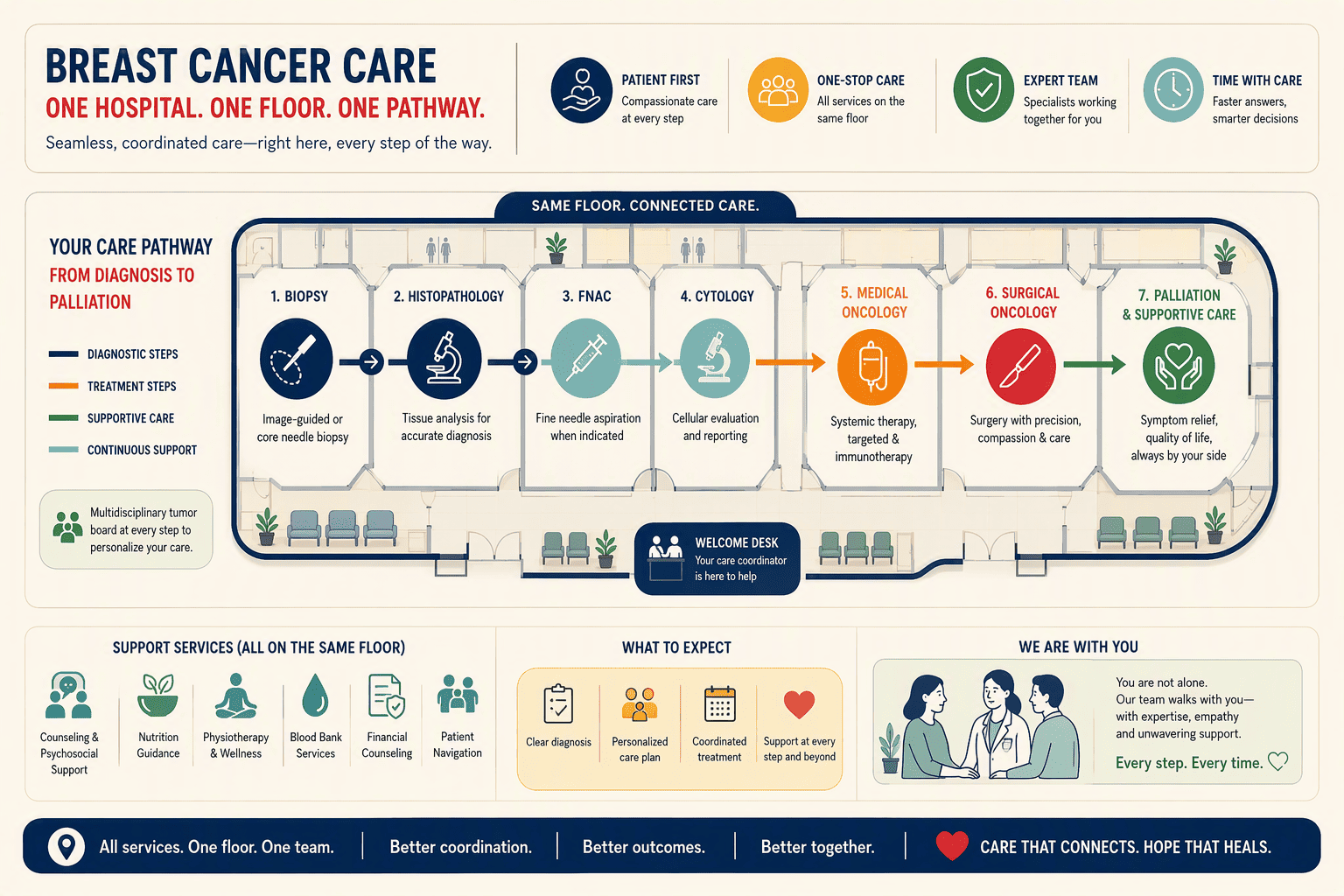
The reality is simple: each week spent shuttling biopsy slides between a standalone diagnostic lab and a surgical oncologist in a different city adds costs that have nothing to do with medicine. Andromeda Cancer Hospital in Sonipat neutralises this fragmentation with a genuine same-roof model, where histopathology, FNAC, and full cytological services operate on the same floor as the medical and surgical oncology teams. That spatial integration directly compresses the diagnostic window.
The hospital coordinates PET-CT and IHC testing with a turnaround targeted within one week for review at its twice-weekly multidisciplinary tumor board meetings. This is not an academic formality. Individualized tumor board recommendations can significantly extend survival in complex cancers, making structured multidisciplinary planning a genuine clinical asset.
Andromeda positions itself as a private middle ground. It is not the lowest-cost option, like a government medical college, nor the highest-volume tertiary centre. Its value lies in shortening cycle time and containing ancillary expenses.
A patient can receive neoadjuvant chemotherapy, undergo surgery with immediate or delayed reconstruction, and complete adjuvant radiation using the hospital's TrueBeamSTx linear accelerator without ever leaving one campus. For a family travelling from Panipat, Karnal, or Jind, that eliminates the corrosive daily cost of cross-border NCR travel and lodging that silently bankrupts households. The hospital's palliative and pain management unit further ensures that when curative intent is exhausted, the final phase of care does not require a traumatic, expensive transfer to another facility.
2. Pt. B.D. Sharma PGIMS, Rohtak: Government Tertiary Care at Minimal Cost
For a household where cash liquidity is the primary barrier, Pt. B.D. Sharma PGIMS in Rohtak offers the lowest direct cost structure in the state. As Haryana's flagship government tertiary centre, it delivers ward-based surgical oncology, radiotherapy, and chemotherapy for a nominal out-of-pocket charge that runs orders of magnitude below any private facility in the NCR. The hospital's surgical teams also accumulate real procedural experience with locally advanced breast cancers, the presentation they see most often.
| Cost Dimension | PGIMS Rohtak (Government) | Private NCR Hospital (Without Insurance) |
|---|---|---|
| Surgery (MRM/BCS) | Nominal (< Rs. 5,000 to 10,000 ward charges) | Rs. 75,000 to Rs. 2,50,000+ |
| Chemotherapy Cycle | Mostly subsidized or free | Rs. 8,000 to Rs. 60,000 per cycle |
| Radiotherapy | Nominal machine charges | Rs. 1,00,000 to Rs. 2,50,000 for full course |
| Ancillary Risk | Time off work, lodging, longer wait times | Diagnostic and room-category markups |
The trade-off is time. Elective surgery slots and radiotherapy linear accelerator schedules at PGIMS run longer than at private facilities. A patient with a rapidly proliferating triple-negative tumor may not have that kind of time. For hormone-positive, indolent cases caught early, or for patients who live within Rohtak district, the financial math makes PGIMS the rational default. The facility is the safety net that keeps the Haryana oncology ecosystem viable for anyone who cannot pay a single rupee of private billing.
3. Medanta, The Medicity, Gurugram: High-Volume Private Care with Ayushman Bharat Tie-Ups
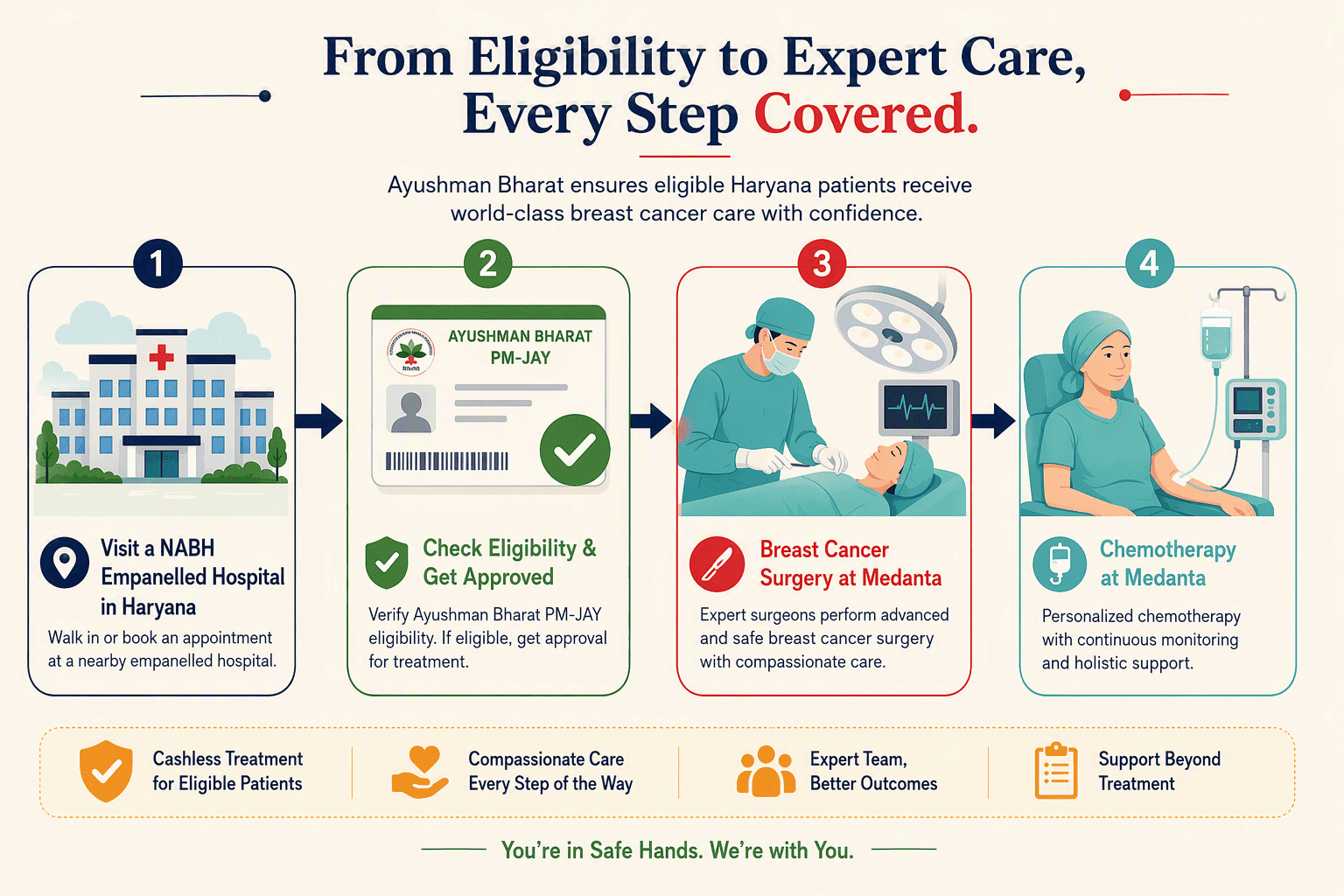
The most persistent myth in Indian healthcare is that world-class private infrastructure is exclusively for the cash-rich. Medanta, Gurugram disproves this through its direct empanelment under the Pradhan Mantri Jan Arogya Yojana (PM-JAY), which provides a health cover of Rs. 5 lakh per family per year for secondary and tertiary care hospitalization. For an SECC-verified Haryana family holding a valid Ayushman card, a modified radical mastectomy, a chemotherapy block, or a radiotherapy schedule at Medanta can be a zero-bill transaction. The pre-authorization process begins at the hospital's insurance desk at the time of admission, not after discharge.
The clinical volume that this public-private convergence unlocks is substantial. High surgical caseloads in Medanta's oncology departments mean operating theatres and adjunctive services are optimized for efficiency, and the hospital's in-house pathology and biomarker testing labs run with turnaround times designed to feed active treatment protocols, not just record-keeping. The facility makes full use of modern diagnostic armamentaria, including PET/CT, which plays a vital role in staging, detecting metastases, and assessing treatment response in breast cancer. For a patient in Hisar or Sirsa who qualifies for PM-JAY, the 4 to 5 hour drive to Gurugram is financially viable precisely because the hospital bill itself drops to zero, making the trade-off between travel cost and zero treatment charge pencil out positive.
4. AIIMS, New Delhi (Haryana's De-facto Tertiary Referral): Benchmark Success Rates and Dr. Arun Kumar Goel's Expertise
When the case gets complicated, a chest wall recurrence, a rare histology, or a young patient with a strong family history, most Haryana oncologists direct the patient to AIIMS Delhi. The institute charges a fraction of what a private Delhi hospital bills, even for an out-of-state admission from Haryana. The wards are basic, but the clinical outcomes define the reference point for the entire NCR.
Dr. Arun Kumar Goel runs one of the surgical oncology units that Haryana's PGIMs and medical colleges rely on for second opinions. He holds both his MBBS and MS from AIIMS, and his caseload is dominated by complex resections and reconstructions. A patient sent from Rohtak or Sonipat gets evaluated for breast conservation and oncoplastic closure, options that a lower-volume center might skip straight past toward a total mastectomy.
AIIMS anchors the survival data private hospitals cite. When a corporate chain in NCR quotes a five-year survival figure for stage III breast cancer, the number almost always traces back to a published AIIMS departmental series or a multicentre trial where AIIMS was the lead Indian site.
Because the institute treats the largest concentration of socioeconomically disadvantaged patients in north India, its results include the very comorbidities and late presentations that private datasets filter out. That makes AIIMS figures a realistic floor: if you can match or beat them at your chosen center, your treatment plan is probably on solid ground.
5. Fortis Memorial Research Institute, Gurugram: Multidisciplinary Protocols and Subsidized Diagnostics
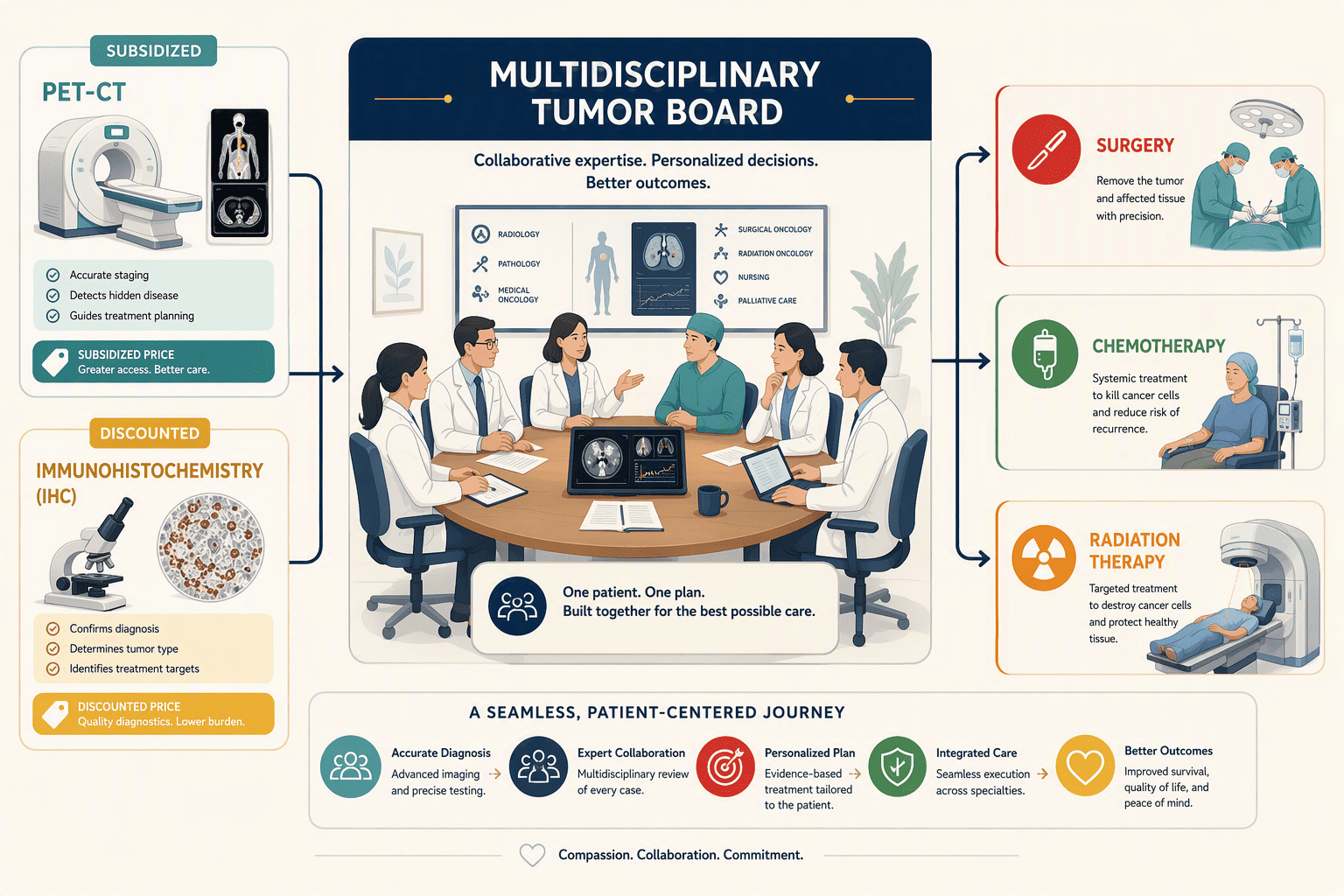
Fortis FMRI competes for the same NCR oncology patient cohort as Medanta, but its competitive lever is slightly different. It leans on a strong tumor board model and aggressive pricing on the diagnostic front end to capture downstream treatment. The logic is commercially simple but clinically useful: a subsidized PET-CT scan or a discounted immunohistochemistry panel often unlocks a full treatment cycle of surgery, chemotherapy, and radiation that the patient commits to at the same hospital. This initial loss-leader pricing is a practical point of negotiation for a family paying out of pocket.
- Tumor Board Model: FMRI convenes formal multidisciplinary meetings where medical, surgical, and radiation oncologists align on a single treatment plan. This is particularly valuable for HER2-positive and triple-negative breast cancers, where the sequence of neoadjuvant chemotherapy, surgery, and adjuvant therapy must be choreographed precisely.
- Diagnostic Capability: The hospital operates modern PET-CT scanners and full biomarker labs. As emerging radiotracers targeting estrogen and HER2 receptors may improve diagnostic accuracy, the ability of a facility to run these advanced scans in-house becomes a differentiating factor.
- Subsidy Strategy: Fortis sometimes packages health-check bundles and advanced imaging at rates designed to attract oncology patients. A patient who gets a whole-body PET-CT through such a package may pay significantly less than the standalone rate at a private standalone diagnostic centre.
- Geographic Logic: For a family in Faridabad or South Delhi, Fortis in Gurugram is more accessible than a cross-city trip to North Delhi's academic centres. Accessibility reduces non-medical costs, a key factor in treatment completion.
6. Rajiv Gandhi Cancer Institute & Research Centre, Delhi (NCR): Targeted Therapy and Financial Counseling
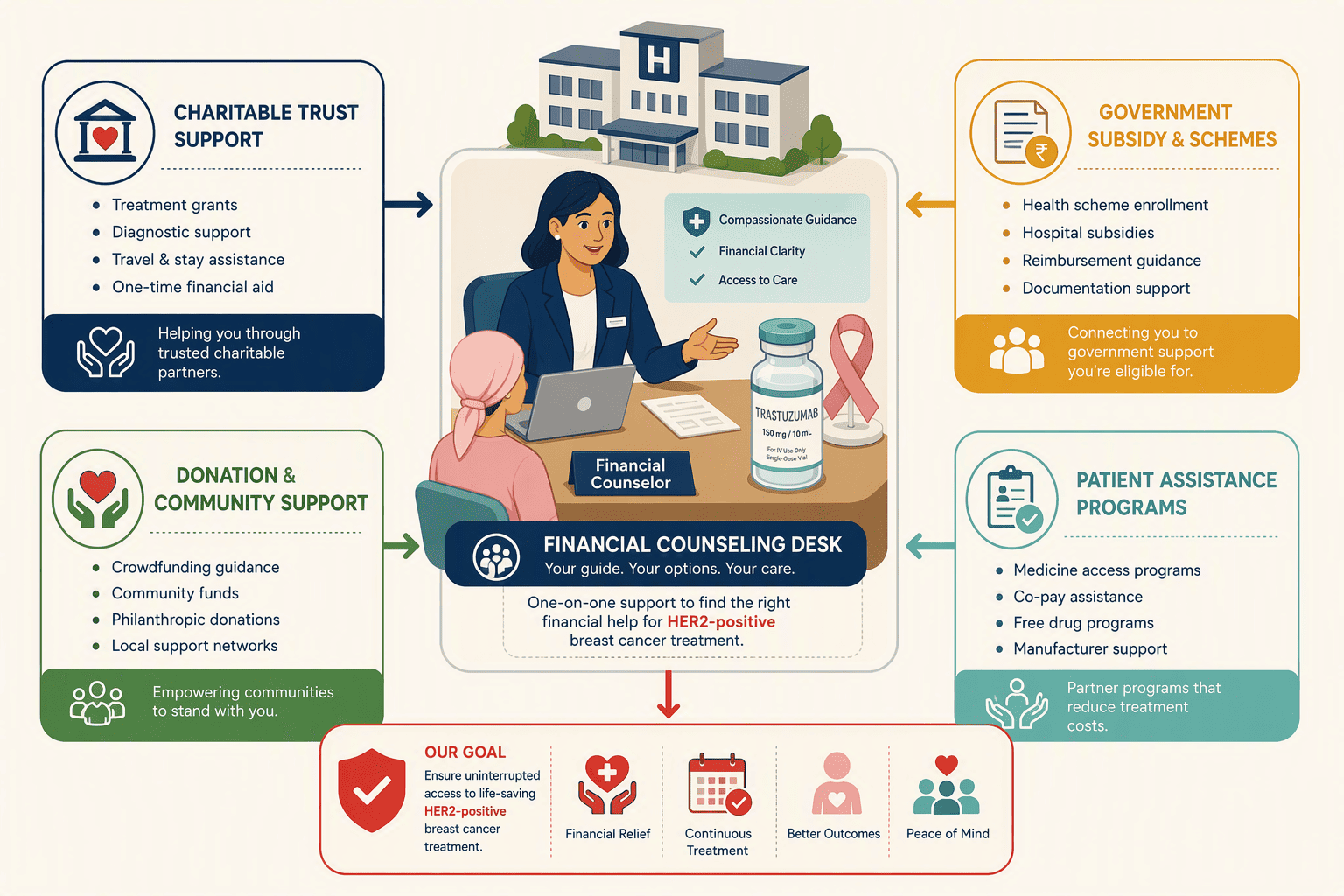
The moment a biopsy report returns positive for HER2 overexpression, the financial stakes of breast cancer treatment multiply dramatically. Trastuzumab and its biosimilars, the backbone of anti-HER2 therapy, can add lakhs of rupees to a treatment plan that was already thin. RGCIRC in Rohini operates its financial counseling desk as an active routing node that connects families to multiple external funding sources at the same time: charitable trusts that subsidize targeted therapy for specific income brackets, corporate CSR funds for oncology, and crowdfunding platforms like Milaap.
The desk doesn't just hand out a list of loan providers. A social worker helps the family open a Milaap fundraiser with an RGCIRC treatment estimate already attached. That official hospital quotation functions as credibility for donor campaigns, and the paperwork bump is often the difference between a fundraiser that crawls and one that moves.
Take a HER2-positive patient from Haryana whose family income clears the Ayushman Bharat eligibility cut-off but can't come close to privately funding Rs. 15 to 20 lakhs of therapy. RGCIRC's counseling unit turns an impossible lump sum into a mix of trust grants, discounted hospital rates, and community funds. For that specific subset of biomarker-defined patients, the triage model is worth traveling from Faridabad, Palwal, or Gurugram.
7. Statewide Affordability Levers: Ayushman Bharat, CGHS, and Haryana Mukhyamantri Muft Ilaj Yojana
Navigating Haryana's cancer treatment costs without understanding the state's three overlapping insurance shields is a guaranteed path to overpayment. Here is how to verify and activate each scheme in the correct sequence:
- Verify PM-JAY (Ayushman Bharat) Eligibility First: Check your family's status against the SECC 2011 database on the Ayushman Bharat Haryana portal. This scheme, described as the world's largest health assurance scheme, provides a cashless Rs. 5 lakh annual cover for over 10 crore families nationally. If eligible, obtain your e-card before beginning treatment; private hospitals like Medanta and Fortis accept it directly.
- Check Mukhyamantri Muft Ilaj Yojana Eligibility: This Haryana-specific scheme complements PM-JAY by extending coverage to certain state-defined beneficiary categories that may fall outside the central SECC criteria. Contact the district civil surgeon's office or the hospital's social welfare cell to initiate a case-specific application.
- Activate CGHS Benefits if a Central Government Employee: If you or your spouse is a serving or retired central government employee, CGHS empanelment unlocks package rates at specific private and government hospitals. Verify the specific hospital's current CGHS contract annually, as empanelment status can change.
- Use Scheme Portability Strategically: Once you hold a valid Ayushman card, you are not locked into a single hospital. You can transfer your treatment from a government facility to an empaneled private hospital mid-treatment by following the scheme's portability protocol, a critical tactic if wait times at a government radiotherapy unit become clinically dangerous.
- Get Pre-Authorisation Before Admission: Never assume coverage. For any scheme, a hospital's insurance desk must secure a pre-authorisation code from the relevant scheme administrator before major procedures. A surgeon's verbal assurance that it 'will be covered' is not binding until the approval letter is generated.
8. 2026 Advancements in Affordable Diagnostics: Liquid Biopsy and Hypofractionated Radiotherapy in the NCR
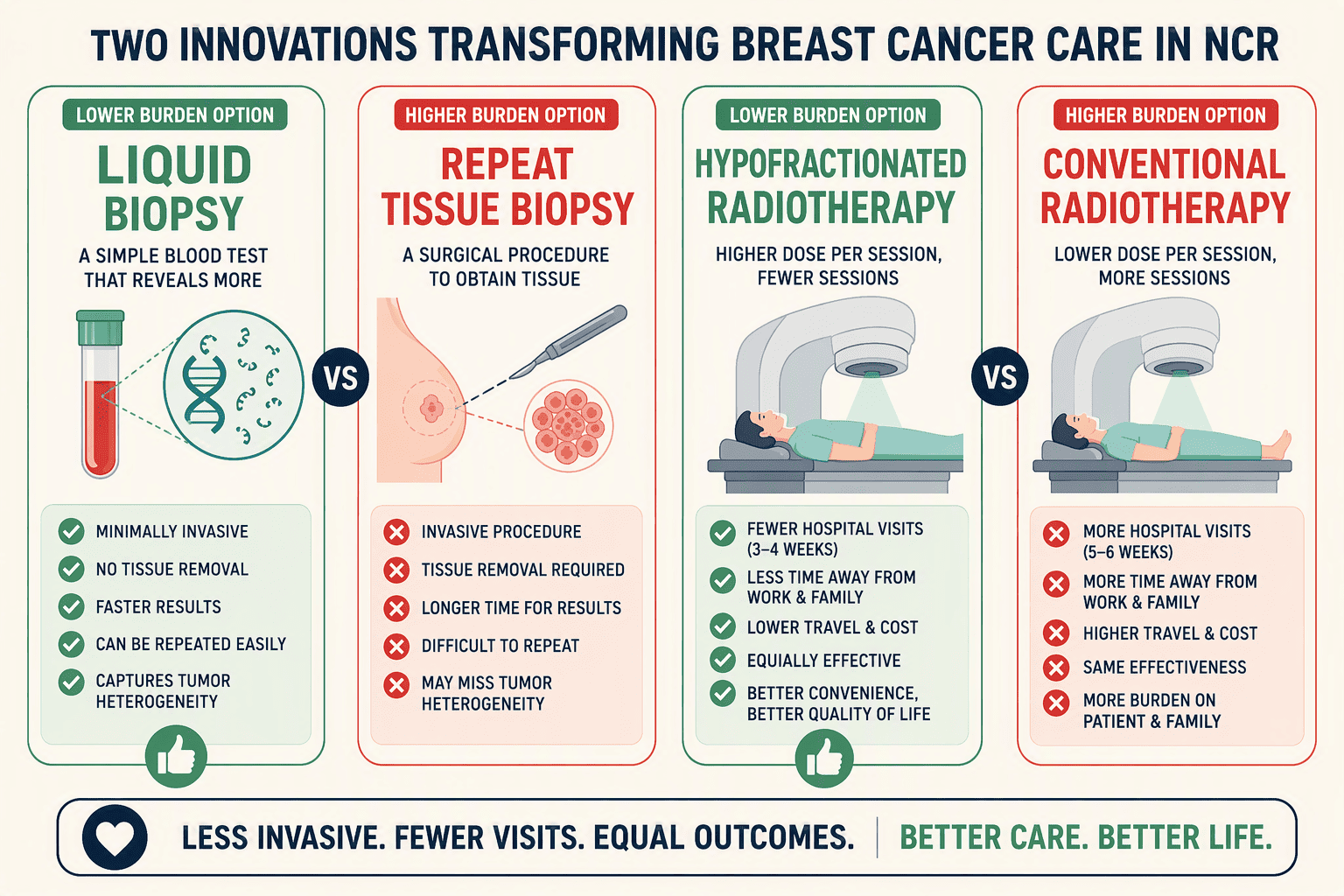
Two clinical innovations are quietly reshaping the total cost equation for breast cancer patients in Haryana in 2026, and neither involves a new drug. Liquid biopsy is one of them. Select NCR labs now offer blood-based circulating tumor DNA assays that detect actionable mutations and monitor treatment response. They remove the need for repeated tissue biopsies, which carry procedure charges, anesthesia time, and recovery complications. For a metastatic patient in Ambala or Bhiwani on endocrine therapy, a blood draw sent to a Delhi NCR lab for genomic analysis can replace an invasive, expensive tissue re-biopsy, directly lowering the non-drug cost of progression monitoring.
The other shift is the faster adoption of hypofractionated radiotherapy protocols. Clinical evidence now supports delivering a full course of adjuvant breast radiation in three to four weeks instead of six to seven weeks, using slightly higher doses per fraction. For a Haryana patient commuting daily to a radiotherapy centre in Gurugram or Delhi, a shorter protocol cuts 15 to 20 days of travel costs, time away from daily-wage work, and urban lodging expenses.
The machine cost and radiation oncology fees stay comparable. The non-medical expenditure, which can eclipse the hospital bill for low-income households, drops by roughly 40%. Major NCR centres are now standardizing these faster schedules for eligible early-stage patients, making radiation therapy more affordable without a formal price cut.
Conclusion
Affordability in Haryana's breast cancer landscape ultimately splits along a single, bright line: whether you hold a valid government insurance card.
For PM-JAY or state-scheme cardholders, the optimal pathway leads to high-volume empaneled private centres like Medanta or Fortis, where the infrastructure is modern and the direct bill is zero.
For the uninsured below the poverty line, the PGIMS Rohtak government route offers the lowest cash burden, backed by AIIMS Delhi for complex surgical or recurrence cases.
For families who fall into the 'missing middle', insured but with sub-limits, or uninsured but not destitute, a dedicated private value option like Andromeda Cancer Hospital in Sonipat offers a compressed, integrated model that eliminates the hidden costs of diagnostic delays and multi-city shuttling.
The financial strategy is not to find the single cheapest hospital, but to match your specific insurance status, tumor biology, and geographic location to the facility type that minimizes your total out-of-pocket cycle cost.
Frequently Asked Questions
What is the typical cost range for breast cancer treatment in Haryana, and what factors make some options more affordable?
The cost ranges from near-zero at government hospitals like PGIMS Rohtak for ward care to Rs. 1.5 to 5 lakh+ at private NCR hospitals. The three biggest cost drivers are:
- Government insurance card eligibility: whether the patient qualifies for a scheme like Ayushman Bharat that covers the majority of the bill.
- Single-campus service integration: whether diagnostics and all therapies are under one roof to avoid referral markups between separate facilities.
- Radiotherapy schedule length: the duration of the radiation protocol, which directly drives travel and lodging costs for out-of-town patients.
How do success rates for breast cancer treatment in Haryana compare to national averages in India?
Tertiary centres like AIIMS Delhi, which serves as Haryana's primary complex-case referral, set the national benchmark for survival data through their published peer-reviewed oncology outcomes. Dedicated private facilities in the NCR achieve comparable results by adhering to the same multidisciplinary, protocol-driven care models.
Which hospitals in Haryana offer the most cost-effective breast cancer care with documented good outcomes?
PGIMS Rohtak offers the lowest direct cost for government care. Medanta and Fortis in Gurugram deliver high-end private care with zero billing for eligible Ayushman Bharat cardholders. Andromeda Cancer Hospital in Sonipat provides a private, integrated alternative that reduces costly diagnostic fragmentation for patients paying out of pocket.
What government schemes or insurance options in Haryana help reduce the out-of-pocket cost of breast cancer treatment?
Three government insurance schemes cover breast cancer care in Haryana:
- Central PM-JAY (Ayushman Bharat): Provides up to Rs. 5 lakh annual cashless cover for secondary and tertiary care.
- Haryana Mukhyamantri Muft Ilaj Yojana: Also offers up to Rs. 5 lakh annual cashless cover for eligible residents.
- CGHS: Covers central government employees with package rates at empaneled hospitals.
Eligibility verification through the SECC 2011 database is the key first step for all schemes.
How does a multidisciplinary team approach affect treatment outcomes and overall costs for breast cancer patients?
A tumor board where medical, surgical, and radiation oncologists plan treatment jointly provides two key advantages:
- Lower non-medical costs: Reduces sequential, unplanned doctor visits and diagnostic repeats, directly lowering out-of-pocket expenses beyond the hospital bill.
- Better clinical outcomes: Research shows individualized tumor board recommendations are associated with significantly longer survival, making multidisciplinary coordination both a clinical and financial advantage.
What are the latest advancements in affordable breast cancer diagnostics and therapies available in the Delhi NCR and Haryana region in 2026?
Liquid biopsy is reducing the need for expensive, invasive tissue re-biopsies during treatment monitoring, and accelerated hypofractionated radiotherapy protocols are shortening radiation courses from 6 to 7 weeks to 3 to 4 weeks, significantly cutting travel and lodging costs for patients commuting from Haryana to NCR centres.
Sources
- Breast Oncology | Andromeda - www.andromedahospital.in
- Breast Cancer | Andromeda - www.andromedahospital.in
- Homepage | Ayushman Bharat, Haryana | India - ayushmanbharat.haryana.gov.in
- Official Website Ayushman Arogya Mandir - aam.mohfw.gov.in
- Integrating PET/CT into breast cancer care: a review of recent developments - PubMed - pubmed.ncbi.nlm.nih.gov
- Impact of interdisciplinary tumor boards (ITB) and personalized treatment on survival outcomes in metastatic castration-resistant prostate cancer | Journal of Cancer Research and Clinical Oncology | Springer Nature Link - link.springer.com