

Introduction
A breast cancer diagnosis triggers two immediate fears: losing a loved one and losing all your savings. In Haryana, that second fear has a powerful solution. You can access thorough, early-stage breast cancer treatment for between ₹1.5 lakh and ₹6 lakh, a cost that is 30% to 40% lower than what you would pay for comparable outcomes in Delhi NCR. State-subsidised institutions like the Homi Bhabha Cancer Hospital and strong government schemes, including the Ayushman Bharat Pradhan Mantri Jan Arogya Yojana (PM-JAY), have reshaped the financial landscape of cancer care here. For eligible families, the out-of-pocket expense can drop to near-zero.
Haryana occupies a unique position. It offers Delhi NCR-comparable survival rates of 70% to 85% for early-stage disease, but without the crippling private-sector overheads that inflate bills across the border. This cost difference comes from deliberate policy choices: state-funded infrastructure, operational Day-Care Cancer Centres (DCCC) in 22 districts, and the integration of PM-JAY that covers up to ₹5 lakh per family per year. The data is clear: a prospective study from the Tata Memorial Centre in Mumbai found that the mean total cost of breast cancer treatment was ₹258,095, with out-of-pocket payments accounting for a staggering 72.2% of that total. In Haryana, the strategic mix of public and integrated private centres is designed to close that catastrophic payment gap.
Yet the challenge remains profound. Breast cancer is the most common cancer among women in India, accounting for over one quarter of all female cancers. Incidence rates are growing, with an annual percentage rise ranging from 1.4% to 2.8% in major urban regions. This article maps the institutions in Haryana that directly confront the cost-versus-survival paradox. It is a practical guide to the hospitals and cost structures that let families focus on cure, not on crippling debt.
Key Takeaways
Here are the critical facts you need to know about the cost, quality, and financial aid available for breast cancer treatment in Haryana:
- Achievable cost range: Early-stage breast cancer treatment packages in Haryana are available from ₹1.5 lakh to ₹6 lakh, with thorough care for complex cases reaching up to ₹10 lakh.
- High survival rates: Institutions like the Homi Bhabha Cancer Hospital in Mullana report 5-year survival rates of 70% to 85% for early-stage breast cancer, in line with top-tier national benchmarks.
- Government-subsidised care: PM-JAY provides health coverage of up to ₹5 lakh per family per year, effectively slashing the out-of-pocket cost to near-zero for eligible patients at empanelled hospitals.
- Financial aid beyond PM-JAY: The Haryana State Cancer Society provides a dedicated BPL fund, and patients with advanced cancer and low annual income can receive ₹3,000 per month in direct financial assistance.
- Near-zero non-medical costs: State-run day-care centres and free travel on Haryana Roadways buses for patients and one attendant dramatically reduce the hidden costs of long-term treatment.
1. Homi Bhabha Cancer Hospital (Tata Memorial Centre), Mullana: Subsidised Tertiary Care Under Government Model
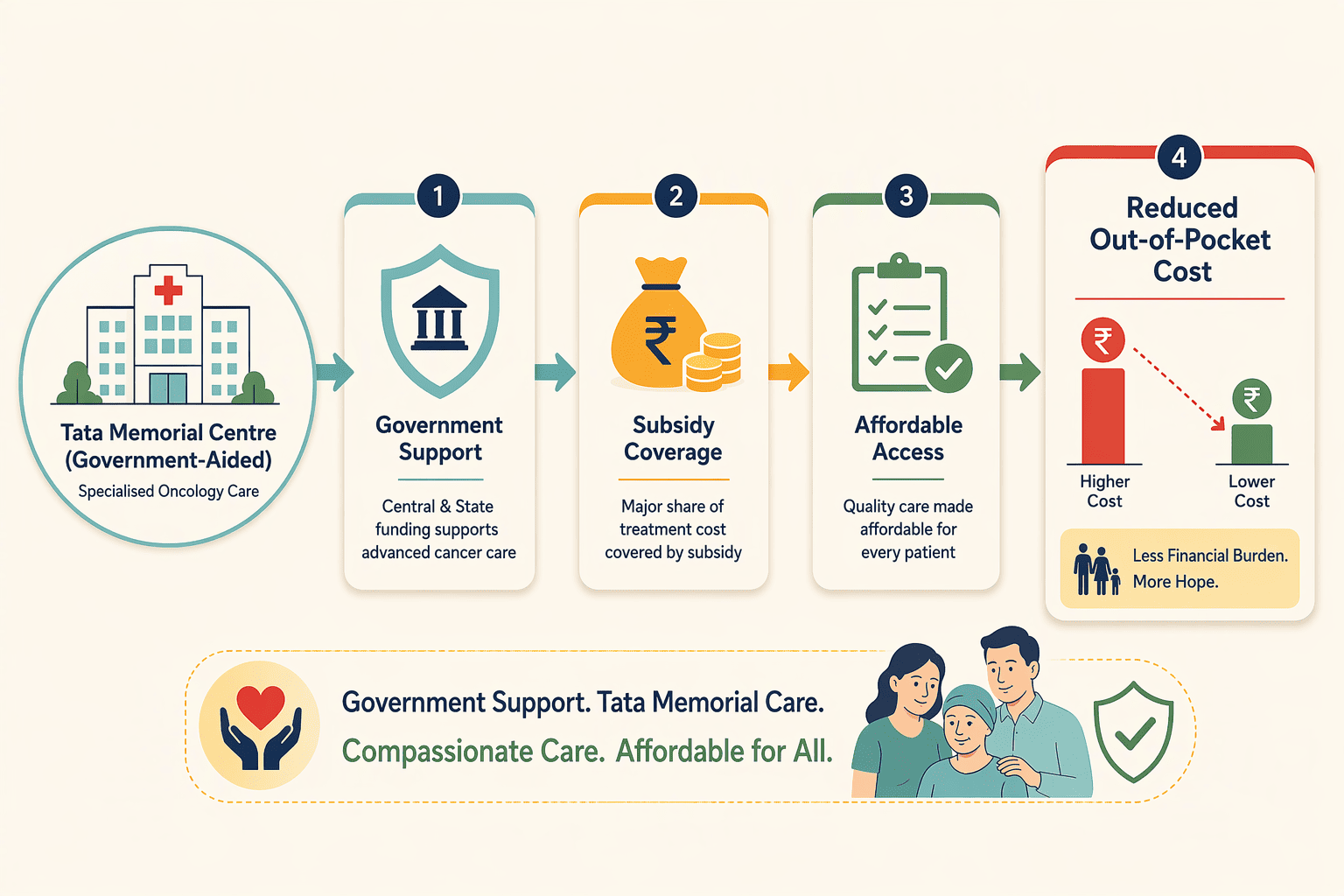
Homi Bhabha Cancer Hospital in Mullana, a unit of the Tata Memorial Centre (TMC), operates on a rigid protocol that puts elite-level outcomes within reach of families who cannot afford market rates. A prospective study from TMC in Mumbai found that for subsidized patients, the mean total cost was ₹210,246, a concrete benchmark for the subsidy model.
The hospital’s pricing structure is designed for volume and equity, not profit, and its smooth PM-JAY integration means eligible families face near-zero direct costs for standard treatment protocols.
The survival data underpinning its reputation is strong. National studies show the 5-year observed survival rate for localized-stage breast cancer across pooled registries was 81.0%. The Mullana centre, following the exact Tata protocols that produced those results, delivers a level of clinical confidence typically associated with far more expensive facilities. The institution is not just a treatment centre; it's a financial shield. It actively channels patients through the Haryana State Cancer Society’s BPL fund and other state-level welfare schemes.
The one trade-off is demand. As India's premier subsidised cancer network, patient volume is high, which can translate into scheduling wait times for non-emergency surgeries. A private centre may offer faster admission for a lumpectomy, but it cannot replicate the Tata protocol's cost structure for a full course of chemotherapy, radiation, and follow-up. For the majority of Haryana families, the trade of some scheduling flexibility for a compound ₹3 to 4 lakh saving is the defining financial decision of their cancer journey.
2. PGIMER Satellite Centre, Panchkula: Public-Sector Excellence With Cashless PM-JAY Integration
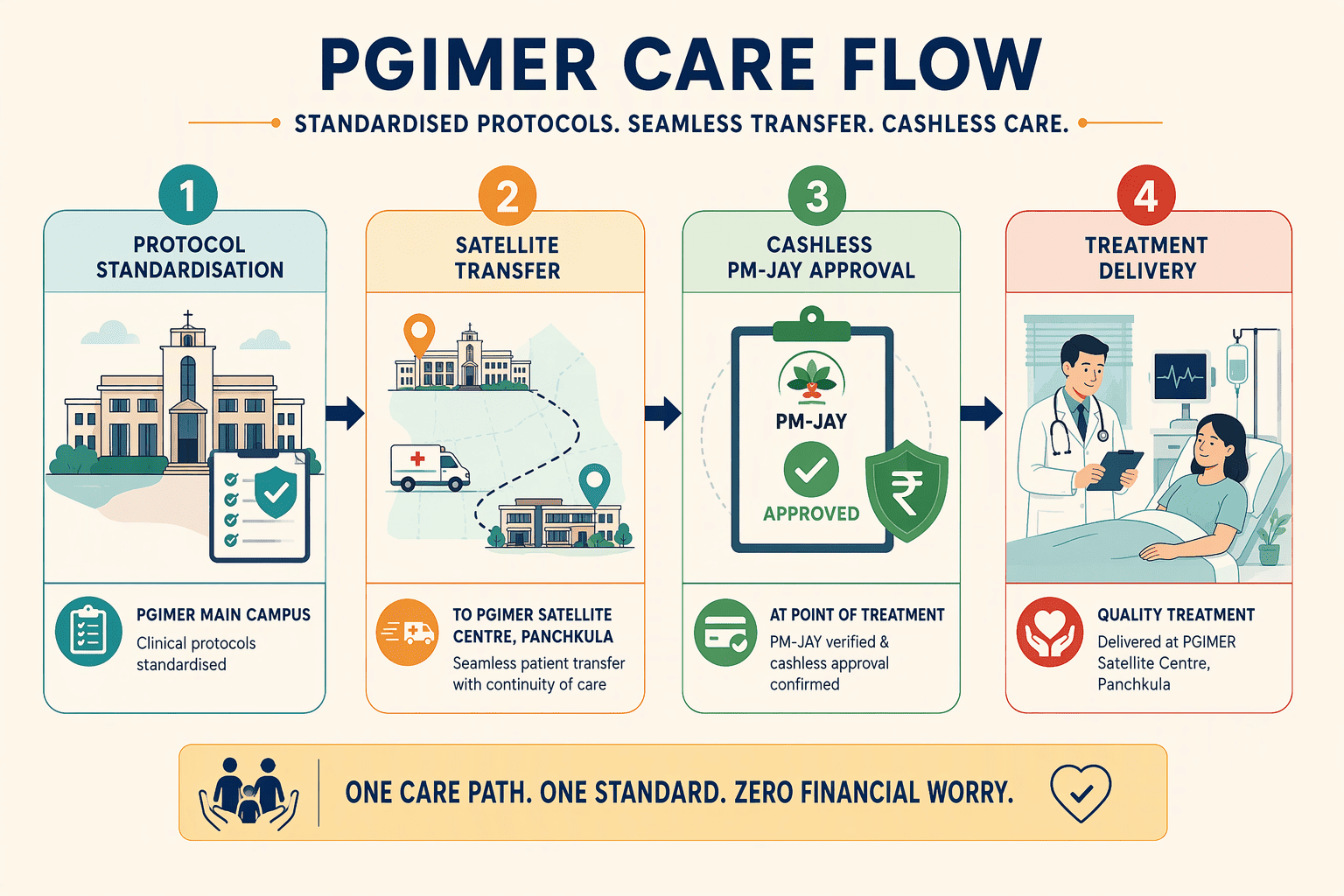
The PGIMER Satellite Centre in Panchkula extends Chandigarh's premier public-sector oncology protocols into a cashless, protocol-standardised environment for Haryana residents. Key features include:
- Standardised treatment pathways: Breast conservation surgery, modified radical mastectomy, and adjuvant radiotherapy are derived directly from PGIMER’s main campus, eliminating clinical variation between the two sites.
- Cashless PM-JAY coverage: The centre is fully empanelled for PM-JAY, so the entire surgical and radiotherapy package is processed as a cashless transaction; for an eligible family, the financial barrier to entering a top-tier public medical university's treatment stream disappears.
- Multi-disciplinary board oversight: A surgeon, radiation oncologist, and medical oncologist calibrate the sequence of care without the referral fees common in private networks.
- On-site radiotherapy unit: Keeps patients from the exhausting and costly cycle of cross-city referrals that plague smaller districts.
3. Paras Health, Panchkula: Private Multi-Speciality Centre With Visiting Senior Consultants
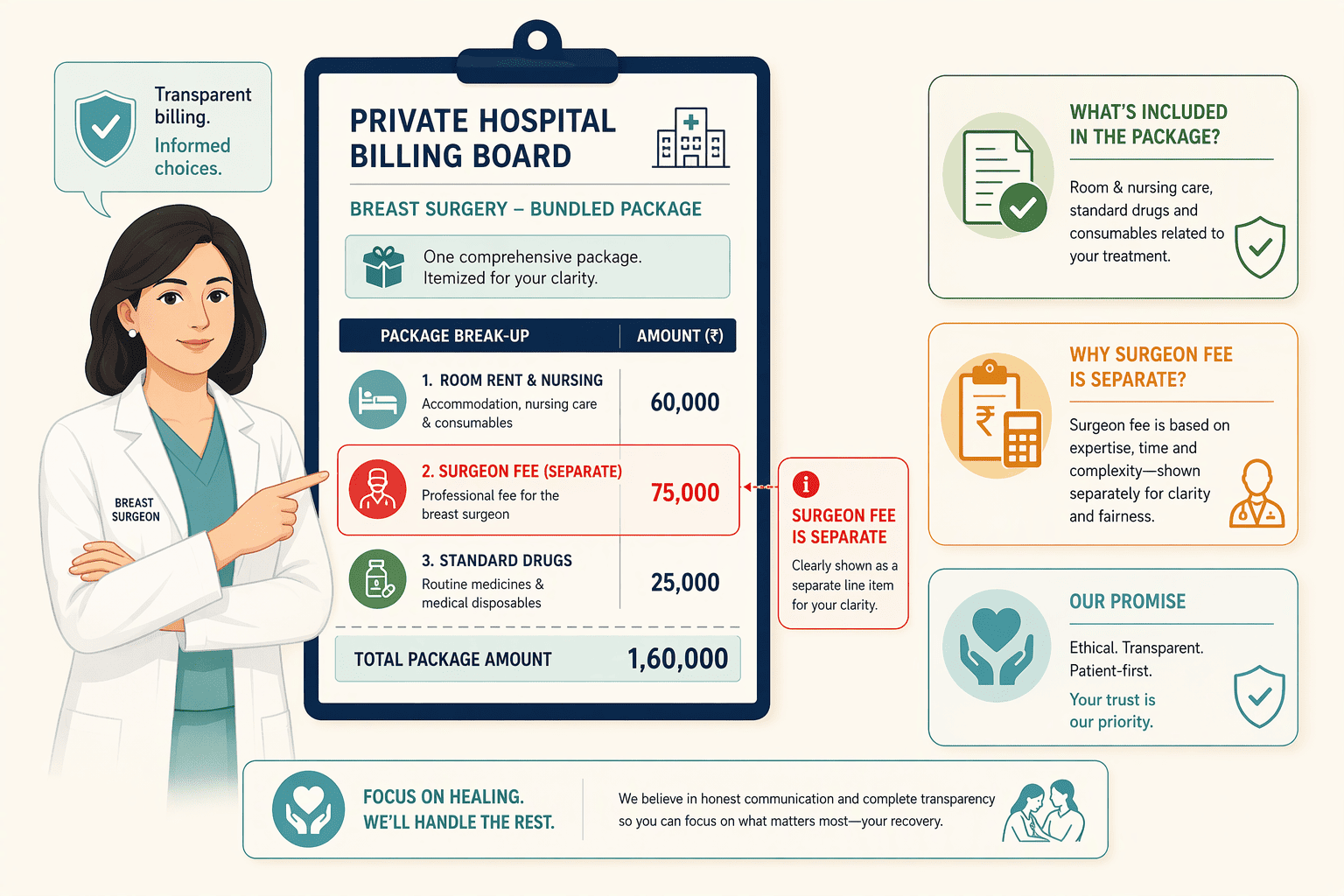
Paras Health in Panchkula runs on a straightforward corporate hospital model. You come here to get operated on by a senior surgeon who also operates at two or three other hospitals. Speed and expertise are the draw. A larger bill that demands a close read is the reality.
- Package pricing structure: Quoted packages typically bundle room rent, surgeon fee, and standard drugs. Because the surgeon is a visiting consultant, the surgeon's fee appears as its own line item. Any intra-operative deviation or complication can push the final invoice past the initial quotation quickly.
- Cashless processing speed: As a corporate chain, Paras has mature relationships with Third-Party Administrators (TPAs) and insurers. Cashless pre-authorisations often clear faster than they do at standalone hospitals, which cuts the upfront deposit insured patients need to arrange.
- Consultant access, but limited continuity: A roving senior consultant treats high surgical volumes across multiple centres. That volume matters for complex reconstructions. The trade-off is that daily post-operative oversight typically falls to in-house registrar-level staff, not the surgeon who did the operation.
4. Fortis Memorial Research Institute, Gurugram: Regional Leader With Financial Counselling and Cross-State Protocols
Fortis Memorial Research Institute in Gurugram sits inside the Delhi NCR arc but remains a critical referral destination for Haryana residents facing complex breast cancer. The institution's standout feature for this patient group is a department: dedicated financial counsellors who optimise treatment plans against insurance liability. For a Haryana family with a ₹10 lakh upper budget, these counsellors navigate the interplay between private insurance coverage, cross-state PM-JAY portability, and the hospital's own protocols to construct a financially viable treatment calendar.
| Feature | Fortis Gurugram Approach | Standard Private Hospital Approach |
|---|---|---|
| Financial Navigation | Dedicated counsellor calibrates treatment to PM-JAY portability and insurance limits | Ad-hoc billing office response; patient manages insurer alone |
| Cross-State Coverage | Active protocols for Haryana PM-JAY portability in NCR facilities | Often unclear or denied at billing stage without patient escalation |
| Complex Reconstruction | High-volume surgical expertise for DIEP flap and implant-based reconstruction | Limited to basic procedures; complex cases referred out |
| Targeted Therapy Access | On-site molecular tumour board integrates targeted therapy into package planning | Targeted drugs often a separate, unoptimised out-of-pocket cost |
The clinical advantage is most pronounced in high-complexity scenarios. Where a district-level centre would refer a candidate for advanced reconstructive surgery or HER2-targeted therapy to a metro hub, Fortis Gurugram anchors the entire multi-modal plan in one place. The counterweight is the underlying cost structure. Without full PM-JAY absorption or strong private insurance, the bill for a surgery-chemo-radiation sequence here can quickly approach the ₹10 lakh mark, justifiable for highly specific procedural needs, but not a cost-efficient first line for early-stage, standard-risk disease.
5. World Brain Center Hospital (Cancer Wing), Delhi NCR Border: Low-Overhead Bridge Facility for Haryana Residents
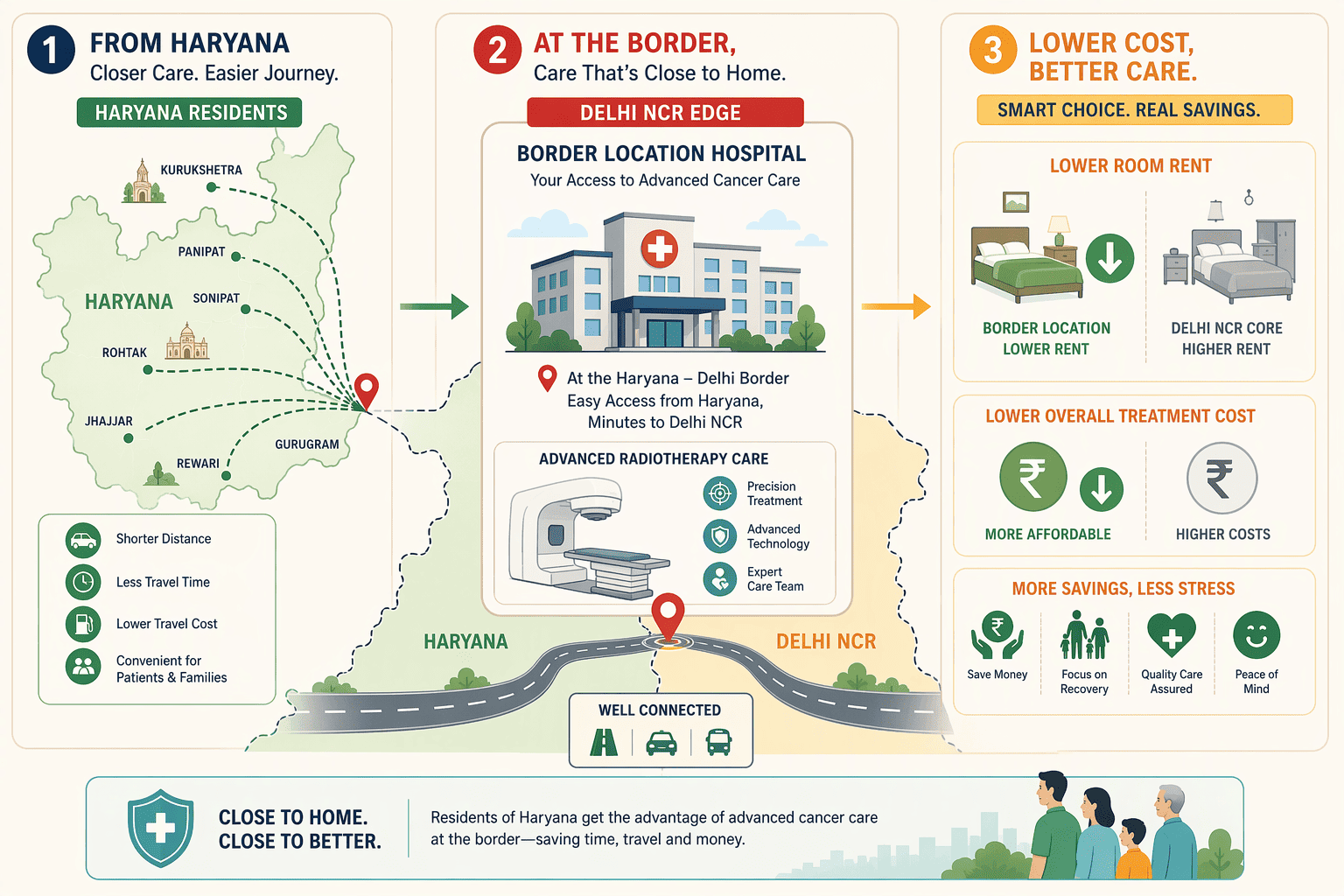
The World Brain Center Hospital sits right on the Delhi NCR border, and its location shapes the economics of cancer care. Lower real-estate costs here translate directly into lower room rents and procedure markups than you will find at hospitals deep inside Gurugram or South Delhi. For a Haryana family that wants Delhi-based oncologist expertise without paying a premium for prime metro infrastructure, this facility bridges that gap. Its cancer wing has the radiotherapy linear accelerator and standard chemotherapy day-care units that handle the majority of early-stage, hormone-receptor-positive breast cancer cases, the kind that do not need the tertiary bells and whistles of a research institute.
This is a tactical choice. It fits best when the diagnosis is already clear and the treatment protocol is a standard one: a modified radical mastectomy followed by routine adjuvant radiotherapy, for example. Walk in with a rare triple-negative subtype that demands a complex clinical trial or advanced reconstructive surgery, and you have a mismatch between what you need and what this facility is built to deliver.
6. State-Wise Cost Comparison: Haryana vs. Delhi NCR, Punjab, Rajasthan and UP
The cost differential that Haryana offers is not marginal; it is structural, driven by state electricity and fuel subsidies for healthcare and lower operational tax burdens. The savings manifest in two key ways:
- Lower treatment packages: The typical total treatment package in Haryana, a bundled sequence of surgery, radiotherapy, and six cycles of chemotherapy, sits 30% to 40% below the Delhi NCR equivalent for the same clinical protocol. Standard secondary data places the typical cost of treatment including radiation, surgery, and investigations between ₹5 and 6 lakhs, a figure that skews toward private metro pricing and against which Haryana’s integrated and public-sector centres compare favourably.
- Reduced non-medical costs: The state government’s push to operationalise Day-Care Cancer Centres in 22 districts, combined with free travel on Haryana Roadways for patients, may save patients an average of ₹3.3 lakh per patient in travel, accommodation, and related non-medical expenses over a treatment cycle.
7. Itemised Bill Estimator: Anatomy of an Affordable Breast Cancer Treatment Package
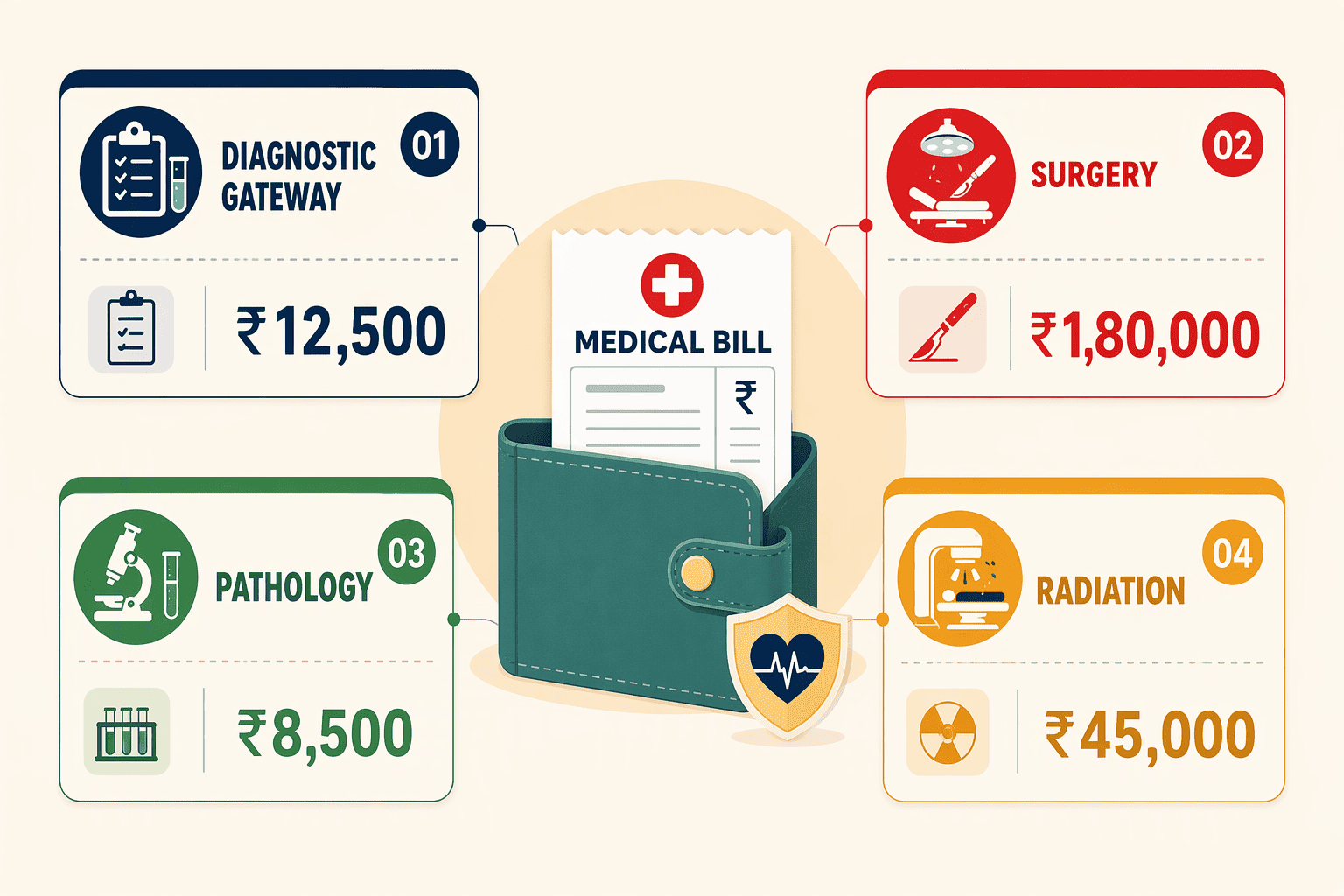
Hospital quotations for cancer care are notoriously opaque. By deconstructing a typical early-stage package into four cost blocks, families can negotiate from a position of knowledge:
- Diagnostic gateway: Registration and up-front consultation rarely exceed ₹1,000 to ₹2,000 even in private centres. Mammography, core needle biopsy, and basic IHC for receptor status together form a diagnostic outlay of approximately ₹15,000 to ₹25,000.
- Surgery (the major procedural block): A breast conservation surgery or modified radical mastectomy at a government or subsidised centre carries a surgical fee and OT charge bundled under a PM-JAY package; at a private integrated centre like Andromeda Cancer Hospital, in-house pathology and surgical oncology can keep the all-inclusive procedural cost between ₹60,000 and ₹1.5 lakh.
- Radiotherapy and chemotherapy (recurring costs): A single sitting of IMRT on an in-house linear accelerator ranges from ₹1,000 to ₹2,500 per fraction, with a full course of 25 to 30 sittings. Chemotherapy costs swing wildly based on the regimen: generic CMF or AC protocols cost a few thousand rupees per cycle, while targeted agents like trastuzumab add a zero to that figure.
- Pharmacy and consumables (often uncontested): Checking these line items against the Haryana Drug Control price caps can expose markups.
Conclusion
Achieving a high treatment-success-to-low-cost ratio in Haryana comes down to getting the decision architecture right. For families with PM-JAY eligibility and standard-risk, early-stage disease, the government-subsidised model at Homi Bhabha Cancer Hospital, Mullana, or the PGIMER satellite centre delivers Tata Memorial Centre-calibre survival rates with near-zero financial toxicity. Integrated private centres like Andromeda Cancer Hospital offer an optimised middle path for those who need faster scheduling without falling into the premium corporate overhead trap. Their ownership of diagnostic and radiation infrastructure strips out the per-session technical outsourcing charges that inflate bills elsewhere. The cross-border NCR hubs remain the high-cost, high-complexity backup for niche procedures like advanced reconstructions.
Your first step is to verify your AB-PMJAY eligibility immediately. That single act determines which tier of this architecture, zero-cost public, integrated affordable private, or full-fee metro referral, becomes your starting point.
Frequently Asked Questions
What is the typical cost range for breast cancer treatment in Haryana hospitals in 2026?
Early-stage breast cancer treatment packages in Haryana range from ₹1.5 lakh to ₹6 lakh at dedicated and subsidised centres.
Which hospitals in Haryana offer affordable breast cancer treatment with high success rates?
Integrated private centres like Andromeda Cancer Hospital in Sonipat optimise costs through in-house pathology and radiation.
What treatment modalities are available for breast cancer at affordable cancer centres in Haryana?
Affordable centres across Haryana provide the full spectrum: breast conservation surgery, modified radical mastectomy, intensity-modulated radiotherapy (IMRT/IGRT), standard chemotherapy, and targeted therapy.
How do success rates for breast cancer treatment in Haryana compare with Delhi NCR and other parts of North India?
Institutional outcomes in Haryana are competitive with Delhi NCR, with early-stage 5-year survival rates of 70% to 85% at top centres. National pooled registry data shows an 81.0% 5-year observed survival rate for localized breast cancer, a benchmark that major Haryana institutions match at a lower cost.
What financial assistance or insurance options exist for breast cancer patients in Haryana?
PM-JAY provides up to ₹5 lakh per family per year in cashless coverage at empanelled hospitals. Other financial support layers include:
- Haryana State Cancer Society BPL fund: Offers additional financial assistance for eligible low-income patients.
- Monthly stipend for advanced cases: The state provides ₹3,000 per month to low-income Stage III/IV patients.
- Free transport and local care: Free Haryana Roadways travel and district day-care centres further reduce non-medical costs.
What makes a dedicated cancer hospital in Haryana a better choice for breast cancer care than a general hospital?
A dedicated cancer hospital deploys sub-specialist multi-disciplinary tumour boards, in-house linear accelerators for radiation without referral delays, and access to clinical trials. This vertical focus eliminates the outsourced pathology and consultant coordination costs that inflate bills and slow treatment at a general facility.
Sources
- Breast Cancer | Andromeda - www.andromedahospital.in
- Out-of-pocket payment and financial risk protection for breast cancer treatment: a prospective study from India - PMC - pmc.ncbi.nlm.nih.gov
- Breast cancer survival in India across 11 geographic areas under the National Cancer Registry Programme. - pubmed.ncbi.nlm.nih.gov
- CMO Haryana | Press Release - 11 February 2026 - haryanacmoffice.gov.in